


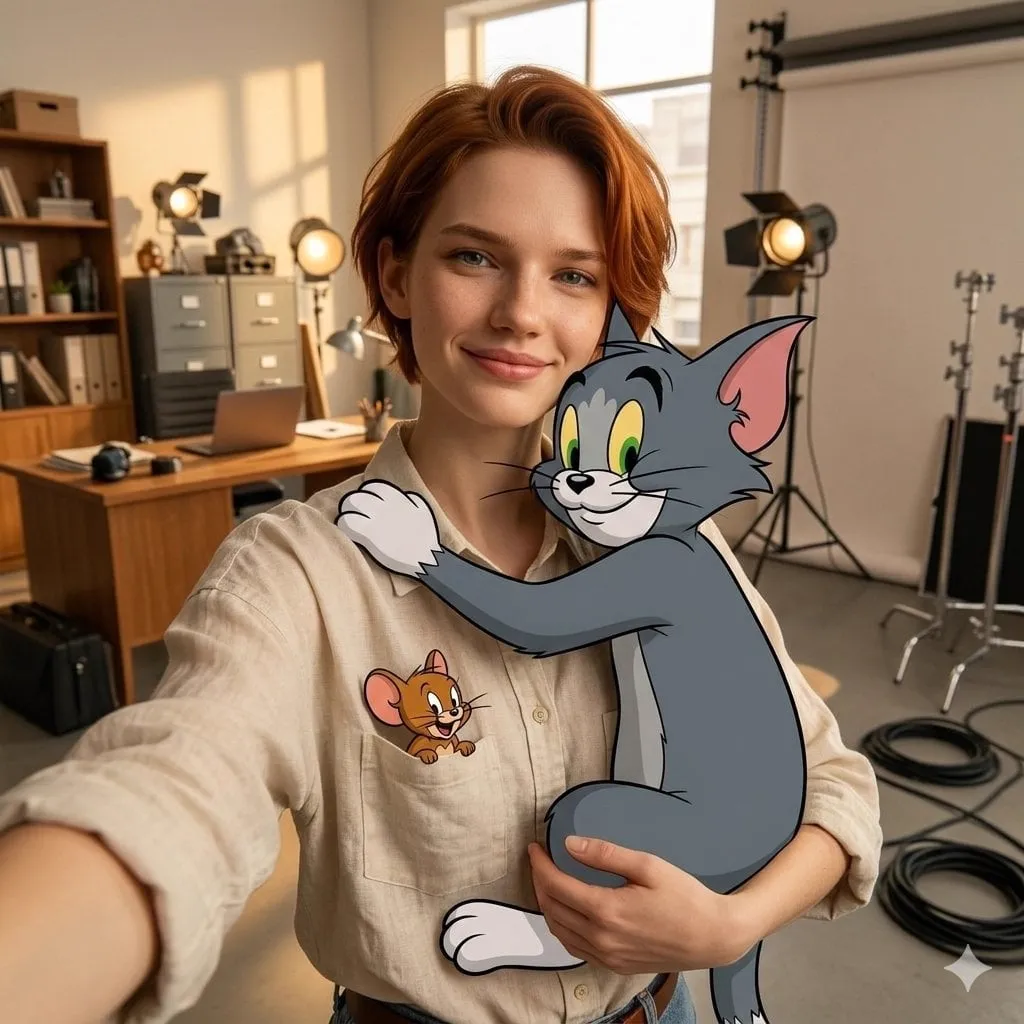

Why Keyword-Led Short Video Wins Attention
Short-form video is no longer a side channel. It is the default way people discover products, ideas, creators, and brands. But the mechanics behind that discovery are less mysterious than they look. Every feed — vertical video apps, short-video tabs inside larger platforms, and even search-driven video surfaces — is fundamentally a matching engine. It tries to answer one question: which viewers will watch this clip to the end, and then watch it again?
Keywords are how you help that engine answer the question quickly. Not keywords stuffed into a caption, but keywords that shape your topic choice, your opening line, your on-screen text, and the promise your clip makes. When a trending phrase and a clear viewer intent line up, the algorithm stops guessing and starts distributing.
There are three reasons keyword-led thinking outperforms pure creative instinct:
- Classification speed. Platforms transcribe audio, read on-screen text, and parse captions. A clip that states its topic in the first two seconds is easier to classify correctly, which means it reaches the right interest cluster sooner.
- Search demand. Vertical video apps have become search engines for a younger audience. People type questions into them the same way they once typed into a browser. If your clip answers a phrase people actually type, it can accumulate views for months instead of hours.
- Repeatable ideation. Trends are infinite but attention is finite. A keyword bank turns "what should I post today?" into a decision with criteria rather than a coin flip.
The trap is treating virality as luck. It is better understood as a compounding system: research, hook design, retention structure, metadata, and measurement. This guide walks through that system end to end, including where AI tools genuinely help and where they quietly hurt.
The Anatomy of a Viral Short: Trend, Keyword, Hook, Payoff
Before optimizing anything, separate the four layers that every high-performing short video contains. Most failed clips are strong in one layer and empty in another.
Layer 1: The trend layer
This is the cultural current — a format, sound, visual style, controversy, or news moment that is rising right now. Trends give you relevance, but they decay fast. A trend-driven clip usually has a window measured in days.
Layer 2: The keyword layer
This is the language people use when they look for the topic. It might be a question ("why does my sourdough collapse"), a comparison ("budget vs pro microphone"), or a search-shaped noun phrase ("small apartment storage ideas"). Keywords are what make a trend searchable rather than merely seen.
Layer 3: The hook layer
The first one to three seconds. This is where retention is won or lost. A hook does three jobs at once: it signals the topic, creates a small information gap, and gives the eye something to look at that is not a static talking head.
Layer 4: The payoff layer
The reason the viewer stays past second eight. Payoff can be a reveal, a result, a punchline, a transformation, or a piece of information the viewer could not have guessed. Without payoff, hooks generate clicks and disappointment in equal measure — and disappointment shows up in your completion rate.
A useful diagnostic: write your clip's four layers as a single sentence. "Trend: three-ingredient dinners. Keyword: easy high-protein lunch. Hook: I stopped buying lunch after this. Payoff: 90-second assembly that survives a fridge for four days." If you cannot fill in all four, the clip is not ready to shoot.
Build a Repeatable Trend and Keyword Research Routine
Most creators research sporadically and then wonder why output feels random. A routine beats inspiration. Set aside one hour per week for research and one hour for scoring — and separate those two activities, because they use different parts of your brain.
Where the signals actually live
- Platform search autocomplete. Type your topic into a video platform's search bar and record every suggestion. These are real queries with real demand, ranked by real behavior.
- Comment mining. Your own comments and competitors' comments are an unpaid focus group. Sort by "top" and look for repeated phrasing — that repetition is a keyword.
- Rising-query tools. General trend tools show relative interest over time and, crucially, related queries that are climbing before they are saturated.
- Community forums and Q&A threads. Long-form text communities surface the emotional framing behind a search. The phrasing there often converts into a stronger hook than a keyword tool suggests.
- Outlier analysis. Find clips with far more views than the account's follower count would predict. Those outliers usually combine a rising trend with an unusually clear keyword promise.
Score every keyword before you commit
Rate each candidate from one to five on six criteria, then total the scores:
- Demand — is there evidence people search or ask about this?
- Intent clarity — can you tell in one sentence what the viewer wants?
- Content gap — are the existing results weak, outdated, or boring?
- Competition — how many strong accounts already own this phrase?
- Durability — will this still be relevant in six months? (Mix durable and trend-reactive clips roughly 70/30.)
- Production feasibility — can you actually make this well with your current setup?
Anything scoring below 18 out of 30 goes into the parking lot rather than the calendar.
Keep a rolling keyword bank
Use a simple table with columns for phrase, intent type, trend status, hook angle, format, status, and publish date. Add twelve to twenty scored phrases per month and you will never start a week empty-handed. Review it monthly and archive the phrases whose trend window has closed.
Read Search Intent Before You Write a Script
A keyword without intent analysis produces a clip that answers the wrong question. Sort phrases into five intent buckets and let the bucket determine your structure.
Informational intent
"How," "why," "what is." These viewers want clarity fast. Structure: answer first, explain second, nuance third. Front-load the conclusion in the first three seconds, then earn the explanation.
Comparison intent
"X versus Y," "best for," "worth it." Viewers are mid-decision and highly engaged. Structure: state the verdict early, then give the two or three criteria that decide it. Comparison clips consistently earn high save rates because people bookmark them for later.
Transactional intent
"Cheap," "under budget," "where to buy." These viewers are close to acting. Structure: show the result, show the process, show the constraint that makes it credible. Overpromising here destroys trust instantly.
Trend-reactive intent
"Is it true that," "what happened with." Fast-decaying, high-ceiling. Structure: acknowledge the moment in one line, then add the perspective nobody else is adding. Speed matters more than polish.
Identity and entertainment intent
"POV," "things nobody tells you about," "relatable." Here the keyword is emotional rather than literal. Structure: lead with recognition — the viewer should feel seen in the first second — then escalate or subvert.
One clip, one intent bucket. Mixing informational and transactional intent in a twenty-second clip usually means you deliver neither well.
Turn Keywords Into a Visual Plan With AI
This is where AI video tools have genuinely changed the cost curve. What used to require a shot list, a location, and a crew can now begin as a prompt and a storyboard. The mistake is letting the tool choose the concept.
Start with a creative brief, not a prompt
Write four lines before you open any generator:
- Subject and action: who or what is on screen, and what changes during the clip.
- Visual reference: the look you are matching — documentary, product macro, animated, archival, cinematic.
- Emotional register: calm, urgent, playful, authoritative.
- Constraint: the keyword phrase that must appear on screen or in the voiceover.
Your AI prompt should be a translation of that brief, not a replacement for it.
Use a consistent prompt skeleton
Subject, action, camera movement, lens and framing, lighting, palette, mood, duration, aspect ratio. Example: "Close-up of hands assembling a ceramic mug, slow push-in, 50mm equivalent, soft window light, warm neutral palette, calm mood, four seconds, 9:16." Keep the skeleton stable across a series and only change the subject and action. That single habit is the difference between a channel that looks intentional and one that looks like a stock-footage blender.
Protect visual consistency
If your series has a recurring character or host, generate or capture a reference set first: front, three-quarter, profile, and a couple of expressions. Reuse that reference for every subsequent generation rather than redesigning the character each time. Do the same for palette, typography, and transition style. Consistency compounds recognition, and recognition compounds retention.
Automate the boring layers
AI is strongest on the repetitive parts: b-roll fills, caption transcription, translation and localization, voiceover scratch tracks, thumbnail variations, and hook-alternative edits. Use it there. Keep the concept, the hook, and the payoff decision human.
Handle rights and disclosure deliberately
Check the commercial-use terms of every generator you use, keep a record of source assets, and follow platform rules for synthetic media disclosure. If a clip depicts a real person or a recognizable brand asset, either get permission or replace it. A viral clip that gets taken down is worth less than an average clip that stays up.
The Production Workflow From Script to Export
A repeatable pipeline beats a heroic all-nighter. Here is a workflow that scales from solo creator to small team.
Step 1: Script for retention, not for reading
Write in spoken language. Use this five-beat skeleton:
- Hook (0–3s): the promise or the tension.
- Open loop (3–6s): why the viewer should stay — what is coming.
- Three-beat body (6–20s): one idea per beat, one visual change per beat.
- Payoff (20–25s): the result, reveal, or crisp conclusion.
- Soft next step (25–30s): a question, a follow prompt, or a pointed pointer to a longer piece.
Read it aloud with a timer. If it runs long, cut a beat rather than speeding up your delivery. Fast talking is not the same as tight editing.
Step 2: Capture or generate
Record vertical native whenever possible — reframing a horizontal shot to 9:16 wastes pixels and usually crops the subject badly. For generated segments, work in short durations (three to six seconds per shot) and assemble rather than attempting one long continuous generation.
Step 3: Edit for rhythm
- Cut every 1.2 to 2.5 seconds in the first ten seconds. After that you can breathe.
- Add a pattern interrupt every four to six seconds: a zoom, a text pop, a sound effect, a scene change.
- Burn in captions. A large share of viewers watch muted, and captions also feed the platform's transcription pipeline.
- Keep music under the voice track. If the audio peaks clip, re-render — bad audio kills retention faster than bad visuals.
- End on a frame that makes a loop feel natural. Seamless loops inflate rewatch rate, which is one of the strongest distribution signals available.
Step 4: Export variants
Produce at least two hook variants per concept and test them. Keep a master export with captions off for localization, and platform exports with captions burned in. Name files with the topic phrase and variant letter so your library stays searchable six months later.
Metadata: The Invisible Reach Layer
Metadata is not decoration. It is how the classification engine knows where your clip belongs.
- Title: lead with the keyword phrase in natural language. Avoid all-caps bait and avoid stacking three unrelated keywords.
- Caption first line: repeat the promise in plain words. The first line is what appears in truncated previews.
- Hashtags: three to five relevant tags beat twenty generic ones. Mix one broad, two niche, one topical.
- Spoken keyword: say the phrase out loud in the first five seconds. It gets transcribed and matched.
- On-screen text: keep the keyword visible for at least two seconds. Text that flashes for half a second is read by humans poorly and by systems unreliably.
- File and description naming: use descriptive filenames. Small signal, but free.
What to avoid: keyword stuffing that makes the caption unreadable, misleading titles that inflate the first three seconds and destroy completion, and hashtag walls that dilute topical clarity.
Choosing Tools and Avoiding Common Retention Killers
Tool selection criteria
Judge any tool on seven things: output resolution and aspect ratio support, maximum usable clip length, character and style consistency, commercial licensing, editing speed, collaboration and review features, and export flexibility. A tool that nails consistency but exports slowly will bottleneck your cadence. A tool that is fast but inconsistent will fragment your visual identity.
Practical stack shape:
- Research: platform search, a trend tool, and a spreadsheet.
- Scripting: a doc with a timer, or a teleprompter app.
- Capture: your phone, plus one decent light and one decent microphone.
- Generation: one image-to-video tool and one text-to-video tool, chosen for consistency over novelty.
- Voice: a voiceover tool for scratch tracks, a human recording for finals.
- Edit: a fast mobile editor for daily output, a desktop editor such as DaVinci Resolve or Premiere Pro for hero clips.
- Captions: automated transcription with a manual proofread pass.
- Scheduling: a planner that supports vertical formats and drafts.
Reassess quarterly. Removing one tool that nobody opens is usually more valuable than adding two.
The mistakes that quietly kill reach
- A slow first second. Logo animations, greeting cards, and "hey guys" intros are retention poison.
- Promise-delivery mismatch. If the hook says transformation and the clip delivers commentary, viewers leave — and the algorithm notices.
- No visual change in the first five seconds. A static frame with a voiceover gives the eye no reason to stay.
- Chasing every trend. Trend participation without a keyword angle produces views that never convert to followers.
- One export, everywhere. Feeds differ in length tolerance, caption conventions, and safe zones.
- Ignoring the comments. The first twenty comments often contain your next three clip ideas.
- Hard-selling in the first five seconds. Value first, offer second.
- Never revisiting a winner. A clip that performed well merits a second angle, a follow-up, or a series — not abandonment.
- Different tools, different look. Inconsistent style resets recognition every upload.
Measuring What Actually Matters
Vanity metrics feel good and teach nothing. Track these instead, per clip, for at least the first seven days:
- Three-second hold rate — the share of viewers still watching at second three.
- Average watch percentage — the strongest single predictor of further distribution.
- Rewatch ratio — views divided by viewers; anything above 1.2 is a strong signal.
- Saves and shares per 1,000 views — the clearest evidence of perceived usefulness.
- Follower conversion — new followers per 1,000 views.
- Search impressions over time — a clip that keeps accumulating views after week three is being found by search, not just fed by a recommendation burst.
Run a proper test cohort
Publish ten clips with a single variable changed — hook style, for example — and hold everything else constant: length, format, posting window, caption structure. Compare the cohort's three-second hold rate and average watch percentage, not total views, because view counts are heavily influenced by distribution luck on a single post.
Give each clip a 48-to-72-hour primary window before judging it, then revisit the top performer monthly. Some clips resurface months later when a related trend rises, and a light re-edit or a new caption can revive them.
Questions Creators Ask Most
How many keywords should one clip target? One primary phrase and one or two close variants. Clips that chase five unrelated terms rank for none of them.
Do trending sounds matter more than keywords? They serve different jobs. Sounds help with short-term visibility inside a trend window; keywords help with search-driven views that compound. The best clips use both without letting the sound dictate the topic.
Is AI-generated footage acceptable in a serious brand channel? Yes, if it matches your visual identity, discloses what needs disclosing, and clears commercial licensing. Mixed-quality generation is more damaging than no generation.
How long should a short video be? Long enough to fully deliver the payoff and not one second longer. Test 15, 25, and 40-second versions of the same concept; the winner is often topic-dependent rather than universal.
What if my niche has no trending keywords? Every niche has search language — it just lives in forums and comment sections rather than trend tools. Mine questions, not headlines.
How often should I post? Pick a cadence you can sustain for twelve weeks without quality collapse. Three well-researched clips per week beat daily improvisation, especially once you start measuring cohorts.
A weekly cadence that holds up
- Monday: score ten keyword candidates and choose three.
- Tuesday: script all three and write the visual briefs.
- Wednesday: capture or generate footage for the first two.
- Thursday: edit, caption, export variants, publish clip one.
- Friday: publish clip two, respond to comments, record new keyword ideas from replies.
- Saturday: produce and publish clip three; note outlier formats.
- Sunday: review the week's metrics, update the keyword bank, archive dead trends.
That loop is unglamorous and it works, because it replaces mood with a system. Trends change, tools change, and formats change. The underlying pattern does not: find language people already use, promise something specific, deliver it faster than expected, and label it clearly so the right viewers find it. Do that consistently, measure honestly, and a percentage of your clips will do extraordinary things — and the rest will still build the audience that makes the next one easier to launch.
