
Why most code tutorials fail to teach
Anyone who has learned to code has hit the same wall: the tutorial shows you lines of code, you type them, they run, and yet you feel you learned nothing. The problem is not the instructor's knowledge. It is the medium. Code is abstract, and a talking head reading lines on a screen does not make the abstraction visible. The concept behind the syntax — why a loop repeats, what memory does, how a function returns — stays invisible, and invisible things are hard to learn.
Video is the dominant format for learning technical skills, and Python is the most-taught language in the world. That combination creates an enormous opportunity for creators who can do better than screen-recording a notebook. AI video tools have matured to the point where they can visualize abstract concepts, generate illustrative animations, and help structure lessons that actually stick. The gap between a mediocre tutorial and a great one is not effort; it is a production system.
This guide lays out that system: how to visualize abstract programming concepts, how to structure a lesson as a video, how to use AI to generate examples and visuals, and how to grow a sustainable teaching channel around Python content. The focus is on pedagogy first and technology second, because tools change fast and good teaching does not.
Visualizing abstract programming concepts
The core job of a Python tutorial is to make the invisible visible. A variable is not a box on a screen; it is a named space in memory where a value lives. A loop is not a block of repeated lines; it is a journey with a condition that decides when to stop. Data structures are not syntax; they are arrangements of information with different strengths and weaknesses.
The most effective tutorials show these ideas as moving pictures. A variable assignment can be animated as a labeled container receiving a value. A loop can be shown as a cursor moving through a sequence, checking a condition at each step. A recursive function can be drawn as a stack of frames that builds up and then collapses. These animations do not need to be photorealistic — clean, simple diagrams with motion are exactly what the brain needs.
AI video tools make this practical for solo creators. Instead of hiring a motion designer, you describe the animation you need: "a blue cursor walks through a list of five items, pausing at each one." The tool generates the visual, and you place it next to the code. This is the killer use case for AI in education: the visualization layer that used to require a production team is now available to one person.
The discipline is to never show code without showing its behavior. If a viewer watches your video and cannot predict what the code will do before you run it, you are teaching typing, not programming.
Three concrete examples make the principle vivid. For a lesson on dictionaries, animate a phone book: names on the left, phone numbers on the right, and a finger that jumps directly to the right entry instead of scanning every page — that is the difference between a list and a hash map. For a lesson on recursion, draw a tower of nesting dolls: each call opens the next smaller doll, and the answer returns in reverse order as the dolls close. For a lesson on list comprehensions, show a factory conveyor belt: items go in, a transformation happens on each one, and the processed items come out — the visual is the comprehension itself. Each animation costs one generation pass but replaces a paragraph of abstract explanation.
Structuring a Python lesson as a video
A good lesson has a shape. It opens by connecting to something the learner already understands, states the one thing they will be able to do by the end, demonstrates it with a minimal example, then expands into variations and pitfalls. Most tutorials fail because they skip the opening and the pitfall section — they jump straight into code.
Open with the "why." Before showing a single line, answer: what problem does this concept solve, and why does the learner care? A learner who understands why lists exist will remember how to use them; one who is told "here is the syntax" will forget by tomorrow.
State the outcome in one sentence: "By the end of this video, you will be able to read a CSV file and extract the rows that match a condition." This sentence is your script's backbone. Every segment must serve it. When you are editing and a segment does not serve the stated outcome, cut it — no matter how interesting it is.
Then structure the demonstration in three layers: the minimal example (the smallest code that works), the real example (the same idea in a context the learner cares about), and the pitfall (what commonly breaks, and how to debug it). The pitfall layer is what learners actually search for later, and it is what makes them subscribe.
Generating examples, diagrams, and animations with AI
The practical workflow for a Python video creator has a surprising amount of AI assistance available today. Beyond video generation, you can use AI for the code itself: generate clean example programs, write multiple variations of the same concept, or produce buggy code specifically to teach debugging. The key is that you must understand and verify every example before it goes on screen; unverified AI code in a tutorial is a credibility bomb.
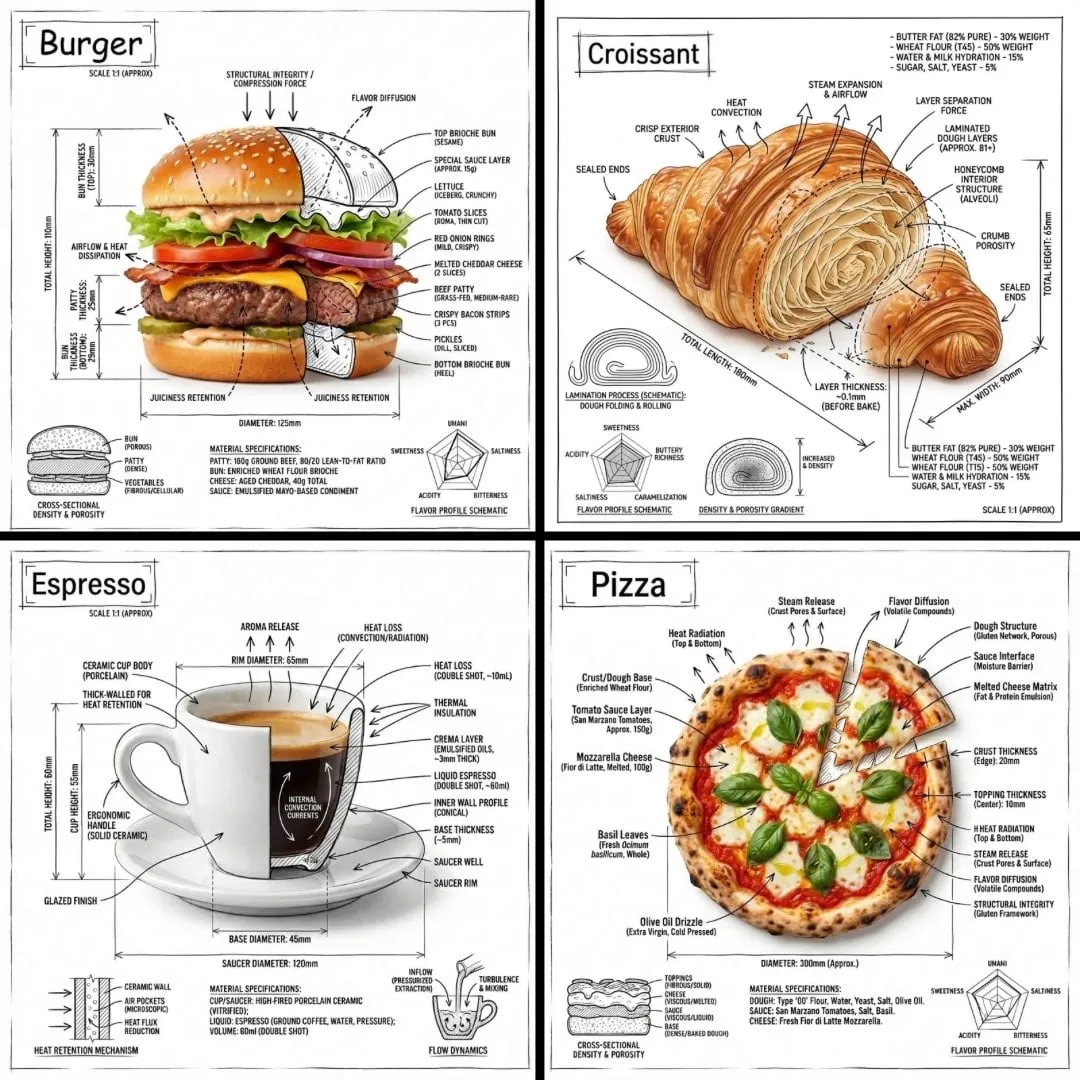
For diagrams, generate the core visual with an image or video tool, then keep it minimal. A diagram with too many labels teaches nothing; the animation should move one idea at a time. Build the diagram in layers across the video rather than showing the final state all at once.
For narration, write the script yourself, then use text-to-speech or record your own voice. Authentic voice matters in teaching: learners stay for the person, not the pixels. If you use synthetic narration, keep the pacing natural and add your own on-screen annotations to carry personality.
A practical production stack looks like this: a code editor for the demonstrations, a video generation tool for concept animations, a screen recorder for live coding when needed, and a simple editor to assemble. You do not need expensive gear. You need a repeatable template that lets you produce one solid lesson per week.
Personalization and accessibility in learning content
The best learning content adapts to the learner, and video can do this better than most people assume. Rather than one fixed pace, structure your videos so learners can enter at their level: a quick recap of prerequisites at the start, the core lesson in the middle, and an advanced extension at the end. Beginners watch the whole thing; experienced viewers skip to the extension.
Accessibility is not optional polish. Add accurate captions for every video — learners watch in public places, with sound off, and many rely on captions entirely. Keep the language plain, define jargon on first use, and use consistent terminology across your channel so the series builds on itself.
Personalization also means respecting the learner's environment. Many Python learners are working in a browser, not a full IDE. If your examples run in a notebook or an online playground, show them there first, then mention the desktop alternative. Demonstrating only a professional IDE alienates the beginner who has not installed anything yet.
A practical production workflow
A sustainable teaching channel runs on a template. Define your format once and reuse it: intro hook, stated outcome, concept explanation with visualization, minimal example, real example, pitfall, recap, call to action. Each video follows the same beats but the content varies. This is not laziness; it is how viewers build a mental model of your channel.
Weekly production looks like this. Day one: choose the concept and write the outcome sentence. Day two: generate the example code and verify it thoroughly, including the failure cases. Day three: create the visualizations — describe each animation, generate, and select the best takes. Day four: record or synthesize narration, assemble the video, add captions. Day five: publish, write the description with the code link, and schedule the next topic.
Keep an archive of your visual assets. Every diagram and animation you create can be reused when you revisit a topic or when a viewer asks a follow-up question. Over time, your archive becomes the moat of your channel: the more topics you cover, the faster you produce the next video.
What to do when you cannot keep the cadence
Life happens, and the weekly rhythm will break eventually. The strategy that preserves trust is to prepare buffer content: one evergreen lesson recorded in advance, ready to publish when the schedule slips. A single buffer video means a missed week never becomes a silent channel. The second strategy is honest communication — a short community post explaining the pause is better than disappearing. The third is protecting the archive: even a skipped week should not skip the asset collection, because the archive is what makes the next weeks easier to recover.
Publishing, community, and growing a channel
Distribution matters as much as production. A Python tutorial that nobody finds teaches nobody. Publish where Python learners search: YouTube for the long-form lesson, and short clips on social platforms for the concept animations. Each short clip should stand alone — one concept, one animation, one takeaway — and link back to the full lesson.
Community is the multiplier. Reply to comments, because the questions viewers ask are a free syllabus of what to teach next. Run a simple survey or read the comment section for the topic of next week's video. Learners who feel heard stay, and staying viewers become the seed of a course or a paid community.
For monetization, be honest and gradual. Start free; build trust; then offer depth: a workbook, a project series, or a structured course. The audience that trusts your free tutorials is the audience that will pay for structure. Never put the core teaching behind a paywall and hope to grow — the free content is your marketing.
Measuring learning impact
Numbers like views and watch time tell you about reach, not learning. To measure impact, track what learners do after watching: do they download the code, finish the exercise, ask a follow-up question? The strongest signal is the question: a viewer who asks a specific question about the concept understood it enough to engage with it.
Use retention graphs to find the weak segments. If a large percentage of viewers drop at a specific moment, that segment is either confusing or boring. Rewatch it with fresh eyes and ask what a struggling learner needs at that exact point. Often the fix is one sentence of context or one more visualization.
Finally, measure your own consistency. A channel that publishes weekly for a year beats a channel that publishes brilliantly once a month. The compounding asset in teaching is the catalog: every solid video is a permanent salesperson for your channel. Protect the cadence even when perfection is not possible.
Frequently asked questions
Do I need to be an expert to teach Python? You need to be a few steps ahead of your audience and honest about the limits of your knowledge. Learners value clear explanations more than encyclopedic expertise.
Which format works best, screen recording or animation? Both, in sequence. Show the concept as an animation, then show the code running on screen. The combination is far more effective than either alone.
How long should a lesson be? Shorter than you think. Aim for five to ten minutes for a single concept. Long videos have their place, but the single-concept format builds the habit of watching and finishing.
Can I use AI-generated code in tutorials? Yes, but verify it completely and disclose when appropriate. The moment a learner catches broken code in your tutorial, the trust is gone.
How often should I publish? Weekly is the realistic sweet spot for a solo creator. Monthly is too slow to build momentum; daily is too fast to maintain quality.
What is the most common mistake in Python tutorial videos? Showing code without explaining behavior. If the learner cannot predict the output before you run it, the video is entertainment, not education. Always pair code with visualization and a stated outcome.
Should I teach with notebooks or plain files? Show both. Notebooks are how most learners start and how data science is done; plain files are closer to real software. Demonstrate the concept in the environment your audience actually uses, then mention the alternative.
