
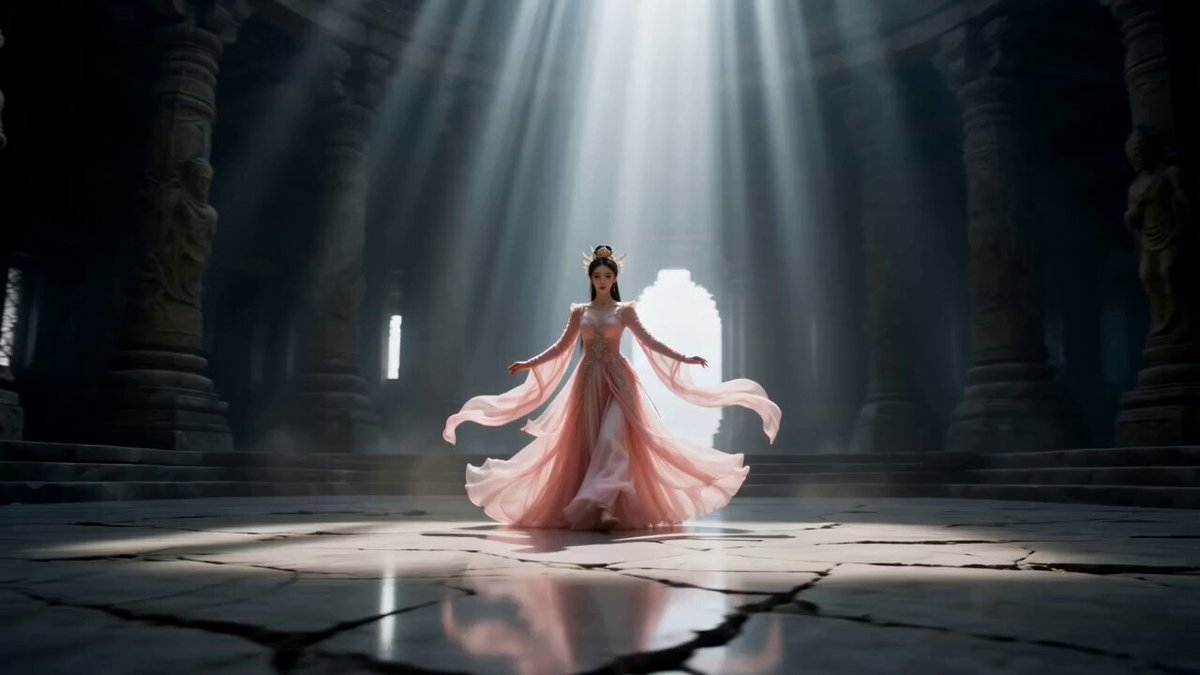
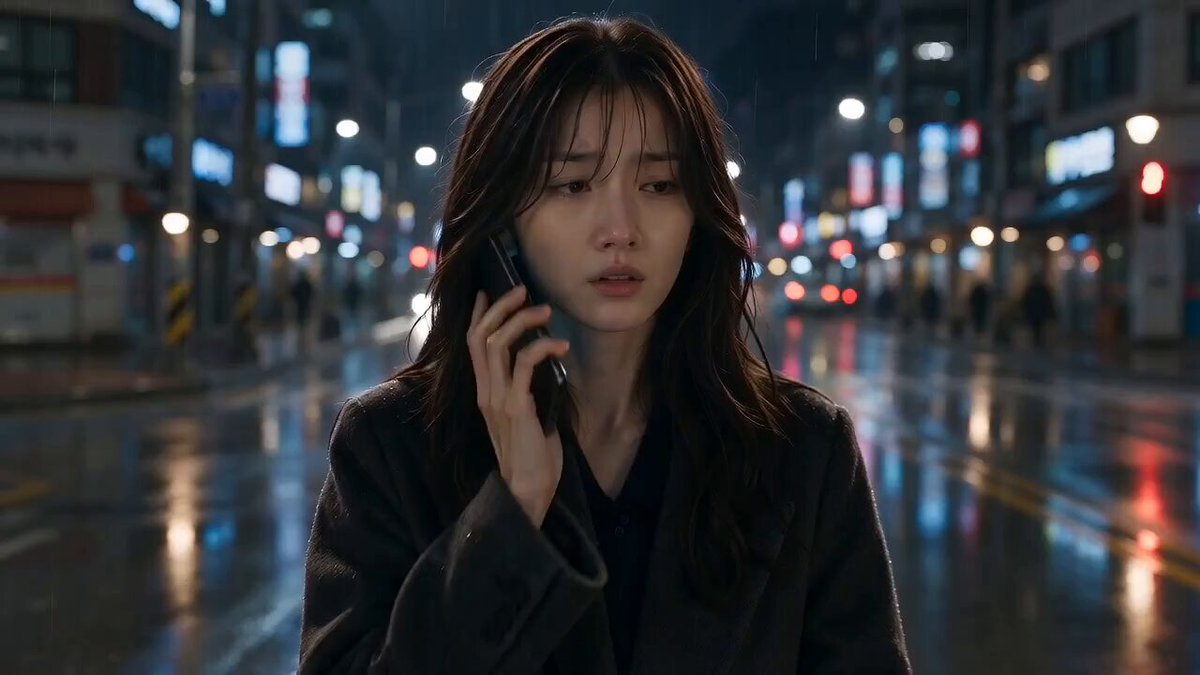
A finished AI video almost never begins with a prompt. It begins with an idea that has already been shaped into a story — someone wants something, something stands in the way, and the audience keeps watching to find out what happens next. The distance between a rough text idea and a shootable screenplay is where most AI video projects quietly fall apart. Not because the generator is weak, but because the script behind it was never written to be produced.
This guide walks through a complete, tool-agnostic pipeline for converting a text idea into a screenplay that both humans and video models can execute. You will see how to lock a story core, expand it into a beat sheet, translate beats into shot-level prompt blocks, and keep characters and locations visually consistent across dozens of generated clips. Every stage includes decision criteria so you can tell when a draft is good enough to move forward and when it needs one more pass.
Why the screenplay is still the bottleneck in AI video
Text-to-video models have become remarkably good at rendering a single beautiful shot. They are still fragile at narrative. Give a model a vague paragraph and you get a vague paragraph rendered as motion: a person walking somewhere, a camera drifting, a mood with no engine. The model is not failing — it is faithfully visualizing an under-specified instruction.
A screenplay solves that problem by removing ambiguity before generation begins. It answers questions the model cannot guess:
- Who is on screen, described in physical, renderable terms rather than vibes.
- What changes between the first second and the last second of the scene.
- Where the camera is, and whether it moves or stays put.
- What the audience hears, including dialogue, ambience, and silence.
- How this shot connects to the previous and next shot in space, time, and emotional temperature.
There is also a practical economic reason. Video generation is expensive in time, compute, and iteration count. Every minute spent tightening a script saves multiple regeneration cycles later, because you catch contradictions on paper where they cost nothing to fix. A scene that reads clearly on a page is usually a scene that generates cleanly on the first or second attempt.
Finally, a script is the only artifact that survives a change of tool. Models, interfaces, and pricing structures shift constantly. A well-structured screenplay with a beat sheet and prompt blocks can be re-executed in any generator without rewriting your story.
The full pipeline at a glance
The workflow below has three creative stages and one technical stage. Skipping any of them tends to produce the same symptom: attractive footage that does not add up to a watchable film.
- Story core — a logline, a protagonist with a visible goal, an obstacle, and a dramatic question.
- Structure — a beat sheet and scene cards that distribute that question across a fixed runtime.
- Production script — scenes broken into numbered shots, each with subject, action, camera, light, and style.
- Continuity and QA — locked character and location descriptions, audio plan, and a final read-through against the finished edit.
Expect to spend roughly 60 percent of your total project time in stages one and two. That ratio feels wrong the first time, especially if you enjoy prompting. It is also the single biggest predictor of whether a project gets finished.
Stage one: from raw text to a story core
Stage one is about subtraction, not addition. Most text ideas arrive carrying three stories at once. Your job is to find the one that can survive a short runtime.
Finding the dramatic question
Read your raw text and underline everything that implies change. A character who is dissatisfied, a deadline, a discovery, a decision — those are your raw materials. Now write a single sentence in this shape:
When [inciting event] happens, [protagonist] must [concrete action] before [consequence], or else [stakes].
If you cannot fill every bracket with something specific, the idea is not ready. "A woman reflects on her life" has no brackets worth filling. "When her train is cancelled, a nurse must cross a flooded city before dawn to reach a patient who is the only witness to a crime" gives you a protagonist, a goal, a clock, and stakes. That version is generative — you can already picture six shots.
Building characters the model can render
AI video renders surfaces, not inner lives. Describe your protagonist in terms a cinematographer could use: approximate age range, build, hair, wardrobe in specific colors and textures, one distinctive detail, and a default emotional register. "Mid-30s, wiry, shaved head, olive field jacket over a grey sweater, a chipped enamel pin on the left lapel, default expression guarded" will stay consistent across shots. "A mysterious woman" will not.
Write this once, in a locked block you reuse verbatim in every prompt. Consistency in AI video comes from repetition, not from the model remembering.
Writing the one-page treatment
The treatment is a page of present-tense prose that tells the whole story without dialogue. It forces you to check whether the plot actually works before you invest in shot-level detail. Keep it under 500 words. If your story needs more than a page to explain, it is probably two stories, and one of them should become a separate project.
End the treatment with your intended runtime and format: a 30-second vertical ad, a 90-second teaser, a 4-minute narrative short. Runtime determines shot count, and shot count determines how much detail is achievable.
Stage two: beat sheet, scene cards, and structure
Now you distribute the story across time. A beat sheet is a list of the turns in your story, each one sentence long. For short-form AI video, seven to twelve beats is a comfortable range. Each beat should change something: a decision, a revelation, a reversal, a loss, a commitment.
Converting beats into scene cards
Each beat becomes one or more scene cards. A scene card records location, time of day, characters present, the beat it delivers, and its target duration. Physical cards or a simple table both work. The value is that you can shuffle them and see the story before you generate a single frame.
Watch for these structural problems while the cards are still on the table:
- Two beats doing the same job. Merge them.
- A beat with no visual expression. If the only way to show it is voiceover, consider cutting it.
- A location change that adds nothing. Every new location costs you a new visual lock and a new lighting setup in your prompts.
- A slow middle. If nothing turns for more than two scenes, add a complication or compress.
Budgeting shots per beat
A practical rule for AI video: two to four shots per beat for narrative pieces, one to three for advertising. Shots in AI video are cheap to attempt and expensive to perfect, so plan slightly more coverage than you think you need — especially inserts, hands, and environmental details, which are easier to generate convincingly than complex human action.
Once your cards total roughly the right runtime, you have a structure. Everything after this point is execution.
Stage three: writing the production-ready script
This is where the screenplay becomes a document a machine can read. Each scene keeps its human-readable description at the top, then breaks into numbered shots. A shot is not a paragraph. It is a structured instruction.
The six-slot prompt block
Use the same six slots in the same order for every shot. Order matters because generators weight early tokens more heavily.
- Subject — the locked character or object description, verbatim from your character sheet.
- Action — one clear physical verb phrase, present tense. "Lifts the envelope" beats "seems to consider lifting the envelope."
- Environment — location, time of day, weather, key set dressing.
- Camera — shot size, angle, movement, lens character. "Medium close-up, eye level, slow push in, shallow depth of field."
- Light and color — source, direction, contrast, palette. This is your continuity anchor between shots in the same scene.
- Style and mood — film references, texture, grain, grade. Keep this identical across an entire scene; vary it only between scenes.
Six slots, filled consistently, produce coherent footage. Free-form paragraphs produce lottery results.
Dialogue, voice, and audio planning
AI video is increasingly good at lip-sync, but dialogue still deserves separate treatment. Write dialogue in short lines that a single speaker can deliver in one breath. Long speeches are hard to generate, hard to edit, and hard to match to a moving mouth.
Build a simple audio column alongside each shot: dialogue, diegetic sound, ambience, music cue, and silence. Silence is a legitimate and underused choice — a beat with no music often reads as more confident than one buried in a score.
Continuity notes per scene
Add a short continuity block at the end of each scene listing wardrobe state, props in hand, injuries, time elapsed, and any location detail that must persist. This is the section you will consult when shot nine does not match shot four.
Formatting rules that keep a script machine-readable
A screenplay for AI production should be boring on the page. Predictability is a feature.
- One idea per shot. If a shot description contains "and then," split it.
- No pronouns without antecedents. Generators resolve ambiguity unpredictably.
- No abstract emotional instructions. Replace "looks heartbroken" with "jaw tight, eyes wet, breathing shallow."
- Numbers over adjectives for anything measurable: duration, shot count, camera height.
- A consistent naming convention for characters, locations, and props, used identically in every block.
- A single source of truth for each visual lock, stored at the top of the document.
If a collaborator or a different generator had to pick up your script tomorrow, these rules are what make that possible without a meeting.
Choosing tools for each stage of the pipeline
The pipeline is deliberately platform-neutral, but tool choice does affect how smoothly each stage runs.
Writing and structuring tools
Dedicated screenwriting applications give you scene navigation, revision colors, and clean exports. General-purpose documents and databases give you flexibility, tables, and easy sharing. For AI production specifically, a database or spreadsheet view often wins, because you want to sort, filter, and count shots — not just read them.
AI writing assistants are genuinely useful at three specific jobs: expanding a thin treatment into scene options, generating alternate dialogue in a defined voice, and stress-testing structure by asking where tension drops. They are least useful when asked to invent taste. Use them to produce options, then choose.
Storyboard and previsualization tools
Image generators have effectively replaced the sketch artist for most small teams. Generate one still per shot using the same six-slot block, minus camera movement. A complete set of stills lets you edit a rough animatic before spending any time on video generation, and it exposes visual repetition you would otherwise miss.
Video generation and editing
When evaluating a video generator for structured work, prioritize controllable camera motion, consistent character rendering across shots, image-to-video support so your storyboard stills can drive shots directly, and clean aspect-ratio presets. Editing software matters just as much: you need reliable trimming, speed ramps, and audio mixing, because a surprising amount of AI footage is rescued in the edit rather than regenerated.
A worked example: a 60-second teaser from one paragraph
Start with this raw text: A lighthouse keeper finds a message in a bottle that predicts tomorrow's storm.
Story core. When a keeper finds a bottle predicting a storm that has not formed yet, she must decide whether to warn the mainland, knowing the warning will expose why she has been hiding on the island for six years.
Beats. Quiet routine; bottle washes ashore; message read; doubt; second prediction confirmed; decision; radio call begun; the storm arrives early; the call connects; the keeper walks into the light.
Scene cards. Ten beats become eight scenes across two locations — the lamp room and the shore — with a locked visual package: cold blue exteriors, warm amber interiors, salt-crusted textures, handheld in exteriors and locked-off in interiors.
Shots. Scene one is four shots: wide of the lighthouse at dusk, close of the keeper's hands on the brass rail, medium of her face against the glass, cutaway to the failing lamp. Each shot carries the same six-slot block, with the character description copy-pasted verbatim.
Audio. Ambient wind and gull calls, a single low string drone that enters at the second prediction, and complete silence in the moment she reaches for the radio.
That is a complete production document from a one-sentence idea, and none of it required a model. The generation step becomes mechanical: fill the slots, review, regenerate the two or three shots that missed, and assemble.
Common mistakes that break AI video scripts
Most failures repeat. Watch for these patterns.
- Describing feelings instead of behavior. Generators render the visible. Translate every emotion into posture, motion, and light.
- Changing the style block mid-scene. Even a small shift in grade or lens language reads as a continuity error to the audience.
- Writing shots the model cannot do well. Crowds, complex hand interactions, and long continuous takes with dialogue are all high-risk. Restage them as simpler coverage.
- Ignoring aspect ratio and platform framing. A vertical short needs different shot sizes than a widescreen piece. Decide before you write.
- Skipping the animatic. Reviewing stills before video is the cheapest quality improvement available.
- Overwriting dialogue. Long lines fail lip-sync and force awkward pacing. Cut the line, keep the beat.
- No locked character sheet. If the description lives only in your head, the character will drift.
FAQ and a final pre-production checklist
How long should a script for AI video be? Match the runtime, not a page count. A 60-second piece is roughly 12 to 20 shots. A 90-second narrative short is 20 to 35. Write to the shot budget.
Can I skip the treatment if my idea is short? You can compress it to three sentences, but do not skip it. The treatment is where you discover that your idea has no ending.
Do I need a beat sheet if I already have a full script? Yes, because the beat sheet is what you check against when a rough cut feels slow. It tells you which scene is not doing its job.
How do I keep a character consistent across many shots? Copy the same physical description verbatim into every prompt, generate a reference still, and use image-to-video to anchor later shots to that still.
Should I write dialogue before or after generating visuals? Write it before, then re-time it in the edit. Writing to the finished picture usually produces flat, explanatory lines.
What is the best sign a script is ready to generate? You can describe any single shot to another person in under twenty seconds and they can picture it accurately.
Before you open a generator, confirm: one clear dramatic question; a locked character sheet with physical descriptions; a beat sheet of 7 to 12 beats; scene cards totaling your target runtime; a shot list with six-slot blocks; a continuity block per scene; an audio column with dialogue, ambience, music, and silence marked; and a storyboard of stills you have reviewed as an animatic.
When those boxes are checked, prompting stops being a gamble. You are no longer hoping the model understands your idea — you have already written the film, and the model is simply the camera.
