
Why Text-to-Video Changed the Production Math
For most of the last decade, the expensive part of making a video was not the idea. It was the gap between the idea and the first frame: crews, locations, lighting, permits, and the slow accumulation of footage that might not work at all. Text-to-video generation attacks that gap directly. You write a description, wait a minute or two, and receive a moving image that either supports the concept or proves it needs rethinking.
That shift changes which skills matter most. Operating a camera is no longer the bottleneck; describing a shot precisely and judging motion quickly is. A director who can write a clean shot description and spot a broken hand in the first second of playback now moves faster than a team that owns a full lighting package.
The other change is psychological. Generated video is probabilistic. The same prompt produces different results on different runs, so the professional habit is not to hunt for one perfect render but to sample several variations, keep the strongest, and understand why it worked. Treating generation as sampling rather than as a single lottery ticket is what separates people who finish projects from people who collect impressive clips.
What You Are Actually Comparing
When people argue about which generator is best, they usually compare isolated frames. That tells you almost nothing about production value. A frame can look gorgeous while the clip around it falls apart: limbs melt, backgrounds breathe, faces change identity between shots. Useful evaluation happens on six axes.
Motion coherence and physics
Watch how objects behave when they touch. Does a glass stay on the table? Do feet plant on the ground instead of sliding? Do fabrics and hair move with weight? Physical plausibility is the hardest thing to fake and the fastest way to spot a weak generation.
Prompt adherence
A model that renders beautiful images but ignores half your instructions is not controllable. Test adherence with specific, checkable details: a red umbrella, a leftward pan, three people, a rainy street at dusk. Count how many survive.
Temporal consistency of the subject
For a single clip, consistency means the subject does not morph mid-shot. For a sequence, it means the same character still looks like the same character in shot seven. This is the dividing line between one-off clips and anything serial.
Resolution, duration, and aspect ratio
Short clips are easier to make convincing. Longer clips expose drift. Check the native duration before you fall in love with a tool, then decide whether you will generate two short shots and cut them together rather than pushing for one long take.
Control surfaces
Image-to-video, start and end keyframes, camera path hints, motion brushes, style references, and inpainting-style repair all matter more than raw beauty once you are on a deadline. Control is what lets you fix a shot instead of regenerating it from scratch.
Iteration speed and cost per usable shot
The real number to track is not the price of a single generation. It is how many attempts it takes to get one clip you would actually put in a timeline, multiplied by how long each attempt takes. A slower model that lands the shot in two tries beats a fast model that needs fifteen.
The Current Model Landscape, Grouped by Job
Brand-name comparisons age badly, because model versions move quickly. A more durable approach is to group engines by the job they are good at, then test two or three candidates per group on your own footage.
Flagships for photoreal hero shots
High-end engines such as Sora, Runway, Kling, Luma Ray, Hailuo (MiniMax), Vidu, Hunyuan, PixVerse, and Pika all target cinematic realism. They differ in how they handle complex motion, how strictly they follow camera instructions, and how much short-form stylization they introduce. Use these for the two or three moments in a piece that must look expensive.
Drafters and stylized engines
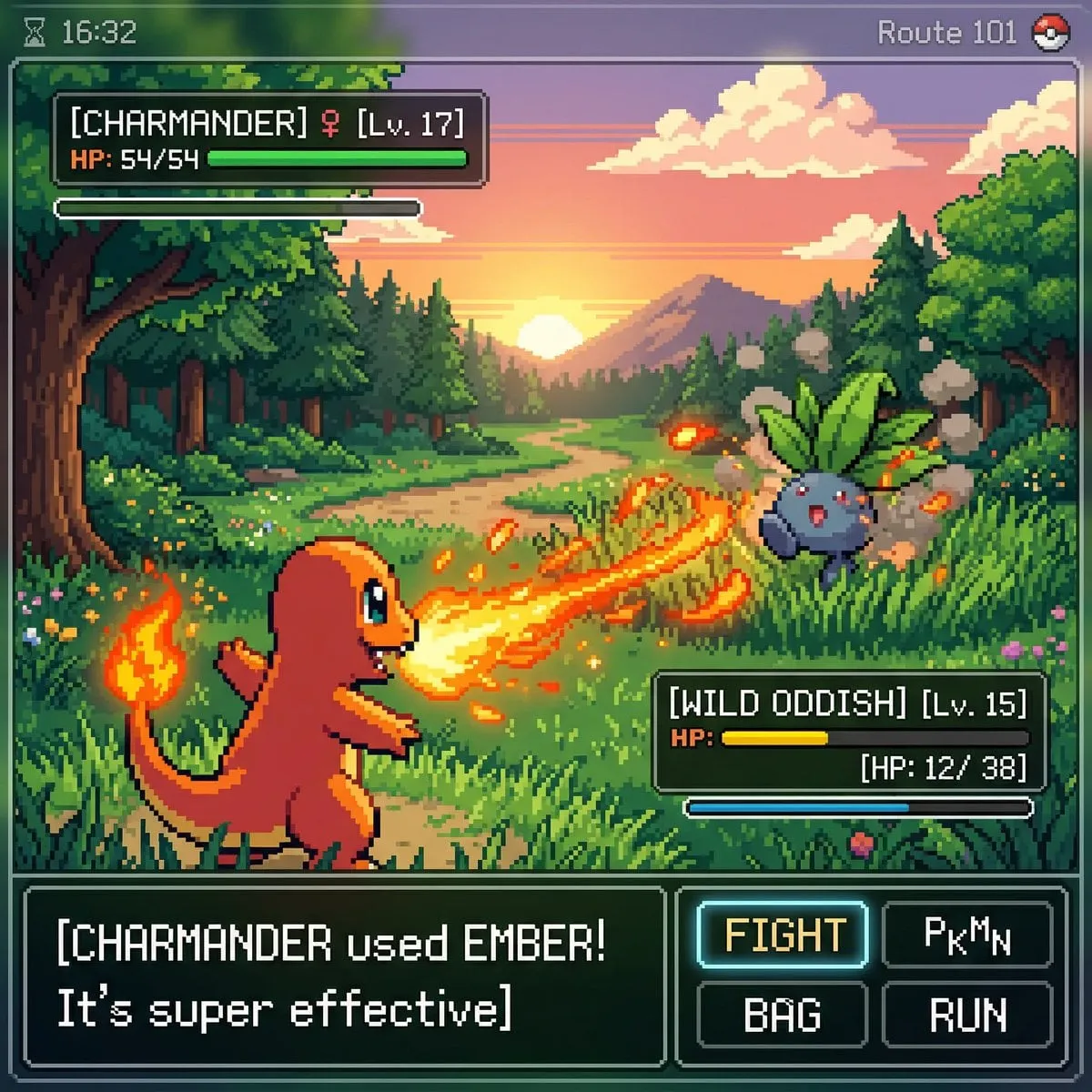
Faster, cheaper modes are ideal for previz. A rough animated version of your cut, even with imperfect detail, lets you test pacing and timing before you commit to hero renders. Stylized engines that lean into animation, illustration, or retro aesthetics also live comfortably here, because they hide physics flaws behind a deliberate art direction.
Image-to-video and hybrid pipelines
The most reliable professional path is rarely pure text-to-video. Generate or photograph a still frame first, approve the composition, then animate it. Fixing composition in a still is cheap; fixing it after a bad animation is not.
The practical lesson: keep a short list of engines you know well, and re-test that list every few months rather than chasing every release.
Writing Prompts That Survive Rendering
Most failed generations fail in the prompt, not the model. A strong prompt reads like a shot list written for a cinematographer who has never met you.
A workable structure is: subject, action, environment, camera, lighting, style, and constraints.
- Subject: who or what, with two or three defining details. "A middle-aged fisherman in a faded yellow raincoat" beats "a man."
- Action: one clear motion per clip. "He pulls the net hand over hand" is animatable. "He works, then walks away, then looks at the sky" is three clips pretending to be one.
- Environment: location, weather, time of day, and one background detail that anchors depth.
- Camera: shot size plus movement. "Medium shot, slow push in, shallow depth of field" gives the model a plan.
- Lighting: source and quality. "Overcast window light from the left" produces more controlled results than "nice lighting."
- Style: film stock, genre, reference era, or medium. Keep it to a few words; stacking ten style references muddies the output.
- Constraints: short negative-style notes such as "no text overlays, no camera shake, single subject."
Three failure patterns show up constantly. First, contradictory instructions: a locked-off tripod shot cannot also be a sweeping drone orbit. Second, overcrowding: five characters in one clip guarantees identity drift. Third, abstract emotion words: "a powerful feeling of loneliness" means nothing to a renderer, while "a wide empty parking lot at night, one figure standing under a flickering lamp" means everything.
A Repeatable Workflow: Idea to Final Cut
Step 1: Break the script into shots
Write the piece as beats, then convert each beat into one to three shots of two to six seconds. If a beat cannot be expressed as a single visible action, split it. This step prevents the most expensive mistake in AI video: generating long clips that have to be thrown away because the story changed.
Step 2: Lock the look with stills
Generate or shoot keyframes for every shot before animating anything. Approve framing, wardrobe, color, and composition while changes are cheap. This is also where you build a small reference sheet for recurring characters or products.
Step 3: Draft low, decide fast
Animate at lower settings or with a faster engine to test whether the motion works. Do you believe the figure is walking, or does the ground slide under them? Is the camera move motivated? At draft stage you are answering yes-or-no questions, not polishing pixels.
Step 4: Refine only the shots that earn it
Promote the drafts that pass review to hero renders. Regenerate problem areas using image-to-video with a corrected frame rather than rewriting the whole prompt. Keep a log of prompts that worked; a personal prompt library compounds faster than any subscription upgrade.
Step 5: Assemble, sound, and grade
Cut for rhythm, not for completeness. Add sound design early, because audio changes perceived pacing dramatically and can rescue a clip that feels flat. Then apply a light grade across all shots so the piece reads as one world rather than a demo reel of different engines.
Keeping Characters and Products Consistent
Consistency across shots is the hardest problem in AI video and the one most often ignored during planning. Three habits help.
Describe people as a fixed recipe. Write a locked character line and paste it into every prompt: age range, hair, build, wardrobe, and one signature detail. Do not improvise variations, because each synonym shifts the render.
Use image references wherever the engine supports them. A portrait or a turnaround sheet gives the model far more to work with than words alone. For products, generate three or four angles first and animate from those stills.
Shoot sequences in the same session. Style, color, and rendering quirks drift between runs, so generating all shots of a character back to back produces a more coherent sequence than returning to it a week later. Where seeds or style references exist, reuse them.
For serialized content, accept that you will still repair shots. Budget time for regeneration, and design shots so faces are not the only thing carrying the scene.
Choosing the Right Tool for the Job
A simple decision framework beats a leaderboard.
- Short-form social clips: prioritize speed, vertical aspect ratios, and punchy motion. Photoreal nuance matters less than immediate readability.
- Product and ecommerce: prioritize image-to-video fidelity, clean backgrounds, and stable geometry. Test with your actual product photos, not stock images.
- Narrative scenes: prioritize character consistency, camera control, and clip length. Expect to use two engines: one for hero shots, one for coverage.
- Advertising concepts: prioritize iteration volume. You will pitch multiple directions, so cheap drafts matter more than single-shot perfection.
- Previsualization: prioritize turnaround time above all. Rough animation that sells timing is worth more than a beautiful still.
Before committing to any engine, run the same five-shot test across candidates: a person walking, a hand interacting with an object, a slow camera move on a landscape, a dialogue-adjacent close-up, and a product rotation. Score each on adherence, motion, artifacts, and attempts required. That test tells you more than any feature list.
Common Mistakes That Waste Time and Budget
- Starting with hero renders. Draft first. Always.
- Writing one giant prompt for a whole scene. One action per clip.
- Ignoring native duration limits. Plan cuts around them instead of fighting them.
- Changing wardrobe or lighting language mid-project. Lock the recipe.
- Skipping stills. Composition problems never animate away.
- Reviewing on a small screen. Artifacts hide on phones and appear on monitors.
- Not logging prompts. You will want to reproduce the good ones.
- Over-generating. Ten options per shot creates decision paralysis. Three is usually enough.
- Leaving sound to the end. Audio shapes pacing decisions.
- Mixing engines without grading. Unify color and contrast in the edit.
A Quality-Control Checklist for Every Clip
Run the same short checklist before a clip enters the timeline. Check hands and fingers for merging or extra digits. Check any on-screen text or signage for garbled letterforms, and remove it in post if needed. Watch the background for drift: doors that move, crowds that flicker, horizon lines that breathe. Verify eye direction and eyelines between shots. Confirm that contact physics hold when a character sits, lifts, or leans. Scan reflections and shadows for duplicated subjects. Watch the first and last half-second, where artifacts cluster. Finally, play the clip at normal speed, not frame by frame, and ask whether it is believable in motion. Viewers never scrub; they watch.
FAQ
Is text-to-video good enough for client work?
For short hero moments, product visualizations, and stylized sequences, yes. For continuous photoreal footage of people speaking at length, you will still blend generated shots with real footage or use generated elements inside conventionally shot material.
How long should a generated clip be?
Two to six seconds is the sweet spot for most engines. Shorter clips are more controllable and cut together more naturally. If a scene needs twenty seconds, build it from four shots rather than one long generation.
Do I need to learn prompt engineering?
You need to learn shot description. The vocabulary of cinematography, shot size, camera movement, lighting direction, and blocking, transfers directly to these tools. Generic adjective stacking does not.
Why does the same prompt give different results?
Generation is stochastic. Small changes in sampling produce different motion and detail. Keep a prompt library, note what worked, and reuse proven phrasing rather than rewriting from scratch each time.
Should I always start from an image?
Not always, but image-to-video is more reliable when composition, identity, or product accuracy matters. Pure text-to-video is best for exploration and for shots where exact framing is flexible.
How do I handle dialogue?
Generate the visual performance without relying on lip-sync from the video engine, then dub and align in post. Close-ups with minimal mouth movement, or shots where the character is turned away, are far more forgiving.
What about audio?
Generate or record sound separately and design it deliberately. Footsteps, room tone, and ambience do more for believability than an extra render pass on the image.
How often should I re-evaluate tools?
Every few months, and always on your own test clips. Feature announcements are not evidence. Your five-shot test is.
Where to Focus Next
The productive mindset is not to find the single best generator but to build a small, tested pipeline: stills for composition, drafts for motion, hero renders for the moments that matter, and a disciplined edit that unifies everything. Tools will keep changing. Shot lists, prompt libraries, consistency recipes, and a short quality-control checklist do not. Master those, and any new engine becomes an incremental upgrade instead of a fresh learning curve.
