


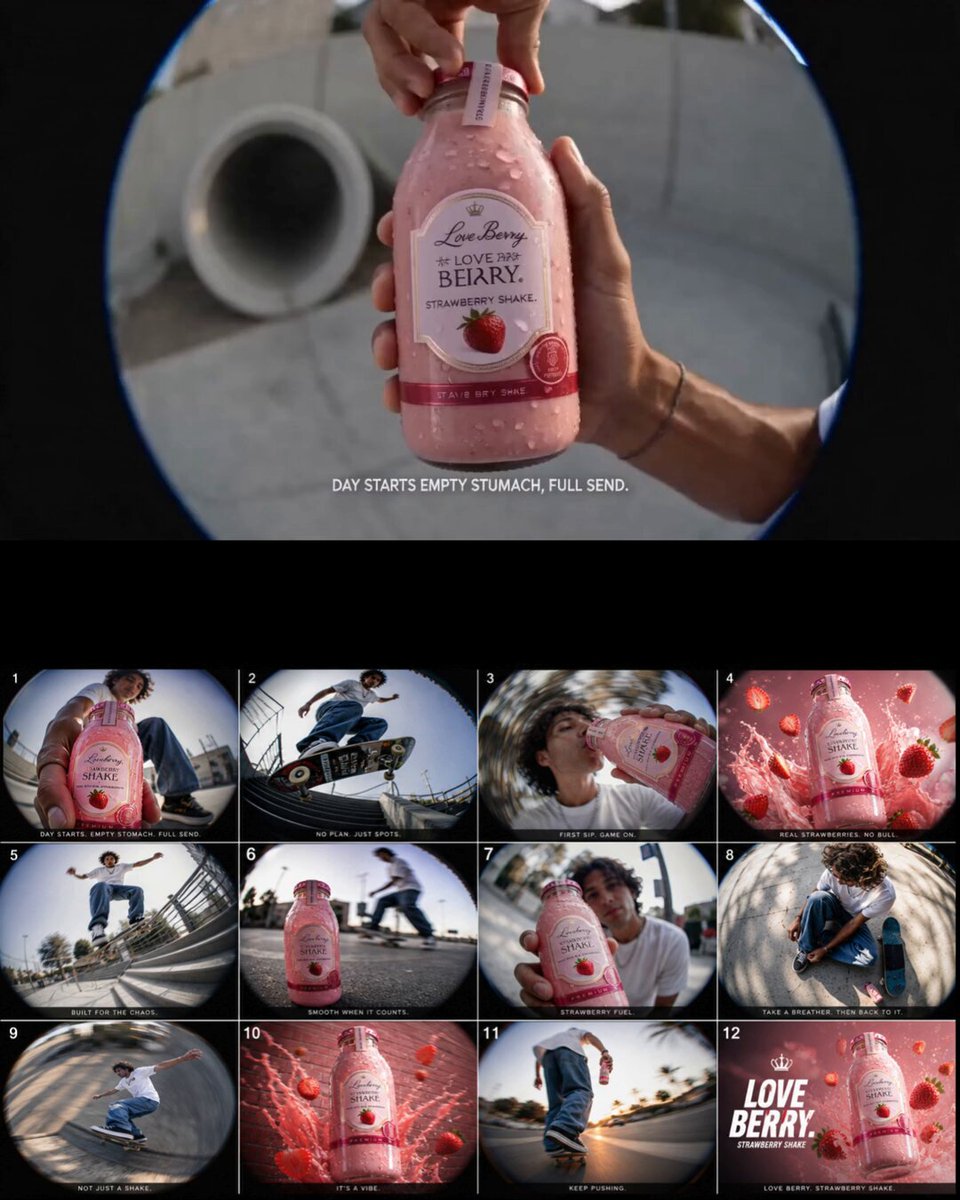

Why Text-to-Video Became a Marketing Default
A few years ago, generating video from a written sentence meant accepting warped hands, melting faces, and camera moves that felt like a drifting dream. Marketing teams treated the output as a novelty, never as a deliverable. That changed for a practical reason: the bottleneck moved. Producing video used to be limited by cameras, crews, locations, and editing hours. Today generation itself is fast and cheap enough to iterate on, so the real constraint is deciding what to say and how to structure the shots.
The commercial logic is straightforward. Short-form platforms reward volume and speed, while paid social rewards fast creative testing. A team that can produce twelve ad variations in a day will outlearn a team that produces one polished spot in three weeks, even if the polished spot is objectively better made. Text-to-video collapses the distance between an idea and a testable asset, which means the marketing skill that matters most shifts from production logistics to creative direction and evaluation.
That shift is not free. Generated footage has its own grammar. Clips are short, physics can bend, text rendering is unreliable, and continuity between shots requires deliberate planning. Teams that treat AI video as a magic button usually end up with a folder of pretty clips that never becomes a campaign. Teams that treat it as a production pipeline, with inputs, review gates, and naming conventions, ship consistently.
This guide focuses on that pipeline. It is not a tour of one product. It is a workflow you can run with whatever generation tools you have access to, plus the decision criteria that tell you when to reach for a different model, a different shot length, or a human editor.
What the AI Video Tool Landscape Actually Looks Like
Most teams start by asking which model is best. That is the wrong first question, because the models are not competing on a single axis. They cluster into a few functional groups, and a serious production usually borrows from more than one.
Foundation models with broad capability
These handle the widest range of prompts: landscapes, crowds, action, dialogue-adjacent scenes. They usually offer the longest clip durations, the most camera-motion controls, and the best prompt adherence for complex scenes. They are also the slowest and most expensive per attempt. Use them for hero shots and any frame where the composition must match a storyboard.
Style and motion specialists
Some tools are tuned for a recognizable aesthetic: anime, claymation, retro film, painterly illustration, or exaggerated physics. Others specialize in motion control, letting you specify camera paths or transfer motion from a reference clip. These are invaluable when brand identity depends on a look rather than realism, and they often generate faster because the search space is narrower.
Fast drafting models
Low-latency models trade fidelity for iteration speed. They are perfect for exploring composition, pacing, and emotional tone before committing expensive renders. A common professional habit is to block a whole sequence on a fast model, approve the rhythm, then re-render only the approved shots on a premium model.
Orchestration and agent layers
A newer category sits above the generators. These tools take a brief, propose a shot list, write prompts, dispatch jobs to multiple models, and assemble the results. They are useful for teams producing at volume, and they reduce prompt-writing fatigue. The risk is losing fine control, so the best setups keep a manual override at every step.
Understanding these groups matters more than memorizing model names, because names change every few months while the functional categories stay stable. Build your workflow around categories and your team will survive the next round of releases.
Matching the Model to the Deliverable
Model choice should follow from the format you are shipping, not the other way around. Three common marketing formats have very different requirements.
UGC-style ads
These mimic a person filming themselves with a phone. The winning qualities are natural motion, believable lighting, and a conversational rhythm. You do not need cinematic fidelity, but you do need consistent framing and a face that stays stable across three to five seconds. Fast models with strong portrait handling usually win here, and vertical aspect ratios are non-negotiable. Because these ads live or die on hooks, generate the first two seconds five times and pick the strongest.
Product demos
Here the product is the hero and accuracy is everything. Labels, colors, and shapes must match reality, which is where pure text-to-video struggles. The practical approach is image-to-video: shoot or render one clean product still, then animate it with controlled camera moves and subtle environmental motion. Keep clips short and avoid prompts that invite the model to invent details.
Cinematic brand films
If you need atmosphere, scale, and deliberate pacing, premium foundation models earn their cost. These projects justify longer clips, more retries, and post-production color work. Plan for fewer shots with more coverage per shot, and budget time for a colorist or at least a consistent look-up table applied across the sequence.
A useful rule: the more the viewer must trust what they see, the less you should delegate to a generative model. Products, hands, text, and human faces carry the highest scrutiny, so treat those as hybrid shots where generation supplies the environment and real footage supplies the subject.
The Four-Stage Production Workflow
Every efficient text-to-video pipeline I have seen reduces to four stages. Skipping one of them is the most common cause of wasted generation budget.
Stage 1: Write a shot-ready script
A script for AI video is not a screenplay. It is a numbered shot list where each line contains a subject, an action, a camera instruction, a setting, and a target duration. "Show the problem" is not a shot. "Close-up of a hand tapping a cracked phone screen, slight handheld drift, warm office light, 3 seconds" is a shot. If you cannot describe the frame in one sentence, the model cannot render it either.
Stage 2: Build prompts from a template
Standardize your prompt order so results stay comparable across runs: subject, action, environment, camera, lighting, style, duration, negative constraints. When every prompt follows the same skeleton, you can swap one variable at a time and learn what actually caused a change in output. Random prompt phrasing makes iteration guesswork.
Stage 3: Generate wide, select narrow, re-render winners
Generate two to four variants per shot on a fast model. Review them in a grid, not one by one, and mark each as usable, close, or discard. Only the usable and close shots get a premium re-render. This two-tier approach typically cuts generation time and spend dramatically while keeping final quality high.
Stage 4: Assemble, sound, and caption
Raw clips are not a video. Assembly is where pacing lives: cut on motion, keep shots shorter than feels comfortable, and never let a single clip run past the point where its limitations become visible. Add sound design early rather than late, because music and effects change perceived pacing and reveal which cuts are too slow. Burn in or export captions for every social format, and keep a text-free master for future localization.
Prompt Anatomy for Reliable Results
A prompt that produces a great clip on Tuesday may produce something different on Thursday. Models update, samplers vary, and randomness is baked into the process. You cannot eliminate variance, but you can structure prompts so failures are diagnosable.
Subject and identity. Be specific about what the viewer should focus on, and avoid loading a single shot with competing subjects. Two people plus a dog plus a moving car is four problems at once.
Action with a verb of change. Static descriptions produce static video. Words like turns, lifts, opens, steps, pours, and unfolds give the model a motion arc to animate.
Environment with one or two anchors. "Bright kitchen with a window on the left" beats "nice kitchen." Anchors also help continuity between shots.
Camera language. Specify shot size and movement: wide, medium, close-up; static, slow push in, orbit, handheld. Models respond to camera vocabulary reliably, and it is the fastest way to change the emotional register of a clip.
Lighting and time of day. Golden hour, overcast, neon night, soft window light. Lighting carries more perceived production value than resolution.
Style and medium. Photoreal, documentary, 35mm film, watercolor, 3D render. Set this once per project and repeat it in every prompt so the sequence feels unified.
Duration and aspect ratio. Match the target platform from the start. Cropping a horizontal render to vertical later usually destroys the composition.
Negative constraints. List what you do not want: no on-screen text, no extra fingers, no logos, no lens flares. Negative prompts are not guarantees, but they measurably reduce recurring defects.
Keep a prompt log. When a shot works, you want to reproduce the recipe six months later for a new campaign.
Consistency Across Characters, Products, and Brand
Consistency is the difference between a campaign and a collage. Viewers forgive imperfect realism; they do not forgive a character whose jacket changes color between cuts.
For recurring characters, generate a character sheet first: three or four reference images from different angles in consistent lighting, then use image-to-video or reference-conditioned generation for every shot. Keep wardrobe, hair, and accessories described with identical wording across all prompts. If the tool supports multi-image conditioning, feed several references at once so the model has more evidence to anchor on.
For products, always start from a real still. A photograph of the actual packaging will beat a text description every time. Animate with subtle camera movement, gradient sweeps, or environmental reaction like steam, condensation, or rotating light. Avoid prompts that ask the model to rotate the product a full 360 degrees; invented geometry is where accuracy collapses.
For brand look, define a small style bible: color palette, contrast curve, grain amount, lens character, and motion feel. Apply it in the prompt and again in post. A single grade applied to all clips does more for perceived quality than upgrading to a more expensive model.
Finally, keep a continuity spreadsheet for anything longer than thirty seconds. Columns for shot number, character state, location, time of day, wardrobe, and props. It sounds bureaucratic until the first time it saves a reshoot.
Batching, Automation, and Human Review
Volume is where AI video pays off, but volume without structure produces chaos. The answer is batching with clear review gates.
Batch by shot type rather than by scene. Generate all close-ups in one session, all wide establishing shots in another. Prompts stay similar, so you spend less time context-switching and you notice drift faster.
Name files with a consistent scheme: campaign_shot_version_model_date. Six weeks later, when a client asks for the version with the blue jacket, you will find it in seconds.
Use queue-based tools when you are dispatching many jobs across multiple models. A task queue lets you fire off fifty generations and review them in one sitting instead of babysitting each render. The important discipline is to review in one pass and delete aggressively. Storage fills up fast, and a bloated library makes selection slower.
Keep a human in the loop at exactly three points: approving the shot list, selecting the winning takes, and final edit. Everything between those points can be automated safely. Automating creative judgment is where teams go wrong; automating mechanical repetition is where they gain hours.
If you work with a team, assign roles. One person owns prompt quality, one owns selection and continuity, one owns assembly and sound. When one person does all three, review quality drops because they are judging their own prompts.
Quality Control and Common Mistakes
Before anything publishes, run a fixed checklist. Watch the video once with sound off to check composition and continuity. Watch again with sound on but eyes closed to check pacing and audio balance. Then watch at 25 percent speed and look for artifacts: morphing edges, extra limbs, text that shifts between frames, faces that change structure mid-clip. Most failures hide in fast motion, so slow playback is the cheapest QA tool available.
The most common mistakes are predictable:
- Overloading a single prompt. Two subjects, three actions, and a camera move rarely all land. Split into multiple shots.
- Ignoring the first second. The hook determines whether the rest is seen. Generate hooks separately and treat them as their own deliverable.
- Clips that are too long. If a generated clip runs eight seconds, you will usually use two to three. Cut on motion and keep the tempo tight.
- Inconsistent lighting across shots. Mixed lighting reads as amateur more than any artifact does.
- No captions. A large share of social viewing happens muted, and uncaptioned video silently loses that audience.
- Skipping the brief. Generating before writing down the audience, offer, and single message produces attractive video that sells nothing.
- Chasing realism in the wrong places. Hands holding objects, text on screens, and complex reflections are still high-risk. Design shots that avoid them.
The fix for most of these is the same: shorter shots, simpler prompts, more variants, and a consistent look applied in post.
Cost, Speed, and Resolution Decision Criteria
Generation is priced in different ways depending on the tool, but the decision logic is universal. Ask three questions before each shot.
How many attempts will this realistically need? High-variance shots with complex action may need ten tries. If so, start on a fast model and only escalate the winner. Low-variance shots like a static product close-up may succeed on the first premium attempt, so skipping the draft stage saves time.
How long will the clip appear on screen? A 1.5-second cut does not need maximum resolution or fidelity. Match quality to screen time, and reserve premium renders for shots that hold the frame for three seconds or more.
What happens if this shot fails? Hero shots that define the ad deserve redundancy. Background texture does not. Allocate effort by narrative importance, not by technical ambition.
On resolution, generate at the highest practical setting only for the final master. Upscaling well beats generating large and compressing badly. For vertical social, 1080x1920 is usually sufficient; a crisp 1080p render outperforms a soft 4K one every time.
Speed matters mostly during exploration. A model that returns results in seconds lets you test ten creative directions before lunch. During final production, speed matters less than control, so it is fine to wait longer for accurate camera work.
FAQ
How long should an AI-generated clip be? Generate four to six seconds and cut to two or three in the edit. Generation length is not the same as screen length.
Can I use text-to-video without any real footage? Yes, for atmospheric and lifestyle content. For product accuracy and human faces, hybrid workflows with real stills or footage still produce the most trustworthy results.
Why does my character change between shots? Almost always because the prompt wording changed. Lock your character description, use reference images, and keep wardrobe language identical across every prompt.
Do I need a different model for vertical video? Not necessarily, but you must set the aspect ratio before generating. Cropping later breaks composition and wastes renders.
How do I keep costs predictable? Draft on fast models, re-render only selected shots, and cap retries per shot with a hard limit. Decide in advance what happens when a shot hits that limit.
Is AI video good enough for paid advertising? For top-of-funnel creative testing, yes. For regulated claims, product accuracy, or brand-critical hero films, treat generation as one input in a broader production process.
What is the single biggest quality upgrade? Consistent lighting and color grading across every clip. It costs nothing extra and changes perceived production value more than any model swap.
Building a Repeatable Weekly Rhythm
The teams that get the most from text-to-video are not the ones with the fanciest tools. They are the ones with a rhythm: brief on Monday, shot list and draft generations on Tuesday, premium re-renders and assembly on Wednesday, review and publish on Thursday, analysis on Friday. That loop produces a steady stream of tested creative without anyone burning out on prompt writing.
Start smaller than you think you need to. One campaign, one format, one clear message, four shots. Run the full pipeline end to end, including QA and captions, before you scale volume. The workflow is the asset; the clips are just the output. Once the pipeline is stable, adding a new model or a new format is a small change rather than a rebuild.
