

Why text-to-video changes the pipeline, not just the toolchain
Generating a clip from a sentence is easy. Generating a coherent story from forty sentences is a production problem. That distinction is the single most useful thing to internalize before you open any generator.
The early appeal of text-to-video was novelty: type a phrase, receive a moving image. The practical appeal is different. A writer can now produce a first visual pass of a script without leaving the keyboard, which collapses the distance between the idea and the review. Stakeholders can react to something that looks like the final product instead of a storyboard of rectangles and arrows.
But the moment a project grows beyond one clip, new constraints appear. A character's jacket changes color between shot three and shot twelve. A camera move that felt dramatic in isolation reads as nauseating when cut against three similar moves. Lighting flips from golden hour to overcast because two prompts implied two different times of day.
The workflow below treats generation as one stage inside a larger pipeline: plan, blueprint, prompt, generate, select, assemble, finish, review. Skipping stages is what produces the familiar disappointment of beautiful clips that do not add up to a watchable piece.
Define your constraints before you generate anything
Constraints are not restrictions on creativity; they are the rails that keep a generated sequence coherent. Decide these before you write a single prompt.
Runtime, format, and delivery surface
Ask where the video will live. A vertical short for a feed rewards a hook in the first second, tight framing, and readable text overlays. A horizontal explainer for a landing page tolerates slower establishing shots and wider compositions. A square social cut needs center-weighted framing so nothing important is cropped.
Runtime drives shot count. A common planning ratio is two to four seconds per shot for fast-paced content, and five to eight seconds for calm, documentary-style pieces. A sixty-second film therefore needs roughly fifteen to twenty-five shots, which is a realistic generation target only if you accept that a meaningful share of attempts will be discarded.
Define the format in concrete numbers: 1080x1920 vertical, 1920x1080 horizontal, 24 or 30 frames per second, and a specific delivery codec. Generators often output a default resolution and frame rate that will not match your timeline, and upscaling later costs you sharpness.
Realism versus stylization
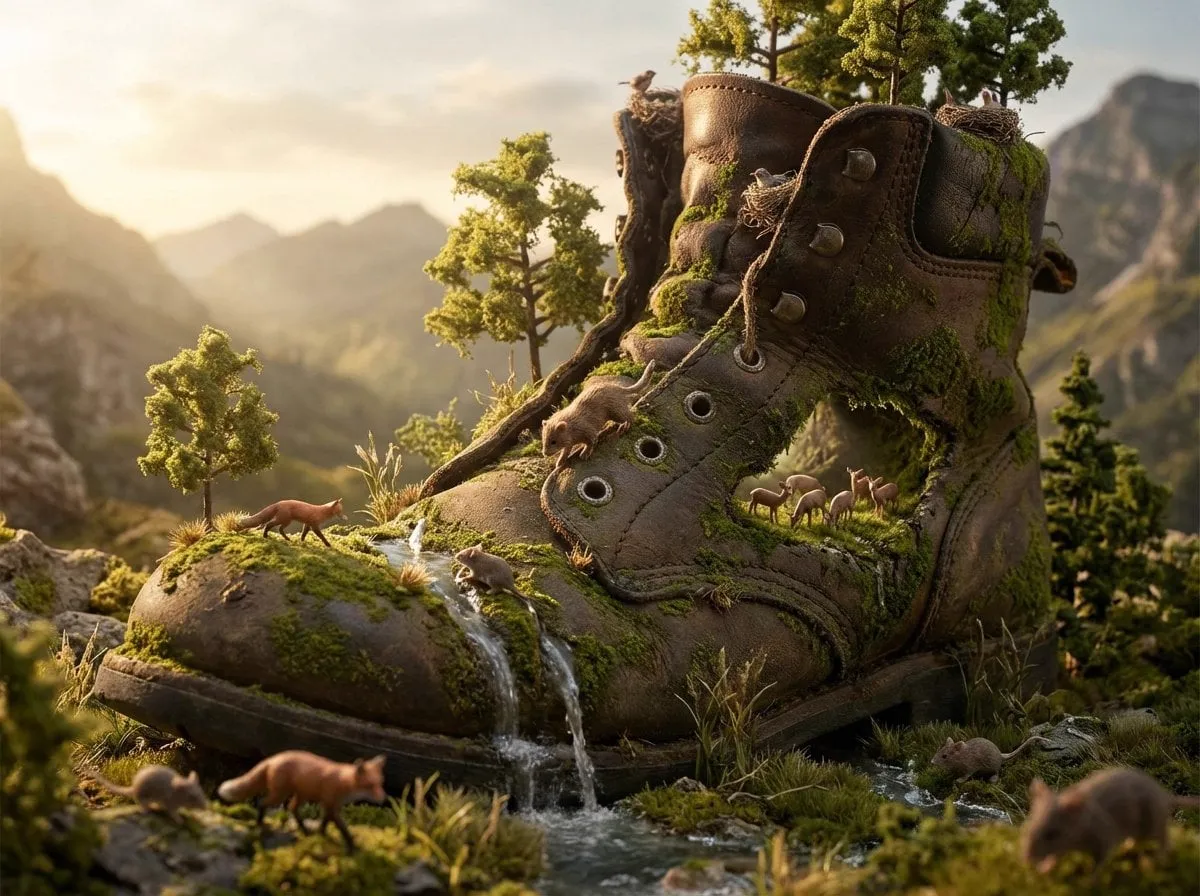
This is the biggest fork in the road. Photoreal generation is unforgiving: hands, teeth, text, and reflective surfaces are where artifacts hide, and viewers notice them instantly because they have a lifetime of reference footage in their heads. Stylized output — animation, painterly, graphic, miniature, archival — is more forgiving and often more distinctive.
If your story needs a human face in close-up for more than a few seconds, plan for extra takes, or design the shot language around lateral movement, silhouettes, over-the-shoulder framing, and environmental detail. If your story is about a product, a place, or an abstract idea, you have far more freedom and can push stylization hard.
Continuity anchors you can actually enforce
Write down a short continuity sheet: time of day, weather, color palette, lens character, wardrobe, hair, key props, and the emotional register of the piece. Keep it to one page. Every prompt should be checkable against it. Vague intentions like "cinematic mood" cannot be checked, which means they cannot be enforced, which means drift.
Turn your script into a shot blueprint
A script describes what is said. A shot blueprint describes what is seen. They are different documents, and conflating them is the most common source of unusable generated footage.
Beat mapping: from narration to visual units
Split the narration into beats — one idea per beat. Then ask, for each beat, what a camera would have to show for the idea to land without words. Sometimes the answer is literal; often it is metaphorical.
Example: the narration line "Most dashboards fail because they report activity instead of outcomes" could become (a) a person scrolling a wall of green charts, unimpressed, or (b) a clock face where the hands are charts. Both work. The literal version is safer and faster to generate; the metaphorical version is more memorable and requires more experimentation.
Assign each beat a duration, a shot type, and a movement. Shot types worth rotating deliberately: wide establishing, medium, close-up, extreme close-up, over-the-shoulder, top-down, and macro. Movement options: static, slow push in, slow pull out, lateral dolly, orbit, handheld drift, crane up. Rotate rather than repeat; three consecutive slow push-ins flatten the whole sequence.
The shot card
For every shot, write a small card with six fields:
- Beat and narration line it supports
- Duration in seconds
- Shot size and camera movement
- Subject, action, and setting
- Light and time of day
- Continuity notes (wardrobe, props, palette)
This card becomes the prompt skeleton. It also becomes your editing plan before you have any footage, which means you can start building a rough timeline with placeholder cards, audio, and timing while generation runs in parallel.
Prompt architecture that produces usable footage
A prompt is a specification, not a wish. The most reliable structure reads like a shot note from a director of photography.
The five-part core
Use this order, and keep each part short:
- Subject: who or what, with two or three defining details
- Action: one primary verb, plus a secondary micro-action if useful
- Camera: shot size, angle, movement, and lens character
- Light: source direction, quality, and time of day
- Look: palette, texture, grain, film reference, or rendering style
A complete example: "A ceramicist in her forties, flour-dusted apron, seated at a wheel; she presses both thumbs into wet clay and the rim widens; medium close-up, slightly high angle, slow lateral dolly right, 50mm; single window light from camera left, soft, late afternoon; muted earth palette, fine grain, documentary texture."
Notice what is absent: emotional adjectives like "awe-inspiring," narrative context, and abstract concepts. Generators can render a person pressing clay. They cannot render "the passage of time in craft" — that meaning comes from editing.
Camera language that behaves predictably
Broadly, three camera families generate reliably:
- Static or near-static frames with internal motion (smoke, water, fabric, crowds)
- Single-direction moves: push in, pull out, lateral track, orbit
- Subject-driven motion: a walk, a turn, a hand entering frame
Multi-stage choreography (a crane up that becomes an orbit while the subject walks out of frame) tends to produce warping, duplicated limbs, or abrupt teleporting. If you need that shot, split it into two clips and cut between them. Cutting is a more powerful transition tool than any prompt.
Negative instructions and continuity anchors
Many generators accept negative guidance. Use a short, stable list rather than a long one: no text overlays, no logos, no extra fingers, no sudden cuts, no morphing faces, no heavy vignette. Long negative lists dilute each item's effect.
When returning to a location or character, repeat the same descriptive keywords verbatim across prompts. Consistency comes from repetition, not from the model remembering. If your generator supports style references, character references, or seeds, use them and record the exact values alongside the shot card so the sequence is reproducible.
Choose the right generation path for each shot
Different shots deserve different methods. Treating every shot as a fresh text-to-video generation is slow and expensive in time, not money — and time is the real budget.
Text-to-video: best for establishing and abstract shots
Text-to-video excels where the subject is generic: landscapes, cityscapes, weather, textures, abstract motion, and environment-setting shots. There is no specific character to maintain, so drift is not a problem. Generate these first, because they establish the world your other shots must match.
Image-to-video: best for characters and products
When you need a specific face, a specific garment, or a specific product, generate or capture a still image first, approve it, then animate it. This gives you an approval gate before you spend generation time, and it dramatically reduces identity drift. It also lets you use photography, 3D renders, or illustrations as the source frame.
Video-to-video and restyling: best for repair
If a clip is 80 percent right — correct composition and timing, wrong palette or texture — restyling can save it. This is faster than regenerating from scratch and preserves the motion you already liked. Keep the original file; restyling is not always reversible.
Draft mode versus final render
Two-pass production is the single biggest time saver. Pass one: short, low-resolution, fast generations with simplified prompts to test composition, pacing, and continuity. Approve the winners. Pass two: full-length, high-quality renders of only the approved shot cards, with the full five-part prompt. Never polish a shot you have not tested at draft quality.
Keep a simple log with columns for shot ID, prompt version, generator, seed or reference, status, and notes. Without a log, you will regenerate the same shot twice with slightly different wording and wonder why the good version vanished.
Keep style consistent across dozens of clips
Consistency is not one setting; it is a set of overlapping habits.
Lock the palette and the light
Choose three to five core colors and one accent, then describe light the same way every time: same direction, same quality, same time of day. If half your shots are "soft window light" and half are "dramatic hard sunlight," no amount of color grading will fuse them.
Where the generator supports style references, feed it one approved frame as the anchor for every shot in a location. When it does not, paste a fixed style clause at the end of every prompt — for example: "muted teal and amber palette, 35mm film grain, shallow depth of field, naturalistic light." Identical wording every single time.
Lock character identity
For recurring characters, build a small reference kit: a front-facing portrait, a three-quarter view, and a full-body shot. Use them as image inputs wherever possible. Describe the character with a fixed phrase and never vary it — "short dark curly hair, linen shirt, thin silver necklace" repeated verbatim is worth more than five poetic variations.
Avoid extreme close-ups on faces for more than a beat or two early in a project. Medium shots and movement cover small imperfections, and you can always push in on a strong take later.
Voice, music, and pacing
Generated visuals are only half of a watchable video. The audio track determines whether the piece feels professional.
Narration and synthetic voice
Write for the ear, not the page. Short sentences. One idea each. Read every line aloud; if you run out of breath, split it. When using synthetic voice, generate each paragraph separately so you can re-render one line without disturbing the rest, and keep the voice settings identical throughout. Slight imperfections in synthetic speech are far less noticeable than inconsistent pacing between paragraphs.
Lay the narration down first and build the timeline around it. Cutting visuals to the narration's rhythm is much easier than stretching narration to fit finished visuals.
Music and sound effects
Choose a track with a clear structure — a build, a peak, a resolution — and align your strongest visual moment with the peak. Avoid music that is constantly busy; it competes with narration and masks the small audio details that make footage feel real.
Add a thin layer of diegetic sound: footsteps, room tone, wind, clicks, cloth movement. Even subtle effects anchor generated footage in physical reality, and they are the cheapest way to raise perceived production value. Duck the music two to four decibels under narration rather than lowering the whole track.
Assembly and finishing
Editing is where scattered clips become a story.
Cut on motion, not on timecode
Human eyes forgive almost any cut that happens when something is moving. If a clip ends mid-gesture, cut a few frames earlier, on the peak of that gesture. This hides the small inconsistencies between takes and makes the sequence feel intentional.
Build a rough cut with placeholders and audio first. Review it without any generated footage and ask whether the story works. If it does not read as a story with placeholder cards, better visuals will not rescue it.
Transitions, speed, and stabilization
Prefer hard cuts for eight out of ten edits. Use a whip pan, a match cut on shape or motion, or a quick dissolve to bridge locations. Long cross-dissolves between two AI clips invite the viewer to study the seam, which is exactly what you do not want.
Speed ramps of five to fifteen percent can rescue a clip that is slightly too slow without being obvious. Mild stabilization helps handheld-looking footage; heavy stabilization creates a floating, synthetic quality. When you finish, apply one consistent grade across the whole timeline, add a subtle grain layer, and check that your export matches the delivery specification.
A worked example: a sixty-second product story
Suppose you are making a vertical sixty-second piece about a cold-brew coffee brand. Five beats, eighteen shots, one voice.
Beat one, the problem: three shots. A darkened kitchen at dawn, a hurried hand reaching for a mug, a clock. Text-to-video handles all three; no character identity to preserve beyond a sleeve.
Beat two, the ritual: six shots. Grinding, pouring, water hitting grounds in macro, a slow orbit around a glass carafe. Image-to-video with a locked product still for the carafe shots; text-to-video for the texture macros.
Beat three, the wait: four shots. Time-lapse style light moving across a counter, condensation forming, a hand tapping a table. Static frames with internal motion, the most reliable category.
Beat four, the payoff: three shots. Pour over ice, first sip, a satisfied half-smile in a medium shot. The half-smile is the riskiest shot; plan three draft takes before committing to a final render.
Beat five, the close: two shots. Product on the counter with morning light, logo card built in the editor rather than generated.
Total draft generations: roughly sixty to eighty, narrowing to eighteen finals. That ratio — three to four drafts per approved shot — is a realistic planning assumption for a new project, and it improves as your prompt library matures.
Quality control, common mistakes, and FAQ
Pre-export checklist
- No flickering frames, warped hands, or duplicated limbs in any approved shot
- Character wardrobe and hair identical across all appearances
- Time of day and light direction consistent within each location
- No unintended text or logos in generated frames
- Audio peaks below clipping; narration intelligible on phone speakers
- Frame rate, aspect ratio, and codec match the delivery target
- First two seconds carry a hook; last two seconds carry a clear end
- Every shot earns its place — delete anything that repeats a previous idea
Mistakes worth avoiding
Prompting paragraphs of story instead of one visual moment. Regenerating everything when only the palette is wrong. Forgetting to save seeds and reference images. Cutting to music instead of to narration. Using four slow push-ins in a row. Expecting the generator to solve continuity that a shot list would have prevented. Polishing clips before the rough cut proves the story works.
Frequently asked questions
How many shots can I realistically produce in a day? With a prepared shot list and a consistent prompt template, eight to fifteen approved seconds of finished footage per focused session is a reasonable benchmark for one person handling writing, generation, and editing.
Do I need different tools for different shots? Often yes. Many creators keep one generator for photoreal characters and another for stylized or abstract material, then match them in the edit with a shared grade and grain layer.
What about clips longer than ten seconds? Generate a shorter clip and extend it, or cut two related clips together on a movement. Long continuous generations accumulate artifacts, and an edit hides more than it reveals.
How do I stop characters from changing between shots? Lock a reference image, repeat the character description verbatim, avoid extreme close-ups, and keep shots short. When identity still drifts, restyle a still frame and animate it rather than regenerating blindly.
Is a shot list overkill for a thirty-second piece? No. A thirty-second piece is roughly eight to twelve shots, which is more than enough for continuity to break. The shot list takes twenty minutes and saves hours.
What if the story does not work once assembled? Rewrite the narration and re-cut before regenerating anything. Structural problems are almost never solved by better footage — they are solved by removing shots, reordering beats, or tightening the script.
