
Text-to-video generation has crossed the line from novelty to working instrument. A writer with a shot list and a laptop can now produce footage that once required a crew, a location permit, and a lighting truck. The interesting question is no longer whether the models work. It is how to direct them well enough that the output survives an edit.
Why Text-to-Video Changed the Production Equation
Traditional video production scales linearly with ambition. Every extra location, actor, and camera move adds cost, scheduling risk, and coordination overhead. Generative video breaks that relationship. Once a model is trained, the marginal cost of a new shot is measured in seconds of compute and a few minutes of human attention, not in call sheets and permits.
That shift has three practical consequences. First, pre-visualization becomes cheap and iterative. You can test five versions of a scene before committing to any of them, which changes how you pitch and how you decide. Second, niche content becomes economically viable. A five-minute explainer for a tiny audience no longer needs to justify a production budget. Third, the bottleneck moves entirely to taste and structure. When anyone can generate a beautiful shot, the differentiator is knowing which shot belongs in the sequence.
The catch is control. Models are collaborators with strong opinions, and they will happily give you something gorgeous that contradicts your script. The rest of this guide is about narrowing that gap.
How Modern Text-to-Video Models Actually Work
Understanding the machinery at a high level makes you a better prompter, because you learn which instructions are easy, which are hard, and which are effectively impossible right now.
From prompt tokens to latent video
A text encoder converts your prompt into a numerical representation. A diffusion or transformer-based generator then denoises a block of compressed video data conditioned on that representation. The model has never seen your specific character or location; it reconstructs something statistically plausible from everything it learned during training. This is why specificity helps and why contradictions confuse it.
Temporal coherence is the real battleground
A single frame is easy. Keeping a face, a jacket, and a background stable across four seconds is the hard part. Models maintain coherence through attention mechanisms that link frames, but those links weaken as duration and motion increase. That is why a slow push-in on a static subject holds up beautifully while a fast whip pan through a crowd tends to fall apart.
Control layers beyond text
Most serious workflows add control inputs on top of the prompt: a reference image to lock a look, a depth or pose sequence to dictate motion, or a start and end frame to define a transition. Text sets intent; these layers set constraints. The more constraints you supply, the less the model has to guess.
Kling, Sora, and the Wider Model Landscape
Different models have different personalities. Treating them as interchangeable is the fastest way to waste a day.
What Sora tends to do well
Sora-class models excel at cinematic realism, physically plausible motion, and longer continuous takes. They handle complex lighting and reflective surfaces gracefully, and they respond well to filmic language about lens, grain, and depth of field. They are strong choices for establishing shots, product beauty shots, and narrative sequences where the camera itself is doing the storytelling.
What Kling tends to do well
Kling-class models are known for crisp human motion, strong subject adherence, and fine control over camera movement. They are particularly useful for dialogue-adjacent shots, character action, and any scene where a person needs to move convincingly through space without turning into an anatomical experiment. Motion control parameters tend to be more explicit, which rewards directors who know exactly what they want.
Where the rest of the field fits
Runway remains a strong all-rounder with mature editing and control features. Luma leans toward dreamy, atmospheric imagery. Pika is fast and playful, useful for social-first content. Open-weight models offer customization and offline privacy at the cost of setup work and weaker out-of-the-box polish. Most professional pipelines end up using two or three models rather than one, assigning shots based on which model handles that shot type best.
A practical rule: match the model to the shot's dominant risk. If the risk is human motion, pick the model with the best anatomy. If the risk is atmosphere, pick the one with the best light. If the risk is consistency across many shots, pick the one with the most reliable reference-image support.
A Practical Text-to-Video Workflow, Step by Step
Here is a workflow that works for a thirty-second social clip and scales up to a multi-minute narrative piece.
Step 1: Turn the script into a shot list
Do not prompt from prose. Break the script into discrete shots, one action each. A shot should have a subject, an action, a setting, and a camera intention. If a sentence contains two actions separated by "and then," it is two shots. This single discipline eliminates more wasted generations than any prompting trick.
Step 2: Build a prompt card for every shot
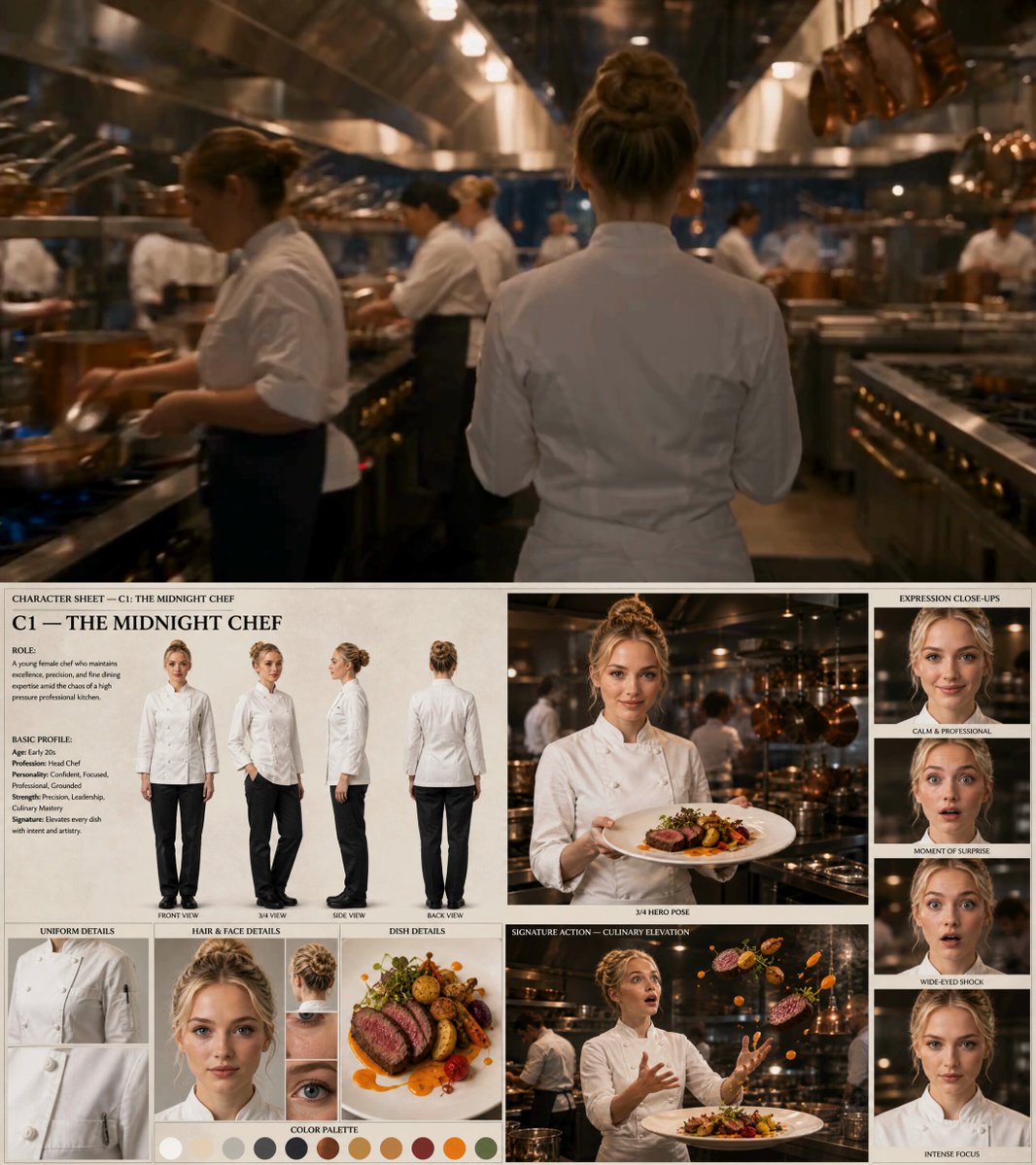
For each shot, write a compact card with six fields: subject, action, environment, camera, lighting, and style. Keep the card to roughly forty to seventy words. Longer prompts dilute attention; shorter prompts leave too much to chance. Save these cards in a spreadsheet or notes file — they become your reusable production bible and your consistency reference.
Step 3: Generate in small batches and select
Generate three to six variations per shot rather than one. Small batches let you compare without drowning in options. Review with sound off first, judging composition and motion, then with sound on if you already have a scratch track. Reject fast. A shot that is merely acceptable will cost you more in editing than a regeneration costs in time.
When a shot almost works, change one variable at a time: tighten the camera instruction, shorten the action, or swap the model. Changing three things at once teaches you nothing.
Step 4: Assemble, sound-design, and grade
Generated footage rarely cuts together on its own. Trim to the strongest fractions of a second, add a unifying color pass, and let sound carry continuity. Ambience and music do more for perceived coherence than any visual fix, because audiences forgive small visual inconsistencies when audio is locked. Add a subtle grain or halation layer across all shots to make disparate generations feel like one film.
Writing Prompts That Survive Generation
Prompting is directing. The vocabulary you use steers the model the same way a lens choice steers a camera operator.
Camera and lens language
Words like "slow dolly in," "handheld tracking," "static medium close-up," and "low-angle wide" produce measurably different results. Name the movement and the framing, not just the subject. Avoid stacking three movements in one prompt; the model will usually pick one and ignore the rest, often the one you least wanted.
Light, palette, and texture
Lighting descriptors anchor a shot's mood faster than any adjective about the subject. "Soft window light with cool shadows," "golden-hour backlight with lens flare," "overcast diffused daylight" each push the output in a distinct direction. Add a palette note — muted teal and amber, desaturated neutrals, high-contrast monochrome — to keep multiple shots visually related.
Motion verbs, timing, and negative constraints
Use concrete verbs: walks, turns, lifts, pours, exhales. Vague verbs like "moves" or "interacts" produce vague motion. Where the model supports it, state pacing explicitly — "slow, deliberate" versus "quick, energetic." Negative constraints are useful but limited; most models handle a small number of exclusions far better than a long list of prohibitions.
Solving the Hard Problems: Consistency, Hands, and On-Screen Text
Consistency is the most common reason a generated sequence feels amateur. Solve it with reference images for characters and locations, fixed prompt cards that change only the action field, and a locked style suffix appended to every prompt. Where a model supports start-frame conditioning, use the final frame of one shot as the first frame of the next to create a seamless handoff.
Hands remain the classic failure point. Keep hands out of frame, at rest, or partially occluded when possible. If a hand must be visible, keep it small in frame or in motion, since blur hides errors better than stillness. On-screen text is still unreliable — generate clean plates and add typography in your editor. Never trust a model to spell a brand name correctly, and check any incidental signage in the background before publishing.
Managing Compute, Time, and Cost Sanely
Generation spend is easy to lose track of because each individual render feels trivial. Two habits keep it under control.
The first is a shot budget. Before generating anything, decide how many attempts each shot deserves. A hero shot might justify ten; a two-second cutaway justifies two. Write the number down and respect it.
The second is resolution staging. Iterate at the lowest resolution that lets you judge composition and motion, then re-render approved shots at final quality. The same logic applies to duration: test the look at four seconds, then extend.
Finally, track time as carefully as money. The most expensive part of AI video production is usually your own review loop. If you have watched the same clip fifteen times without deciding, the answer is no.
Quality Control Checklist Before You Publish
Run every sequence through the same pass:
- Motion continuity: does movement across a cut flow in the same direction?
- Anatomy: check hands, ears, teeth, and limbs on every frame where they are visible.
- Background integrity: look for warping objects, melting signage, and flickering textures.
- Color and grain: is there a single unifying grade across all shots?
- Audio sync: do impacts land exactly on the frame they should?
- Text accuracy: verify every word that appears on screen.
- Frame-one appeal: does the opening second work without sound?
This pass takes ten minutes and prevents the most common credibility failures.
Common Mistakes and How to Avoid Them
Writing prompts like screenplays. Models respond to visual instructions, not narrative description. Cut every clause that does not describe something visible.
Ignoring the cut. A beautiful shot that cannot be edited into the sequence is not useful. Shoot for edit points: entrances, exits, and moments of stillness.
Chasing a single perfect generation. Ten mediocre variations teach you more about a model's behavior than one stubborn attempt.
Forgetting sound. Silent generated footage feels artificial in a way that scored footage does not. Sound design is not polish; it is part of the picture.
Skipping the storyboard. The cheapest way to fix a sequence problem is to find it on paper, before generating anything.
FAQ
Do I need a paid plan to experiment seriously?
Not to learn, but yes to produce. Free tiers are useful for understanding prompt behavior and testing model fit. Once you have a shot list, paid access pays for itself in iteration speed, longer durations, and higher resolutions.
How long should a generated shot be?
Shorter than you think. Most usable material comes from the middle of a clip, so generate slightly longer than you need and trim hard. Two to four seconds per shot is a comfortable default for narrative work.
Can I mix models in one project?
Yes, and most good pipelines do. Match each shot to the model that handles its dominant risk, then unify the results with a single color grade, consistent grain, and locked sound design.
How do I keep a character consistent across shots?
Use a reference image wherever the model supports it, keep every prompt field identical except the action, and reuse the same style suffix. Expect to regenerate more often than with standalone shots.
Is generated video good enough for client work?
For concept pieces, social content, and inserts, frequently yes. For anything requiring precise brand control or legal clearance, treat generation as one stage in a pipeline that still includes compositing, typography, and review.
What is the fastest way to improve?
Finish small projects. A complete thirty-second piece teaches more about prompting, consistency, and editing than months of isolated test clips.
Where to Start This Week
Pick one short scene — fifteen seconds, four shots, one character. Write the shot list before you open any tool. Build a prompt card for each shot with the six fields above. Generate a small batch per shot, select ruthlessly, and finish the edit with sound and a single grade.
The tools will keep improving and the model names will keep changing. The skill that compounds is directing: knowing what you want to see, describing it precisely, and cutting away everything that does not serve the sequence. Start small, finish something, and let the next project be more ambitious than the last.
