
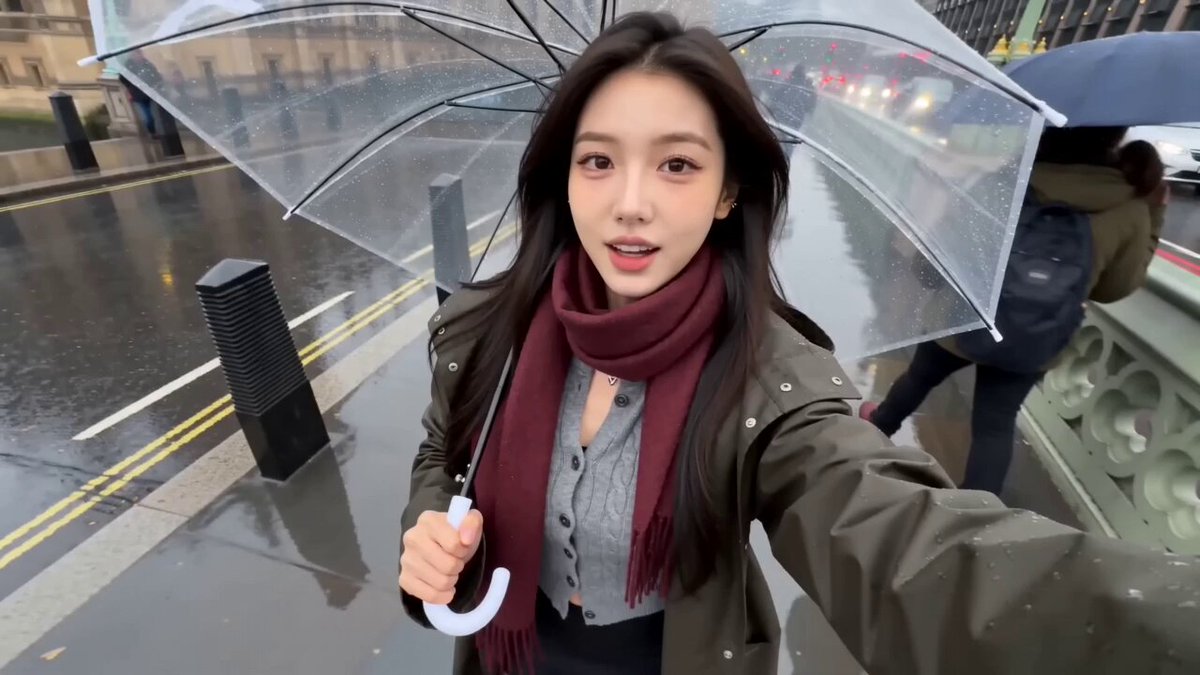
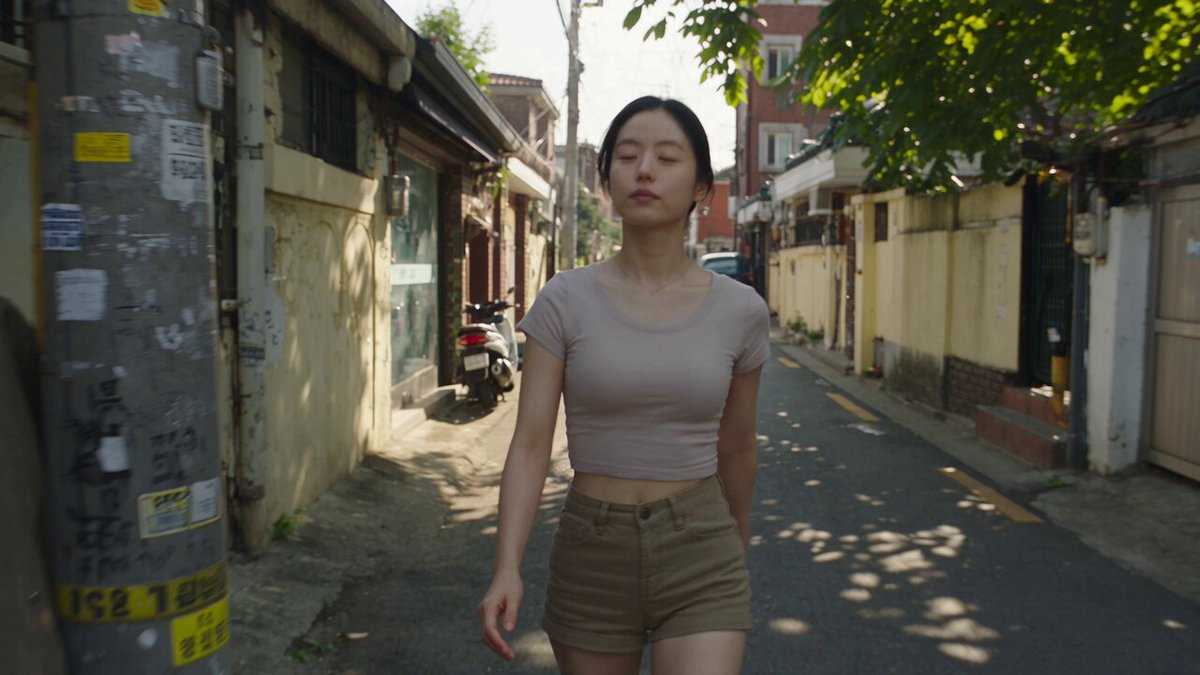
AI video generation has moved from impressive demos to a practical production tool. Text prompts and reference images now turn into cinematic clips, animated scenes and realistic product shots in minutes. But the market is crowded, and each model has a different personality. Some excel at photorealistic lighting, others at stylized animation, and a few at believable physics. Picking the right one for your project is the difference between a polished video and a wasted afternoon. This guide compares the leading AI video generators across the styles that matter most, and gives you a practical framework for choosing.
How to Evaluate an AI Video Generator
Before comparing models, define what you are optimizing for. Every generator is a trade-off between five dimensions:
- Visual quality: resolution, lighting, detail and how close the output gets to film-like footage.
- Prompt adherence: how faithfully the model follows your text description and reference images.
- Temporal consistency: whether characters, objects and lighting stay stable across frames and shots.
- Motion quality: whether movement looks natural, including physics, camera work and interactions.
- Speed and cost: how long generation takes and how much it costs per clip at scale.
No model wins on all five. A budget-friendly generator may produce surprisingly good short clips but fall apart on complex motion. A premium cinematic model may deliver stunning footage but cost too much for rapid testing. Start by scoring your project against these dimensions, then match it to a model.
The Photorealistic Leaders: Sora and Runway
Photorealism is the most competitive category, and two families set the industry standard.
OpenAI Sora demonstrated that AI can understand real-world physics, lighting and narrative structure. Its strength is generating long, coherent scenes where objects behave plausibly: water flows, shadows track the sun, and a character moving across a room stays the same person. For brands that need high-end product films or cinematic storytelling, Sora-class models are the reference point for quality.
Runway Gen-4 focuses on what professional studios actually need: consistent characters and environments across multiple shots. Its image-to-video and video-to-video workflows produce smooth frame transitions, stable lighting and controllable camera motion. Directors use it when a project has an established look that must survive from shot to shot, which makes it a favorite for narrative work and advertising.
When to choose photorealistic models:
- Product commercials where the object must look exactly like the real item.
- Brand films with cinematic lighting and camera movement.
- Real estate, automotive and lifestyle content where believability is the whole point.
- Any project where a character must remain recognizable across scenes.
The trade-off is cost and compute time. High-quality photorealistic generation is slower and more expensive, so reserve it for final deliverables rather than early experiments.
Animation and Style Specialists: Kling and Vidu
If your project needs a distinct visual identity rather than realism, animation-focused models are often a better fit.
Kling AI stands out for prompt adherence and a deep understanding of stylized rendering. It handles Eastern and Western animation aesthetics well, and its controls let you keep a consistent tone and manner across a whole sequence. The start-to-end mode is particularly useful for producing multi-shot pieces where the style must not drift between clips.
Vidu has built a reputation for strong character control and clean animation output. It is a solid choice for creators building animated series, explainer content or character-driven ads, where consistency of the character design matters more than photographic detail.
Animation models are also more forgiving of creative prompts. You can describe a watercolor world, a 3D clay render or a retro anime scene, and the model will commit to the style. Photorealistic models, by contrast, tend to drag everything back toward realism.
When to choose animation and style specialists:
- Branded animated content with a custom look.
- Educational explainers that need clear, stylized visuals.
- Character-based series where design consistency is critical.
- Social content that needs to stand out from realistic feeds.
The trade-off: if your brief demands realism, these models may stylize when you want fidelity.
Physics and Motion Control: Hailuo, PixVerse and Luma
Some projects live or die on motion: a product being dropped, a fabric flowing, a dancer moving. Three model families specialize here.
MiniMax Hailuo offers a strong quality-to-cost ratio. It produces natural motion and impressive visuals at a price point that suits small businesses, independent YouTubers and agencies doing high-volume work. For testing many variants quickly, it is hard to beat.
PixVerse differentiates itself with detailed control over the camera and composition. Its cinematic lens controls let you plan zooms, pans and focus shifts with precision, which is essential when a clip is built around a single strong camera move.
Luma focuses on realistic physics and smooth camera work. Its outputs handle interactions between objects and environments well, making it useful for product demonstrations and action scenes where movement must look grounded.
When to choose motion specialists:
- Product demos that show the item in use.
- Action-driven social clips where movement is the hook.
- Projects requiring precise camera direction.
- High-volume iteration where cost per clip matters.
The trade-off: motion specialists may prioritize flow over fine detail, so inspect close-ups before committing.
Matching the Model to the Production Goal
A practical decision matrix keeps the selection honest:
- Cinematic brand film → photorealistic leader (Sora-class or Runway Gen-4).
- Animated explainer → Kling or Vidu.
- Product demo with real physics → Hailuo or Luma.
- Camera-driven social clip → PixVerse.
- Large batch of test variants → Hailuo or other fast, low-cost options.
- Multi-shot narrative with stable characters → Runway Gen-4 or Kling start-to-end.
The most effective creators do not pick one model and stick with it. They keep a shortlist of two or three generators and route each task to the model best suited for it. The same campaign might use a photorealistic model for the hero shot and a fast model for A/B test variants.
Building a Practical Workflow
Whichever models you choose, the workflow follows the same shape:
- Define the look: collect reference images, color palettes and style notes before generating.
- Write structured prompts: subject, action, environment, camera, lighting, mood. A mini script beats a vague sentence.
- Lock the character: generate reference frames and reuse them as image inputs to keep faces and objects consistent.
- Generate in passes: start with low-cost fast models for ideas, then upgrade the selected concept to the premium model.
- Review every shot: check prompt adherence, physics and consistency before assembly.
- Assemble and refine: edit, add sound and music, and re-generate only the weak shots.
A common mistake is generating one long clip and hoping it works. Short shots that are reviewed individually and stitched together produce far more reliable results.
Costs and Scaling Considerations
Budgeting for AI video is straightforward if you separate experimentation from production. Use cheap and fast models for the 80 percent of shots that test an idea, and reserve expensive models for the 20 percent that will actually be published. Track cost per usable clip, not cost per generation: a free hour of failed renders is more expensive than a paid render that lands.
For teams producing high volumes, build a small library of reusable prompts and reference assets. Consistent inputs reduce rework, keep the style stable and make it easy to swap models without starting from scratch.
Common Mistakes to Avoid
- Chasing the trendiest model: quality depends on fit, not hype. Match the model to the brief.
- Ignoring temporal consistency: a beautiful clip that changes the character's face halfway through is useless.
- Overspending on early tests: validate the concept cheaply before committing premium compute.
- Under-specifying the prompt: models follow instructions; vague prompts produce vague results.
- Skipping the human review: AI generates proposals, not guarantees. A director's eye is still the final filter.
Building Your Shortlist: A Test Protocol
Instead of trusting reviews and demo reels, run a controlled test before committing to a generator. The protocol takes an afternoon and produces data you can actually use.
Step 1: Fix the test prompt
Write one prompt that includes a subject, an action, a specific environment, a camera move and a lighting mood. Use the same prompt for every model you test so the outputs are comparable. A generic prompt hides differences; a specific one exposes them.
Step 2: Generate the same clip everywhere
Run the prompt on each candidate model with default settings. Save every output, including the failures. The failures tell you as much as the successes: a model that breaks on a simple scene will break on a real project.
Step 3: Score on your five dimensions
Rate each output from 1 to 5 on visual quality, prompt adherence, temporal consistency, motion quality, and speed-to-result. Do not average the scores; keep them separate, because your projects weight these dimensions differently.
Step 4: Test a consistency scenario
The single-clip test misses the most common production failure: character drift across shots. Generate two shots of the same character using a reference image and check whether the face, clothing and lighting hold. This one test eliminates many models instantly.
Step 5: Price the realistic workload
Estimate your monthly volume, multiply by the per-clip cost of each candidate, and compare the totals. A model that is twice as expensive but halves your rework rate can be cheaper in practice.
A sample scoring table
| Dimension | Model A | Model B | Model C |
|---|---|---|---|
| Visual quality | 5 | 4 | 3 |
| Prompt adherence | 3 | 5 | 4 |
| Temporal consistency | 4 | 3 | 5 |
| Motion quality | 4 | 4 | 4 |
| Speed and cost | 2 | 4 | 5 |
The table does not pick the winner; it frames the decision. If your project is a cinematic brand film, Model A wins despite the cost. If you are testing hooks at volume, Model C is the rational choice. Score what matters to you, not what the marketing pages claim.
When to upgrade to a premium model
Upgrade when the concept is already validated and the final render must carry the campaign. Premium models earn their cost on hero shots, brand films and anything that will be seen at scale. For everything else, the fast model is the disciplined choice: it keeps experimentation cheap and your pipeline honest.
Frequently Asked Questions
Which AI video generator is the best overall?
There is no universal best. Sora-class models lead on photorealism, Runway Gen-4 on cross-shot consistency, Kling on stylized animation, and Hailuo on value. Choose based on your project's dominant need.
Can AI generate videos long enough for YouTube?
Most generators produce clips of a few seconds to a few minutes. Longer videos are built by generating multiple shots and editing them together, not by generating the whole piece at once.
Do I need a powerful computer?
No. Almost all leading generators run in the cloud through a browser. Your computer only needs to handle editing and playback.
How do I keep a character consistent across clips?
Use reference images as input and generate each shot from the same character frame. Consistency tools like image-to-video and keyframe control are the standard solution.
Are AI-generated videos safe for commercial use?
Most platforms allow commercial use of outputs, but check each provider's terms and avoid generating content that infringes on existing copyrighted characters or trademarks.
Conclusion
The AI video generator landscape is rich enough that no creator needs to compromise on style. Photorealistic leaders handle cinematic brand work, animation specialists protect stylized identities, and motion-focused models bring physics and camera control to the table. The winning approach is not loyalty to a single tool but deliberate routing: define what your project needs, score the models against those needs, and let each generator do the work it does best. Do that, and you will spend less time fighting tools and more time making videos people actually watch.
