

Turn Your Photo Library Into Eye-Catching Short Films on Instagram
Instagram rewards motion. A feed full of static images now competes against Reels and short clips that grab attention in the first split second. The good news is that you no longer need a film crew, expensive equipment, or months of editing experience to bring your photos to life. With modern AI video tools, you can transform a handful of still images into a short, cinematic film that looks intentional and polished.
This guide walks you through a practical, step-by-step process for turning static photos into short films on Instagram. You will learn which AI techniques actually help, how to keep a character or a scene consistent across shots, and how to structure your content so it performs well in the feed. By the end, you will have a clear pipeline you can repeat for every post.
Why photo-to-film conversion matters for Instagram
Short-form video has become the default way people discover and consume content on Instagram. The algorithm rewards engaging, fast-paced, and visually coherent content, and short films made from your existing photos let you produce high-volume, on-brand posts without constantly shooting new footage.
There is a deeper reason this technique is valuable: consistency. A random animated clip feels like a novelty. But when a sequence of photos becomes a coherent mini-story with stable characters, lighting, and mood, it reads as intentional storytelling. That is, the difference between amateur and professional AI video lies in how well you control the transformation, not in how much you generate.
Choosing the right approach for your photos
Not every photo deserves to become a film. The first skill to learn is selection. Here are the criteria that tend to produce the best results.
Select photos with a clear subject
A strong subject with a recognizable face, silhouette, or object gives the AI something stable to track across frames. Busy group shots or images with many competing elements are far harder to animate convincingly.
Group photos that share a mood
Your short film will feel cohesive only if the source photos belong together visually. Group images by shared lighting, color palette, location, or theme. A morning coffee series will not mix well with a neon night scene.
Keep the story simple
A short Instagram film should communicate one idea quickly. Whether it is a product reveal, a travel moment, or a character expression, choose a single narrative beat rather than trying to cover many events.
Understanding the AI techniques that make it work
The real breakthrough is the ability to turn a still image into motion while keeping the identity of the scene stable. Several ideas come together to make this possible.
Multi-image fusion for consistency
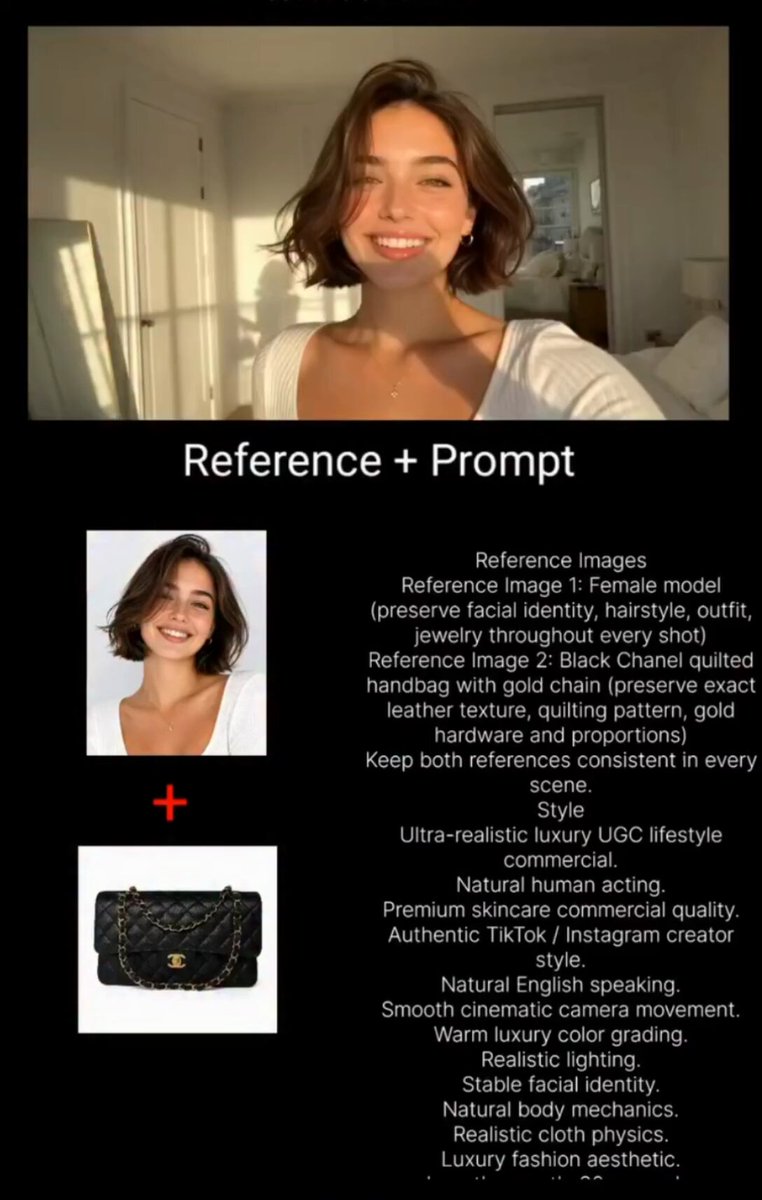
Instead of animating a single photo, you can feed the AI several reference images of the same subject. This technique, often called multi-image fusion, lets the model lock onto the identity of a character or an environment and carry that identity across every frame. It is the closest thing to guaranteeing that your character still looks like your character in the finished film.
Controlled motion rather than random movement
Early AI clips often produced random, uncontrolled motion. The modern approach is different: you can define how the subject should move, how the camera should behave, and which parts of the frame should stay still. This control is what separates a useful asset from a gimmick.
Keyframes as a planning tool
Think of keyframes as the crucial moments of your story. By setting which appearances matter most, you guide the AI toward the shots your narrative depends on, rather than leaving everything to chance.
A practical workflow for turning photos into a film
Here is a repeatable process you can apply to any project. It is designed to keep you organized and to minimize wasted effort.
1. Clean and prepare your source images
Start with high-resolution, well-lit photos. Remove obvious distractions, crop to a consistent aspect ratio, and correct exposure if needed. The quality of your source images directly influences the quality of the final film.
2. Choose your primary and reference images
Pick one image that establishes the look of the sequence. Then select two or three additional photos that show your subject from different angles or in slightly different situations. These become the references that keep everything consistent.
3. Brief the AI clearly
Describe what should move and what should stay still. Specify camera behavior, direction of motion, and the mood you want. A clear brief produces predictable results and saves you many regeneration cycles.
4. Generate and review your first pass
Run your first generation and watch it critically. Look for flicker, wobble, or any moment where the subject breaks. Note the frame numbers where things go wrong rather than dismissing the whole clip.
5. Refine with small iterations
Make targeted adjustments instead of starting over. Adjust the motion parameters, swap a reference image, or change the camera description. Each iteration should bring you closer to your target.
6. Assemble and polish in your editor
Bring the generated clips into your editing timeline, cut to the beat of your soundtrack, add captions, and color-grade lightly to unify the look. Export in Instagram-friendly dimensions.
Designing for the platform
A technically solid film still needs to meet the expectations of the Instagram feed. Here are the platform-specific considerations to keep in mind.
Format the video for the placement
Choose the aspect ratio that fits your goal: vertical for Reels and Stories, square for the feed, or horizontal for longer viewing experiences. Export at a high enough resolution that quality survives compression.
Hook the viewer in the first moments
The first one to three seconds decide whether someone watches or scrolls past. Open with your most striking image or the most dramatic motion, so the viewer immediately understands what they are watching.
Layer in audio and captions
Background music and voice narration add emotional depth, and silent captions make your content accessible. Instagram users often watch with sound on, so a well-chosen soundtrack can dramatically improve engagement.
Use motion to reinforce your message
Align the motion with the story. A slow push-in works for an emotional moment; a fast cut pattern suits an energetic product reveal. Let the movement serve the message rather than showing off technique.
Building a repeatable content system
The real return on this skill comes when you turn it into a routine. Here is how to make photo-to-film conversion a consistent part of your content plan.
Create templates from your best work
When you produce a film that performs well, save its structure as a template: the same motion style, pacing, and soundtrack approach. Then apply that template to new photo sets instead of starting from scratch every time. Over time, your template library becomes a small production studio in itself, one that lets you publish reliably even on busy weeks.
Batch your production
Collect several themed sets of photos in advance, then generate and assemble them in a single session. Batching preserves your creative focus and keeps your posting schedule steady. It also lets you compare output across templates side by side, which speeds up refinement.
Track what resonates
Pay attention to which types of films get the most saves, shares, and watch time. Double down on what works and adapt your templates accordingly, so your content keeps improving over time. Keep a simple log of what each post used and how it performed, and you will build an asset far more valuable than any single viral moment.
Advanced techniques to keep improving
Once the basic workflow is comfortable, there are several directions you can push to keep raising the bar on your work.
Extending scenes beyond a single subject
The same underlying approach that keeps a character consistent can also keep a destination, a product, or an outfit consistent. If your brand relies on a signature background or a recurring object, treat it like a character and anchor it with accurate references.
Combining subtle motion with camera moves
The most professional-looking films combine small subject motion with a gentle or meaningful camera move. A slow push-in on a product, a subtle pan across a landscape, or a slight orbit around a person creates production value that a static subject cannot offer. Experiment with pairing these movements deliberately.
Telling a two-part story
Once you can reliably produce a single coherent film, try splitting a theme across two short clips that share the same world and characters. This gives you a series that rewards viewers who follow along, and it increases watch time across your profile. A coherent two-part story often outperforms two unrelated clips.
Refining with negative prompts
Many platforms let you describe what to avoid. Explicitly ruling out artifacts, distorted hands, or unwanted objects can steer a generation toward a cleaner result. Like any tool, it takes practice, but it is one of the fastest ways to cut down on regeneration cycles.
Post-production and export quality
The generated film is only a raw material. A short editing pass can raise the perceived quality significantly and ensure your video looks its best on the platform.
Cut to the rhythm of your soundtrack
Rather than assembling clips end to end, cut them to emphasize the beats of your chosen music or voice. A synchronized edit feels intentional and keeps the viewer engaged through every transition. Even a simple pattern of cutting on musical accents transforms a plain sequence into something polished.
Unify the grade across clips
Different shots can carry slightly different color casts. A light, consistent color grade across the whole film ties the sequence together and makes it feel like one cohesive piece rather than a collection of separate clips. Keep it subtle and on-brand.
Add captions that follow the motion
Well-timed captions improve accessibility and keep people watching even with the sound off. Place them so they do not cover the subject's face, keep the text short, and let it appear and disappear in rhythm with the video.
Export at the right settings
Choose a high resolution, a modern codec, and an aspect ratio matched to your placement. Instagram compresses heavily, so starting with a clean high-quality export gives you more headroom than a low-bitrate file that falls apart after re-encoding. Test on both a phone and a desktop before publishing.
Frequently asked questions
Do I need expensive software to do this?
No. Modern AI video platforms handle the core transformation, and a standard editing app is enough for assembly. The bigger investment is your planning and the quality of your source photos.
Why do my characters change between shots?
Character drift usually happens when the AI lacks enough reference material or when the prompt is too vague. Add more consistent reference images and describe the character's features clearly. Testing with a small sequence before committing to a full film is the best safeguard.
How long should my short films be?
For Reels, aim for something between fifteen seconds and a minute. Enough time to tell a small story, but short enough to hold attention. A longer clip is only worth it if every second adds value.
Can I use my own voice or music I do not own?
Use your own recordings or licensed audio. Avoid pulling copyrighted music into content you upload, as it can be muted or blocked. Stock libraries and AI-generated audio give you copyright-safe options.
Moving from static to cinematic
Turning photos into short films is one of the most accessible ways to raise the production value of your Instagram content. It rewards planning, selection, and a consistent workflow more than raw technical skill. Start small with a single themed set, refine your motion and storytelling, then build systems that let you publish quality films on a regular rhythm. The more you practice controlling these transformations, the more natural and professional your content will become.
