
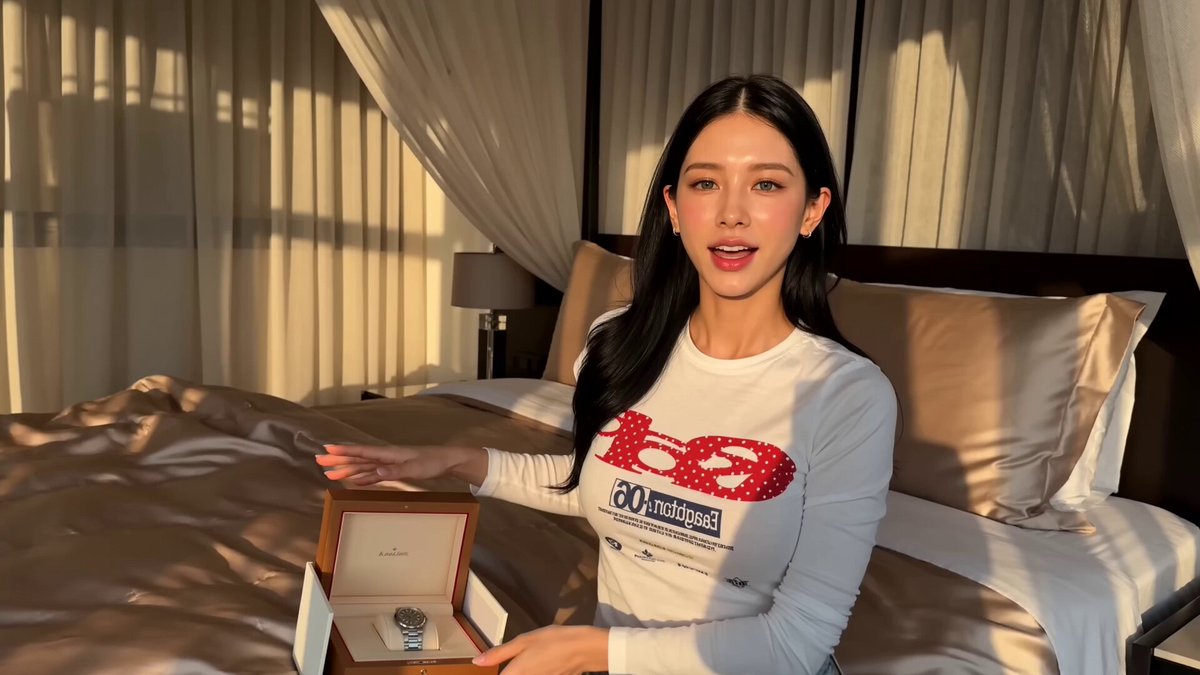
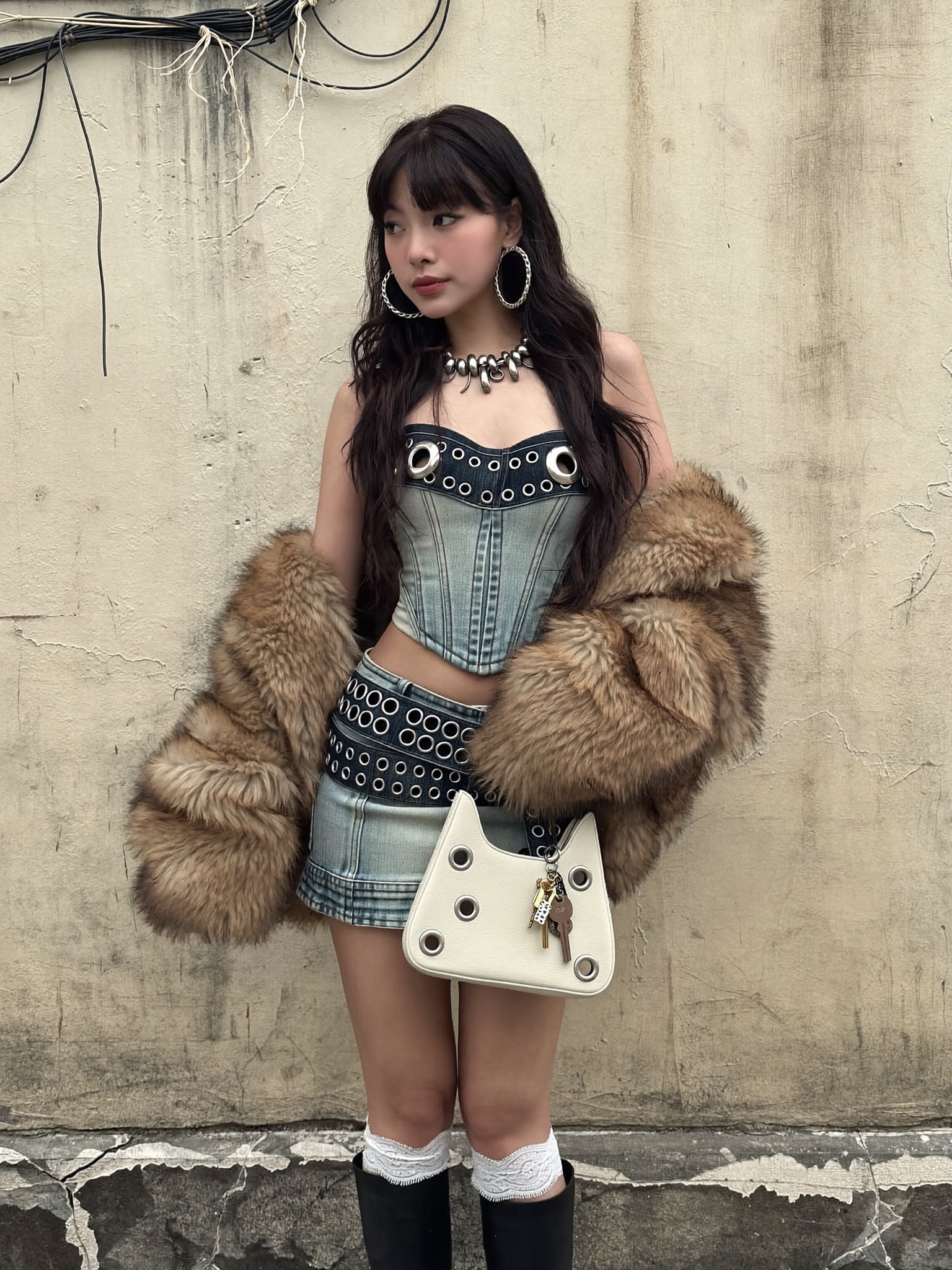
Why Veo 3 and 3.5 Belong in a Working Production Pipeline
Generative video has moved past the demo reel stage. Teams now use it for social cutdowns, product explainers, previsualization, narrative shorts, and internal training clips. Veo 3 established a genuinely useful baseline: coherent motion, strong prompt adherence, and native audio generated alongside the picture. Veo 3.5 tightens that baseline — better subject persistence, cleaner lip sync, more reliable ambient sound, and a friendlier response to multi-image conditioning. The practical consequence is that you no longer need to generate twenty variants to land one usable shot. You still need discipline.
This guide walks through the parts of the workflow that actually determine output quality: how to write shot descriptions that the model can execute, how to keep a character looking like the same person across a sequence, how to place meme imagery inside a moving scene without it looking pasted on, and how to build a repeatable pipeline from script to final cut. It is written for editors, marketers, and solo creators who want professional-looking results rather than novelty clips.
One framing note before we start: the model is a camera, not a director. It will execute what you describe, at the quality level your description deserves. Everything below is about earning better executions.
Where Veo 3 and 3.5 Diverge in Daily Use
Both generations share the same core interface logic: you write a prompt, optionally attach reference images, choose an aspect ratio and duration, then generate. The difference shows up in the corners — the shots you used to re-roll five times.
| Capability | Veo 3 | Veo 3.5 |
|---|---|---|
| Complex multi-action prompts | Interpreted loosely | Follows sequence more literally |
| Character persistence | Needs aggressive reference use | More forgiving with light references |
| Native audio and dialogue | Present, occasionally drifting | Tighter sync and cleaner separation |
| Crowd and fabric physics | Occasional warping | Noticeably reduced artifacts |
| Best role in a pipeline | Fast ideation and animatics | Hero shots and final-ready frames |
In practice, the smartest setup is not choosing one. Use the faster, looser generation for exploration — blocking, camera angles, pacing tests — then move your locked shot list into the newer version for the takes that end up on screen. That split keeps your iteration cycles short without sacrificing the final frame.
A second difference matters more than the table suggests: how each version handles ambiguity. When your prompt leaves something undefined, the older generation invents confidently and the newer one tends to hedge toward the most statistically common interpretation. If you want a specific look, you must specify it. Vagueness is not a style choice; it is a handoff of creative control.
Anatomy of a Strong Veo Prompt
The best prompts read like a shot card from a real production. They answer five questions in order: who or what is in frame, what happens, how the camera behaves, what the light looks like, and what we hear.
The five-part shot description
A workable template looks like this:
A woman in her thirties wearing a charcoal wool coat stands on a rain-slicked rooftop at dusk. She turns slowly from the railing toward the camera, exhaling visible breath. Camera is a slow handheld push-in from chest height, shallow depth of field. Light is cool blue ambient with a warm sodium practical behind her left shoulder. Audio: distant traffic, light rain on metal, no music.
Notice what is absent: no adjectives about mood, no "cinematic masterpiece" language, no emotional instructions to the model. Mood emerges from the combination of actions and light, not from a label. Words like "stunning" and "epic" consume prompt space and change nothing.
Audio is not a separate step
Veo generation produces picture and sound together, which means your audio direction belongs inside the shot description. State the ambience, whether dialogue is present, and whether music is playing. If you want a clean plate for later sound design, say "no music, minimal ambience" explicitly — otherwise you will get a score you did not ask for and cannot cleanly remove.
Dialogue is best kept short. One or two lines per shot, written in plain sentences, with a clear indication of who speaks. Long monologues tend to produce lip movement that drifts from the waveform, which is far harder to fix in editing than a short line is to generate again.
Mistakes that quietly ruin output
- Contradictory camera moves. "Slow push-in while orbiting the subject" produces mush. Pick one primary move per shot.
- Too many subjects. Three people doing three things in one eight-second clip guarantees that at least one of them will render badly. Split the action across shots.
- Aspect ratio mismatch. Generating vertical footage with a horizontal composition in mind wastes the frame. Decide the destination format first.
- Unstated wardrobe changes. If your character wears a red jacket in shot one, restate the jacket in shot two. The model does not remember.
- Overwritten prompts. Beyond roughly 150 words, additional detail stops helping and starts competing with itself.
Multi-Image Fusion and Character Consistency
Consistency is the single hardest problem in AI video, and it is the reason multi-image conditioning exists. Instead of describing your lead character in prose every time, you supply reference images that carry the identity: face, hair, build, wardrobe.
Building a reference pack
A useful pack has three or four images, not ten:
- A neutral, front-facing portrait with even lighting.
- A three-quarter angle showing facial structure.
- A full-body shot that establishes proportions and wardrobe.
- Optionally, one environmental shot that defines the character's world.
More references are not better. Conflicting lighting or dramatically different angles can cause the model to average them into a face that resembles none of your inputs. Keep the pack internally consistent — same person, same styling, similar lighting.
Continuity rules that actually hold
When you move a character through a sequence, hold these variables constant between shots and change only one thing at a time:
- Identity references: the same images, every shot.
- Wardrobe language: identical wording, copied and pasted.
- Lighting direction: if the sun is camera-left in shot one, it is camera-left in shot two.
- Lens language: pick a focal-length feel and keep it. Mixing an extreme wide with a macro feel in the same scene reads as an error.
If a shot drifts anyway, regenerate rather than trying to repair it in post. A slightly wrong face through an entire sequence is a bigger problem than one extra generation pass.
Integrating Meme Images Without Wrecking the Scene
Meme imagery inside generated video is a real creative technique, not a gimmick — when it is used as a storytelling device rather than a sticker. The difference between a clip that feels clever and one that feels cheap comes down to context, timing, and spatial logic.
Cultural context and timing
A meme carries meaning because an audience recognizes it instantly and shares the reference. That recognition has a shelf life. Before you build a shot around one, ask three questions: Is this reference still widely understood? Does the audience for this video share the reference? Does the joke survive without explanation?
If the answer to any of those is no, the meme becomes noise. A better approach for evergreen content is to use the structure of a meme — the visual grammar of an overlaid caption, a reaction insert, a zoom punch-in — rather than a specific image that will date.
Spatial integration in a 3D world
Flat assets placed into a generated scene fail for one reason: they behave like flat assets. A real object in a shot responds to the light and the camera. Four techniques close that gap:
- Describe the asset as a physical object. Instead of "a meme image appears," describe "a glossy printed poster taped to the wall, slightly curling at the corner, catching the window light." The model now has material and lighting cues to work with.
- Match the light direction. If your scene light comes from the right, the inserted element should be brighter on its right side. State it in the prompt.
- Give it parallax. Place the asset on a surface the camera moves past, so it shifts perspective naturally. Static overlays on a moving camera always look composited.
- Respect scale. A human-sized meme poster in a small office breaks the frame's logic. Size it to the space.
Framing, legibility, and pacing
A meme element that is unreadable is a wasted element. In vertical formats, keep inserted text within the safe area and allow at least a beat of screen time where the camera is relatively still. Do not cut on the exact frame the reference lands — let the audience read it.
Also decide early whether the element is diegetic or decorative. Diegetic elements live in the scene and obey its physics. Decorative overlays sit on top of the frame and belong to the edit, not the generation. Mixing the two categories in one shot produces the uncanny, pasted-on look that makes AI video obvious.
A short note on rights and brand safety
Meme imagery frequently carries third-party ownership, recognizable faces, or trademarked characters. Whatever the technical execution, the publishing decision is separate. Keep a simple internal rule: if you cannot name the source and its usage terms, do not ship it in commercial work.
A Repeatable End-to-End Workflow
Ad-hoc prompting produces inconsistent results. A four-phase pipeline produces a library of usable footage that cuts together.
Phase 1: script and shot list
Write the sequence as a list of shots, one line each, with duration estimates. A ninety-second piece typically runs twelve to eighteen shots, most of them two to four seconds. Short shots hide generation artifacts and give you more editorial control.
Phase 2: reference generation
Generate your still references first — character portraits, key locations, wardrobe details. These can come from an image model or from stills you already own. Lock them before generating any motion. Every video shot downstream inherits their consistency.
Phase 3: hero shot passes
Generate in order of narrative importance, not chronology. Get your establishing shot and your key emotional beat right first, because they dictate the visual grammar everything else must match. Expect two to four passes per hero shot and one to two for connective shots.
Phase 4: assembly and finishing
Bring everything into your editor. Trim to the beat, stabilize what needs stabilizing, and add your real sound design on top. Generated audio is a useful base layer, but a proper mix — ambience, foley, music bed — is what separates a professional clip from a demo. Color grading across shots matters too; slight differences in contrast between generations read as mistakes.
Choosing Between Veo and Other Video Models
Different models have genuinely different personalities. Rather than chasing a single winner, route each shot to the tool whose strengths match the requirement.
- Dialogue-driven scenes: prioritize models with native audio and reliable lip sync.
- Product and tabletop shots: prioritize models with strong physics and material rendering on small objects.
- Stylized animation: prioritize models with strong style adherence and clean edges.
- Character continuity across many shots: prioritize multi-image conditioning and consistent identity handling.
- Rapid ideation: prioritize speed and cost per attempt, not final quality.
A realistic production often uses two or three engines in the same timeline. The audience does not care which model made which shot. They care that the sequence holds together — which is why your reference pack, wardrobe language, and grade matter more than engine choice.
Quality Control: The Pre-Publish Checklist
Run every sequence through the same review before it leaves the edit.
- Hands and faces: frame-step through any shot where they are prominent.
- Text and signage: generated text is the most common failure. Replace it in post.
- Motion cadence: watch at half speed. Speed ramps hide warping; they do not fix it.
- Audio sync: check dialogue against the waveform, not against your memory.
- Color continuity: compare the first and last shot of each scene side by side.
- Aspect ratio safety: verify titles and meme elements survive on a phone screen.
- Rights clearance: every third-party visual asset accounted for.
Troubleshooting Common Veo Problems
| Symptom | Likely cause | Fix |
|---|---|---|
| Character face changes between shots | Inconsistent or conflicting references | Rebuild the reference pack with even lighting |
| Camera movement feels floaty | Two competing moves in one prompt | Choose one primary move |
| Audio arrives with unwanted music | No audio direction given | State "ambience only, no music" |
| Inserted graphic looks pasted on | Described as an overlay, not an object | Give it material, light direction, and parallax |
| Motion warps on fast action | Too much happens in too few seconds | Split into two shots |
| Prompt is ignored halfway through | Prompt too long or self-contradictory | Cut to the essential five parts |
FAQ
How long can a single Veo shot be?
Practical shot lengths sit between two and eight seconds. Longer generations are possible but artifacts accumulate, and long shots give you less editorial flexibility anyway. Think in shots, not scenes.
Do I need reference images for every character?
For one-off background people, no. For anyone who appears in more than one shot, yes. Reference images are the cheapest consistency insurance available.
Can I fix a bad take in editing instead of regenerating?
Minor color and pacing issues, yes. Structural problems — wrong face, wrong wardrobe, broken hands — are almost always faster to regenerate than to repair.
Is meme integration worth it for brand content?
It works when the reference is current, widely understood by your specific audience, and structurally integrated into the scene. It fails when it is a sticker dropped on top of an unrelated shot. Test on a small audience before you build a campaign around it.
How do I keep a series visually coherent across episodes?
Maintain a project style guide: lens language, color palette, lighting direction, wardrobe phrasing, and the exact reference images. Treat prompts as production assets that get versioned, not as things you retype from memory.
What is the biggest mistake beginners make?
Generating before planning. Teams that write the shot list first, lock references second, and generate third consistently outperform teams that prompt their way toward a story.
The through-line across all of this is simple: quality comes from decisions made before generation. Write shot cards, lock references, integrate inserted elements as physical objects, and finish with real editing and sound. Veo 3 and 3.5 will meet you at the level of the plan you bring.
