
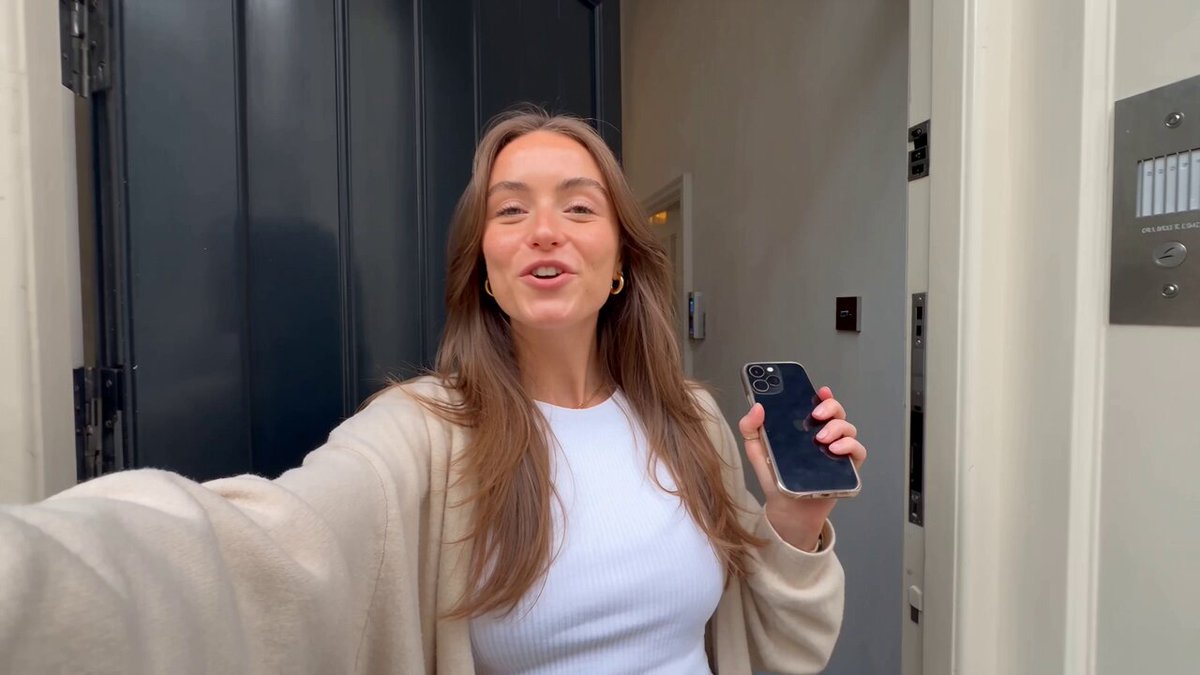

Why Video Became the Default Format for E-Commerce
The path from discovery to purchase has compressed into seconds. A shopper scrolling a feed sees a clip long before they see a product page, a price, or a review. That single shift explains why video has moved from a nice-to-have marketing channel to the primary storefront for most online brands. Text and static photography can describe a product, but only motion can demonstrate what it does, how it feels, and why it belongs in someone's life.
Three forces pushed video to the center of e-commerce marketing:
- Attention economics. Feeds reward watch time. A clip that holds someone for six seconds earns more distribution than a beautifully written description nobody opens.
- Mobile-first behavior. Most shopping sessions happen on a phone held vertically, frequently with sound off. Footage designed for that format outperforms repurposed landscape content.
- Falling production barriers. Generative video models, template editors, and synthetic voice tools collapsed the cost of producing a polished clip from a large budget to a few focused hours.
The practical consequence is that creative volume now matters as much as creative polish. A brand that can produce twenty focused variations learns faster than a brand that spends the same budget on one hero film. The rest of this guide is about building a repeatable workflow that produces that volume without sacrificing product accuracy or brand voice.
Start With the Product Story, Not the Product Specs
Most weak product videos read like a specification sheet set to music. They list materials, dimensions, and features in sequence and hope the viewer connects the dots. Strong videos do the opposite: they show a person in a specific moment, with a specific frustration, meeting a product that resolves it.
Turning Features Into Visual Promises
Translate every feature into a visible outcome. If you cannot film it or generate it, it is not a video feature — it is copy.
| Feature | Visual promise | Shot idea |
|---|---|---|
| Stain-resistant fabric | "Messy life, no panic" | Coffee tips onto a sleeve and rolls away |
| Long battery life | "A full day without hunting for a socket" | Morning commute through late evening, charger never appears |
| Compact folding design | "Fits where you did not expect" | Product slips into a small bag pocket |
| Adjustable fit | "One size that behaves like custom" | Same product on three different body types |
| Quiet motor | "A nursery that stays asleep" | Baby monitor stays flat while the device runs |
| Recycled packaging | "Guilt-free unboxing" | Hands open a plain box, no plastic filler inside |
Once the table is complete, you have your shot list half-written. Each row becomes a beat, and each beat becomes something a camera or a generative model can actually depict.
The Three-Second Contract
Every ad makes an implicit promise in its first three seconds: stay with me and you will see something worth seeing. Break that contract and no amount of production quality will recover the view.
The most reliable structure for product video is a three-part arc: promise, proof, payoff. The promise is a hook that names a problem or shows an unexpected result. The proof demonstrates the product doing the work. The payoff shows the improved state — the clean couch, the packed bag, the calm baby — plus a clear next step. Fifteen to thirty seconds is usually enough when each part earns its place.
Building the Ad Blueprint: Script, Shot List, and Hook Matrix
Before touching a tool, write a one-page blueprint: hook, three proof beats, one payoff, one call to action. Blueprints keep creative decisions cheap and revisions fast.
Hook Formulas That Survive the Scroll
Most hooks fall into a handful of repeatable patterns. Test several against the same product before committing budget:
- Problem close-up. Extreme macro of the annoyance the product removes — a cracked phone screen, a tangled cable, a stained shirt.
- Unexpected demonstration. The product performs in a way viewers did not anticipate and cannot explain at first glance.
- Before and after cut. Hard cut between two states, no narration required.
- Objection answer. Open with the doubt: "Worried it will not fit your counter?" Then show it fitting.
- Social proof opener. Fast montage of real customer moments, captioned, with one line of context.
- POV scenario. Camera becomes the customer's eyes, walking through a real routine.
A useful discipline is to write ten hooks for every one you produce. The hooks that survive a second read are usually the ones that name a specific person or moment rather than a general benefit.
Shot List Templates for Physical Products
A workable 20-second structure looks like this:
- Shot 1 (0–3s): hook, tight framing, immediate motion
- Shot 2 (3–7s): product in context, hands-on use
- Shot 3 (7–11s): the key proof beat — the demonstration
- Shot 4 (11–15s): close detail of texture, material, or mechanism
- Shot 5 (15–18s): payoff state, wider framing
- Shot 6 (18–20s): call to action with product and offer visible
Keep the shot list short. Six shots that each do one job beat twelve shots that blur together, and short lists are far easier to generate, reshoot, and localize later.
Writing Prompts an AI Model Can Actually Execute
Generative video rewards specificity about the physical world and punishes abstraction. A prompt that works names the subject, the action, the setting, the camera behavior, the lighting, and the mood. "A woman enjoys using our product" produces mush. "Medium close-up, woman in a linen shirt lifting a matte black kettle from a gas hob, morning window light from the left, slight handheld drift, warm neutral palette" produces something usable.
Two habits help enormously. First, describe what the camera does, not just what is in frame. Second, name a reference style in plain language — "clean studio product photography" or "documentary handheld" — rather than injecting brand jargon the model cannot interpret.
Choosing the Right Tool for Each Job
Tool choice should follow the shot, not the other way around. Some shots are cheap to generate and expensive to film; others are the reverse.
Generative-Only vs. Hybrid Pipelines
A generative-only pipeline uses AI models for every shot, then assembles them in an editor. It is fastest, cheapest, and best for lifestyle context, abstract transitions, and background plates. Its weakness is fidelity: logos, fine text, and precise product geometry can drift between shots.
A hybrid pipeline mixes real product footage — shot on a phone with a cheap light — with generated backgrounds, transitions, and voice. It costs slightly more effort but keeps the product pixel-accurate, which matters when the item is the thing being sold.
A practical default: generate everything except the hero product shots. Film those yourself against a plain backdrop, then composite.
Decision Criteria
| Need | Best approach | Why |
|---|---|---|
| Fast lifestyle context | Generative video model | No location, talent, or crew required |
| Exact packaging and label | Real footage, generated backdrop | Text and logos stay intact |
| Multiple languages | Synthetic voice plus subtitles | Fast, cheap re-recording |
| Sequential storytelling | Editor-driven assembly | Models handle shots, not narrative |
| Seasonal variants | Template plus new plates | Swap background, keep structure |
Product Accuracy Beats Spectacle
It is tempting to chase cinematic awe. E-commerce viewers are not judging cinematography; they are checking whether the item looks like what arrives in the box. A slightly plain video with an accurate product outsells a spectacular video with a melting logo every time. Protect accuracy first, then add visual flourish.
Camera Control, Consistency, and Product Fidelity
Locking the Product Across Shots
Consistency is the hardest part of AI-assisted product video. Three techniques close most of the gap:
- Anchor frames. Generate a still of the product in the exact pose and lighting you want, then use it as the starting frame for motion.
- Fixed descriptors. Reuse the same wording for the product in every prompt — same color name, same material, same shape language.
- Short clips. Generate four-second shots instead of ten-second ones. Shorter generations drift less, and you can cut between them invisibly.
Static vs. Dynamic Scenes
Motion earns attention, but not all motion is equal. Slow pushes, subtle parallax, and gentle handheld drift read as premium. Whipping pans, rapid zooms, and constant rotation read as chaotic and make product details unreadable.
Match motion to the message. A durability claim benefits from a slow, steady inspection. A speed or convenience claim benefits from a brisk cut pattern. When in doubt, hold the product still and let light or background move instead.
Failure Modes to Watch For
- Labels that morph or re-spell themselves mid-shot
- Hands with the wrong number of fingers or impossible joints
- Logos that reshape subtly across frames
- Physics that breaks — liquid flowing uphill, fabric passing through skin
- Reflections that show a different product than the one in frame
- Text on packaging that turns into invented characters
Any of these can pass unnoticed on a small phone screen during editing and become obvious to a customer. A frame-by-frame review of every shot with the product visible is worth the extra ten minutes.
Sound, Voice, and Localization
Voice Direction That Sells
Synthetic voice quality is now good enough for ads if the direction is specific. Ask for a conversational pace, slight warmth, and natural pauses. Avoid the breathless announcer register that makes viewers assume they are being sold to. If you write your own script, read it aloud first — if you stumble, the model will too.
Music, Pacing, and Rhythm
Choose a track after the edit, not before. Cut to the beat where it helps, but do not let music dictate the story. A simple rule: music should support the proof beat, never compete with the explanation. Keep levels low enough that dialogue remains intelligible on a phone speaker at half volume.
Designing for Muted Autoplay
A large share of viewers will never hear your ad. Assume silence and design for it:
- Burn in subtitles with high contrast and safe margins
- Make the product's benefit legible from visuals alone
- Place key text away from platform UI overlays at the top and bottom
- Keep on-screen text to a few words per beat
If the video still makes sense with sound off, the sound-on version will feel richer rather than necessary.
The Production Workflow, Step by Step
Phase 1: The Creative Brief
Write one page: target customer, single problem, single promise, three proof beats, one call to action, and the platform it is built for. Ambiguity here multiplies later.
Phase 2: Script and Storyboard
Turn the brief into a shot list with timings. Sketch rough frames, even as stick figures. Storyboards expose weak transitions before you spend time generating anything.
Phase 3: Asset Preparation
Collect clean product photos, packaging shots, and any real footage you have. Remove backgrounds where useful. The better your reference images, the better your generated shots.
Phase 4: Generation
Generate shots in batches by scene type rather than in story order. Produce three to five variations per shot and keep the best. Label files clearly so assembly does not become an archaeology project.
Phase 5: Assembly and Edit
Cut to the blueprint timings, then tighten. Most first assemblies run long; trimming the first two seconds and the final second usually improves retention without losing meaning.
Phase 6: Quality Assurance
Watch the full video on a phone, muted, at arm's length. Then watch it again frame by frame with the product visible. Check text, logos, colors, and any claim you make.
Phase 7: Export and Variant Packaging
Export in the aspect ratios you actually need — vertical, square, and horizontal if you run placements across platforms. Name files by hook, audience, and language so reporting stays clean.
Testing, Learning, and Scaling Creative
Metrics That Actually Matter
Ignore vanity numbers. Four metrics drive decisions for product video:
- Hook rate: percentage who watch the first three seconds
- Hold rate: percentage who reach the proof beat
- Click-through rate: percentage who take the next step
- Cost per acquisition: the only number connected to revenue
If hook rate is high but hold rate is low, your promise is stronger than your proof. If both are high and clicks are low, the call to action or the offer is the problem.
Building a Variant Matrix
Structure tests so each one answers a question. A clean matrix multiplies hooks, proof beats, and calls to action — three hooks, two proof beats, two endings produces twelve distinct videos from one shoot. Change one variable per generation so you can attribute results.
Iteration Cadence
Give each variant enough impressions to produce a signal before judging it, then retire losers early and feed winners into the next round. A weekly rhythm — review, cut the bottom third, produce replacements — keeps creative fresh without burning out the team.
Common Mistakes That Kill E-Commerce Video Ads
- Leading with the logo. Nobody cares who made it until they know why it helps.
- Listing features instead of showing outcomes. Features belong in the description, demonstrations belong in the video.
- Overloading the first frame. One subject, one action, one idea.
- Ignoring the muted viewer. No subtitles means no message for a large share of the audience.
- Inconsistent product appearance. Color, shape, and label drift destroys trust instantly.
- Making the product too small. If a viewer cannot identify the item on a phone, the shot has failed.
- Burying the offer. State the price, bundle, or incentive plainly, once, near the end.
- Reusing one video everywhere. Aspect ratios, pacing, and platform norms differ; adapt rather than re-upload.
- Skipping the QA pass. Ten minutes of frame-by-frame review prevents the most embarrassing errors.
- Producing too few variants. One video teaches you almost nothing.
Frequently Asked Questions
How long should an e-commerce video ad be?
For paid social, 15 to 30 seconds covers most needs, with a 6-second cutdown for retargeting. Longer formats work when the product requires education, such as technical gear or skincare routines.
Do I need the physical product to make a video?
No, but accuracy suffers. If you have the item, film a few clean shots yourself — even on a phone — and use generated footage for context, lifestyle, and transitions. That combination delivers the best balance of cost and fidelity.
How do I keep the product looking identical across shots?
Use anchor frames, repeat identical product descriptors in every prompt, and keep individual generations short. Then review frame by frame before publishing.
What if I have a very small budget?
Prioritize the hook and the proof beat. A single well-lit product shot with a strong first three seconds outperforms a sprawling video with weak structure. Spend your time on the script and the edit, not on additional tooling.
Should I localize ads for different regions?
Yes, when the market justifies it. Localization is more than translation: adjust the scenario, the model of phone or car in frame, the clothing, the humor, and the seasonal reference. Synthetic voice plus localized subtitles makes this affordable at scale.
How many variants should I test at once?
Four to eight is a practical starting range. Fewer gives noisy data; more makes attribution confusing. Change one element per variant so you know what caused the difference.
Can AI video replace product photography?
Not yet for the primary product image, where pixel accuracy matters most. It excels at lifestyle context, motion sequences, and rapid iteration — which is exactly where traditional shoots are most expensive.
