


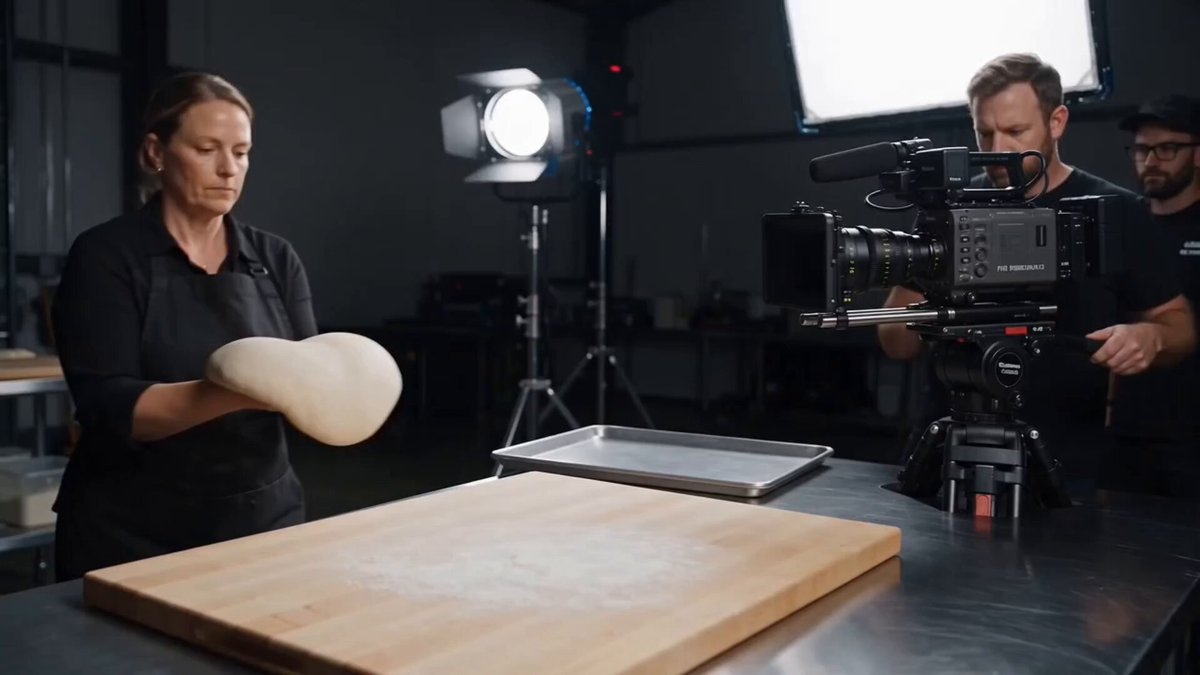
Why transcripts became the backbone of video work
Video is the format people watch; text is the format machines read. Almost everything you want from a published video — captions, chapter markers, search visibility, repurposed articles, retention diagnosis, translation — begins with one artifact: an accurate transcript.
That is why transcription has quietly moved from a niche accessibility task to core production infrastructure. Modern speech recognition handles accents, crosstalk, technical vocabulary and mid-sentence language switching far better than early systems did. Combined with cheap storage and fast parallel processing, it is now realistic to transcribe every video you publish without thinking about it.
The second half of the story is analytics. A transcript is not just a text file; it is a timestamped map of your video. Once you have sentence-level or word-level timings, you can align them with retention graphs, comments, survey responses and conversion events. That alignment answers questions that used to be guesswork. Which sentence lost a third of the audience? Which explanation triggered the most rewinds? Which call to action actually produced signups?
The rest of this guide covers the full pipeline: capturing clean transcripts, structuring them as assets, using them for discovery, mining them as data, and building a repeatable weekly rhythm around them.
The transcription layer: accuracy, formats, and pipeline choices
Batch versus real-time versus hybrid
Batch processing is the default for edited content: upload a finished file, get a transcript back in minutes, move on. Real-time transcription suits live streams, webinars and interviews where captions must appear as people speak. Hybrid setups are increasingly common — live captions for the broadcast plus a corrected batch pass afterward that becomes the canonical transcript.
If you publish live regularly, plan for both. Live output is fast but rougher; the corrected version is what you quote, index and repurpose.
What accuracy actually means in practice
Word error rate is a useful headline number, but what matters for creators is domain accuracy. A system with strong general accuracy can still mangle product names, guest surnames, acronyms and jargon. Before committing to a tool, run a test on real footage: a fast-talking interview, a segment with background music, a section where two people talk over each other, and a stretch of accented speech.
Check three things: proper nouns, numbers and units, and sentence boundaries. Punctuation and casing matter more than most people expect, because they determine how readable the transcript is and how well downstream summarizers and taggers perform.
Formats worth keeping
Always archive more than plain text. The formats that pay off later:
- Plain text for reading, editing and search
- Timed captions (SRT or WebVTT) for publishing
- Structured JSON with word timings for analytics and clip selection
- Speaker-labelled output for interviews and panels
If your tool exports only one format, a converter or a short script gets you the rest. Keeping word-level timings is the single highest-value habit, because clip discovery, retention mapping and animated captions all depend on them.
Working with multilingual and code-switched audio
If your content mixes languages — a bilingual interview, an English tutorial with Spanish asides, technical terms borrowed from another language — choose a model that handles code-switching rather than forcing a single-language mode. Test a two-minute sample before a long recording day. Keep a glossary per language, and treat translation as a separate step that starts from the clean transcript rather than from the audio. Translating text is cheaper, more consistent and much easier to review.
From raw transcript to structured content asset
Raw output is a wall of text. A short structuring pass turns it into something you can actually use.
The cleanup pass
Fix names, brand terms and technical spellings once, then save a glossary or custom vocabulary list so future jobs inherit the corrections. Add paragraph breaks at topic shifts and insert speaker labels. This takes ten to twenty minutes and improves every downstream use — captions, articles, summaries and search.
Chaptering and segmentation
Read the transcript as a table of contents. Where does a new idea start? Those boundaries become chapters, timestamps, blog subheadings and short-form hooks. A twenty-minute video typically yields five to eight natural segments, and each one is a potential standalone clip, newsletter section or social post.
Reusable derivatives
One good transcript can feed:
- A blog post or newsletter issue
- Show notes with timestamps and links
- A quote graphic or carousel set
- A clip list with in and out points
- An FAQ page built from recurring audience questions
The economics are simple: transcription and structuring happen once, and every derivative reduces the cost of the next published asset.
Video SEO through text: what actually drives discovery
Search engines cannot watch your video. They rely on text signals around and inside it, which is why transcript quality has a direct effect on how your content surfaces.
Metadata hierarchy
Treat metadata as a layered system rather than a single field:
- A title that names the specific question or outcome
- A description whose first two lines state the value clearly
- Chapters that describe each segment in plain language
- Transcript or captions as the machine-readable body
- Structured data marking the page as a video object
Each layer reinforces the others. A descriptive title with a matching transcript phrase is a much stronger signal than either alone.
Where to put the transcript
Publishing the full transcript on the page can help, but do not dump a raw, unpunctuated block. Format it with headings that mirror your chapters, add anchors, and consider collapsing long sections so the page stays readable. For interviews, a lightly edited transcript with clear speaker names usually performs better than a verbatim dump, because readers skim rather than read.
Chapters, clips, and short-form discovery
Short-form platforms reward the first seconds, and transcripts help you find them. Search your transcript for the most concrete, self-contained statements — a number, a mistake, a strong claim — and mark those timestamps as clip candidates. Because you already have word timings, captions for those clips can be generated accurately instead of guessed. This one habit connects your long-form archive to your short-form pipeline.
Keyword reality check
Do not stuff phrases. Let the transcript show you the language your audience and guests actually use, then mirror it in titles, chapters and descriptions. Vocabulary mined from transcripts and comments is usually more specific and less competitive than generic keyword lists, and it sounds like a human wrote it because a human did say it.
Analytics: reading the transcript as data
This is where transcripts stop being documentation and start being instrumentation.
Retention mapping
Export the retention curve from your hosting platform, then align it with transcript timings. Mark every point where the curve dips sharply and read the sentence at that timestamp. Patterns appear fast: dips during long intros, tangents, sponsor reads placed too early, or explanations that assume knowledge the viewer does not have. Equally useful are the spikes — rewinds often mean a dense or valuable moment that deserves its own clip or follow-up video.
Sentiment and emotional engagement
Sentiment analysis over a transcript shows where energy rises and falls. It is not about happy versus sad; it is about intensity and clarity. Segments with strong conviction, concrete examples and short sentences tend to correlate with higher retention. Flat, hedged, adjective-heavy passages tend to correlate with drop-off. Use the signal as a writing prompt: rewrite the flattest two minutes of your next script before you record.
Question mining and search intent
Extract every question asked in the transcript, plus every question in the comments. Group them by theme. Clusters that appear in both places are your next five videos, and the exact phrasing is your title. This is search intent research done from your own material, which is why it converts better than generic trend lists.
Semantic tagging and clustering
Run topic extraction across a backlog of transcripts to see what your channel actually covers, as opposed to what you think it covers. Clusters reveal gaps and overlaps: three near-identical tutorials, no beginner entry point, an entire theme mentioned once and never developed. This is one of the cheapest content strategy exercises available, because the data already exists in your archive.
Measuring the effect of edits
If you re-cut an intro, change a hook or move a chapter, keep the old transcript and compare retention before and after. Over a dozen videos, that becomes a reliable internal benchmark for what your audience responds to, and it separates real improvements from lucky weeks.
A weekly workflow for solo creators and small teams
A rhythm beats a hero effort. Here is a workflow that fits a normal production week.
- Record and edit as usual. Do not change your creative process yet.
- Transcribe automatically on export, with word timings and speaker labels.
- Clean the first five minutes by hand — names, brands, jargon — and add those terms to a glossary.
- Apply automated cleanup to the rest, then skim for obvious errors.
- Chapter the transcript into five to eight segments with timestamps.
- Publish captions and chapters alongside the video.
- Extract derivatives: one article, three to five clips, one quote set, show notes.
- After forty-eight hours, pull retention and align it with the transcript. Write down one hypothesis.
- After two weeks, review sentiment and topic tags across the last four videos. Write down one pattern.
- Feed both notes into next week's script.
Steps eight to ten are the ones creators skip, and they are where the compounding value lives. Fifteen minutes of analysis per video is enough to change how you write the next one. If you work with an editor, split the work: they produce the clean transcript and chapters, you own the retention review and the hypothesis.
Tool selection criteria and a lean stack
Judge transcription tools on criteria that map to real work, not demo videos:
- Domain accuracy on your actual footage
- Language coverage if you publish or interview across languages
- Word-level timings and speaker diarization
- Export formats and API access
- Glossary or custom vocabulary support
- Editing experience for fixing the fuzzy five percent
- Data handling and retention policy
A lean stack looks like this: one primary transcription engine, one editor for cleanup and captions, one storage location for structured exports, and one spreadsheet or database for analysis. Resist adding a second engine until you have a documented failure it solves. Two overlapping tools usually mean two half-maintained workflows.
If your material is sensitive — medical, legal, internal training — decide on data retention before you upload anything, and prefer tools that let you disable training on your content or process locally. Write the decision down so you are not re-litigating it every project.
Common mistakes and how to avoid them
- Publishing raw output. Unpunctuated walls of text hurt readability, search performance and caption quality.
- Ignoring proper nouns. A misspelled product name becomes a misspelled caption, chapter and article.
- Skipping word timings. Without them, clip selection and retention mapping turn into manual scrubbing.
- Treating the transcript as an archive only. If it never feeds planning, you are paying for storage rather than gaining leverage.
- Over-indexing on sentiment scores. Use them as prompts for review, not verdicts.
- Never re-checking accuracy after a format change. New microphones, rooms or guests can shift quality noticeably.
- Letting captions go out unproofed. Automated captions with obvious errors quietly undermine trust.
- Analysis without a decision. A retention review that does not produce a change in the next script is entertainment, not work.
Accessibility, translation, and compliance
Captions are an accessibility baseline, not a bonus. Accurate captions broaden your audience, reduce playback friction in sound-off environments, and are often required by law or platform policy for public and institutional content.
Transcripts also unlock translation. Translating a clean, well-punctuated transcript produces far better subtitles than translating audio directly, and it lets a reviewer fix terminology before publishing. Keep a bilingual glossary for recurring terms so multi-language versions stay consistent across episodes.
For anything regulated, document your process: which tool produced the transcript, who reviewed it, and when. A short log answers most compliance questions later, and it takes seconds to maintain.
FAQ
How accurate does a transcript need to be before it is useful?
For captions, aim for correctness on names, numbers and terminology; small filler-word errors rarely matter. For analytics, consistency matters more than perfection, because you are comparing segments within the same transcript. If a sentence is garbled, mark it and move on rather than rebuilding the whole job.
Should I publish transcripts on the video page?
Usually yes, if you format them. Break them into sections, add headings, and consider collapsing long blocks. If your transcript is repetitive or unedited, publish a cleaned version or keep it internal and rely on chapters and descriptions for search instead.
Do I need word-level timings if I only want captions?
Not strictly, but they make caption timing smoother and enable clip discovery, animated text and precise quote extraction later. The storage cost is trivial compared with the rework of regenerating timings after the fact.
How do I handle multiple speakers and overlapping speech?
Use speaker diarization and label participants, then correct labels during cleanup. Overlapping speech is the hardest case; note who dominates each segment, and where accuracy drops, keep the transcript as an internal reference rather than publishing it verbatim.
Can transcripts really improve retention?
Indirectly, yes. They give you the diagnostic layer you need to see which sentences lose viewers and which earn rewinds. Creators who review that data consistently tighten intros, cut tangents earlier and place key explanations before natural drop-off points.
What is the minimum viable analytics routine?
One retention pass per video, one topic review per month. Align the retention curve with transcript timings, write down a single hypothesis, then test it in the next video. That loop is enough to produce visible improvement over a quarter.
How do I keep multi-language projects consistent?
Maintain a glossary per language, translate from the clean transcript rather than from audio, and have a native reviewer approve terminology in the first two minutes of each project. Consistency in terminology matters more to viewers than stylistic perfection.
Where should a beginner start?
Start with captions and chapters. That alone improves accessibility and discovery. Add word timings when you begin clipping, and only then layer in retention mapping and topic clustering. Each step is useful on its own, which is why the order matters less than actually starting.
Transcription is the cheapest upgrade available to most video workflows, and analytics is what turns it from documentation into direction. Get accurate text with timings, structure it into chapters and derivatives, publish captions, then spend fifteen minutes per video reading the data. The creators who do this consistently stop guessing why a video worked — and start repeating the reasons on purpose.
