
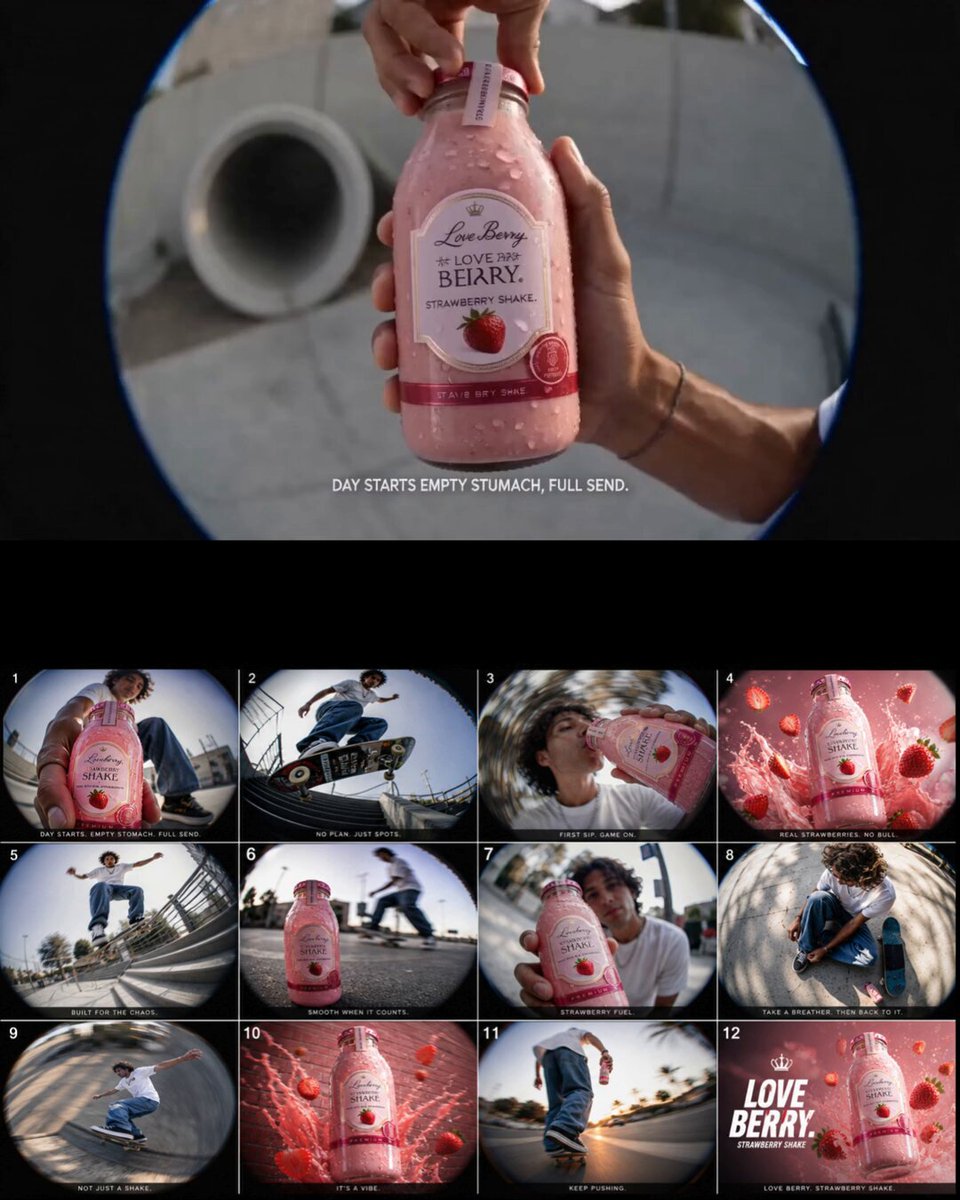

Short vertical video is a distribution problem, not a production problem
Most creators assume the gap between a clip that gets 400 views and one that gets 4 million views is budget, camera gear, or luck. In practice, the gap is almost always structural. Vertical feeds do not reward polish first; they reward evidence. A ranking system is looking for proof that a specific clip is worth showing to a slightly larger group of strangers than the last group, and it looks for that proof in a very narrow window of behaviour.
That reframing matters because it changes what you spend your time on. If distribution is the goal, then the highest-leverage work happens before you ever open an editing timeline: choosing a promise, shaping a hook, and deciding how the clip ends. Everything else, color, sound design, transitions, motion graphics, is downstream. It can lift a clip that already works. It cannot rescue one that fails the first test.
The creators who produce hits consistently are not more inspired than everyone else. They run a loop: collect questions, write several hook candidates per idea, shoot in batches, cut for rhythm before polish, publish on a schedule, log the result, and adjust one variable at a time. This guide lays out that loop in enough detail that you can copy it, then adapt it to your niche and your publishing rhythm.
How the ranking loop actually decides what gets shown
The cold-start pool and the sequential test
When you publish, your clip enters a small pool of viewers who have some loose affinity with your topic, your past content, or a nearby interest cluster. The system measures how that group behaves. If the numbers clear a threshold relative to other clips competing for the same session slot, the clip moves to a bigger and less targeted pool. This repeats. Virality is not a switch, it is a staircase, and each step has to be earned with the same evidence: viewers staying, watching, sharing, saving, and coming back.
Because every step is comparative, your clip is never judged in isolation. It is judged against the three or four clips that would have filled that session instead. This is why "my content is good" is not a useful diagnostic. The useful question is: in a two-second decision, why would someone pick mine over the thing above and below it?
The opening window
The first second or two carries disproportionate weight, because the system needs early positive evidence to justify the next step. Practical consequences:
- Open on movement, a face, a finished result, or a visual contradiction. A static wide shot with no text reads as "nothing is happening here."
- Cut greetings, channel logos, animated intros, and any version of "in this video I am going to show you."
- Assume sound is off for the first moment. On-screen text is a second hook, not a subtitle of convenience.
- Make the first frame readable as a still image. If someone scrolled past and only saw one frame, that frame should still communicate the promise.
Retention shape
Total watch time matters, but the shape of the retention curve matters more. A twenty-two-second clip that most viewers finish is a stronger signal than a ninety-second clip that most viewers abandon at second nine. Two metrics summarize it: average view duration and completion rate. If completion is low but average duration is decent, your clip is too long for its payoff density. If both are low, the promise was weak or the pacing collapsed.
There is a subtlety worth internalizing: loops. A clip that ends in a way that flows into its own first frame effectively increases watch time without adding runtime. That is why so many high-performing clips end mid-thought, on a question, or on a visual match to the opening image.
Engagement weighting
Not all engagement is equal, because not all engagement costs the viewer the same amount. A like is nearly free. A save is a decision to return. A share is a small social risk in front of people the viewer knows. Comments extend the session and signal topical depth, which is why question-driven endings work so well.
Design for the expensive signals. Concretely:
- Structure the clip so there is something worth saving: a checklist, a measured value, a three-step sequence, a template, a troubleshooting branch.
- Give people an easy, low-embarrassment reason to comment. "Which one do you want next" beats "let me know your thoughts."
- Make the share meaningful. People share clips that make them look useful, informed, funny, or early.
Negative signals
Fast skips, "not interested," repeated swipes past on the same account, and reports quietly cap distribution. So does a mismatch between promise and payoff. A hook that says "three settings" must show three settings. A hook that implies a shocking result must deliver the result. Misalignment is not just a taste problem, it is a measurable distribution penalty, and the penalty tends to follow the account for a while rather than just the clip.
A diagnostic table you can use this week
| Symptom | Likely cause | First fix |
|---|---|---|
| Low 3-second retention | Weak or slow hook | Re-cut the first second, add text, start mid-action |
| High 3-second retention, low completion | Payoff too late or too thin | Compress the middle, remove a step, shorten the clip |
| High completion, few follows | Clip does not signal what else you make | Add a recurring format marker or series name |
| Good saves, weak shares | Useful but not identity-relevant | Add a point of view or a surprising claim |
| Views spike, comments hostile | Promise/payoff mismatch | Rewrite hooks to be literal about the payoff |
Building a hook library that survives the swipe
Hooks are not magic lines, they are formulas you rotate. Write five to eight per idea, then choose two that stay honest to the payoff.
Hook formulas with worked examples
- Contradiction. State the opposite of the accepted belief, then justify it. "Stopping your export at the default bitrate is why your clips look soft." Then show the comparison.
- Result first. Open on the finished outcome, then rewind. "This is a fifteen-minute repair. Here is the ten-second version of what went wrong."
- Named problem. Describe a specific symptom the viewer recognizes in themselves. "If your vertical video looks fine on your laptop and washed out on a phone, this is the setting."
- Hard constraint. Constraints make clips feel engineered. "Three shots. One lamp. No tripod. Finished in twenty minutes."
- Mid-action entry. Start one second into the task. No setup, no context, no throat-clearing.
- Direct address. Describe the viewer's situation within the first four words. "You record on your phone and the audio is always thin."
- Numbered promise with a twist. "Two ways to fix this. The second one is the one nobody mentions."
The text overlay is the real hook
A large share of viewers process the first moment of a clip visually, before they commit to audio. Treat the overlay as your primary hook and the spoken line as its explanation. Rules that hold up across niches:
- Six to nine words maximum on the opening frame.
- High contrast, thick weight, no thin display fonts.
- Keep text out of the bottom and right edges where interface elements sit.
- Repeat the promise in the first spoken sentence, using different words so it does not feel redundant.
Retention architecture: beat sheets by length
A beat sheet is not a script. It is a timing skeleton that tells you what has to happen by when. Here are three that work in most niches.
The 12-18 second single-tip clip
- 0-2s: the symptom or the result, on screen and in text.
- 2-6s: why the obvious fix fails.
- 6-13s: the actual fix, shown in one continuous action or two cuts.
- 13-18s: the caveat, then a one-line close that loops back to the opening problem.
The 25-40 second narrative clip
- 0-3s: hook, motion, text.
- 3-8s: stakes. Why this matters right now, in one sentence.
- 8-22s: payoff in two or three visible steps. Show, do not narrate.
- 22-32s: the exception, the caveat, or the mistake most people make.
- 32-40s: close on a question or a visual match to the opening. No outro.
The 45-70 second explainer
- 0-3s: claim plus visual proof.
- 3-10s: the setup, compressed to a single sentence.
- 10-30s: step one, with the failure mode shown.
- 30-48s: step two, with a comparison or measurement.
- 48-62s: step three and the result.
- 62-70s: the recap line plus a reason to rewatch the beginning.
Cutting rules that apply to every beat sheet
- Delete every sentence that does not move the viewer forward.
- If a line can be shown instead of said, show it.
- Merge steps that are separated only to look thorough.
- Trim the first 0.4 seconds and the final silence. Most clips get noticeably tighter after both cuts.
- Keep micro-pauses between beats. Complete silence removal produces a clip that feels machine-gunned and robotic.
A weekly production workflow you can sustain
Day 1: Build an idea bank from real questions
The best research is free and already written down: comments under your posts, comments under similar creators' posts, search autocomplete, support messages, and questions you answer repeatedly in person. Log each idea as a promise, not a topic. "Why your exports look darker on phones" is a promise. "Color management" is a topic, and it will produce a vague clip.
Day 2: Write hooks before scripts
Write five hooks per idea. Draft the payoff second. Only then write the middle. If the hook and the payoff do not connect, no amount of editing, sound design, or b-roll will save the clip. Most thirty-second clips need two to four sentences of spoken script, not a full page.
Day 3: Batch capture
Shoot or generate everything for the week in one session. Batch work removes setup cost and produces a consistent look, which is itself a retention tool: viewers start recognizing your clips before they read your name. Lock a framing, a color treatment, and a caption style, and reuse them deliberately.
Day 4: Assembly session
Assemble the rough cut at speaking pace. Place the hooks, place the payoffs, ignore color and sound design. Order the clips so that consecutive uploads contrast in format: a tip clip next to a story clip next to a comparison clip.
Day 5: Polish session
Now spend the time you skipped yesterday. Captions, mix, ducking, motion graphics that carry meaning, and safe-zone checks. Verify on a phone speaker, not studio headphones, because that is where most of your audience is.
Day 6-7: Publish and log
Publish on a predictable cadence and record the result. Without a log, you cannot tell which variable changed the outcome, and you will keep repeating mistakes that feel like bad luck. A log entry takes ninety seconds and saves months.
What to log for every clip
Date, hook type, topic pillar, length in seconds, sound choice (original audio, trending audio, voice plus bed), posting time, first-hour views, three-second retention, average view duration, completion rate, shares, saves, follows, and profile visits. Six weeks of that data answers questions you cannot answer by feel.
Where AI helps, and where it quietly hurts
Concepting and scripting
Language models are genuinely useful for generating twenty hook variants from one idea, compressing a rambling voice memo into a beat sheet, and rewriting a technical explanation at a fifth-grade reading level. Treat the output as raw material, not finished copy. The typical failure mode is phrasing that sounds like everyone else's captions, so rewrite in your own speech patterns before recording. Read it aloud. If you stumble, the viewer will too.
Visual generation and style consistency
Text-to-video and image-to-video tools shine at establishing shots, abstract transitions, impossible visuals, and anything that would be expensive or dangerous to shoot. They struggle with hands, precise on-screen text, subtle continuity across shots, and anything that requires a consistent face or product. Plan around those limits instead of fighting them. Keep a small library of real footage for close-up detail shots, and lock a detailed style description so a series looks like one body of work rather than a random stock montage.
Editing, captioning, and reframing
Automated captions, silence detection, and horizontal-to-vertical reframing save hours each week. Reframing is the highest-value one: a single long interview can become a dozen vertical clips with speaker tracking. Always review automated cuts, because the tool will remove pauses you wanted and preserve pauses you did not.
The trust question
Synthetic footage has a recognizable texture, and audiences are getting better at spotting it. Use it where it serves the story, follow platform disclosure rules, and never generate a real person saying something they did not say. A useful test: if the synthetic element is the entire point of the clip, viewers may watch once and never return. If it serves a promise they already care about, it disappears into the work.
Platform differences that should change your edit
Vertical feeds share a grammar but not an emphasis. Rather than treating every platform as identical, adjust three things: length, text strategy, and hook intensity.
| Dimension | Save-and-share driven feeds | Search-heavy vertical feeds | Trend-driven feeds |
|---|---|---|---|
| Typical sweet spot | 20-45s | 15-60s | 7-20s |
| Text strategy | Sensory, aesthetic, minimal | Keyword-forward, matches search phrasing | Punchy, fast, often meme-shaped |
| Hook priority | Visual elegance plus curiosity | Clear problem statement | Immediate pattern interruption |
| Best call to action | "Save this for later" | "Search this term" | "Send this to someone" |
What works everywhere: 9:16 framing, a first frame that reads as a still, legible captions, and an ending that invites a loop. Beyond that, adapt. Do not upload identical files to every platform at the same minute, and never leave a visible watermark from another app on an export. That is the fastest way to look like a reposter rather than a creator.
Testing, reviewing, and scaling a hit
Test one variable at a time
Test hook type, or length, or caption style, or sound. Not all four. Post two versions of the same idea a few days apart rather than within an hour, and give each a few hours before judging. Judging at twenty minutes produces noise, not insight.
Weekly review in fifteen minutes
Sort your log by completion rate, then look at the top three and bottom three. Ask one question per row: what did this clip do that the other one did not? Usually the answer is in the first second or the ending, not the topic.
Repurpose aggressively
A vertical clip becomes a carousel, a community post, a newsletter section, and one beat inside a longer video. The cheapest content you will ever make is a second cut of something that already worked. Keep a folder of "proven assets" and mine it monthly.
When to abandon a format
If a series loses completion rate for three consecutive posts, change the hook or the topic, not the length. If a niche accumulates views but never accumulates saves, the content is entertaining but not useful; add a takeaway, a template, or a checklist. If a format works but you dread producing it, shorten the format rather than quitting it, because a repeatable 60% version beats an unsustainable 100% version.
Common mistakes that quietly suppress reach
- Slow openings. Greetings, intros, logos, and "in this video" cost you the widest part of your potential audience.
- Three ideas in one clip. Split them. Each becomes its own test with its own upside.
- Hooks that lie. Mismatch between promise and payoff produces short-term views and long-term suppression.
- Unreadable captions. Thin fonts, low contrast, and long lines push viewers to swipe.
- Audio neglect. Clipping, no ducking, and music louder than speech are common in amateur exports.
- Cross-posted watermarks. Obvious reposting signals reduce trust and reach.
- No logging. Without records, every observation is unverifiable.
- Optimizing for likes. Likes are the cheapest signal. Build for saves, shares, and follows.
- Editing before timing. If the rhythm is wrong, no amount of grading fixes it.
- Chasing every trend. Trends borrow attention but rarely convert strangers into subscribers. Use them deliberately, not reflexively.
FAQ
How long should a short vertical clip be?
Long enough to deliver the payoff, short enough that completion stays high. Many creators settle around 20-40 seconds for narrative clips and 7-15 seconds for single-tip clips. The number matters far less than the ratio of payoff to runtime.
Do I need to publish every day?
No. Consistency beats volume. Three well-made clips a week usually outperform a daily stream of rushed uploads, especially when you review performance weekly and act on what you learn.
Can AI-generated footage carry a viral clip?
Occasionally, when the concept is strong and the synthetic element is genuinely the best way to show the idea. But the hook, promise, and structure do the work. Generation method is a production detail most viewers never consciously notice.
Why did a high-view clip produce no new followers?
Usually because the clip was entertaining but did not signal what else you make. Fix it with a recurring format, a visible series marker, or a closing line that implies more of the same is available.
Do I need trending audio?
No. Trending sound can help discovery on sound-driven feeds, but voice-led clips with clear value perform well on search-driven feeds and tend to age better. Choose audio that supports comprehension rather than fighting it.
How many hook options should I write per idea?
At least five, ideally eight. Then pick two that stay honest to the payoff and test them against each other across separate posts.
What is the fastest single improvement to retention?
Trim the first second and the last three. Most clips improve measurably after both cuts, because both ends are where viewers decide to swipe.
How do I know when to repeat a format?
When a format clears your completion and save benchmarks twice in a row. At that point, stop inventing and start varying: same structure, new topic. Variety inside a known frame is easier to produce and easier to watch than constant reinvention.
Should I answer comments in the clip or in the replies?
Both, but differently. Reply in text for the person who asked. Turn the best question into the next clip's hook. The comments section is the cheapest and most accurate research panel you will ever have access to.
