
Why short-form AI video changed the production math
A decade ago, a short video that reached millions of viewers usually required a crew, a location, lighting gear, a camera operator, a sound recordist, and a week of editing. Today a single creator with a laptop can produce a dozen variations of the same concept before lunch, test them across three platforms, and double down on whichever one the algorithm rewards. That shift is not about gimmicks. It is about collapsing the cost of iteration.
The real advantage of generative video is not that it replaces craft. It is that it lets you fail faster and cheaper. A concept that would have cost a shooting day to test can be prototyped in twenty minutes. If the idea is weak, you lose almost nothing. If the idea is strong, you now have a visual reference you can refine, re-shoot with real footage, or push straight to publishing.
But speed alone does not create reach. Most AI-generated shorts fail for the same reasons most hand-shot shorts fail: no clear hook, no emotional stake, no reason to keep watching past the third second. The tools have changed. The psychology of attention has not. This guide walks through a full workflow, from choosing a generation model to editing for the feed, plus the decision criteria that separate a clip people scroll past from one they send to a friend.
The three pillars of a viral short
Before touching any tool, understand what you are actually optimizing for. Almost every short video that spreads widely hits three notes at once.
Emotional payload
Viewers share content that makes them feel something specific: surprise, recognition, delight, mild outrage, awe, or relief. Vague pleasantness does not travel. "Nice animation" is not a share trigger. "I did not expect that ending" is. Decide on the emotion before you decide on the visuals, then build every shot to serve it.
A practical test: write one sentence describing how a viewer should feel at the end. If the sentence is fuzzy ("entertained"), sharpen it ("delighted that an ordinary object behaved like a character").
Visual surprise
Generative models excel at imagery that would be expensive or impossible to shoot: impossible camera moves, surreal scale shifts, seamless style morphs, physics that bends just enough to feel intentional. That is your edge. A generic talking-head clip generated by AI competes badly against a real person with a phone. A clip where the camera dives through a coffee cup into a city street competes with nothing else in the feed.
Rhythm and retention
The first second decides whether the second gets watched. The third second decides whether the clip finishes. The final second decides whether it loops. Generative video often produces slightly slow, drifting motion, so you will usually need to cut tighter in the edit than feels comfortable during generation.
| Retention window | What must happen |
|---|---|
| 0–1s | Motion, contrast, or an unresolved visual question |
| 1–3s | Clear promise of what the viewer will see |
| 3–8s | Escalation or new information |
| 8–15s | Payoff, twist, or loop point |
Choosing the right generation model for the job
There is no single best model. There are models that fit specific shot types. Think of it as casting, not shopping.
Matching style to intent
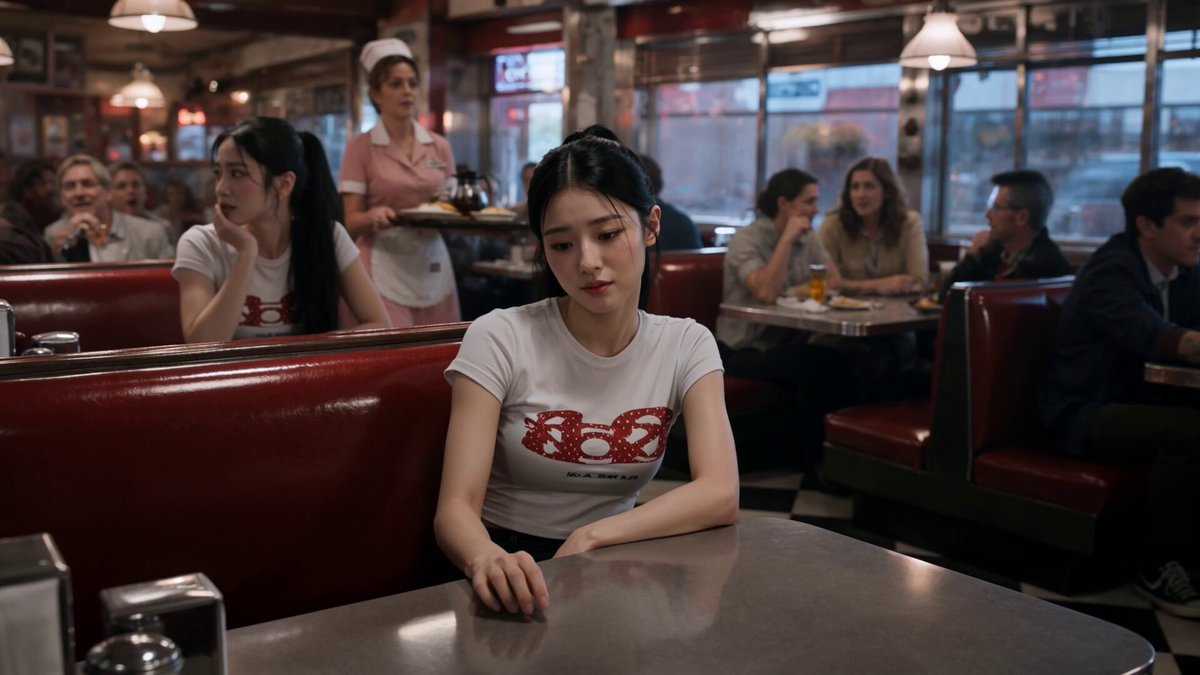
Photoreal cinematic models tend to produce convincing faces, skin, and natural light, which makes them strong for character-driven drama, faux-documentary, and product-style shots. Stylized or animated models hold up better for fantasy, illustration, and anything where the audience already accepts a non-real visual language. If your concept depends on realism, pick realism. If realism is not the point, a stylized model will hide far more artifacts.
Text-to-video, image-to-video, and video-to-video
- Text-to-video is best for exploration. It is fast, surprising, and ideal for finding a look you had not imagined.
- Image-to-video is best for control. Generate or design a keyframe you love, then animate it. This is the most reliable path for character consistency.
- Video-to-video is best for restyling existing footage or repairing motion you already like.
A useful rule: explore with text, lock with images, finish with video-to-video.
When a still plus motion beats full generation
Full generation is expensive in time and unpredictable in output. If your shot is a slow push on a static scene, a well-composed still image with a parallax or depth-based camera move will often look cleaner and render in seconds. Save full generation for shots where something within the frame must move.
Decision criteria in order of priority: does the shot require internal motion, does it require a specific face, and does it require a specific camera path? Three yeses means full generation. Anything less means a still is probably enough.
Prompting that survives the render
Most disappointing outputs are not model failures. They are underspecified requests.
The shot prompt formula
A reliable structure is: subject, action, environment, camera, lighting, style, and constraint. For example: "A tired baker, mid-forties, flour on her forearms, lifting a tray from a scorched oven shelf, small kitchen at dawn, slow handheld push-in from waist height, warm window light with cool shadows, muted documentary color, no camera shake after the first second."
Note the constraint at the end. Negative and boundary instructions matter more than adjective stacking. Telling the model what must not happen (no on-screen text, no extra hands, no fast cuts) prevents a surprising number of problems.
Dialogue, captions, and audio-first prompting
If the clip will carry narration, write the script first and generate visuals to the timing of the spoken lines. Generating first and forcing narration afterward almost always produces rushed pacing. Break the script into beats, then assign one shot per beat, with a target duration attached to each.
On-screen captioning should be planned, not improvised. Short-form feeds are frequently watched on mute, so the visual and the caption must carry the story together.
Handling artifacts and re-rolls
Expect a rejection rate. Budget three to six generations per usable shot and treat them as drafts, not failures. Common artifacts include morphing hands, flickering backgrounds, text that dissolves, and limbs that multiply. Change one variable per re-roll so you learn what actually caused the problem. If the same artifact appears across five attempts with the same prompt, the issue is the prompt structure, not luck.
Consistency across shots
Nothing breaks immersion faster than a character whose jacket changes color between cuts. Consistency is not a nice-to-have; it is the difference between a clip that feels authored and one that feels assembled.
Five habits that help:
- Lock a reference. Generate or design a clean front-facing image of your subject and reuse it as the starting frame across shots.
- Describe, do not assume. Every prompt should restate wardrobe, hair, and key props. Models do not carry context between unrelated generations.
- Keep the lens language stable. Mixing an extreme wide and a macro close-up in the same scene reads as a continuity error unless the cut is deliberate.
- Control the palette. Pick two dominant colors and one accent, then hold them across the sequence.
- Reuse environments. The same kitchen, street, or desk across shots builds a sense of place cheaply.
For multi-character scenes, keep physical interaction minimal. Contact between hands or characters is where most generative video visibly struggles.
A repeatable production pipeline
A consistent pipeline beats inspiration. Here is a five-stage loop that fits a single creator's schedule.
Stage 1: Concept sprint
Write ten hooks in ten minutes. No filtering. Then pick the three that make you feel something and write a one-sentence payoff for each. If you cannot state the payoff, the concept is not ready.
Stage 2: Shot list and storyboard
Convert the winner into five to nine shots with durations. Sketch them if you can, or generate cheap still keyframes. This stage should take less time than generation — if it does not, you are over-designing.
Stage 3: Generation and assembly
Generate in batch, organized by shot. Name files by shot number so assembly is mechanical. Drop everything onto a timeline in order before judging individual clips. A shot that looks weak in isolation often works in sequence, and a beautiful shot that breaks rhythm must go.
Stage 4: Sound, captions, and the first three seconds
Add music before you fine-tune cuts; music dictates pacing. Place captions in the safe zone, avoiding the bottom quarter where interface elements sit. Then rebuild the first three seconds last, once you know what the payoff is.
Stage 5: Testing and iteration
Publish three variants with different hooks but the same body. Compare retention at the three-second mark rather than total views, since hook performance is the variable you changed. Replace the losing hooks rather than remaking the whole video.
Editing for the feed
Vertical composition changes how you shoot. Center-weighted framing is safer than wide establishing shots, since the edges of a vertical frame are frequently covered by interface elements.
Cut on motion. A cut placed during a camera move or a gesture hides the seam far better than a cut during a static pause. Trim the start and end of every generated clip: models tend to ease in and ease out, which reads as sluggishness in a feed.
Aim for a loop. If the last frame resembles the first, viewers rewatch without noticing, and rewatches are one of the strongest signals you can produce.
Keep the total duration honest. Most concepts land between twelve and thirty seconds. If you need longer, consider splitting into a series rather than stretching a single clip.
Common mistakes and limitations
- Chasing photorealism with the wrong concept. If the idea does not need realism, realism only adds failure modes.
- Overloading a single prompt. One shot, one action. Multi-action prompts produce mush.
- Ignoring the edit pass. Raw generations rarely deserve to be published unchanged.
- Inconsistent framing. Mixing aspect ratios and focal lengths randomly reads as amateur.
- Neglecting sound. Audio quality affects perceived quality more than most creators expect.
- No hook discipline. If the first second is a logo or a slow pan, expect a steep drop.
- Publishing everything. Volume is useful only when each clip is genuinely finished.
Be honest about limitations, too. Text rendering inside generated frames is unreliable. Fine finger articulation is unreliable. Long continuous takes without cuts are unreliable. Design around these weak points instead of fighting them.
Ethics, disclosure, and platform rules
Generated video is now common enough that audiences forgive a lot — but not deception. Label synthetic media where a reasonable viewer could be misled about what is real, especially in news, testimonials, and anything depicting a public figure. Avoid recreating real people without consent, and avoid using generated likenesses in ways that imply endorsement.
Check the rules of the platforms you publish to. Disclosure requirements, music licensing terms, and rules about synthetic political content vary and change. Keep a simple habit: if a clip could make someone believe something false about a real person or event, either label it clearly or do not make it.
FAQ
How many generations does a finished clip usually take?
Plan on roughly three to six attempts per usable shot. A fifteen-second video with seven shots can realistically consume thirty to forty generations.
Do I need a powerful computer?
Only if you run models locally. Browser-based generation shifts the hardware burden elsewhere, though local setups give you more control over style and privacy.
Can AI-generated shorts actually go viral?
Yes, but usually because of the concept, not the tool. The strongest results come from creators who already understand hooks and pacing, then use generation to execute ideas that would otherwise be too expensive.
What is the biggest mistake beginners make?
Starting with visuals instead of a payoff. Decide what the viewer gets at the end, then build backward.
Should I mix generated footage with real footage?
Often, yes. Generated shots handle impossible visuals; real shots handle faces, products, and anything requiring trust. Blending them keeps production realistic.
How do I keep characters consistent?
Lock a reference image, restate wardrobe and features in every prompt, and keep lighting and lens language stable across shots.
Putting it together
Pick one concept this week. Write the payoff sentence first. Storyboard five to nine shots, generate them in batch, assemble in order, then rebuild the opening second until it earns the next one. Publish three hook variants, read the three-second retention numbers, and iterate only on what failed.
That loop — concept, shot list, generation, edit, test — is the entire job. The models will keep improving, but the discipline of building around a payoff and respecting the viewer's attention will keep working long after any particular tool becomes obsolete.
