


Viral Is Not Luck
Every creator has seen a video that took off overnight and wondered how it happened. The comfortable answer is to call it luck, but the truth is more useful than that. A viral video is the product of a set of choices that line up: the right idea, the right format, the right timing, and a distribution engine that knows how to push content people actually want to watch. You cannot control everything, but you can control a great deal of it.
The goal of this guide is to move you from the mindset of hoping something catches fire to the practice of building conditions where it is far more likely to. We will look at how to choose the tools that fit your goals, why consistency matters more than a single masterpiece, how to use trends without losing your identity, and how to turn a burst of attention into audiences that stay.
The advice here is deliberately platform-agnostic. Whether you publish reels, shorts, or vertical videos on any social network, the underlying principles are the same: catch attention fast, deliver value, keep your style recognisable, and publish with a rhythm you can sustain.
How Social Algorithms Actually Reward Videos
To understand virality, you have to understand the system that decides what gets shown. Modern social platforms are recommendation engines. They are constantly measuring how people react to each piece of content they surface, and they use those reactions to decide what to show more people.
Several signals matter a great deal. The first is early retention: does a viewer watch past the first few seconds? Pauses and clicks away from a video tell the system that it failed to hold attention, and the platform will stop recommending it. The second is engagement, measured in things like likes, comments, shares, and saves. Sharing and saving are especially strong signals, because they mean someone found the content valuable enough to reuse or pass on. The third is completeness: videos that are watched to the end tend to be rewarded.
This explains the single most important rule of short-form content: the first seconds decide everything. The open of your video is not an introduction; it is a test. If the platform's algorithms see people leaving at the start, your video will never reach a wide audience no matter how good the rest of it is. So you design the open to do one job and one job only: make someone want the next second.
It also explains why consistency of style helps. When the system learns that a particular channel reliably holds attention, it becomes more willing to recommend that channel's future videos. Building a track record of strong hook-to-payoff videos gives you a reputation with the algorithm itself.
Choose the Right Tools for Your Goal
If you aim to make videos that get watched and shared, your choice of production tools matters, but only as a means to an end. The most impressive-looking video in the world does not help you if the idea is weak or the open falls flat. Tool selection should be driven by the result you want, not by what is newest.
Think about the job you need to do. To show an impossible world or a stylised concept quickly, generative tools are often the fastest route. To convey a genuine moment with real people, a camera in the right hands is hard to beat. To iterate on ideas rapidly before committing, a fast, cheap tool wins every time.
The pragmatic approach is to keep a small toolkit with different strengths rather than one expensive all-purpose option. Recognise what each tool is good at and delegate accordingly: fast exploration for brainstorming, high-quality generation for the final look, traditional capture for moments that must feel genuinely real. Clarity about intent is what makes you choose well.
Consistency Is the Real Superpower
A single viral hit is exciting, but the creators who grow over the long term are the ones who can repeat their success. That repeatability comes from consistency, and consistency has several interlocking parts.
The first is visual consistency. If your videos all share a recognisable palette, lighting, and framing, audiences and the algorithm start to associate that look with your content. This recognition builds trust and momentum. It is tempting to chase a different style in every video, but a coherent identity is far more valuable than constant novelty.
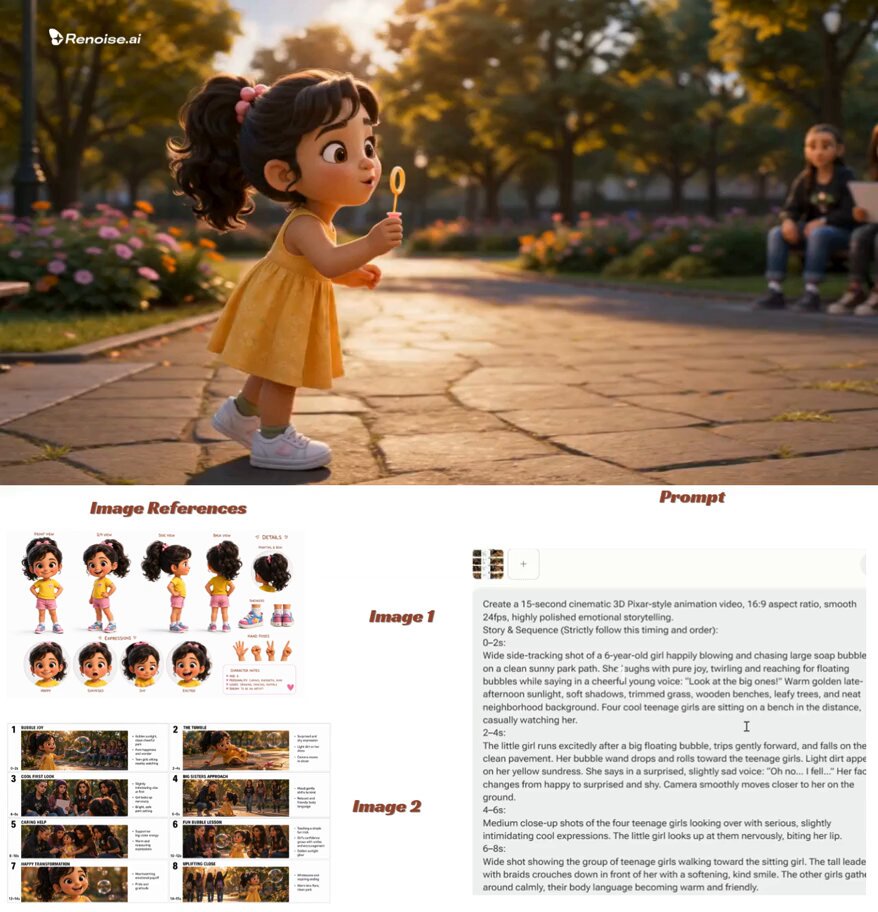
The second is character consistency. If your content features a recurring character—an avatar, a mascot, or a presenter—keep a reference set of that character’s appearances across angles and expressions, and use those same references every time. This prevents the jarring effect of your hero changing appearance from video to video, which reads as careless.
The third is content consistency. Establish a format or a type of value you reliably deliver, whether that is a quick tip, a before-and-after, or a story. Audiences subscribe for a predictable kind of value; giving it to them consistently is what turns casual viewers into a following.
Riding Trends Without Losing Yourself
Trends are the pulse of short-form platforms. Sounding clips, formats, and challenges cycle quickly, and tapping into them can give your video an initial boost because the platform already knows the audio or format is popular. A trend is not a plan, though. It is a boost that only works if you bring your own value on top of it.
When a trend appears, ask two questions. Does it fit my channel and my audience? And can I add a fresh angle rather than simply copying what everyone else is doing? A generic imitation of a trend gets lost in the flood; a version that carries your distinct voice and perspective can stand out within the wave.
Speed matters when trends are short-lived. If you can adapt quickly and publish while the moment is hot, you maximise the impact. But never let a trend drag your content into something that is not yours. Use the trend as a vehicle for your consistent identity, not as a substitute for it.
The Craft of a Compelling Hook
Everything we have discussed comes down to the open of your video. Here is how to build a hook that gives your content the best possible chance.
Start with the result, the question, or the surprise. Show the most compelling outcome right at the beginning, and let the rest of the video explain how you got there. If your instruction is strong but the open is weak, you lose the viewer before they ever see the value.
Make a promise you can keep. Saying you will share three secrets and then delivering three secrets earns trust that carries into future videos. Overpromising and underdelivering is the fastest way to damage a growing audience.
Vary your hooks from video to video. If every video opens the same way, the format stops surprising people. A strong, varied open keeps your content feeling fresh even when the underlying format stays consistent.
Finally, close with a clear next step. Whether it is a question that prompts a comment, a reason to save the video, or a nudge to watch another piece, a deliberate closing turns passive viewing into momentum for your channel.
Turning Attention Into a Following
Virality brings traffic. Traffic only becomes a lasting asset if you convert it into viewers who stay. If the video that went viral looks nothing like everything else you make, curious new viewers will click away and never return. This is why consistency matters so much at the peak moment of growth: the video you are known for should be recognisably part of a bigger set of content they will want to explore.
Prepare for growth before it happens. Make sure your profile communicates what you create and why someone should follow. Have a few more strong videos published so that the influx of viewers has somewhere to go. A single viral clip with an empty shell around it captures little lasting value.
Engagement also compounds. Responding to comments, encouraging saves and shares, and referencing past content in new videos all deepen the connection. The relationship you build during a period of attention determines whether that attention is a one-time event or the beginning of a following.
Adapting the Same Video to Each Platform
The same underlying idea can perform very differently depending on which platform it lands on, because each platform has its own audience behaviour and conventions. A video that is too long for one feed, or that uses a format audiences there have moved past, will struggle no matter how strong the concept is.
Rather than reposting one identical file everywhere, adapt the version to the platform. Shorten or lengthen the cut to match the platform's typical attention span. Rework the caption tone to fit the community's style. Re-time the hook so it accounts for how quickly that platform surfaces content. Small adjustments like native-aspect-ratio, appropriate subtitle size, and an opening that suits the platform's dominant behaviour can change results dramatically.
Maintain a pool of finished concepts and generate platform-specific edits from it. This way you stay consistent in identity across channels while still respecting each platform's quirks. The goal is not to do more work; it is to make the same effort work harder by meeting audiences where their expectations already are.
Speed Adds Up Over Time
Trends move fast, and the ability to publish a well-made video while a moment is still warm is a genuine edge. But speed should never become an excuse for sloppiness. The habit you want is a fast, reliable pipeline that still respects your quality bar, not a race that sacrifices the very consistency that makes content watchable.
The easiest way to gain speed is to remove decisions from the moment of production. Have your formats, your shot styles, and your hook templates decided in advance. Have a backlog of concepts ready so you are not hunting for ideas under deadline pressure. The faster you can convert a fresh trend into a finished piece that still looks like you, the more often you will be early to the moments that drive the biggest reach.
It also helps to build simple drills into your routine. Recreate a recent video in a new format for practice, or produce a stripped-down version of a concept just to rehearse the pipeline. Speed is a skill like any other; it improves with deliberate repetition, and it pays off in more shots on goal every single week.
Building a Rhythm You Can Sustain
No strategy works if you cannot stay consistent with it. Publishing regularly matters, but sustainability matters more. The right rhythm is the one you can keep up even during a busy or low-mood week.
Batch your work where you can. Generate several ideas, plan their structures, and produce them in one focused session rather than scrambling every day. A backlog of ready-to-publish videos gives you flexibility and removes the pressure that kills consistency.
Review the performance of your videos over time and adjust your direction based on what actually works. Let data refine your instincts instead of guessing in the dark. What you learn from each batch should feed directly into the next one, turning your process into an engine that improves with repetition.
Frequently Asked Questions
How long should a video be? As long as it needs to deliver its promise and not a second longer. A tight 20-second tip can outperform a padded minute. Cut anything that does not serve the idea.
How do I handle the algorithm punishing me for a weak video? One weak video is not a disaster. Consistency over time outweighs any single result. Keep the strong structure and rhythm going, and the pattern re-establishes.
Should I imitate a viral video from another creator? You can study why it worked, but copying it directly fills the feed with duplicates. Reuse the principle behind it with your own idea and voice.
Is going viral essential to growing? No. Many channels grow steadily through consistent value without any single breakout hit. Virality is a bonus, not a requirement.
What is the quickest improvement to make? Fix your first few seconds. A strong hook that holds early attention is the highest-leverage change you can make to any video.
Put the Principles to Work
Viral moments are not purely random, but they are also not reliably predictable. What you can control is the quality of your process: a strong hook, a clear structure, consistent style, wise use of trends, and a sustainable publishing rhythm. Over time, that process produces more shots on goal, more videos worth sharing, and an audience that keeps returning between the occasional hits. Stop chasing the one big spike and start building the system that makes a spike far more likely. That is the practical path to making videos that stand out.
