
Why Visual Storytelling Decides Whether a Short Film Works
A short film has minutes, not hours, to make someone care. That constraint turns every frame into a negotiation: what can be shown instead of said, what can be implied instead of explained, and what can be cut entirely. The shorts that linger in memory — the ones that get shared, discussed, and rewatched — usually rely on images doing the heavy lifting while dialogue stays sparse or disappears altogether.
This is not a stylistic preference. It is a structural necessity. When you strip exposition, you gain density. A single shot of a hand tightening around a shuttlecock, a locker-room light flickering, a hallway stretching a beat too long — each communicates emotional state faster than three lines of dialogue. Visual language is compression.
The rise of generative video tools has made this both easier and harder. Easier, because a solo creator can now produce footage that once required a crew, a location, and a budget. Harder, because tools do not have taste. They will happily generate a beautiful, meaningless shot. The craft has shifted from "can I capture this?" to "do I know what I am trying to say, and can I describe it precisely enough for a machine to render it?"
That shift is what this guide addresses. Instead of treating AI video as a novelty, we will treat it as a cinematography problem: how to build a coherent visual language, how to control it across dozens of shots and several sessions, and how to keep the result from looking like a demo reel rather than a story.
The Five Layers of Visual Language You Need to Control
Cinematography is often taught as a list of gear decisions, but on a short film it functions as a stack of five communicating layers. When they agree, a scene feels inevitable. When they contradict each other, the audience senses something is off without being able to name it.
Light and Color as Emotional Grammar
Light does three jobs at once: it reveals form, it directs attention, and it signals emotional temperature. A high-key, evenly lit room reads as safe and clinical; a single hard source from the side reads as tense and interrogative. Before you generate anything, decide the emotional register of each scene and translate it into a lighting statement: source direction, hardness, ratio between key and fill, and color temperature.
Color should be assigned, not decorated. Pick two or three dominant hues for the film and let them carry meaning. If the protagonist's world is desaturated and cold, a warm accent becomes an event — it appears when hope appears, and its absence in the final act is felt without anyone mentioning it. Consistency matters more than beauty. A muddy palette applied consistently beats five gorgeous shots that belong to five different films.
Camera Movement as Narration
Movement is a narrator's voice. A static frame says: observe this. A slow push says: something is about to change. A handheld drift says: this is unstable. A fast whip pan says: time has jumped.
In generative video, movement is also the hardest thing to keep coherent, because the model must maintain spatial logic while the frame changes. The practical rule: choose one dominant movement per scene and let it mean something. If every shot pushes in, none of them do. Write movement into the shot list as a verb with a speed and a destination — "slow push from medium to close across the length of the line" — rather than as an adjective like "cinematic."
Composition and Negative Space
Negative space is not empty; it is pressure. A figure placed at the edge of a wide frame creates tension that a centered figure does not. A ceiling left in frame implies weight above the character. Space left to the right of a moving subject implies where they are going — or what they are fleeing.
For short films, negative space is also an economy. It gives the eye somewhere to rest between dense images, and it lets a single strong composition carry a beat that would otherwise require a cut. When you plan a frame, ask what you are leaving out and why.
Lens Choice, Depth, and Texture
Lens language tells the audience how close they are allowed to get. Wide lenses exaggerate space and isolate figures within it; long lenses compress and create intimacy or surveillance depending on distance. Generative models respond well to explicit lens and format language — "35mm, shallow depth of field, foreground bokeh" produces noticeably different behavior than "wide shot."
Depth cues separate a convincing image from a flat one: foreground obstruction, mid-ground subject, background atmosphere. Build all three layers whenever practical. It is one of the cheapest ways to make generated footage feel photographed.
Rhythm: Editing and Duration
Rhythm is the layer most creators under-plan. Two shots with identical content feel completely different at 1.5 seconds and 6 seconds. Short films can survive simple stories with sophisticated rhythm; they rarely survive the opposite.
Before editing, mark the emotional beats. Then decide, beat by beat, whether the edit should accelerate, hold, or interrupt. A held shot after a fast sequence reads as shock. A cut on motion reads as continuity. A cut on stillness reads as a decision.
Write a Visual Script Before You Generate a Single Frame
The single biggest predictor of whether an AI-assisted short film works is whether the creator wrote a visual script first. Not a screenplay — a visual script. It documents, shot by shot, what the audience sees and what changes between the first frame and the last.
A practical format has six columns: shot number, duration estimate, framing and lens, subject and action, lighting and palette, and audio. Do not write dialogue in the visual script. If a beat cannot be communicated without words, add a visual action to carry it — a dropped object, a door closing, a look away.
Then write a one-line visual thesis for the entire film. Something like: "the film is told in wide, cold frames that gradually warm and tighten as the character reconnects." Every shot either serves that thesis or fights it. This sentence is what keeps a thirty-shot project coherent when you are generating shots across multiple sessions and different tools.
Also define what the film never shows. Constraints are generative. Deciding that you will never cut to a full face in the first act gives the second act a device to spend.
Previsualization: Storyboards, Animatics, and Look Development
Previsualization used to be a luxury. Now it is a prompting necessity, because it converts vague taste into specific instructions.
Start with stills. Generate six to twelve reference frames that establish the film's palette, contrast, and texture. These are not final shots; they are a target. Keep them on a single reference sheet and look at it before every generation session. Drift is invisible shot to shot and obvious across a week.
Then build an animatic: put the stills in sequence with rough timings and scratch audio. Even at crude fidelity, an animatic exposes problems invisible in a shot list — a scene that has no visual escalation, a transition that breaks rhythm, an ending that arrives without setup.
Look development is the third pass. Choose the specific visual signature: film grain or clean digital, halation or crisp highlights, anamorphic flares or none, 24fps motion blur or a sharper cadence. Decide once, document it, and reuse the same phrasing in every prompt.
Character Consistency Across Shots: Techniques That Hold Up
Character consistency is where most AI short films collapse. The face drifts, the wardrobe changes, the apparent age shifts by a decade between cuts. The durable fix is not a magic prompt. It is redundancy:
- Build a character sheet first: front, three-quarter, profile, full body, plus two extreme expressions. Use these as visual references every time.
- Lock the descriptor text. Write one paragraph describing the character's appearance in concrete, non-contradictory terms and reuse it verbatim.
- Constrain wardrobe and hair. Change one element at a time, on purpose, and treat any change as a story event rather than a rendering accident.
- Control the environment as strictly as the character. If lighting direction changes between shots of the same scene, the face reads as a different person even when the geometry matches.
- Prefer coverage that hides what you cannot hold. Three-quarter turns, backlight, and shadowed profiles are far more stable than straight-on close-ups.
- Generate more takes than you need, then select for consistency rather than for the single best frame. A slightly less beautiful shot that matches its neighbors is worth more than a hero image that breaks the sequence.
If a character must change — aging, injury, transformation — stage it as a deliberate cut with a clear visual trigger, so the audience reads intention rather than error.
Sound Design and Image Rhythm: The Ingredient Most Creators Skip
A silent cut and a scored cut are different films. Sound is not a finishing step; it is half of the rhythm layer.
Plan sound in three bands. The first is the room: environmental tone that tells the audience where they are and whether the space is safe. The second is action: feet, fabric, breath, impacts. The third is score or designed texture. Mix them so the room is always present, action is specific, and music enters only when the film needs to change gear.
Because generated footage often arrives without usable production audio, you build the soundscape from scratch. That is an opportunity. Without set noise, you choose exactly what the audience hears — exaggerating breath in a tense scene, muting the world entirely during a realization, letting a single repeated sound become a motif the audience learns to anticipate.
Align cuts to audio events rather than the other way around. Cutting on a breath, a footfall, or the start of a musical phrase makes an edit feel intentional even when the visuals are ordinary.
Texture Control: Escaping the Plastic Look
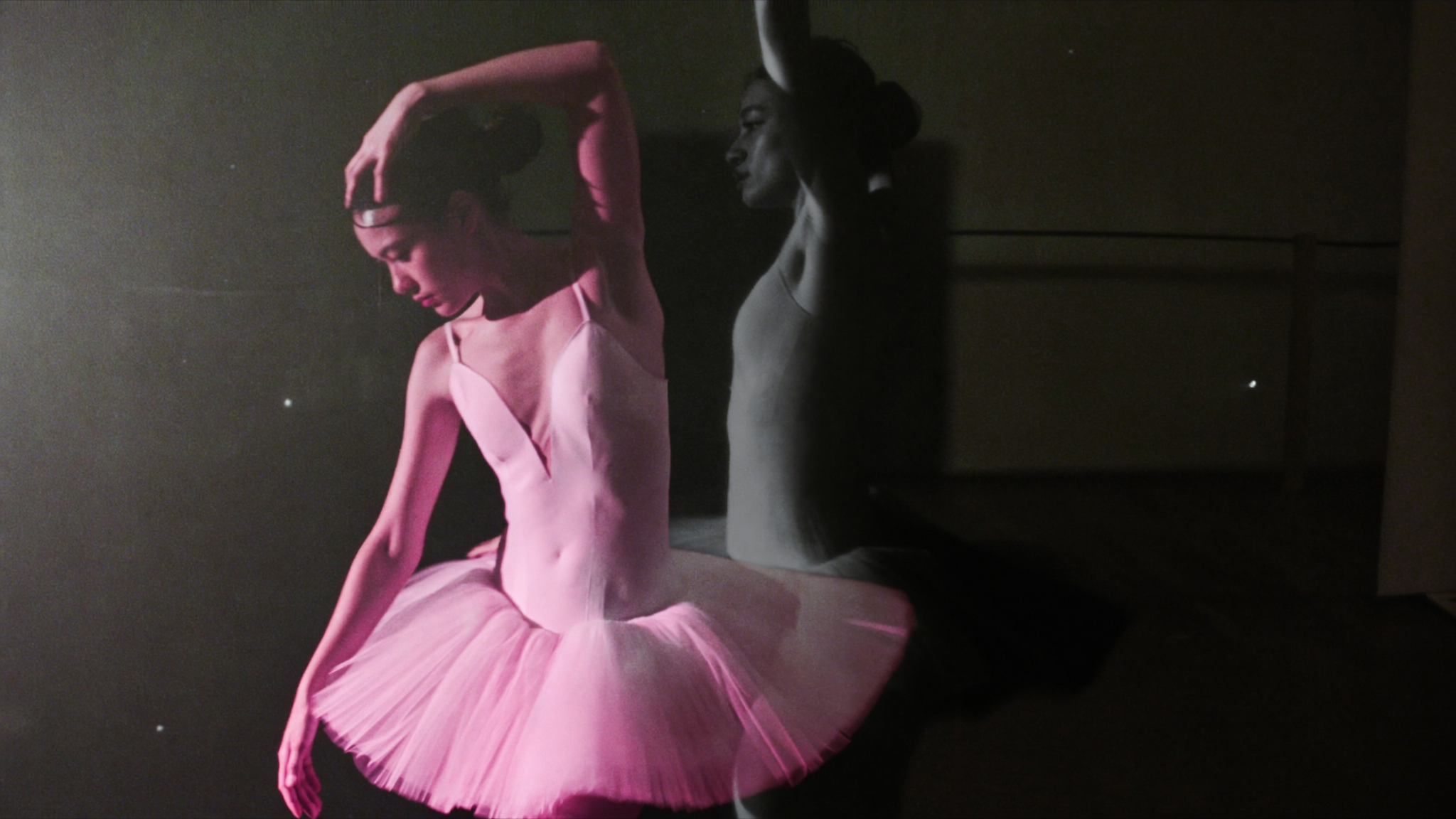
Smooth, glossy, over-clean images are the default failure mode of generated video. Real footage has imperfections, and those imperfections carry the credibility of the image.
Control texture explicitly. Ask for specific surface behaviors: skin with visible pores and slight unevenness, fabric with fiber and weight, metal with smudges and micro-scratches, glass with fingerprints and imperfect reflections. Add atmospheric elements — haze, dust motes, smoke, humidity — because atmosphere scatters light and creates depth that a clean render cannot fake.
Then add an imperfection layer in post: grain, subtle chromatic aberration at the edges, a touch of vignetting, and a gentle highlight roll-off. Keep it restrained. The goal is not to look vintage; the goal is to look captured, as if a sensor and a lens did the recording rather than a render farm.
Motion blur deserves its own note. Frames that look too sharp during movement are a giveaway. Match your shutter behavior to your frame rate and keep the blur consistent across the whole film, including shots that came from different generation runs.
A Practical End-to-End Workflow for an AI-Assisted Short
Here is a workflow that scales from a sixty-second piece to a ten-minute short.
- Story and visual thesis. Write the beat sheet, then reduce it to one sentence describing how the images will tell it.
- Visual script. Six columns, no dialogue, every shot planned with framing, action, light, and audio.
- Look development. Generate reference stills and lock palette, contrast, texture, and grain rules.
- Character sheets. Build and freeze appearance references plus descriptor text.
- Animatic. Sequence stills with rough timing and scratch sound.
- Generation passes. Generate by scene rather than by shot, so consistency stays local. Keep a log of prompts that worked and the settings used.
- Selection. Pick for continuity first and beauty second, then assemble a rough cut immediately.
- Sound build. Room, action, score. Cut to audio events.
- Texture and grade. Unify grain, contrast, and color across everything.
- Test screening. Show it to someone who knows nothing about it and ask what they understood. Their confusion is your edit note.
Two habits matter more than any single technique. First, generate shots that will sit next to each other in one session or with identical settings. Second, keep a project bible — one document containing the thesis, palette, references, and proven prompt patterns. It is the difference between a film and a folder of clips.
Common Mistakes and How to Fix Them
Gorgeous shots, no through-line. Return to the visual thesis and cut anything that does not serve it, however beautiful it is.
Too many shot types. Define a small kit — establishing wide, medium two-shot, close detail, insert — and use it consistently. Style comes from repetition, not variety.
Inconsistent light direction within a scene. Lock one lighting diagram per location and reuse it for every shot in that location.
Dialogue carrying the story. Convert each line of exposition into an action or an object the audience can watch.
Over-long shots. Cut ten percent off your first assembly and see what breaks. Often nothing does, and the film gets faster and better.
Music from the first frame. Earn the score. Let the room and the action carry the opening, then bring music in when the film changes gear.
No ending image. Design the final frame as a deliberate echo or inversion of the opening frame so the film closes rather than stops.
FAQ: Visual Storytelling with Generative Video
How many shots does a short film need? Fewer than you think. A tightly told three-minute film often works with fifteen to thirty shots. What matters is escalation, not count.
Do I need a screenplay? You need a beat sheet and a visual script. Formal screenplay formatting is optional; clarity of image and change is not.
How do I keep a consistent look across sessions? Lock a reference sheet, a descriptor paragraph, and an imperfection layer. Re-apply the same rules instead of re-describing them loosely each time.
Should I generate longer clips or shorter ones? Generate slightly longer than you need for any shot containing movement, then trim. You need handles for editing, and you will rarely get a clean usable frame at the very start of a clip.
What if the tool cannot hold character consistency? Change the coverage, not the standard. Use profiles, backlight, silhouettes, hands, and objects. Restriction is a legitimate artistic choice, and audiences read it as style.
How important is sound for a generated short film? As important as the image. Weak sound makes strong footage feel like a test render; strong sound makes modest footage feel like a film.
When should I stop iterating? When the film communicates the beat without you explaining it to a viewer. Additional passes rarely change comprehension, only polish.
