
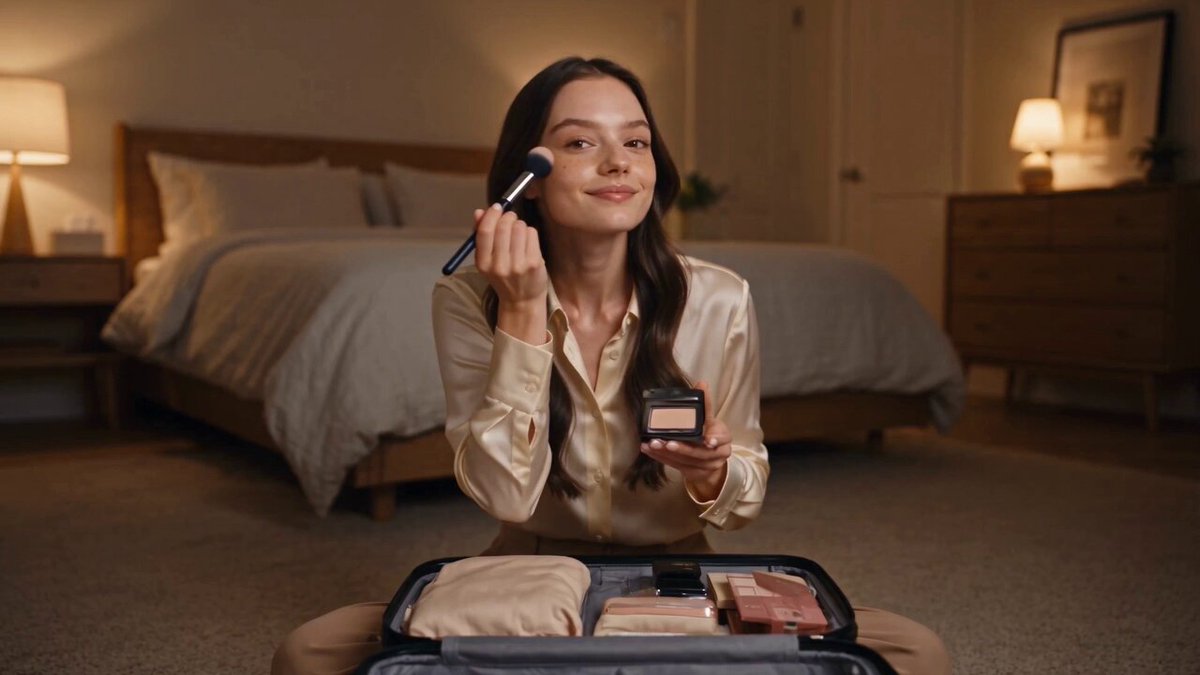
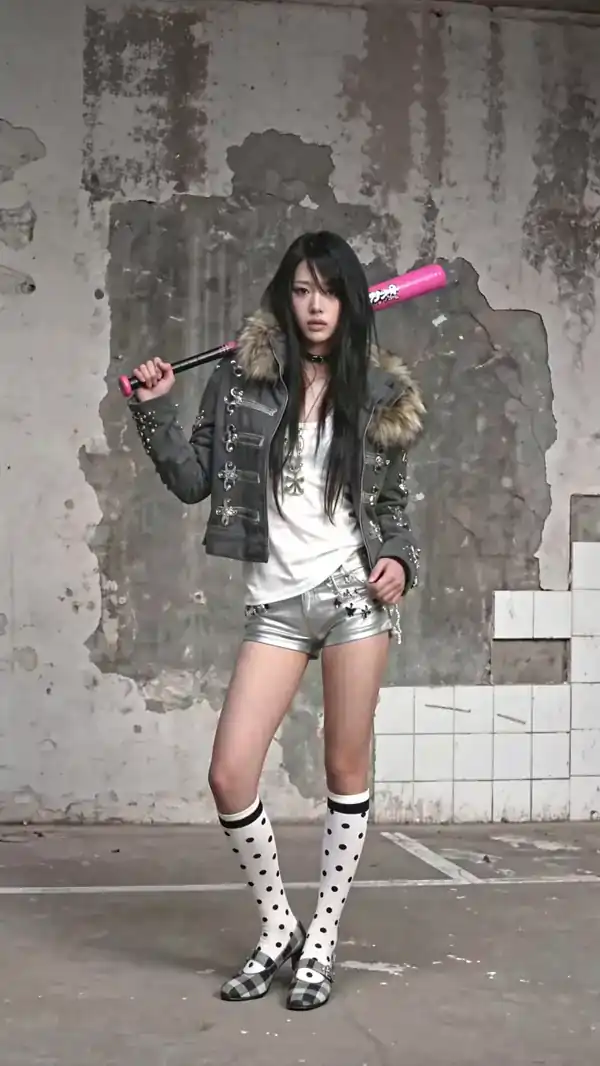

You type a sentence, press generate, and a few seconds later a moving image appears that looks close to what you imagined. That is the strange new reality of AI video work: language has become a production tool. The words you choose are not a request to a colleague who fills in gaps with judgment and experience. They are closer to a machine instruction set, and every adjective, noun, and omitted detail becomes part of the frame.
This guide treats that reality seriously. It covers how to build a precise prompt vocabulary, how to plan shots before generating anything, how to keep characters and locations consistent across clips, and how to assemble output into something that feels intentional rather than lucky.
Why Words Become Reality in AI Video Work
Generative video models are pattern completers. They take a text representation, combine it with noise, and sample toward the most plausible visual arrangement that matches. Nothing in that process knows what you meant. It only knows what you said, plus everything you left unsaid, which the model happily fills with whatever is statistically common in its training data.
That is the double edge of the technology. Say "a woman walking in the rain" and you will get a woman, rain, and a walk — but also a specific age, wardrobe, city, time of day, lens, color palette, and camera height that you never chose. Some of those defaults will be fine. Others will quietly contradict the story you are telling.
Experienced creators learn to think of prompting as narrowing a distribution. Each well-chosen term removes a swath of possibilities the model would otherwise consider fair game. When the distribution is narrow enough, the output becomes predictable enough to shoot a sequence, not just a clip.
The practical consequence is that vagueness is not neutral. A thin prompt does not produce a thin result — it produces a substituted result, and the substitution is made by a model that has no idea what your project needs.
Precision Beats Poetry: Writing Prompts That Survive Rendering
Beautiful writing and effective prompting are different skills. A prompt is a technical document with emotional intent. It should read like a shot note from a director to a cinematographer: specific, ordered, and free of ambiguity the crew would have to resolve on set.
Consider the difference. "A sad woman in the rain, cinematic" gives the model three vague anchors. "Wide shot from behind, woman in her thirties in a soaked grey wool coat walking away down a narrow cobblestone street at night, sodium streetlights, wet reflections, slow handheld follow, shallow depth of field, desaturated teal shadows" gives it fourteen. The second version is not more artistic. It is simply more constrained, and constraint is what makes generation repeatable.
What vague prompts actually produce
Unconstrained clips tend to fail in recognizable ways: subjects drift toward the center of frame, lighting becomes generic soft daylight, camera movement defaults to a slow push, and backgrounds fill with unreadable signage or crowds. None of these are wrong, but together they create the flat, unmistakable look of unfinished AI footage.
Build a personal prompt lexicon
Keep a plain text file with the vocabulary you actually use, grouped by category: shot sizes, camera moves, light sources, color treatments, textures, pacing words, and mood words. Add a term only after you have confirmed it changes the output in a direction you like. Over a few weeks this file becomes more valuable than any single model upgrade.
Cinematic Vocabulary That Actually Changes Pixels
Not every word carries equal weight. Models respond strongly to physical description, camera geometry, and light. They respond weakly to abstract emotion words like "powerful" or "epic" unless those are anchored to something visible.
Shot size, angle, and framing
Extreme wide, wide, medium, medium close-up, close-up, and extreme close-up are the backbone of any shot list. Pair them with angle language: eye level, low angle, high angle, overhead, Dutch tilt, over-the-shoulder. Specifying framing beats — "subject in the left third, negative space on the right" — keeps compositions from drifting between clips.
Camera movement verbs
Movement words are among the most powerful tokens available. Dolly in, dolly out, truck left, crane up, orbit, whip pan, tilt down, handheld follow, and static locked-off all read differently to a model. Use one primary move per clip. Stacking three movements in a single prompt usually produces mush or an unmotivated drift.
Lenses, light, and color
Focal length language — 24mm wide, 50mm normal, 85mm portrait — shapes perspective and compression. Lighting language should name direction and source: backlit by a window, side-lit by a practical lamp, top light through blinds, rim light from behind. Color words work best when they describe a relationship rather than a single hue: warm highlights against cool shadows, teal and amber separation, monochrome with a single red accent.
Texture, film stock, and grain
Texture vocabulary controls the finish: 16mm grain, digital clarity, subtle halation, motion blur, shallow depth of field, anamorphic flare. These terms determine whether a clip feels like archival footage or a modern commercial. Pick a texture and hold it across an entire sequence, or the edit will look assembled from different projects.
Constraints and Negative Space: What You Do Not Say
Every prompt contains hidden assumptions, and the model resolves them silently. If you do not state the time of day, you get daylight. If you do not state wardrobe, you get contemporary casual clothing. If you do not state crowd density, you get an empty street or an unreadable mass of extras.
The most common hidden assumption is text. Ask for a shop, a poster, or a screen and you will often get garbled lettering. Some engines support explicit negative prompts; others ignore them entirely. Where negatives do not work, describe the desired state instead: "clean uniform backdrop," "unbranded surfaces," "plain grey wall." A positive description of a clean frame outperforms a negation.
Write your constraint list as a short checklist you run before every generation: aspect ratio, duration, time of day, wardrobe continuity, background complexity, on-screen text, and camera height. Two minutes of checking saves twenty minutes of regeneration.
Plan First: Shot Lists, Beat Sheets, and Continuity
Generating before planning is the most expensive habit in AI video production. Planning does not have to be heavy. A one-page beat sheet followed by a shot list is enough for most short projects.
From beat sheet to shot list
Write your story as five to eight beats: setup, inciting detail, complication, turn, resolution. Convert each beat into one to three shots, and give every shot a single job. If a shot does not advance a beat or establish something the audience needs, cut it before you generate it.
Each row in the shot list should hold: shot number, size, movement, subject action, location, lighting, duration, and the prompt draft. This table becomes your production database and your edit plan at the same time.
Continuity across clips
Consistency is the hardest problem in AI video. Three techniques work reliably. First, generate a character reference still and use image-to-video for every shot featuring that character. Second, lock wardrobe, hair, and location descriptors verbatim in every prompt — identical wording, not paraphrases. Third, use first-frame and last-frame guidance where your tool supports it, so consecutive clips share a frame at the seam.
Small drift is inevitable. Choose which inconsistencies matter and shoot coverage: if you have a wide, a medium, and a close-up of the same moment, an editor can hide a mismatch between takes.
A Practical End-to-End Workflow
Step 1: Brief and reference board
Write one paragraph describing the piece and who it is for. Collect six to ten reference images covering light, palette, wardrobe, and framing. References keep your vocabulary honest, because you can compare output against something concrete instead of your memory of an idea.
Step 2: Beats and shot list
Turn the brief into beats, then into a shot list with durations. Add up the durations and check them against your target runtime before generating anything. Most first drafts run far too long.
Step 3: Prompt drafting
Write every prompt in the same order: subject, action, wardrobe, environment, lighting, camera, lens, texture, duration. Consistent ordering makes it easy to spot which variable caused a problem when a clip comes back wrong.
Step 4: Generate in test batches
Start with three-second tests of the hardest shots. If the difficult shots work, the easy ones will. Generate three to five variations per shot, changing one variable at a time, and save the seed of anything promising so you can return to it.
Step 5: Select, repair, and upscale
Choose the best take per shot and note the specific failure in the rejects — drifting hands, unwanted text, a jump in lighting. Repair with a localized regeneration, an inpainting pass, or a different engine, rather than re-rolling the entire shot from scratch.
Step 6: Assemble, sound, and grade
Cut picture to a temp music bed first, then record or generate voice, then add effects and ambience. Grade last, with one look applied across the whole timeline so mismatched clips converge visually. Slight grain, a gentle contrast curve, and a shared color cast do more for cohesion than any single fix in the generator.
Step 7: Quality control
Watch the finished piece three times: once for story, once for technical artifacts, once with sound only. Check for flicker, warped hands, drifting backgrounds, abrupt exposure changes, and audio that does not match the room. Fix what a viewer would notice on a phone screen, and let the rest go.
Mistakes That Sabotage Otherwise Good Prompts
The first mistake is contradiction: asking for a locked-off handheld shot, or golden hour at midnight. Models resolve contradictions arbitrarily, and the result looks broken rather than stylized.
The second is dilution. Past a certain length, added adjectives compete with each other and the most specific terms win unpredictably. If a prompt stops improving after thirty or forty words, split the shot instead of lengthening the sentence.
The third is changing many variables at once. If you alter lighting, lens, and action simultaneously, you cannot tell what fixed the problem — or what caused it.
The fourth is ignoring delivery specifications. Aspect ratio, frame rate, and duration should be decided before generation, because reframing a vertical clip into a widescreen cut destroys compositions you carefully set up.
Finally, do not expect consistency without a reference. Text alone rarely holds a face across ten clips. Reference images, seeds, and verbatim descriptors do the work.
Matching the Tool to the Intention
Different engines have different strengths, and the choice matters as much as the prompt. Runway Gen-4 is widely used for stylized movement and character continuity. Kling is often chosen for naturalistic motion and physics. The Wan series handles detailed environments well, while Veo and Sora are strong on complex scenes with multiple subjects. Pika and Luma remain useful for fast iteration and stylized short loops.
For post-production, DaVinci Resolve offers the most complete free grading and finishing path, Premiere Pro fits teams already in a creative suite, and CapCut handles fast vertical-first edits. Topaz Video AI is a common choice for upscaling and frame interpolation. For audio, ElevenLabs covers voice, while Suno and licensed library tracks cover music.
Run a two-minute test on a new engine before committing a project to it. Generate the same three-shot sequence with identical prompts across two tools and compare motion, texture, and consistency. Real footage differences appear faster than benchmark claims.
Frequently Asked Questions
How long should an AI video prompt be?
Most effective prompts land between twenty and sixty words. Below twenty, the model fills too many gaps. Above sixty, competing terms start to cancel each other out. If you need more detail, split it into two shots.
Do negative prompts actually work?
Sometimes. Some engines support them directly and respond well; others ignore them or apply them unstably. When in doubt, restate the constraint positively: instead of "no people," write "empty street at dawn."
How do I keep a character consistent across many clips?
Generate one strong reference image, then use image-to-video or character reference features for every shot. Keep wardrobe, hair, and location descriptors word-for-word identical in every prompt, and prefer the same seed family across a sequence.
Why does my footage look like AI even when the prompt is detailed?
Usually because of three things: uniformly soft lighting, drifting camera motion with no motivation, and inconsistent texture between shots. Add a named light source, one deliberate camera move per clip, and a single film-look treatment applied across the whole edit.
Should I generate audio at the same time as video?
No. Lock picture first. Audio decisions made before the cut changes cost you time and often force awkward compromises at the edit stage.
How many variations should I generate per shot?
Three to five for important shots, one or two for utility shots. Save seeds for anything promising, and always change one variable at a time so you learn something from every generation.
A Closing Checklist
Before you publish, confirm that every clip shares a consistent palette and texture, that characters hold together across cuts, that no unintended text or artifacts remain, that audio matches the space on screen, and that the runtime serves the story rather than the other way around.
Treat your prompt file as a production asset. Update the vocabulary list after every project, retire terms that never change the output, and keep the shot-list template that worked. Words really do become reality in this medium — so the useful discipline is not writing more beautifully, but writing more precisely.
