


Most creators treat YouTube optimization as a post-production chore: upload, paste a few tags, hope the algorithm is in a good mood. Channels that grow steadily do the opposite. They treat optimization as a production system that starts with an audience question and ends with a measured result, and every step in between is repeatable.
This guide walks through that system end to end: intent research, retention-first scripting, AI-assisted production, editing decisions, packaging tests, publishing rhythm, community work, and the metrics that tell you whether any of it worked. It is deliberately tool-agnostic, so you can run it with a phone and a free editor or with a full generative pipeline.
Start With Search Intent, Not Keywords
Keywords are a symptom. Intent is the cause. Two videos can target the same phrase and still serve completely different viewers, which is why copying a competitor's tag list rarely produces a competitor's results.
Sort every idea into one of four intent buckets:
- Answer seekers — 'how do I fix X', 'what is Y'. They want resolution fast and will leave the moment they get it. Optimize for clarity and speed.
- Comparison shoppers — 'X vs Y', 'best Z for beginners'. They want a decision framework and a recommendation. Optimize for structure and honest trade-offs.
- Skill builders — 'how to learn', 'practice routine'. They stay longer, return often, and subscribe. Optimize for sequencing and progress markers.
- Entertainment viewers — they want a feeling, not a fix. Optimize for pacing, personality, and payoff.
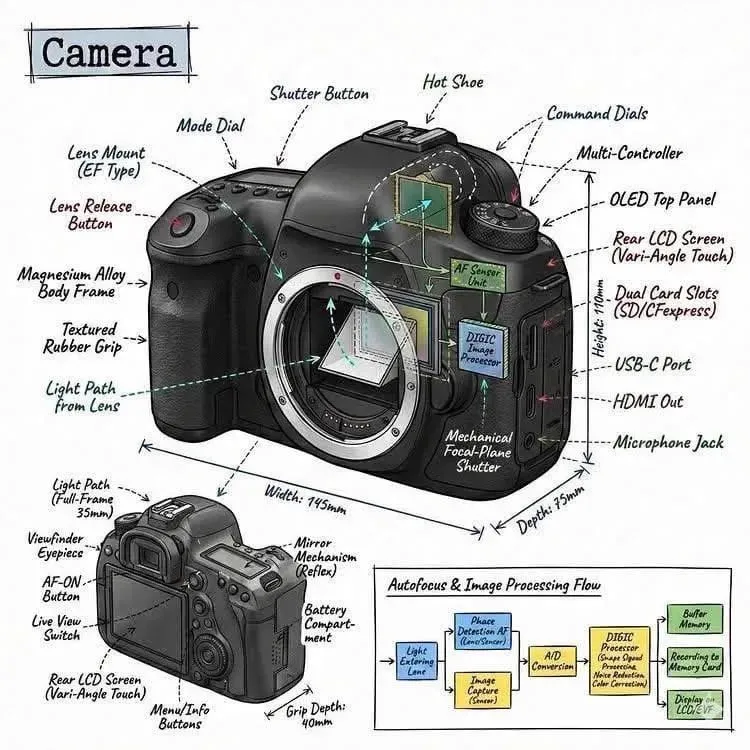
The same topic can be split across buckets. A camera-settings topic could be a two-minute answer, a ten-minute breakdown, or a vlog segment. Decide which bucket you are serving before you write a single line, because that choice dictates length, tone, and thumbnail style.
Building a keyword board you will actually use
Skip the giant spreadsheet nobody opens. Keep a living board with five columns: seed phrase, intent bucket, evidence, format, and hook angle. Fill it from sources that reflect real demand:
- YouTube search autocomplete, including the alphabet-soup trick (type your seed, then add 'a', 'b', 'c' to surface long-tail variants).
- Your own comments and community posts — the questions people repeat are the videos you should already have made.
- Competitor comment sections, especially the top three comments on their best-performing uploads.
- Trend tools and keyword planners for seasonality, not for volume worship.
- Your analytics: search terms that already bring impressions but weak click-through are the fastest wins available.
Evidence matters more than volume estimates. A phrase with modest search demand and strong intent beats a high-volume phrase surrounded by channels you cannot outrank.
Matching format to intent
Answer seekers want the shortest honest video. Comparison shoppers want side-by-side clarity and on-screen text. Skill builders want chapters and a downloadable checklist. Entertainment viewers want a strong cold open and no throat-clearing. When format and intent disagree, retention suffers no matter how good the production is.
Pre-Production: Scripting and Planning for Retention
Retention is decided long before the edit. A confused script cannot be saved by fast cuts, and a boring premise cannot be rescued by a good thumbnail.
Treat your script as a sequence of promises: make one, keep it, make the next one.
The hook formula
The first fifteen seconds need to do three jobs: confirm the click, state the stakes, and open a loop.
- Confirm the click — repeat the thumbnail's promise in words. If the thumbnail says five mistakes, the first line should acknowledge those mistakes.
- State the stakes — what changes if the viewer keeps watching? Time saved, money saved, a skill unlocked.
- Open a loop — hint at the payoff without revealing it. 'The third one cost me a client' is a loop; 'let's get into it' is filler.
Cut anything that delays those three jobs: channel intros, animated logos, 'hey guys, welcome back'. They feel professional and measure as drop-off.
Open loops and chapter breaks
Structure the body as three to five chapters, each with a small unresolved question at the end that the next chapter answers. This is the same mechanic as a serialized show, and it works on a tutorial just as well as on a story.
For each chapter, write down the claim, the proof (demo, example, data, story), and the bridge to the next chapter. If a chapter has no proof, it is an opinion — either find evidence or cut it. If it has no bridge, retention will dip at that seam.
Thumbnail-first planning
Sketch the thumbnail before you shoot. If you cannot express the idea in one image and three words, the video idea is probably too abstract. Deciding the visual early also tells you what footage you must capture: a reaction, a before-and-after, an object in hand.
AI-Assisted Production Without Losing Your Voice
AI is genuinely useful in the middle of the pipeline and genuinely dangerous at the edges. Use it to remove friction, not to replace judgment.
Where AI earns its place
- Research compression — summarizing long sources, clustering comment themes, drafting a keyword board you then edit by hand.
- Script scaffolding — generating three alternate hooks or a rough outline you rewrite in your own voice.
- Storyboards and shot lists — turning a script into suggested frames so you know what to film.
- B-roll and inserts — generating or upscaling short clips for concepts you cannot practically shoot, plus background plates for text overlays.
- Captions and transcripts — auto-captions reviewed by a human, then repurposed into descriptions, chapters, and social copy.
- Voice scratch tracks — synthetic narration for timing a rough cut, replaced by your real voice before publishing.
Guardrails that keep quality high
- Never publish an unreviewed transcript. Auto-captions mangle names and numbers, and those errors land in search results.
- Keep your own narration for the spine of the video. Synthetic voices work for utility inserts; they flatten the emotional beats that drive subscriptions.
- Check licensing and platform disclosure rules for every generative asset you use.
- Lock visual consistency. Define a reference for characters, wardrobe, and color so a series looks like a series rather than a collage.
- Verify every factual claim a model produces. Confident wrongness is expensive on a channel people trust.
A useful rule: if a step requires taste, a human owns it; if it requires repetition, automate it.
Editing for Retention: Reading the Curve
The retention graph is a diagnostic, not a grade. Learn to read its shape.
How to read a retention curve
- A cliff in the first thirty seconds usually means a packaging mismatch or a slow hook.
- A steady downward slope is normal; the question is how steep. Compare against your own average, not against an imaginary ideal.
- A sag in the middle points to a chapter that overstays its welcome or repeats a point.
- A spike means something re-engaged people — a visual change, a surprise, a payoff. Study it and reuse the technique.
- A dip near the end is often a sign that the payoff arrived too early and the outro became a formality.
Pacing rules that travel across niches
Cut dead air ruthlessly: the pause before a sentence, the breath after a joke, the two seconds of silence while you find a file. Vary shot length — long enough to breathe, short enough to feel momentum. Use audio to signal transitions instead of relying on visual cuts alone.
Put on-screen text only where it adds information. Captions for every single word compete with your footage and make the video feel busier without being clearer.
Finally, keep a kill list of habits that only feel good to the editor: a slow zoom on a static shot, overlong title cards, music that drowns dialogue. Removing those is usually worth more than adding effects.
Packaging: Titles, Thumbnails, and the Click Decision
Packaging is not decoration; it is the promise that determines who shows up.
Thumbnail tests that mean something
Build three concepts for every upload — for example, a face-led reaction, an object-led demonstration, and a text-led comparison. Render each at phone size, roughly the width of a thumb, then ask which one communicates the idea with the text hidden. If the image only makes sense with the caption, redesign it.
Practical constraints that hold up across niches: one focal subject, high contrast against the platform interface, text of no more than three words, and no visual clutter in the corners where duration stamps appear.
Title patterns worth rotating
- Specific outcome — name the exact result and the constraint.
- Contrarian correction — state the common belief you are overturning.
- Comparison frame — set two options against each other with a clear winner implied.
- Process reveal — show the mechanism behind a result people already want.
Avoid stacking superlatives. 'The ultimate best ever' reads as noise; specificity reads as information. And never let the title promise more than the video delivers — the mismatch shows up as a retention cliff on the very next upload, because viewers remember.
Publishing and the First 48 Hours
Publishing is a launch, not a save button.
Write the first two lines of your description as a genuine summary with your primary phrase included naturally — that is what viewers see before they tap more. Add chapter timestamps that mirror your actual sections. Build a playlist that answers the next question a viewer will have, and place your end screen and cards where they help rather than interrupt.
Then work the first two days deliberately:
- Pin a comment that asks a specific question about the video's topic.
- Reply to early comments to seed conversation and signal that the channel is alive.
- Publish a short cut-down or a community post pointing to the full upload.
- Share in the places where your audience already talks, not in generic link drops.
Do not judge a video's fate in the first six hours. Early impressions are throttled by audience availability, and a slow start often becomes a steady climb when search traffic arrives weeks later.
Community Management That Compounds
Comments are research, retention, and distribution in one place. Treat them as a product surface.
Answer questions with substance rather than emojis. When several people ask the same thing, that is a video brief with built-in demand. Turn recurring debates into polls, and use pinned comments to steer the conversation toward the part of the video you are proudest of.
Moderate early and consistently: hide spam, remove harassment, and set expectations about what kind of space the channel is. Creators who never moderate end up with comment sections that repel the viewers they want.
Track what you learn. A simple document with three columns — question asked, video it could become, status — turns community management into a content pipeline rather than an inbox.
The Scorecard: Metrics Worth Tracking
Vanity metrics feel good and change nothing. Track a small set, review them monthly, and act on the outliers.
| Metric | What it tells you | Healthy signal |
|---|---|---|
| Click-through rate | Whether packaging matches demand | Rising trend across uploads |
| Average view duration | Whether the body delivers | Stable or improving with longer videos |
| First-30-second retention | Whether the hook works | Above your channel average |
| Returning viewers | Whether the channel builds habit | Growing month over month |
| Subscribers per thousand views | Whether value converts | Positive and non-zero |
| Playlist adds | Whether depth exists | Present on tutorial content |
Review at three levels: the individual video (what to fix next time), the series (what format works), and the channel (what promise you are known for). Change one variable at a time so you can attribute the result.
Common Mistakes That Quietly Kill Reach
- Chasing trends outside your niche. A viral outlier that attracts the wrong viewers damages future recommendations.
- Thumbnail and title mismatch. The fastest way to train viewers to ignore you.
- Front-loading sponsors or intros. Both push the hook past the point where most people decide.
- Ignoring captions and mobile framing. A huge share of your audience watches muted, on a small screen.
- Deleting underperformers too early. Search traffic arrives on its own schedule.
- Automating the voice entirely. Consistency is not the same as presence.
- Publishing without a checklist. Most bad videos are simply unoptimized videos.
FAQ
How long should a video be?
As long as the intent requires and no longer. An answer video can be ninety seconds; a skill-building series may run twenty minutes. Retention percentage matters more than runtime.
Do tags still matter?
They are a minor signal. Spend that effort on titles, descriptions, chapters, and thumbnails instead.
How many videos before results appear?
Expect a learning curve measured in dozens of uploads. The goal of your first fifty is data, not virality.
Should I use AI for narration?
For utility inserts, it can work. For the emotional spine of a video, your own voice builds the trust that turns viewers into subscribers.
How do I test a thumbnail without gambling?
Prepare three concepts, choose the strongest on brand fit, and keep notes on which visual style wins over time. Patterns emerge faster than any single test result.
What is the single highest-leverage change?
Rewrite the first fifteen seconds of your script. It is free, immediate, and affects every metric downstream.
Where to Start Tomorrow
Pick one video you already published and scored below your average. Rewrite the hook, rebuild the thumbnail with three concepts, restructure the description's opening lines, and add chapters that match your actual sections. Then track the same metrics for the next four uploads.
Optimization is not a secret technique. It is a loop: research intent, script for retention, produce efficiently, edit for pace, package honestly, publish deliberately, listen to the community, and measure. Run that loop enough times and the results stop being luck.
