
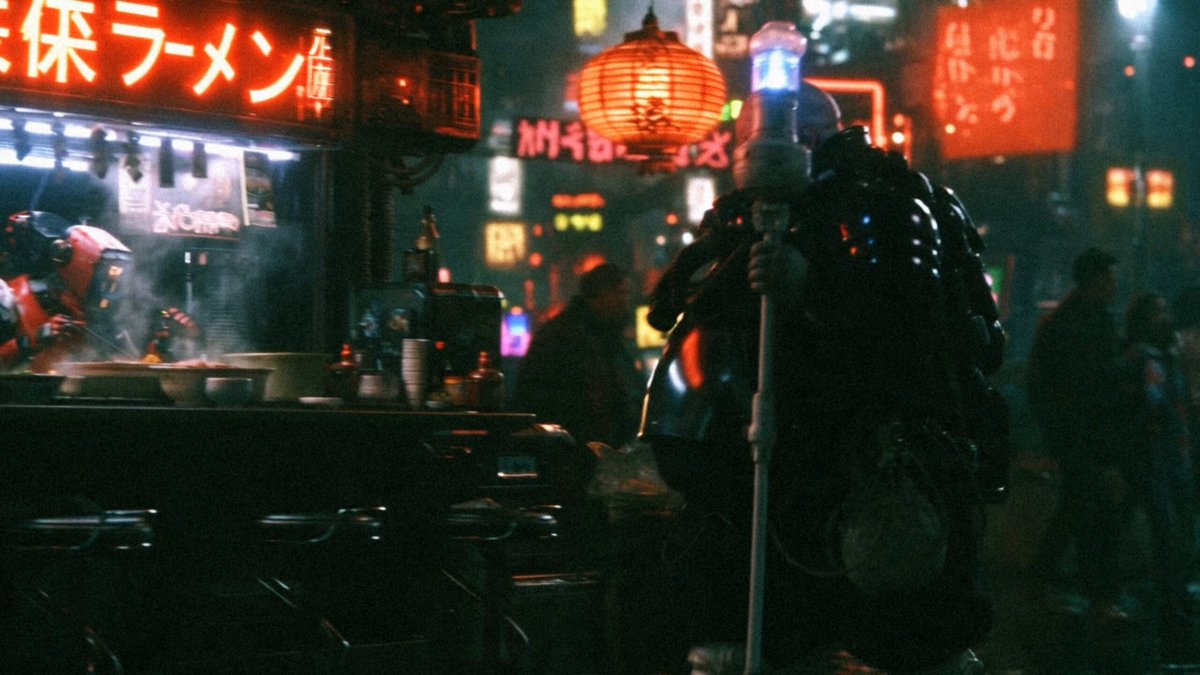
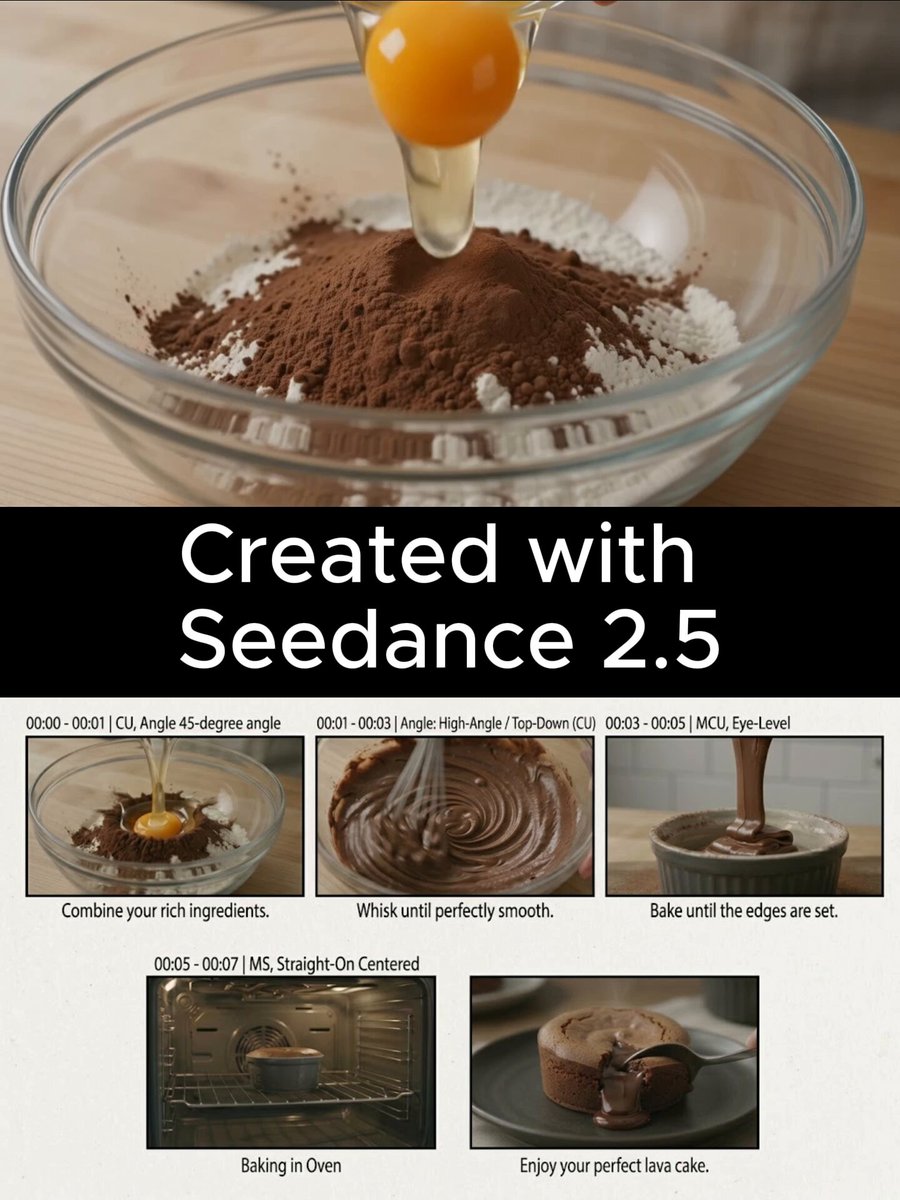
Prompting an image or video generator is closer to writing a shot specification than to chatting with a search engine. The model responds to structure: what is in frame, how it is lit, how the camera moves, what must never appear, and which visual grammar you want to borrow. Once you treat prompts as specifications instead of wishes, output quality becomes predictable, repeatable, and fast to debug.
Why Structured Prompts Beat Long Prompts
Length is not the goal — coverage is. A 60-word prompt that names subject, lens, light, and forbidden elements will beat a 400-word paragraph of adjectives, because every extra adjective competes for the same attention budget. Text encoders weigh tokens; undefined words dilute defined ones.
Three rules follow from that:
- Describe, do not persuade. "Cinematic" is a promise. "35 mm anamorphic, shallow depth of field, warm rim light" is an instruction.
- One idea per clause. Deeply nested clauses create ambiguous relationships. That is how a prompt about a woman and a lantern returns a woman holding the lantern like a horse.
- Separate constants from variables. Your look — film stock, palette, lens family — stays fixed across a sequence. Only subject, action, and framing change. Keep constants in one block and variables in another so you can swap one without rewriting the other.
A useful mental model: the prompt is a brief you would hand a cinematographer who has never read the script. It answers five questions in order of importance — who or what, where, how it looks, how it is shot, and what to avoid. Everything else is decoration.
The Anatomy of a Production-Grade Visual Prompt
Most weak prompts fail in the same place: they cover subject and style, then skip the technical layer that actually gives the model constraints. Build prompts in four layers, written in that order.
Subject and scene anchors
State the subject with enough specificity to be unambiguous, then place it. "A welder" is thin. "A middle-aged welder in a soot-stained canvas jacket, kneeling, mask pushed up on her forehead" gives the model something to render. Scene anchors do the heavy lifting for spatial consistency: "inside a narrow shipyard container, sparks arcing toward camera, wet concrete floor."
For video, add the state change you want across the clip: "she lifts the mask slowly and exhales." A single well-chosen action beats three vague ones.
Look, style, and material directives
Style is where most creators overreach. Instead of naming three directors, name the physical properties that produce the look: "Kodak-style halation, low-contrast shadows, muted teal and rust palette, 1970s documentary grain." Physical descriptions transfer more reliably between models than proper nouns, which may be filtered, ignored, or misread.
Material words matter for realism: brushed aluminum, oxidized copper, matte painted plywood, wet asphalt, wool knit. Models are surprisingly literal about surfaces, and material vocabulary fixes the "plastic AI look" faster than any quality booster word.
Camera, lens, and composition language
This layer is the difference between a picture and a shot. Use real vocabulary:
- Focal length: 24 mm wide, 50 mm normal, 85 mm portrait, 200 mm compression.
- Aperture behavior: f/1.8 shallow focus, f/8 deep focus with foreground detail.
- Angle and height: low angle, eye level, overhead top-down, dutch tilt, over-the-shoulder.
- Movement (video): slow dolly in, handheld follow, crane up, whip pan, static tripod with subject movement only.
- Framing: medium close-up, wide establishing, two-shot, negative space on the left for titles.
If you need a specific composition, describe the geometry: "subject in the left third, horizon line at the lower quarter, empty sky occupying the upper right."
Light, color, and texture
Light is the highest-leverage layer and the most commonly neglected. Specify source, direction, quality, and ratio: "single practical sodium lamp behind the subject, hard key from camera left, deep falloff into black, slight lens flare." That one sentence controls mood more than five style adjectives.
Color should be described as relationships, not single hues: "cool blue shadows against warm amber highlights" is actionable, while "moody" is not. Texture comes last — grain, haze, dust, steam, condensation — and it is the layer that makes generated footage sit convincingly beside real footage in an edit.
Weights, Emphasis, and Negative Space
Many interfaces let you emphasize or de-emphasize parts of a prompt, usually with parentheses or numeric weights. Use weights for conflicts, not for enthusiasm. If the model keeps putting a hat on the subject, weight the hair description and de-weight the accessories. Boosting five unrelated words by the same amount changes nothing except the overall noise floor.
A practical weighting strategy:
- Write the prompt unweighted and generate four samples.
- Identify the single most consistent failure.
- Fix that failure with one weight change or one added clause.
- Regenerate and compare like for like.
Negative prompts deserve the same discipline. Long negative lists often backfire because they introduce concepts the model then borrows from. Keep negatives to the elements that genuinely break the shot: extra fingers, text overlays, watermark, duplicate subject, warped horizon, cluttered background, plastic skin, oversaturated colors.
If a negative term keeps leaking into the image anyway, the problem is usually your positive prompt. Saying "no crowd" while writing "busy street" fights itself. Rewrite the positive to describe an empty street and the negative becomes redundant.
Model-Specific Tuning
Different architectures reward different prompt styles. Learning two or three families well is more valuable than memorizing tricks for twenty tools.
Diffusion image models
Diffusion models tend to respond well to dense, comma-separated descriptors with strong noun phrases and clear style tokens. They tolerate long prompts but weight early tokens more heavily, so front-load subject and camera. Natural-language sentences work, but you lose some control over ordering — a hybrid of one descriptive sentence followed by a technical keyword tail is usually the most controllable format.
These models also reward seed discipline. When you find a composition you like, lock the seed and change only the style block. That isolates variables and teaches you which tokens actually do the work.
Transformer-based video models
Video models that reason over time tend to perform better with clear narrative sentences describing a single continuous action, plus explicit camera behavior. Instead of stacking nouns, write the shot: "A cyclist rounds a rain-slick corner at dusk; the camera tracks alongside at wheel height, then drifts up to reveal the skyline behind her."
Avoid describing more than one major event per clip. Cuts, scene changes, and multiple beats confuse temporal models and produce morphing artifacts. If your idea needs three beats, generate three clips and cut them together.
Control and motion-driven models
Models built around control inputs — depth maps, pose, edge guides, motion brushes — reward prompts that describe what should stay stable and what should move. Spend your words on appearance and atmosphere, not geometry, because geometry is being dictated by the control signal. Phrases like "maintain silhouette," "preserve framing," or "consistent wardrobe across frames" are meaningful here in a way they are not elsewhere.
Prompting Motion: Describing Time, Not Just Frames
A still image is a moment. A clip is a duration, and duration has grammar. Three elements make generated motion readable:
- Velocity and pace. "Slow, deliberate" versus "quick, nervous." Without pace words, models default to a middling drift that reads as artificial.
- Directionality. Say where motion enters and exits frame. "She walks from frame left toward camera right, exiting mid-frame" prevents the aimless floating that plagues amateur AI clips.
- Physics cues. Weight, friction, and aftermath: dust settling after a footstep, fabric still swinging when the body stops, steam curling after a lid lifts.
Also specify what stays still. Held elements — a locked-off background, a character's shoulder — give the moving parts something to move against, and the result feels shot rather than dreamt.
A Repeatable Prompt Workflow
Turn one-off experiments into a process. This five-step loop works for stills, shorts, and sequences.
1. Brief and reference board
Write a two-sentence shot description in plain language before touching any generator. Collect five reference images for palette, light, and lens. Translate each reference into words: what is the light source? What is the focal length? What are the two dominant colors? Prompts built from references beat prompts built from vibes.
2. Write the base prompt
Assemble the four layers in order: subject and scene, look and material, camera and composition, light and texture. Add a short negative list. Keep this version plain — no weights — so you have a clean baseline to compare against later.
3. Iterate one variable at a time
Generate four to eight samples of the same prompt and read them like dailies. Change exactly one thing per round: one lens word, one light direction, one negative term. If you change three things and the output improves, you have learned nothing you can reuse.
4. Lock a template and seed
Once a look works, freeze it. Save the prompt as a template with bracketed slots: [SUBJECT], [ACTION], [CAMERA MOVE]. Lock the seed when the model supports it. Now a whole sequence can be produced with consistent style while varying only the slots.
5. Finish in post
Generators produce plates, not final shots. Plan for stabilization, color matching, grain, and sound design in an editor. A clip that looks slightly thin straight out of the model often looks completely convincing after a grade and a layer of room tone.
Common Mistakes and How to Fix Them
- Adjective stacking. Five mood words and no lens. Fix: delete every adjective that cannot be photographed.
- Style-name shorthand. Naming an artist or franchise and hoping for the exact look. Fix: translate the reference into materials, light, and palette.
- Ignoring aspect ratio and delivery format. A prompt tuned for square social crops fails at 2.39:1. Fix: state aspect ratio and safe areas up front.
- Overlong negatives. Fix: keep negatives under roughly a dozen concrete terms.
- Changing everything at once. Fix: log each round with one variable and keep the winners.
- Skipping continuity. Fix: define constants — wardrobe, palette, lens — and reuse them across every prompt in the sequence.
- Trusting a single sample. Fix: always evaluate across a batch, because variance is part of the medium.
Quality Control: Reviewing Like an Editor
Review generated outputs against a checklist rather than a feeling. Anomalies have signatures, and each signature points to a specific prompt fix.
- Anatomy problems — hands, teeth, limb counts. Usually a resolution or scale issue: simplify the pose or bring the subject larger in frame.
- Warped architecture — bent horizons, melting windows. Add structural nouns and reduce competing detail in the background.
- Muddy lighting — no clear source. Name one key light and its direction.
- Style drift between clips — constants were not locked. Reuse the exact style and light block word for word.
- Temporal flicker — too much motion described for the clip length. Shorten the action or lengthen the shot.
Score each batch on subject accuracy, lighting intention, motion believability, and edit-readiness. Only then decide whether the prompt or the post pipeline needs work.
Frequently Asked Questions
How long should a prompt be?
As short as it can be while covering the four layers. For stills, 40 to 80 words is usually enough; for video, 50 to 120 words with one clear action. Length beyond that rarely adds control.
Do prompt templates really help?
Yes, because they separate the look you have already approved from the variables you still need to explore. Templates also keep multi-shot sequences visually coherent, which is where most AI projects fall apart.
Should I use natural language or keyword lists?
Use one clean descriptive sentence for subject and action, then a technical keyword tail for camera, light, and texture. That combination gives models narrative context and precise constraints.
Why do my results change between sessions?
Model versions, sampler settings, aspect ratio, and seed all shift output. Save the full setting set alongside the prompt, not just the text.
Can one prompt work across different tools?
Roughly. Keep a portable core prompt describing subject, light, and camera, then add a short model-specific tail tuned to the tool you are using. Expect to re-tune style tokens, not the concept.
How do I get consistent characters across shots?
Describe the character in a fixed, reusable block — wardrobe, hair, distinguishing features — and repeat it verbatim in every prompt. Pair that with a locked seed or a reference image when the tool supports it.
Building the Habit
Prompt engineering improves through structured repetition, not inspiration. Over a two-week period, pick one scene and one look. Generate a batch every day with a single variable changed, and keep a log with the prompt, settings, and a one-line verdict. By the end you will have a personal lexicon of tokens that reliably produce your style, a template you can hand to a collaborator, and a clear sense of which failures belong to the prompt and which belong to the edit.
That library is the real output. Models will keep changing, but the discipline of describing light, lens, motion, and intent in precise language transfers to every new generator that arrives.
