
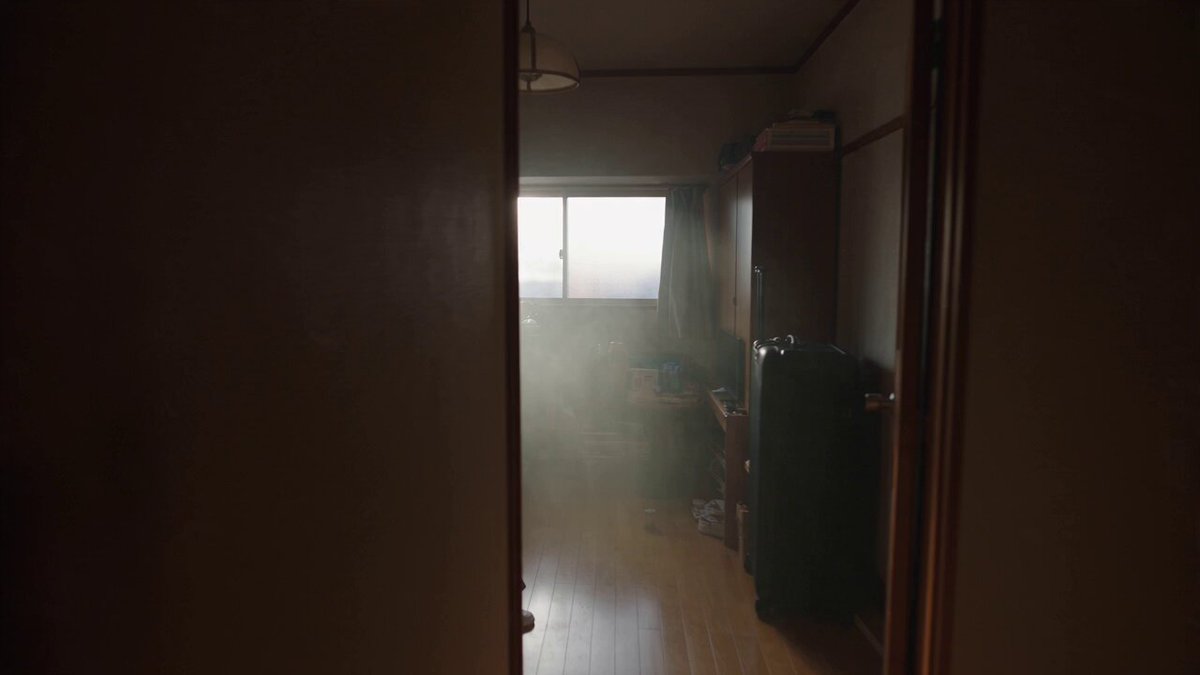

Why AI Shot Analysis Became a Core Filmmaking Skill
Every filmmaker who has ever paused a movie to study a single frame knows the feeling: something in that image works, and you want to know exactly what. For decades, that knowledge was passed down through shot-by-shot commentary, storyboard books, and the instincts of a patient director of photography. What changed recently is that machine vision models can now describe, measure, and even reconstruct the components of a beautiful shot in seconds — which turns the act of studying cinema into something closer to engineering.
The practical payoff is enormous for anyone producing video with AI generation tools. When you can articulate why a shot feels cinematic — the ratio between key light and fill, the direction of the color temperature drift, the speed at which the camera pushes in, the negative space left above a character's head — you stop guessing at prompts and start directing them. The gap between an amateur generation and a professional-looking frame is rarely the model. It is almost always the specificity of the visual instruction.
This article is a working method, not a theory piece. It walks through the visual components that make a shot memorable, shows how to extract those components from reference footage, and explains how to translate them into repeatable decisions you can apply across an entire sequence rather than one lucky frame.
The Visual Grammar of a Cinematic Shot
Before any tool enters the conversation, you need a shared vocabulary. Cinematography is not a single skill; it is five interlocking systems, and AI analysis is most useful when you treat them separately.
Lighting: The Shape of the Frame
Lighting determines where the eye goes. Models that analyze footage can estimate the direction of the primary source, the softness of the falloff, and the contrast ratio between the brightest highlight and the darkest shadow. Those three numbers alone describe a look more precisely than any adjective-heavy prompt.
A practical exercise: take three frames you love from different films and ask the same question of each — where is the light coming from, and how quickly does it fall into shadow? You will discover that most iconic images use a single dominant source with a deliberate shadow side. When you generate video, describing light as a physical object ("a soft window source from camera left, two meters away, no fill on the right side of the face") consistently outperforms mood words like "moody" or "dramatic."
Color: Temperature, Saturation, and Drift
Color analysis is where AI tools shine brightest, because they can measure what the eye only senses. A strong shot usually has a controlled palette: two or three dominant hues, a restricted saturation range, and a consistent relationship between skin tones and the environment.
Look for color drift across a sequence, not just within a frame. A slow shift from warm interiors to cold exteriors communicates emotional movement without a single line of dialogue. When you plan a generated sequence, decide the palette first and write it as a constraint: amber highlights, teal shadows, skin held within a narrow band of warmth. Generators respect constraints far more reliably than they respect vibes.
Camera Movement: Motivation Over Motion
The single most common mistake in AI video is movement without motivation. A slow push-in means something — it intensifies. A lateral track means something — it reveals. A handheld sway means something — it destabilizes. When movement is decorative, the shot feels like a screensaver.
AI analysis helps here because it can estimate motion vectors and distinguish between camera movement and subject movement within the frame. That distinction matters enormously in generation, where an ambiguous instruction like "camera moves" can produce a result where the camera is static and the entire world slides, which reads as a glitch rather than a choice.
Composition and Blocking
Composition is the arrangement of weight: where the subject sits, what competes with it, how much empty space surrounds it, and which lines guide the eye. Blocking adds the human dimension — where bodies are in relation to each other and to the lens.
AI analysis can flag compositional patterns such as rule-of-thirds placement, headroom, leading lines, and symmetry, but the judgment remains yours. A perfectly centered face with generous negative space can be reverent or oppressive depending on context. What the tool gives you is consistency: the same compositional rule applied across twenty shots makes a sequence feel intentional.
Scene Cohesion: The Interaction of Character and Environment
The hardest quality to fake is cohesion — the sense that a character belongs inside the world around them. This is where depth cues, atmospheric haze, practical light sources, and motion blur all cooperate. Models can estimate depth and detect whether foreground, midground, and background are lit consistently.
When a generated shot feels off but you cannot say why, cohesion is usually the culprit. The subject is lit like a studio portrait while the background is lit like a documentary. Fix that mismatch first, before adjusting anything else.
A Repeatable Workflow: From Reference Reel to Shot List
Analysis without a workflow produces interesting notes that never become footage. Here is a five-stage process you can run on any project, from a thirty-second product film to a narrative short.
Stage 1: Build a Narrow Reference Set
Collect eight to twelve shots maximum. Resist the urge to gather everything you admire; a tight set forces you to identify what actually unites them. Group them by function rather than by source: hero shots, transition shots, establishing shots, reaction shots.
Stage 2: Extract the Visual Data
For each reference, write four lines: light direction and quality, dominant palette, movement type and speed, and composition pattern. If you have access to analysis tools, use them to verify your reading of contrast ratios and motion vectors — the exercise is most valuable when your eyeball estimate is wrong, because that is where you learn.
Stage 3: Write the Shot Card
A shot card is a one-paragraph brief that includes subject, action, lens intention, lighting plan, palette, movement, duration, and one sentence about emotional purpose. The emotional sentence is not decoration. It is the tiebreaker when two technical options are equally valid.
Stage 4: Generate and Compare
Produce at least three variants per shot card, changing one variable at a time. If you change the lens description and the lighting simultaneously, you learn nothing. Sequential variation is slow and boring, and it is also the only way to build intuition that transfers to your next project.
Stage 5: Assemble and Diagnose at Sequence Level
Individual shots that look excellent can still fail together. Watch your assembled sequence without sound to check whether the eye has a consistent path, whether contrast and color are stable, and whether movement escalates, recedes, or repeats mindlessly. Most editing problems in AI-generated video are actually pre-production problems.
Choosing the Right Model for Each Job
Different generation systems are strong at different things, and the biggest quality gains come from matching the tool to the shot rather than using one system for everything. Rather than chasing feature lists, evaluate candidates against four criteria.
Temporal coherence. Can the model hold a face, a costume, or a prop stable across several seconds of movement? This is the primary requirement for dialogue-adjacent shots and character-driven sequences.
Motion realism. Does the model produce plausible weight and inertia, or does everything move as if underwater? Slow, deliberate camera moves are a good stress test because they expose subtle warping.
Style adherence. How faithfully does the model follow a stated palette and lighting plan rather than defaulting to its own look? Models with strong stylistic opinions are wonderful for exploration and frustrating for consistency.
Iteration speed. A model that produces acceptable results in forty seconds is often more useful than one that produces excellent results in five minutes, because cinematography is an iterative craft and you need volume to reach precision.
A practical hybrid strategy: use a fast, lower-fidelity system for blocking and composition tests, then regenerate approved shots on a higher-fidelity system with the exact same shot card. You keep the decision-making cheap and spend quality where it counts.
Prompting the Camera: Language That Actually Moves a Frame
Prompt writing for video is closer to writing a technical brief than to writing poetry. The words that reliably work fall into a few categories.
Physical descriptions of light. Distance, direction, softness, and sources. "Soft daylight through a diffusion frame, camera left" beats "beautiful natural light" every time.
Named movement with a speed. "Slow dolly in, roughly one meter over four seconds" gives the model a target. Vague motion words produce vague motion.
Subject-relative framing. Describe where the camera is in relation to the character: over the shoulder, chest height, slightly below eye level. This single detail often does more for perceived professionalism than any stylistic adjective.
Explicit exclusions. If you do not want lens flares, drifting particles, or shallow-focus blooms, say so. Generators fill silence with their own habits.
Environmental physics. Mention haze, dust, rain, or heat shimmer only when they serve the scene. Atmosphere adds depth, but atmosphere applied everywhere flattens the contrast between environments.
A useful habit: after every successful generation, save the prompt alongside the output and annotate which part of the instruction did the heavy lifting. Over a few weeks you build a personal lexicon that is more valuable than any public prompt library, because it encodes the look you actually want.
Common Mistakes That Kill Cinematic Quality
The mistakes are remarkably consistent, and most of them happen before a single frame is generated.
Chasing beauty without narrative purpose. A gorgeous shot that communicates nothing reads as stock footage. Ask what changes in the story because this shot exists.
Overloading the prompt. Ten competing stylistic references produce mush. Two or three coherent constraints produce a look.
Ignoring continuity of light. If shot one has a window on the left, shot two cannot have the same window on the right unless you have shown the camera crossing the room. AI tools will happily break this rule for you.
Treating every shot as a hero shot. Sequences need rhythm. Flat, functional shots between dramatic ones make the dramatic ones feel dramatic.
Skipping the sound design pass. Cinematic quality is audiovisual. Even a rough ambience bed and a low-frequency rumble will change how viewers judge the image.
Refusing to cut. Generated clips often contain two good seconds inside a six-second take. Cut to the good part instead of trying to fix the rest.
Building a Personal Visual Language
The goal of all this analysis is not to imitate a handful of admired shots. It is to develop a signature that shows up consistently across your work, so that viewers recognize your footage before they read the title.
Start by defining three rules you will follow on every project: one about light, one about color, one about movement. Keep them simple enough to remember under deadline pressure. For example: light always has a visible source; the palette never exceeds three hues; the camera only moves when the subject's emotional state changes.
Then treat AI analysis as a feedback loop. Generate, compare your output against your reference set, and note the delta. Over a dozen projects, the delta shrinks. That shrinking is your craft improving, and it is measurable in a way that intuition alone never is.
Ethical and Practical Considerations
Two concerns deserve honest treatment. The first is reference versus imitation. Studying the lighting design in a famous film is education; reproducing a specific shot, costume, and composition to trade on another work's identity is not. Keep references structural — how light falls, how a camera moves — rather than signature-specific.
The second is skill displacement. AI tools compress the distance between an idea and a watchable frame, which raises the value of taste, judgment, and storytelling while lowering the barrier to entry on execution. That is generally good news for people who think visually. It is uncomfortable news for anyone whose entire value was operating equipment.
The practical response is to move up the chain: spend more time on intent, structure, and rhythm, and let tools handle the mechanical reproduction of light and motion.
FAQ
Do I need to know traditional cinematography to use AI video tools well?
It helps more than any prompt library. You do not need to have operated a camera, but you do need a vocabulary for light, lens, and movement. That vocabulary is learnable in a few weeks of deliberate frame study.
How many reference shots should I analyze per project?
Eight to twelve is the sweet spot. Fewer and you cannot find patterns; more and you start collecting rather than analyzing.
Why do my generated shots look flat compared to my references?
Usually one of three causes: no defined shadow side, no atmospheric depth cue, or a palette that uses too many hues at similar saturation. Fix the contrast ratio between light and shadow first.
Should I generate the whole sequence with one tool?
Not necessarily. Using a fast system for composition exploration and a higher-fidelity system for final renders is a normal, efficient workflow — as long as the shot card stays identical between passes.
How do I keep characters consistent across shots?
Lock the description of wardrobe, hair, and build in your shot card, keep the lighting direction consistent, and avoid changing lens language dramatically between shots of the same scene.
How long should a shot be?
As long as it holds attention and no longer. In most short-form work, two to four seconds per shot is typical; let emotional weight, not a formula, decide the exceptions.
A Final Checklist Before You Render
Run this list before committing to a full sequence. Is there a single dominant light source in every interior shot? Does the palette stay within three hues? Does every camera move have an emotional reason? Is there a foreground, midground, and background in the majority of frames? Does the sequence alternate between emphasis and rest? Have you watched it muted to judge visual coherence, and with sound to judge rhythm?
If you can answer yes to those questions, the specific tools you use matter far less than the thinking behind them. That is the real lesson of applying analysis to cinematography: the technology accelerates execution, but the point of view is still yours to supply — and it is the only part of the process no model can generate for you.
