


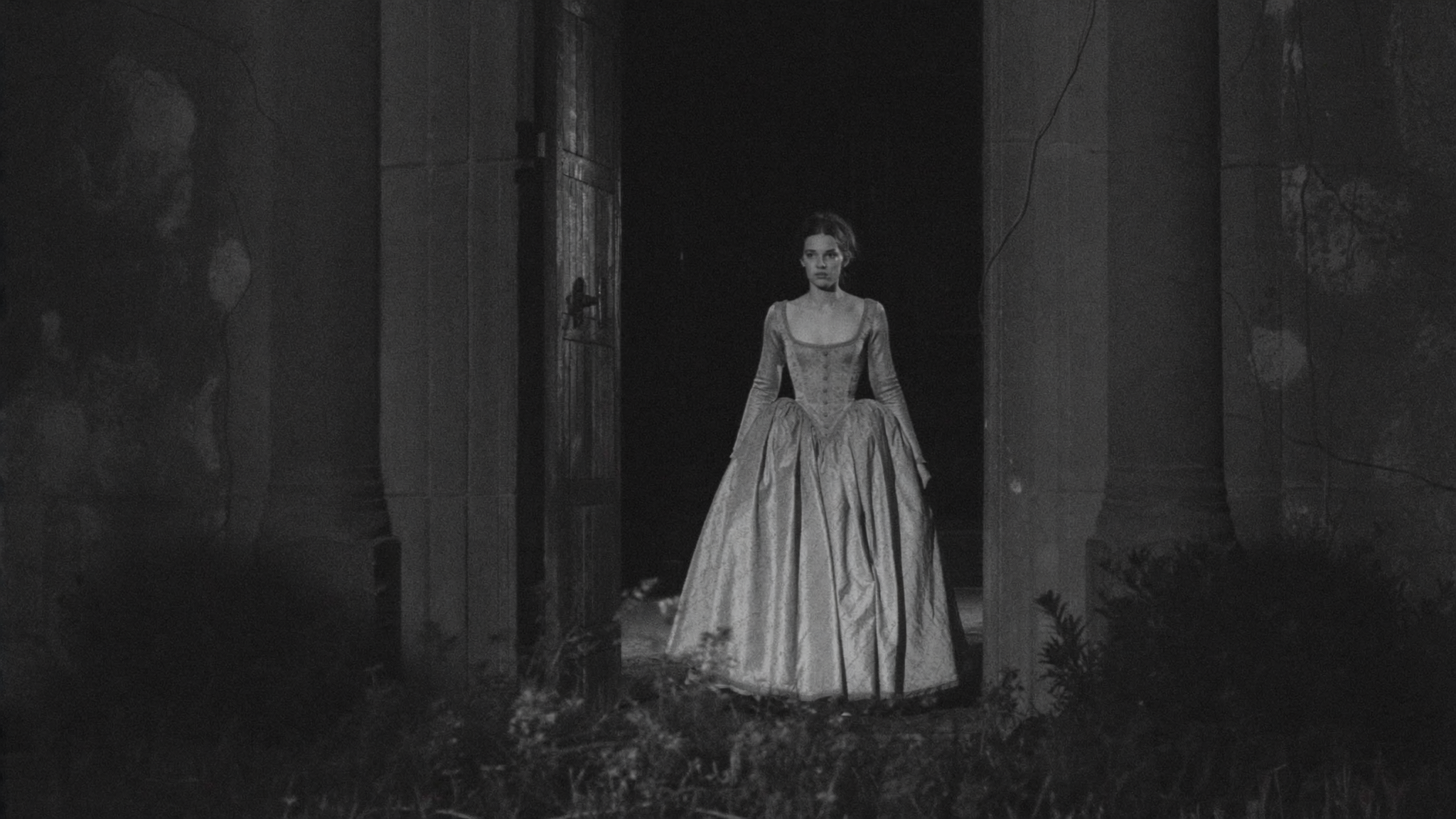
A folder full of gorgeous generated clips is not a film. Faces drift between shots, the pacing flatlines, the light changes direction for no reason, and the story that felt so clear in your head never makes it onto the timeline. The missing piece is rarely the model — it is the planning layer that sits in front of it.
AI director assistants are that planning layer. They read a script, break it into shots, define a look, and translate all of it into prompts and reference frames a video model can actually execute. This guide walks through the workflow end to end: what these tools do well, where they fail, how to design scenes that survive generation, and how to choose a stack that fits the kind of video you make.
Why Story-First Planning Beats Prompt Roulette
Prompt roulette is the habit of opening a text-to-video tool, typing a vivid paragraph, generating four variations, and hoping one of them is usable. It feels creative and productive. It is also the single biggest reason AI video projects stall.
The failure modes are predictable. You get beautiful shots that cannot be cut together because the camera keeps jumping position. You get a character who ages five years between scene two and scene three. You get a sequence with no escalation, because nothing in the generation process knows that shot nine is supposed to be the emotional peak. You also get an enormous amount of wasted generation time rerolling the same idea with slightly different phrasing.
Story-first planning inverts the order of operations. Instead of asking the model to invent structure, you decide the structure and use the model as a very fast, very literal crew: it lights, it frames, it moves the camera, and it renders. Directors have worked this way for a century. A shot list is not bureaucracy — it is the mechanism that makes a hundred separate decisions cohere into one piece.
The practical payoff is measurable. Teams that front-load planning typically cut their generation count dramatically, because each prompt is written against a known shot purpose rather than an improvised idea. More importantly, the output stops looking like a demo reel and starts looking like a story.
What an AI Director Assistant Actually Does
An AI director assistant is not a single feature. It is a bundle of pre-production tasks that have been compressed into a conversational or structured interface. Understanding the four jobs separately helps you judge any tool you try.
The four jobs it takes over
Script analysis and beat extraction. The tool reads your script or treatment and identifies the dramatic units: inciting incident, escalation, turn, resolution. It then proposes how many shots each beat needs. This is the part most human creators skip, and it is the part that determines whether your final cut has momentum.
Shot list and camera language. From the beats, the tool proposes angles, movement, and lens character: a slow push-in on the reveal, a handheld follow as the character crosses the street, a locked-off wide for the establishing beat. Crucially, it keeps these choices consistent across the sequence so the edit has a visual grammar.
Look bible creation. Lighting direction, color temperature, contrast, film grain, aspect ratio, palette. A look bible is a small set of written rules that every subsequent prompt inherits. Without it, each shot is lit by a different imaginary cinematographer.
Prompt construction and reference frames. Finally, the assistant converts each shot into model-ready language and, in most workflows, into a reference image you approve before spending time on motion generation.
Where it stops being useful
These tools are good at structure and consistency. They are not good at taste. They will not know that your brand should feel warm and slightly imperfect rather than glossy, that a joke lands better with a beat of silence, or that the third take of a performance had a flicker of real emotion. Treat the assistant as a first assistant director who prepares everything so you can make the twenty decisions that actually matter.
A Repeatable Pre-Production Workflow
This is the sequence that consistently produces coherent AI video, whether you are making a 30-second ad or a five-minute narrative short.
Step 1 — Lock the logline and the emotional target
Write one sentence: who wants what, what stands in the way, and how it resolves. Then write one more line describing how the viewer should feel at the end. Every downstream decision is checked against those two lines. If a shot is beautiful but does not serve them, it gets cut at the planning stage, which is free, rather than at the edit stage, which is not.
Step 2 — Break the script into beats and shots
A useful default for narrative work is one shot per beat, plus coverage. Coverage means an extra angle on the most important beat so you have something to cut to. As a rough guide: a 60-second piece usually needs 10 to 16 shots, a 3-minute piece needs 35 to 50. Longer than four seconds per shot starts to feel static in short-form; shorter than one second starts to feel like noise.
Give every shot a purpose in your list. A shot list where each line reads "establish, introduce, escalate, react, resolve" is far easier to direct than one that reads "cool drone shot."
Step 3 — Build a look bible
Keep it short enough to remember: three to six constraints. Something like "overcast daylight, cool shadows, low contrast, 2.39:1, 35mm grain, muted greens and grays." Repeat those constraints in every prompt. This single habit fixes more continuity problems than any model upgrade.
Also define what the camera never does in this film. No snap zooms, no dutch angles, no lens flares. Negative rules are as useful as positive ones because they prevent the model from improvising a style you did not ask for.
Step 4 — Generate reference frames before motion
Image generation is faster, cheaper, and far more controllable than video generation. Produce a still for each shot, approve the composition and lighting, then animate from that still. This turns an unpredictable process into an assembly line with quality gates.
When a still is wrong, fix it in the image stage. Rerolling a video clip because the framing was off wastes minutes per attempt; rerolling a still wastes seconds.
Step 5 — Assemble, review, and re-shoot selectively
Cut the sequence early, even with placeholder audio and rough timing. Watch it three times: once for story, once for continuity, once for sound. List the specific shots that fail, then regenerate only those. Keep a version history so a later regeneration does not silently break continuity you already approved.
Designing Scenes That Survive Generation
Not every planned shot renders the way you imagined. Scenes designed with the model's strengths and limits in mind survive much better.
Composition and camera language
Favor clear, readable compositions over busy ones. A single subject against a strong background renders more reliably than five people in a crowd, and it also reads better on a phone screen. Simple camera moves — slow push, slow pull, lateral track — hold together over several seconds. Complex orbits and whip pans tend to warp, and they are usually unnecessary.
Keep camera height and lens choice consistent within a scene. If the first shot of a conversation is at eye level on a 50mm, the second should not suddenly be a high-angle fisheye. Consistency in camera language is what makes separate generations feel like one scene.
Character and object consistency
Consistency comes from specificity, not from repetition. Define each character with a short, fixed descriptor block: age range, hair, build, wardrobe with exact colors, plus one distinguishing detail. Reuse that block word for word in every shot they appear in.
Where the model supports it, lock identity to a reference image rather than to text. Wardrobe changes are fine and often necessary, but change one variable at a time. If hair, wardrobe, and lighting all change in the same shot, the character will read as someone new.
Objects deserve the same treatment. If a red suitcase matters to the plot, describe it identically every time it appears, including its condition. A suitcase that is pristine in act one and scuffed in act two is a continuity error unless you planned it.
Sound, pacing, and the cut
Audio is where AI video most often collapses, so plan it as its own track. Decide early whether you are using generated ambience, licensed music, or voice performance, because the answer changes shot length. Dialogue-driven scenes need longer holds; music-driven montages can cut much faster.
Map pacing to your beat sheet. Slower cuts in the setup, tightening cuts as tension builds, and one deliberately long shot at the resolution. A sequence with identical shot lengths throughout feels mechanical no matter how good the footage is.
Story Structure for Short-Form AI Video
Short-form does not excuse you from structure; it punishes the absence of it. A compact five-beat shape works for almost anything under two minutes:
- Hook (0–3 seconds). A visual question the viewer wants answered. Not a logo, not a title card.
- Setup (3–10 seconds). Who and where, delivered through action rather than exposition.
- Escalation (10–35 seconds). Two or three complications, each raising the stakes.
- Turn (35–50 seconds). The beat that changes the direction of the story.
- Resolution and button (50–60 seconds). Payoff, plus one final image that lingers.
For longer pieces, repeat an escalation–turn pair rather than stretching the same beat. Audiences forgive thin plots in short video; they do not forgive flat pacing.
One more structural note: plan the ending first. Knowing your final image determines what the opening image should echo, and that echo is what makes a 60-second piece feel composed rather than assembled.
Choosing Your Stack: Decision Criteria
Every model and assistant combination trades something. Here are the criteria that matter most when comparing options.
- Shot-length control. Can you specify duration, or does the model decide? Precise duration control saves enormous editing time.
- Reference-image support. Whether you can animate from an approved still is the single biggest lever on consistency.
- Character locking. Any feature that binds identity across generations is worth more than a modest jump in realism.
- Motion realism versus stylization. Photoreal models struggle with stylized worlds; stylized models struggle with believable faces. Match the model to your look, not to a leaderboard.
- Audio capability. Native dialogue and ambience reduce your dependency on separate tools, but often at the cost of control.
- Iteration speed and cost per attempt. If a tool is twice as slow per generation, you will run half as many experiments, and your final quality will suffer.
- Script analysis depth. Some assistants give you a full shot list; others only rewrite prompts. Both are useful, but they solve different problems.
- Export and resolution. Check aspect ratios and bitrates against your actual distribution channels before you build a whole project around a tool.
A practical approach: pick one assistant for planning and two video models with different strengths — one for people, one for environments or stylized work. Route each shot to whichever model handles it better. Uniform pipelines are simpler; mixed pipelines look better.
Common Mistakes and How to Avoid Them
Writing a novel instead of a script. If a prompt contains three sentences of backstory, it is not a shot description. Cut to what the camera sees.
Over-specifying in one prompt. Packing camera, wardrobe, lighting, emotion, and action into a single line dilutes all of them. Split into a fixed style block plus a short shot-specific line.
Ignoring light direction. A scene that is backlit in one shot and front-lit in the next reads as a mistake, even to viewers who cannot articulate why. State the light source and keep it.
Letting the model choose the edit. Generating one long clip and cutting it arbitrarily wastes the control you have. Generate the shots you need.
Skipping audio design until the end. Sound changes timing. Plan it early or rebuild your edit later.
Generating at final resolution first. Iterate at lower resolution, lock the timing, then finish at full quality.
Too many characters. Every additional speaking character multiplies consistency risk. Three is comfortable; six is an expert-level project.
Worked Example: A 60-Second Brand Film
Suppose the logline is: a bicycle courier races a storm across the city to deliver a package before the downpour.
Beats: hook (dark clouds gathering), setup (courier clips in, checks the sky), escalation (rain starts, traffic jams, a wrong turn), turn (courier cuts through a covered market, arriving soaked), resolution (package handed over, dry, as thunder rolls).
Shot list, 12 shots:
- Wide, static — city skyline under a darkening sky.
- Medium, slow push — courier clips in, glances up.
- Close-up, handheld — water bottle, phone with a timer.
- Tracking, lateral — riding through traffic.
- Insert — first raindrops on the handlebar.
- Wide, high angle — the street jammed with cars.
- Medium, handheld — courier takes a turn.
- Wide, static — market entrance canopy.
- Tracking, low — wheels splashing through puddles under cover.
- Medium, slow pull — courier dismounts, soaked, hands over the package.
- Close-up — the recipient's hands taking it, dry.
- Wide, static — courier under the canopy as thunder rolls.
Look bible: overcast daylight, cool shadows, low contrast, 2.39:1, 35mm grain, desaturated greens and grays, no lens flares.
Character block: courier, late twenties, short dark hair, slim build, mustard-yellow rain jacket, black backpack.
Notice how much of this is decided before any model is opened. The generation stage then becomes execution: twelve stills, twelve approvals, twelve short clips, one edit. If shot nine warps, you fix shot nine — you do not rethink the film.
FAQ
Do I need a director assistant if I already write good prompts?
Good prompts solve individual shots; planning solves the sequence. If your clips look great but do not cut together, the prompt quality is not the bottleneck.
How many shots should a short video have?
Roughly one shot per four seconds of runtime for narrative work, with extra coverage on the emotional peaks. A 60-second piece usually lands between 10 and 16 shots.
How do I keep a character consistent across shots?
Use a fixed descriptor block verbatim in every prompt, lock identity with a reference image where the tool allows, and change only one variable at a time. Avoid relying on a single memorable trait like a scar; give the model redundant cues.
Can AI handle dialogue scenes?
Short exchanges, yes, especially if you generate each line as a separate controlled shot and edit them together. Long conversations with complex reactions still struggle, mostly because performance nuance is the hardest thing to specify.
How long should pre-production take?
For a 60-second piece, an afternoon of planning typically saves a full day of generation and editing. The ratio scales; longer projects benefit more.
Should I generate stills first or go straight to video?
Generate stills first unless you are doing pure experimentation. Stills are faster, cheaper, and give you a real approval gate before you commit to motion.
A Final Checklist Before You Hit Generate
- Logline written in one sentence, emotional target in another.
- Beat sheet complete, with a shot purpose on every line.
- Look bible limited to six constraints or fewer, including negative rules.
- Character and object descriptor blocks finalized and reused verbatim.
- Reference still approved for every shot before motion generation.
- Audio plan decided, and shot lengths adjusted to match it.
- Pacing mapped to the beat sheet, with one deliberately long shot at the resolution.
- Version history kept, so regenerating one shot never breaks another.
None of this requires expensive software or a large team. It requires deciding what the piece is about before asking a model to render it. Do that consistently, and the same tools that once produced scattered pretty clips start producing work with a beginning, a middle, and an end — which is the only definition of a film that has ever mattered.
