
Why Short-Form Video Rewards Directorial Thinking
Most people who make short-form video with AI start in the wrong place. They open a generation tool, type an idea, and hope the model hands back something cinematic. Occasionally it works. More often they get a beautiful clip that has no point, no rhythm, and no reason for a viewer to keep watching past the second second.
The fix is not a better prompt. The fix is deciding what the video is before you generate anything. Directors do this instinctively: they read a script, decide how the story will be told visually, plan coverage, and only then roll camera. The same sequence works with generative models — and it works even better, because every render costs time and money and cannot be reshot on a whim.
The three-second contract
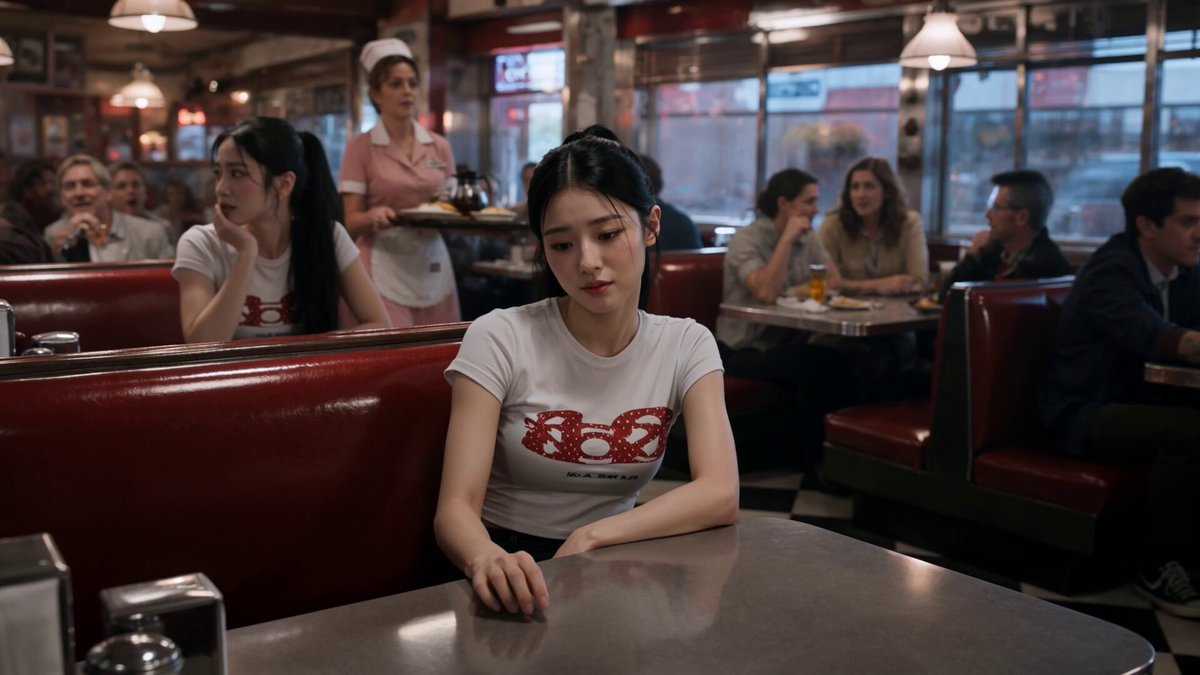
Short-form video is governed by an unwritten agreement with the viewer: give me a reason to stay, immediately, or I scroll. That means your first shot is not an establishing shot in the traditional sense. It is a promise. A face mid-expression, a hand reaching for something, a strange object in an ordinary room, a caption that asks a question the viewer cannot leave unanswered.
Everything in your shot design should serve that promise. If your opening frame needs three seconds of context to make sense, it is the wrong opening frame.
What "directing with AI" actually means
Working with generative video models is not authoring a film and it is not purely prompting either. It sits somewhere in the middle, and it has four repeatable jobs:
- Interpretation — turning a written beat into a describable visual moment: who, where, doing what, seen how.
- Decomposition — breaking that moment into individual shots that can each be generated as a clean unit.
- Continuity control — keeping character, wardrobe, light, and palette stable across every shot in the sequence.
- Assembly — cutting, scoring, captioning, and trimming until the pacing survives a muted phone screen.
Get those four right and the specific model you use matters far less than most tutorials suggest.
Start With a Creative Brief, Not a Prompt
A creative brief is one page. It takes fifteen minutes and saves hours of regeneration.
One sentence, one emotion
Write a single sentence that states the video's dramatic job: A lonely night-shift baker realizes the regular customer she never speaks to has been leaving her drawings. That sentence tells you the emotion (quiet longing), the world (a bakery at night), and the arc (realization). Every shot decision can now be tested against it.
If you cannot write that sentence, no amount of prompt engineering will rescue the project.
Constraints that improve output
Generative video thrives on constraints. Useful ones to lock in before you generate a single frame:
- Aspect ratio and duration — vertical 9:16 for feed-first distribution, with a target runtime and a hard maximum shot length.
- Palette — pick two dominant colors and one accent. Write them down as words you will reuse in every prompt.
- Lens language — for example, "35mm, shallow depth of field, handheld micro-drift." Consistency here reads as authorship.
- Cast size — one or two characters maximum. Every additional character multiplies continuity risk.
- Locations — ideally one, two at most, for anything under sixty seconds.
Write the beat sheet before the shot list
A beat sheet is five to nine lines describing what changes in the story, not what the camera sees. She locks up. The drawings are on the counter. She looks toward the door. Empty street. Only after the beats hold together on their own should you translate them into shots.
Scriptwriting for Vertical Video
Scriptwriting for a tall, muted, thumb-scrolled screen is its own craft. The rules of feature screenwriting mostly do not transfer.
Hook-first outlining
Build the script backwards from the hook. Decide the single most arresting image or line in the piece, then ask what has to be true for that moment to land, then work backwards to your opening frame. This is how you avoid the common failure mode of a slow build that never gets to the payoff.
Dialogue that survives muted playback
Assume sound is optional. Write dialogue that is short, visual, and supported by on-screen text. Guidelines that hold up in practice:
- Maximum one spoken sentence per shot.
- No line that only makes sense with tone of voice — if a line requires a raised eyebrow to work, cut it.
- Prefer visual verbs to abstract nouns: she hides the letter beats she feels conflicted.
- Write the caption text in the same pass as the dialogue so the two never fight for the same second.
Beat sheets for 15, 30, and 60 seconds
Durations dictate structure far more than subject matter does:
- 15 seconds — three beats: hook, turn, button. Four to six shots.
- 30 seconds — five beats: hook, setup, complication, turn, resolution. Seven to ten shots.
- 60 seconds — seven to nine beats with room for one deliberate pause. Twelve to eighteen shots.
Shots under two seconds read as energy; shots over four seconds read as contemplation. Alternating between them is what gives a short piece a pulse.
Shot Design: Coverage, Framing, and Motion
Shot design is where AI video projects most often fall apart, because creators generate single beautiful clips instead of coverage that can be cut together.
Build a shot list, not a storyboard novel
A working shot list has five columns: shot number, duration, framing, camera motion, and one-line action. That is enough. Filling a shot list forces you to notice that you have four consecutive medium shots, or that your entire piece happens from one angle.
A healthy 30-second sequence usually includes:
- One wide or environmental shot to place the world.
- Two or three medium shots where the action lives.
- One or two close-ups on the emotional turn.
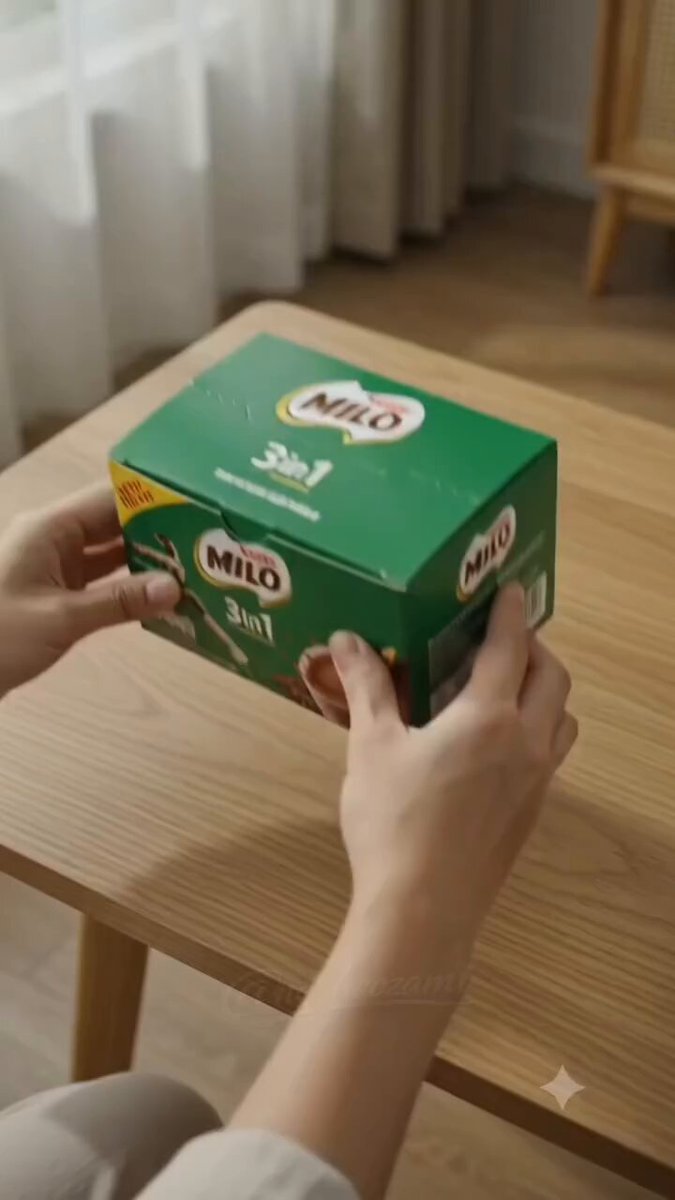
- One insert detail — a hand, an object, a reflection — that carries meaning.
- One transition shot that lets you move locations without a jarring cut.
Framing for a tall frame
Vertical framing is not cropped horizontal framing. What changes:
- Headroom shrinks. Subjects fill the frame; faces sit higher than instinct suggests.
- Horizontal relationships compress. Two people side by side need a front-to-back staging instead.
- Vertical lines become your friend — doorframes, stairwells, corridors, rain streaks, tall windows.
- Negative space goes above and below, which is where captions and interface overlays will sit. Plan for it.
Camera motion vocabulary models understand
Motion prompts work best when they describe the camera as a physical object with a path:
- Slow push in — tension building, attention narrowing.
- Slow pull out — reveal, loneliness, ending.
- Lateral tracking — momentum, following a walk, changing context.
- Handheld micro-drift — documentary realism.
- Static lock-off — formality, comedy timing, or a deliberate pause.
Avoid stacking motions. "Slow push in while orbiting and tilting up" produces mush. One clean motion per shot reads as intentional.
Transitions and match cuts
The cheapest continuity trick in short-form is the match cut: end one shot on a shape, movement, or color, and begin the next on the same. A circle becoming a clock face, a hand closing a door becoming a hand closing a book. Since you are generating both shots, you can deliberately design the match instead of hunting for it in footage — a real advantage of this workflow.
Turning Script Beats Into Model-Ready Prompts
Once the shot list exists, prompt writing becomes mechanical rather than creative. That is the goal: creativity upstream, discipline downstream.
The five-part prompt
Every shot prompt should answer five questions in order:
- Subject — who or what, described concretely, with age, wardrobe, and one distinguishing detail.
- Action — one present-tense verb phrase. Not two.
- Environment — location, time of day, weather, background elements.
- Camera — framing, angle, lens, and one motion.
- Look — palette, lighting quality, film stock or render style, grain or cleanliness.
Example: A woman in her thirties in a wool coat sets a paper bag on a bakery counter, night interior, warm tungsten light with cold blue street glow through the window, medium close-up at chest height, 40mm, shallow depth of field, slow push in, muted amber and indigo palette, soft 35mm grain.
That prompt is not poetic. It is a set of instructions, which is exactly what makes it repeatable.
Style tokens and consistency anchors
Pick a short list of phrases — five to eight — and reuse them verbatim across every shot: the palette wording, the lens wording, the grain wording, the lighting quality. Small paraphrase changes cause visible drift between shots, and drift is what makes AI sequences feel assembled from unrelated parts.
Guardrails
Most model interfaces accept a negative or exclusion field. Use it deliberately: exclude text artifacts, extra limbs, warped hands in foreground, harsh HDR, watermark-like marks, and any style you do not want bleeding in. Write your negative list once and keep it next to your style tokens so it never varies mid-project.
Keeping Continuity Across Shots
Continuity is the single biggest quality gap between amateur and professional-looking AI video.
Character consistency
Techniques that work, roughly in order of reliability:
- Reference images — establish a character with a still, then feed it as a reference for every shot.
- Verbatim description blocks — the same forty-word character paragraph pasted into every prompt.
- Wardrobe anchoring — one memorable garment, one color. Never change it mid-sequence.
- Limiting screen time per angle — fewer angles per character means fewer chances to drift.
Light and color continuity
A sequence shot at four different implied times of day looks broken. Lock the light: "night, tungsten practicals, cool window spill." Then treat any shot with different light as a deliberate narrative event — a sunrise, a power cut — rather than an accident.
Wardrobe, props, and location memory
Keep a continuity sheet, one line per shot, listing wardrobe, key props, and location state (door open or closed, lamp on or off, cup full or empty). Update it as you generate. This is unglamorous and it is the difference between a sequence that holds and one that flickers with small wrongness.
Sound, Rhythm, and the Assembly
Assembly is where a collection of clips becomes a video. Budget as much time for it as for generation.
Pacing to temp music
Drop a temporary track under your timeline before you fine-cut. Cut shot boundaries to musical accents. When the music changes, the edit should change with it. If a shot cannot be trimmed to fit the rhythm, it is probably the wrong shot.
Voice, lip sync, and diegetic sound
Generate or record dialogue as a separate pass, then align it to the shot rather than the reverse. Keep lines short so lip sync has fewer chances to fail. Layer quiet environmental audio underneath — room tone, street hum, kitchen clatter — because silence between lines is what makes generated video feel synthetic.
Captions and on-screen text
Burned-in captions are not optional for feed-first video. Keep them to a few words per line, place them in the safe zone, and keep the style identical across the whole piece. Text is also a directing tool: a single well-timed word on screen can replace an entire setup shot.
A Three-Day Production Loop
A realistic schedule for a thirty-to-sixty-second piece, built to fail cheaply and early.
Day one: words
Write the one-sentence premise, the beat sheet, and the script. Lock the style tokens, palette, and negative list. Finish with a shot list of ten to eighteen entries. Do not open a video model today.
Day two: tests
Generate still frames or very short motion tests for your two hardest shots — usually the one with a face in close-up and the one with complicated motion. If those do not work, revise the script before spending anything on the rest.
Day three: production and assembly
Generate shots in story order, checking each against the continuity sheet as it arrives. Assemble rough, add temp music, then trim until the pacing survives a muted phone test. Only then do a final pass for text, color, and audio levels.
The review checklist
Before publishing, ask: Does the first frame stop a scroll? Is there a clear change between the beginning and the end? Do all shots belong to the same film? Does it make sense with sound off? Is anything longer than it needs to be? Fixing these five answers usually improves a piece more than generating ten new clips.
Choosing Tools Without Getting Locked In
Tool choice should follow your shot list, not the other way around.
Model categories worth distinguishing
- Cinematic realism models — strong physics and lighting, good for drama and product work. Often slower and costlier per second.
- Stylized and animated models — stronger personalities and consistent art direction, weaker photorealism.
- Image-to-video models — you control the keyframe, the model adds motion. Best for continuity-critical work.
- Avatar and talking-head tools — narrow, reliable, and perfect for presenters and explainers.
- Editing and post tools — the timeline, captions, and audio. Never underestimate this layer.
Decision criteria
Score candidates on: continuity of characters across shots, maximum clip length, aspect ratio support, motion realism, prompt adherence, cost per finished second after failed attempts, and how easy it is to export cleanly to your editor. Cost per finished second — not cost per generation — is the number that matters, because failure rates differ wildly between tools.
Iteration budgeting
Assume half of your first-pass generations will be unusable, and plan the schedule around that. Keeps you from over-designing shots that are easy to generate and under-prepare the ones that are hard.
Common Mistakes, Fixes, and FAQ
Overloading the prompt
Long prompts with five adjectives per noun produce averaged-out mush. Fix: cut to one action, one camera move, one lighting description.
Treating generation as the whole job
Generation is maybe a third of the work. The rest is script, shot design, and assembly. Fix: schedule them explicitly.
Changing style tokens mid-project
Even small wording changes cause visible drift. Fix: freeze the token list and paste from a text file.
Ignoring the muted viewer
Half your audience never enables sound. Fix: caption everything and test with audio off.
What length should short-form AI video be?
Fifteen to forty seconds suits most feed-first distribution. Anything longer needs a genuine narrative reason, because retention, not length, is what carries reach.
Can one person realistically produce this?
Yes. The workflow above is a solo-friendly loop: one day for writing, one for tests, one for production. What it cannot survive is skipping the writing day.
How do I keep a character consistent across many shots?
Use a reference image plus a verbatim description block, keep wardrobe identical, and reduce the number of distinct angles that character appears in.
Do I need a storyboard artist?
No. A five-column shot list and two or three test stills are enough for short-form. Storyboards help most when you are coordinating with other people.
What is the fastest way to improve my output?
Cut your prompts down, add sound design, and tighten the edit. Most weak AI video is not badly generated; it is badly cut and silently scored.
Directing with AI is still directing. Decide what the piece means, design how it will be seen, control continuity like a professional, and treat assembly as craft rather than cleanup. Do that consistently and the tools become interchangeable — which is exactly where you want to be.
