
AI image generators are incredibly capable, and incredibly literal. They follow your words, not your intentions. When an image misses the mark, the problem is almost never that the model is bad; it is that the prompt left too much to chance. Prompt engineering is the skill of turning a vague idea into precise instructions the model can actually follow. This guide covers the structure, vocabulary and workflows that close the gap between what you imagine and what the model renders, and it shows how to handle the limits that still frustrate every creator.
Why your images miss the mark
Most disappointing AI images share the same root cause: ambiguity. A prompt like «a futuristic city» gives the model dozens of directions to improvise, and it will pick its own average. The result is generic, technically fine and emotionally empty. Precision is the difference between renting the model's imagination and directing it.
The second common cause is overload. Prompts that pile up ten different ideas produce images where every idea is half-realized. Models distribute attention across the whole prompt, so a crowded description produces a crowded, unfocused frame. The fix is not more words, it is better words: fewer concepts, each described with more specificity.
Build a prompt the model can follow
A strong image prompt has a recognizable skeleton. Learn the skeleton and every prompt you write becomes more reliable, regardless of which tool you use.
Subject, action and environment
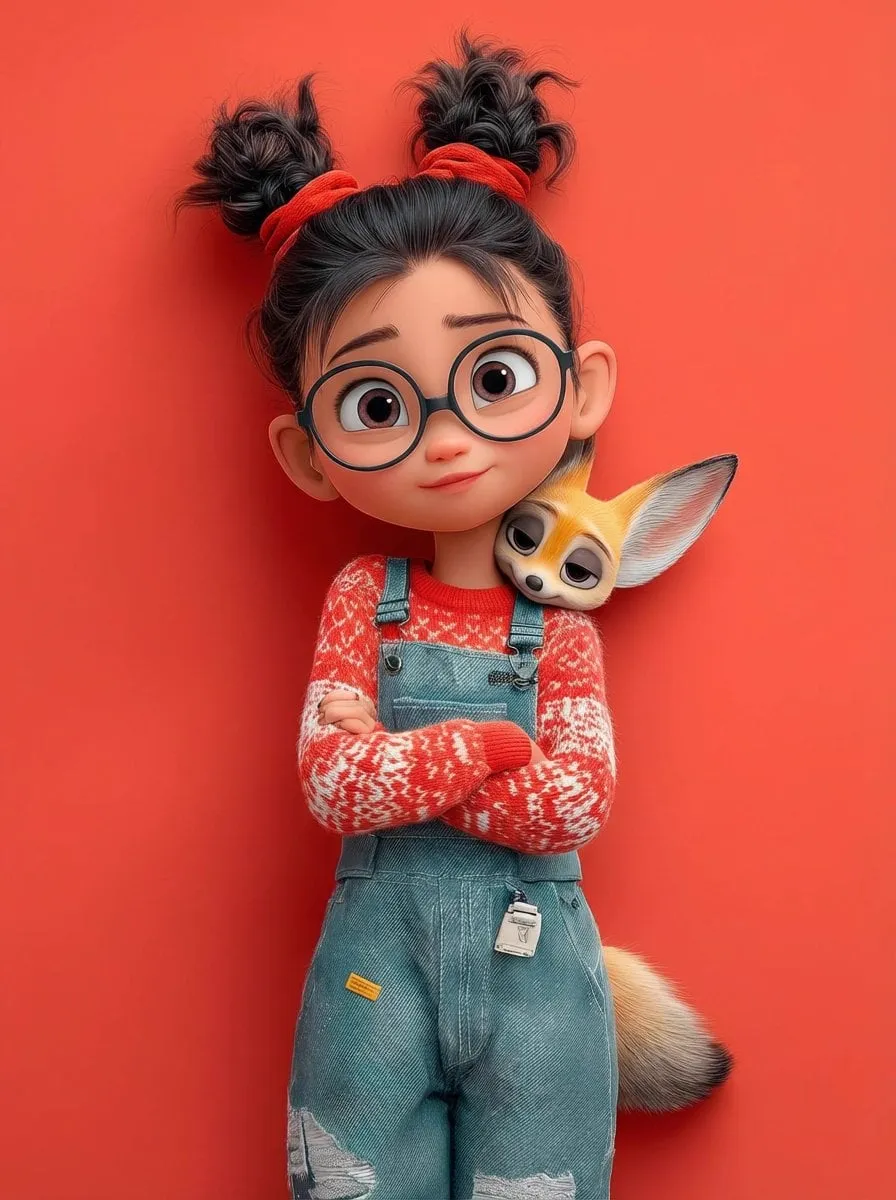
Start with the subject: who or what is the image about? Name the subject with enough detail to lock identity, such as age, clothing, expression or object type. Then describe the action or state, and finally the environment. Keep the subject-to-environment ratio clear: if the subject is the star, say so, and keep the background supportive instead of competing.
Style and medium
Style keywords are the most powerful single lever in image prompting. They select the rendering family: photorealistic, oil painting, watercolor, 3D render, pixel art, anime, black-and-white photography. Choose one primary style and, at most, one or two secondary influences. Contradictory styles, like photorealistic and cartoon at the same time, average into mush.
Quality modifiers
Quality phrases shape the craft of the image: highly detailed, sharp focus, dramatic lighting, depth of field, 8k render. They do not work like magic spells, but they nudge the model toward more rendered detail and better light. Use a small set of modifiers consistently; repeating them verbatim gives you a stable baseline across a series of images.
Use the right vocabulary for control
The fastest way to level up is learning the vocabulary that models were trained on. Photography and cinematography terms give you surgical control: wide-angle lens, 85mm portrait, shallow depth of field, golden hour, rim light, backlight, softbox, hard shadows, low-key lighting, high-key lighting. Composers and artists know these words, and so do the models.
The same applies to composition. Naming the framing changes the crop: close-up, medium shot, full body, bird's-eye view, worm's-eye view, rule of thirds, symmetry, negative space, centered composition. If you want the model to place the subject off-center, say it instead of hoping. Every named concept is a handle you can pull, and learning ten to twenty of them transforms your results.
Weighting and negative prompts
Even with good vocabulary, you will sometimes need to tell the model what matters more, and what to leave out. Prompt weighting does the first: by marking certain phrases as more important, you shift the model's attention toward them. This is useful when a single element keeps getting lost, such as a specific prop or a facial feature.
Negative prompts handle the second. They tell the model what to avoid: extra fingers, distorted hands, blurry, watermark, text, low quality. Negative prompts are not a replacement for clear positive prompts, but they catch the recurring artifacts that models default to. The combination is powerful: weight up what you must have, negate what you must not, and keep the positive prompt clean and specific.
Keeping characters consistent across images
One of the most persistent limits of AI image generation is consistency: the same character across multiple images tends to change face, hair and clothing. The strongest fix is a reference image. Many tools accept an image as an anchor, letting you describe a variation while the identity stays locked to the reference.
When reference images are not available, consistency comes from verbatim repetition. Build a character description block, a paragraph with every stable detail, and copy it exactly into every prompt. Change only what should change: the pose, the scene, the expression. Even small wording changes shift the rendered identity, so treat the description block like a contract. For bigger projects, generate a character sheet first, a grid of poses and angles, and use it as the reference for every subsequent image.
Iterate with a system
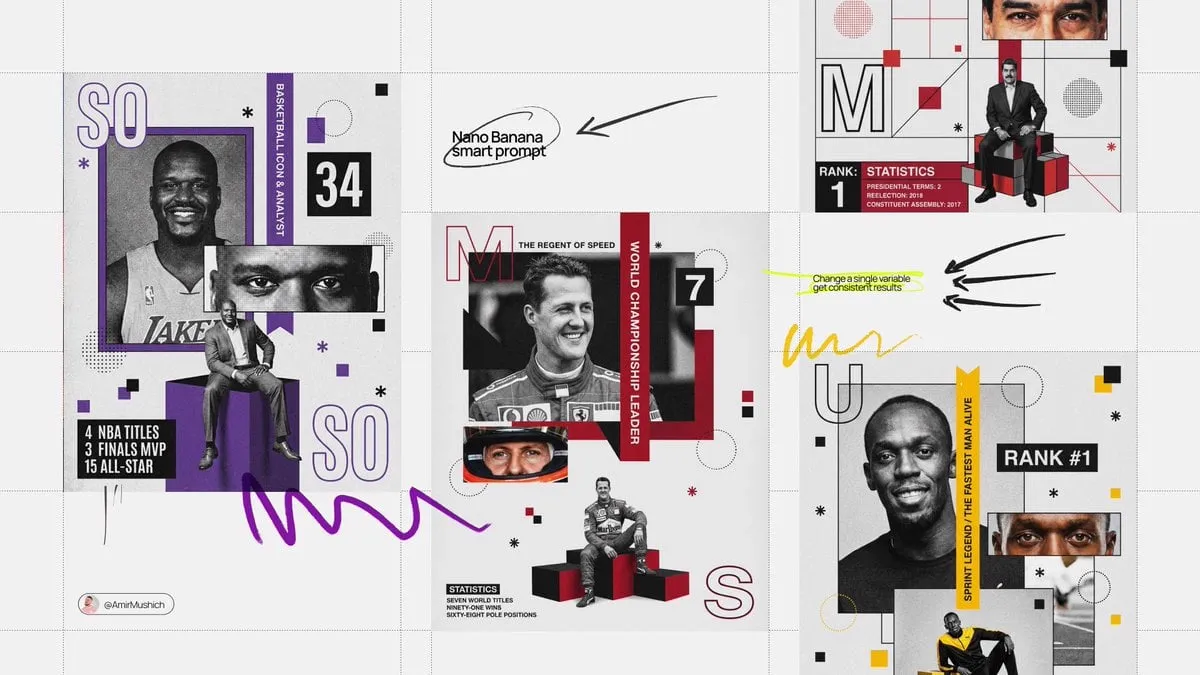
Great AI images are rarely the first output; they are the result of fast, disciplined iteration. Change one variable at a time. If the composition is wrong, do not also change the lighting. If the face is wrong, keep everything else identical and adjust only the face description. Single-variable iteration makes the model's responses legible, so you learn what each word actually does.
Keep a prompt library. When a prompt works, save it with a short note about what it produced, and build variations from it. Over time, you accumulate a personal reference of styles, subjects and fixes that makes every new image faster. Iterating without a system is gambling; iterating with a system is engineering.
Tool-specific notes
The core skills transfer across tools, but each platform has its own dialect. Midjourney rewards descriptive style language and version-specific parameters for aspect ratio and stylization. Stable Diffusion gives you the most control with negative prompts, weighting syntax and a huge ecosystem of fine-tuned models. DALL·E handles natural language instructions well and is forgiving with beginner prompts. Adobe Firefly integrates generation into design workflows and handles text rendering better than most. Ideogram is a strong choice when the image must contain readable text.
Pick one primary tool, learn its dialect, and apply the shared principles: clear subject, one primary style, quality modifiers, weighted emphasis, negative constraints and reference images. Switching tools constantly prevents you from building the intuition that makes you fast.
A workflow for iterating fast
Here is a repeatable workflow. Start with a one-line concept. Expand it into the full skeleton: subject, action, environment, style, quality. Generate a first batch and pick the closest result. Identify the single weakest point of that image. Adjust exactly that point and regenerate. Repeat until the image meets the brief, then save the winning prompt to your library. For series, fix the character block and reference image first, then vary scenes one at a time.
Controlling color, palette and composition
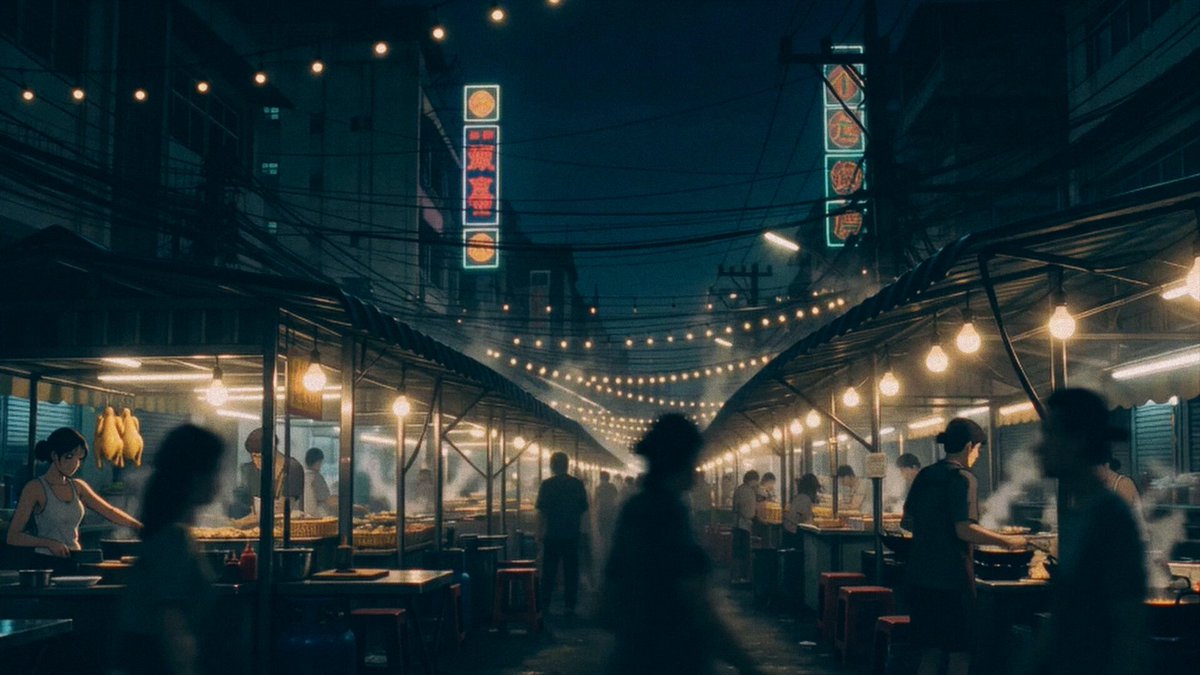
Color is a prompt variable, not just a post-production choice. Name the palette and the grade in your prompt: warm amber interior, cool blue night, desaturated documentary tones, high-contrast black and white. Consistent palette language across a series creates the visual coherence that makes images look like one project instead of random generations. The models understand these terms, and using them saves you hours of correction in an editor.
Composition language gives you the same control. If you want the subject small in a vast landscape, say it: tiny figure in a vast empty desert, rule of thirds, lots of negative space. If you want a symmetrical, graphic frame, name that too. The model reads composition terms literally, so describe the frame you want instead of hoping for it. Pairing palette and composition keywords is one of the fastest ways to move from generic to intentional, and it works in every tool.
Troubleshooting common failures
When an image is wrong, diagnose before regenerating. Blurry faces usually mean the face was described too weakly or the resolution path lost detail; strengthen the face description and add a sharp-focus modifier. Wrong anatomy often comes from describing poses that the model cannot render cleanly; simplify the pose or crop tighter. Wrong color casts usually mean the style and lighting terms contradict each other; remove one of them. Missing elements mean the prompt is overloaded; cut the least important concept.
Keep a failure log. Every time a prompt misfires, write down what you changed and what happened. After a few weeks, you will have a personal troubleshooting manual for your tool of choice, and the failure rate will drop because you stop repeating the same mistakes. Diagnosis is the difference between regenerating and learning.
FAQ
Why do AI images still struggle with hands? Hands have enormous structural variety and the models learned them imperfectly. Negative prompts help, but the most reliable fix is to compose the image so hands are less prominent, or to regenerate until a usable pass appears. Progress is real, but hands remain a telltale limit.
How many words should an image prompt have? Enough to be specific, not so many that concepts dilute. Most strong prompts run 30 to 80 words. If a prompt exceeds 100 words, consider splitting the image into multiple elements or simplifying.
What is the difference between positive and negative prompts? Positive prompts describe what you want; negative prompts describe what to avoid. Both steer the model, but they work differently, and the negative list should stay short and specific rather than becoming a general complaint.
Can I make the same character in different scenes? Yes, with a reference image or an identical character description block. Generate a character sheet first, then reuse it as the anchor for every scene. Small wording changes will change the face, so copy the block verbatim.
Which tool is best for beginners? DALL·E and Firefly are the most forgiving with natural-language prompts. If you want control and don't mind a learning curve, Stable Diffusion's ecosystem is the most flexible. Choose one and learn it deeply before exploring others.
Why do my colors look washed out? Usually the prompt asks for a soft, hazy look, or the tool's default rendering is muted. Add explicit color and contrast language, and check whether your tool has a stylization or quality setting that affects saturation.
How do I make images look like the same series? Lock the style and palette keywords, reuse the same character block or reference image, and keep the lighting language identical across prompts. Series coherence is built by repetition, not by chance.
Should I always use a negative prompt? Only when you know what to avoid. A short, specific negative list helps; a long generic list can fight your positive prompt and wash out the result. Add terms one at a time and test.
Building a personal prompt library
The value of your prompt skills compounds only if you keep what works. Start a library with entries for every successful image: the exact prompt, the tool and settings, and a one-line note on what made it work. Organize it by use case, such as product shots, character sheets, backgrounds or poster layouts, so you can find the right starting point in seconds.
The library is not a collection of secrets; it is a collection of decisions. When you need an image in a familiar style, you start from a proven prompt instead of from zero. When you try a new idea, you riff on an entry that already works. Over time, the library becomes your personal style system, and your consistency across projects improves because you are building on your own evidence rather than on vague memory.
Conclusion
The limits of AI image generation are real, but most of them are prompt-shaped. Build every prompt from a clear skeleton: subject, action, environment, style and quality. Learn the vocabulary that gives you control, from lens choices to lighting to composition. Use weighting and negative prompts to steer attention and block artifacts. Lock character consistency with reference images and verbatim description blocks. Iterate one variable at a time and keep a library of what works. None of this requires talent, only method, and the method compounds with every image you make.
