
Why Product Advertising Video Became an AI-First Discipline
Short-form video is now the default surface for product discovery. Buyers scroll past static banners and skim past text blocks; they stop for motion, faces, hands, and a clear promise delivered in the first two seconds. That shift created a production problem: a brand that wants to compete needs dozens of video assets per month, each tuned to a different platform, audience segment, and hook angle — not two hero commercials per year.
Traditional production economics cannot absorb that demand. A single studio shoot with talent, location, lighting crew, catering, and post-production can consume a quarter of a small brand's marketing budget before a single impression runs. Reshooting for a new hook, a new aspect ratio, or a localized voiceover means rebuilding the whole set.
Generative video changes the constraint. Instead of renting a set, you describe one. Instead of booking talent for an afternoon, you iterate on a character until the performance reads correctly. Instead of paying a post house for every cutdown, you render a 9:16, 1:1, and 16:9 version from the same source material.
The practical result is not "cheaper video." It is a different working method: brief-driven, prompt-driven, and test-driven. This guide walks through that method end to end — planning, prompting, consistency management, sound, localization, governance, and measurement — so the output looks like advertising rather than a tech demo.
The End-to-End Workflow: From Brief to Delivered Ad
Treat AI video generation as one stage inside a normal advertising pipeline, not as a replacement for it. Teams that skip the upstream thinking end up generating beautiful clips that say nothing, and teams that skip downstream QA ship brand-damaging mistakes.
Stage 1 — Brief and message architecture
Start with a one-page brief: the product, the audience, the single job the video must do, the proof point, and the desired action. Write the one-line claim and the one-line proof. If the claim cannot survive being read aloud without qualification, the video will not fix it.
Decide the awareness level of the audience. A cold audience needs pattern interruption and a problem statement. A warm retargeting audience already knows the product, so the video should lead with the offer, the comparison, or the testimonial.
Stage 2 — Script, hook, and shot list
Write three alternate hooks, each under eight words, that could stand alone as the first frame with no sound. Then write the shot list as a table: shot number, duration, subject, action, camera, lighting, audio, and on-screen text. This table becomes your prompt queue. Fifteen to twenty-five shots is a realistic target for a 30-second ad, with two to four seconds per shot.
Stage 3 — Look development and style frames
Before generating motion, generate stills. Produce eight to twelve style frames that establish palette, lens character, product placement, and background language. Approve one direction. Style frames are cheap and fast; discovering a look problem after twenty generated clips is expensive.
Stage 4 — Generation, assembly, and sound
Generate each shot, reviewing in batches rather than one at a time. Assemble a rough cut with scratch music. Only after the rhythm works should you invest in final voiceover, sound design, and color polish.
Stage 5 — QA, compliance, and delivery
Run a checklist pass: product accuracy, label legibility, claim substantiation, subtitles, loudness, safe-area framing, and file naming. Deliver a master plus platform cutdowns.
Prompting for Product Ads: Anatomy of a Shot Prompt
Generic prompts produce generic footage. Ad-grade prompts are structured, specific, and restrained — one idea per shot.
The six-part prompt
A reliable structure covers: subject, action, environment, camera, light, and format. For example — subject: matte ceramic coffee mug with a walnut handle; action: steam rising as a hand lifts it; environment: sunlit kitchen counter, shallow background; camera: slow push-in, 50mm, slight handheld; light: warm morning side light with soft falloff; format: vertical, 4 seconds, photoreal, no text.
Directing performance, not just appearance
Advertising lives on micro-expression. Phrases such as "delighted recognition," "confident mid-sentence gesture," or "relaxed exhale after a sip" move a clip from stock-footage neutral to a performance. Keep performances small; large emotions read as parody at short durations.
Keeping packaging and labels readable
Generated text on packaging frequently degrades into pseudo-letters. Three mitigations work well: shoot product shots on a real set with a physical item and use AI for the surrounding environment; frame labels small and out of focus and add typography in the edit; or generate a clean plate and composite the pack shot in post. Never ship a generated label you have not inspected frame by frame.
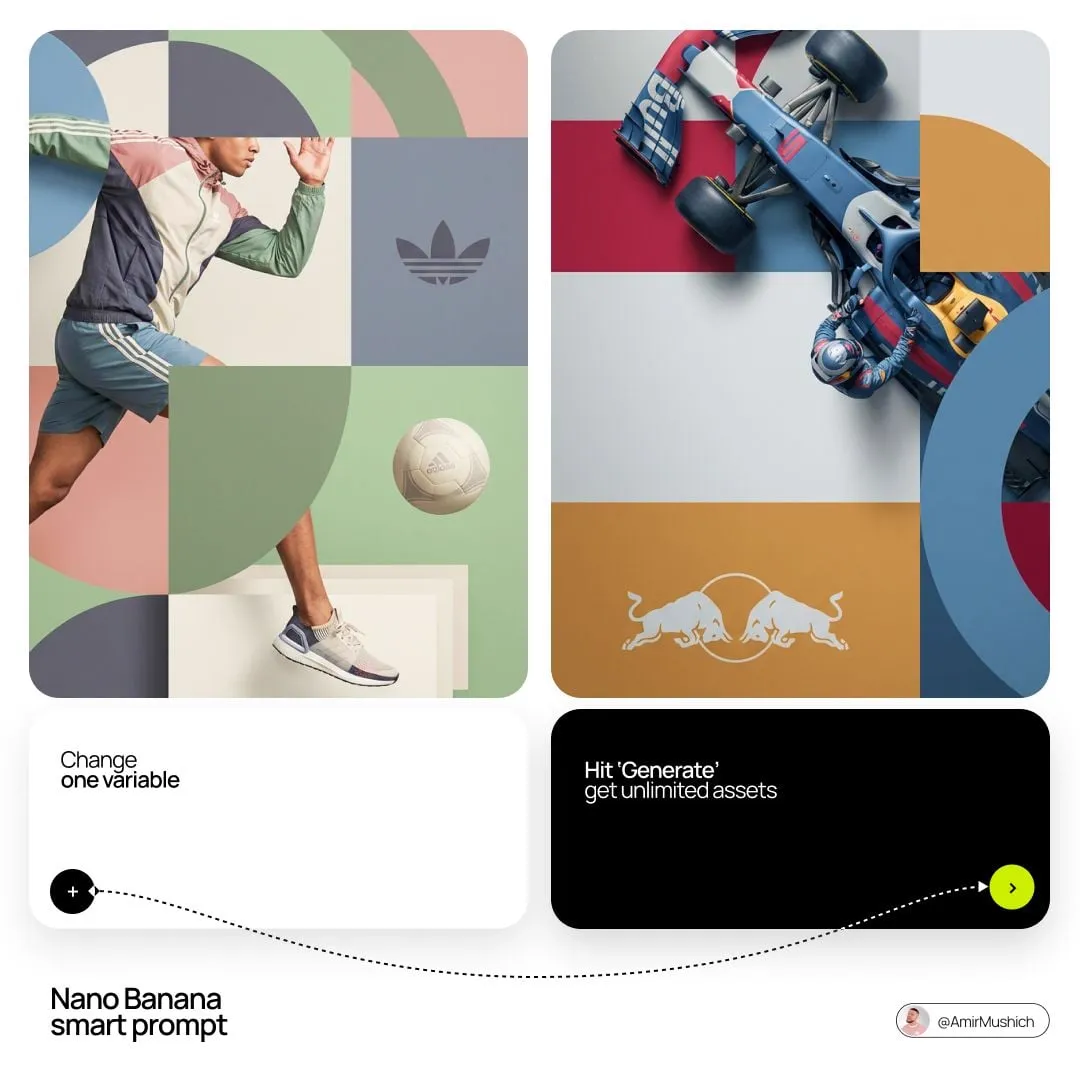
Iteration discipline: change one variable at a time
When a shot fails, isolate the cause. Bad motion is usually an action phrasing problem. Bad composition is a camera phrasing problem. Morphing geometry is usually a duration or complexity problem — split one long shot into two shorter ones. Change a single element per retry and log what worked; your prompt library becomes a real production asset.
Consistency: The Hardest Problem in AI-Generated Advertising
A viewer forgives a strange background. They do not forgive a product that changes shape between cuts or a model whose face shifts mid-sentence. Consistency is the difference between a credible ad and an obvious experiment.
Character continuity
Generate a character sheet first: front, three-quarter, and profile reference at a consistent focal length. Reuse the same reference in every prompt for that character, and describe stable attributes the same way every time — hair length, wardrobe color, accessories. Avoid describing traits you do not intend to keep, because the model will invent them and then keep them inconsistently.
Product continuity
Product geometry is unforgiving. If the item exists physically, photograph it against a neutral background and use those images as reference frames. Lock the camera angle for hero shots so the product is seen from the same side across the sequence. Slight angle changes read as intentional coverage; large ones read as a different product.
Scene and lighting continuity
Write a lighting bible: key direction, color temperature, contrast ratio, and practical sources. Reuse those phrases verbatim in prompts across the sequence. Continuity of light does more for perceived production value than higher resolution.
Handoffs between shots
Design explicit transitions — match cuts on a shape, a color, or a movement direction. When two generated shots cannot be joined cleanly, insert a cutaway, a macro detail, or a graphic card. Editors solve continuity problems that generators create; plan for that in your shot list.
Tool Selection: Matching the Model to the Shot
No single generator dominates every shot type. Build a small toolkit and route work by shot requirement.
| Shot requirement | Best-fit capability | What to check before committing |
|---|---|---|
| Photoreal product hero | High-fidelity image-to-video with strong reference adherence | Geometry retention, label integrity, highlight behavior on glossy surfaces |
| Lifestyle and human performance | Character-consistent video models with expression control | Face stability across seconds, hand quality, wardrobe drift |
| Abstract motion and transitions | Text-to-video with strong motion physics | Coherence at high motion, edge warping, frame-to-frame stability |
| Animated or stylized spots | Stylized diffusion pipelines and 3D-assisted renders | Style consistency between shots, line work stability |
| Voiceover and narration | Neural text-to-speech with voice cloning or preset voices | Pronunciation of product names, pacing control, emotional range |
| Music beds | Generative music with section control | Loopability, energy curve matching the edit |
| Upscaling and cleanup | Video upscalers and detail restorers | Artifact amplification, texture synthesis on skin and fabric |
Two operational rules matter more than the tool list. First, standardize output resolution, frame rate, and color space before assembly, or you will spend more time in post than you saved in generation. Second, keep a fallback: for any shot the models cannot deliver, plan a practical alternative — stock footage, a macro photograph with a push-in animation, or a graphic card. Advertising deadlines do not negotiate with model limitations.
Sound Design, Voice, and Localization
In advertising, sound carries persuasion. A product video with weak audio feels amateur regardless of image quality.
Build the audio in layers. Start with the voiceover script and record or generate it before final music selection, because narration length dictates pacing. Then add a music bed with a clear energy arc — a quieter intro, a lift at the product reveal, and a resolved ending. Finally, layer sound effects: the click of a lid, fabric movement, a subtle whoosh on transitions. Foley at low volume dramatically increases the sense of physical reality.
For localization, avoid the trap of translating word for word. Re-time the script to the target language, regenerate the voiceover with a native-sounding voice, and re-check on-screen text separately, since text expansion in German or contraction in Japanese changes layout. Where lip sync matters, use a lip-sync capable workflow; where it does not, keep the speaker off-camera or in profile, which is far more forgiving.
Always add burned-in or platform-native subtitles. Most short-form viewing happens with sound off, which means your subtitles are often the entire script for a meaningful share of the audience. Keep them to two lines maximum and avoid covering the product.
Turning One Ad Into Many: Variants and Testing
A single approved concept should yield a family of assets. Plan for that during production, not after.
Aspect ratios and platform cuts
Generate with vertical framing in mind for the hero performance, then deliver 9:16, 1:1, 4:5, and 16:9 versions. Re-framing in post works if you protected headroom and kept the subject centered. If the concept depends on a wide establishing shot, generate an alternate vertical version of that shot rather than cropping aggressively.
Hook variants
The first two seconds determine most of the performance difference between two otherwise identical ads. Produce four to six opening variants that share the same body: a problem-led hook, a result-led hook, a curiosity hook, a price or offer hook, and a social-proof hook. Run them against each other and keep the winner as the new control.
Offer and CTA variants
Test call-to-action language and end cards separately from creative. Mixing a new hook with a new CTA in the same test teaches you nothing about which change caused the result.
Localization without reshooting
Keep a version of the timeline with text and voiceover on separate tracks. Localized delivery then becomes a swap rather than a rebuild — a significant operational advantage over live-action production.
Mistakes That Sink AI Product Ads
The failure modes are consistent and mostly preventable.
- No product clarity. The ad looks cinematic but never shows what is being sold. Show the product clearly within the first three seconds.
- Text artifacts. Generated signage, labels, or packaging lettering that reads as gibberish. Inspect every frame or composite real typography.
- Hand and object morphing. Fingers that merge and objects that change shape mid-shot. Shorten shots, reduce motion, or reframe to hide hands.
- Overlong shots. Generators drift over time. Four seconds with a clean edit beats eight seconds with visible decay.
- Style inconsistency. Different tools, different prompts, or different lighting descriptions per shot produce a collage rather than a campaign.
- Unsupported claims. Exaggerated performance or health claims that cannot be substantiated. Substantiate first, write second.
- Ignoring disclosure. Undisclosed synthetic media in markets and platforms that require it. Follow the applicable rules and label where expected.
- No approval gate. Publishing straight from the generator to the ad account without brand, legal, and accuracy review.
Governance: Rights, Disclosure, and Brand Safety
Before scaling volume, settle the rules. Confirm the commercial rights attached to the models and assets you use, and keep records of what generated each asset so you can answer questions later.
Maintain a reference library of approved product photography, logos, packaging, and fonts, and restrict generation from that library. Prohibit generating likenesses of real people without documented permission, and never depict identifiable individuals in a way that implies endorsement.
Because generative output can hallucinate brand-adjacent details, run a frame-level accuracy check for logos, certifications, and claims. Involve legal and brand reviewers early in the pipeline rather than at the final gate; a rejection at the end costs the whole production cycle.
Finally, keep a human in the loop on the decision to publish. Automation can produce volume, but accountability for what a brand says must stay with people.
Measuring Impact and Iterating
Set the measurement frame before you generate, or you will optimize toward aesthetics. Define the primary metric — cost per acquisition, click-through rate, watch-through rate, or add-to-cart rate — and a secondary metric for creative diagnostics, such as three-second hold rate and completion rate.
Track performance by hook, by shot sequence, and by length. Most learnings come from the first three seconds and the last three seconds, so tag those separately in your reporting. Keep an asset library with metadata: concept, hook type, product, aspect ratio, language, and results. Over a few cycles, this library reveals which visual grammar actually converts for your category — and turns video generation from an art experiment into a repeatable marketing system.
If a concept underperforms, diagnose in this order: message, then hook, then edit rhythm, then audio, then visual polish. Teams often rewrite prompts when the real problem is a weak offer.
FAQ
How long does it take to produce an AI product ad?
For a 30-second spot with 15 to 25 shots, plan two to four working days: half a day on brief and script, half a day on style frames, one to two days on generation and review, and a day on assembly, sound, QA, and cutdowns. First projects take longer while you build prompt patterns.
Do I still need a real shoot?
Often, yes — for the hero product shot. Using real photography for the product and generative video for environment, talent, and transitions gives the best ratio of authenticity to flexibility.
How do I keep the same actor across shots?
Create a character reference sheet, reuse identical descriptive language, and generate all shots for that character in the same session with the same model version and parameters.
Can AI voiceover be used for advertising?
Yes, provided the voice is licensed for commercial use and the script is written for speech rather than for reading. Test product pronunciations before finalizing.
How many variants should I test per concept?
Four to six hooks against a fixed body is usually enough to find a meaningful difference without splitting traffic too thin.
What resolution should I deliver?
Match platform requirements, typically 1080×1920 for vertical. Generate at the highest practical resolution and downscale for delivery rather than upscaling later.
How do I avoid obvious AI artifacts?
Keep shots short, describe only what you need, avoid complex hand interactions and readable text, and use close-ups and cutaways to cover areas where generators struggle.
Is disclosure required?
Requirements vary by market and platform. Check the rules that apply to your campaign, and when in doubt, label synthetic media clearly — it rarely harms performance and protects trust.
