
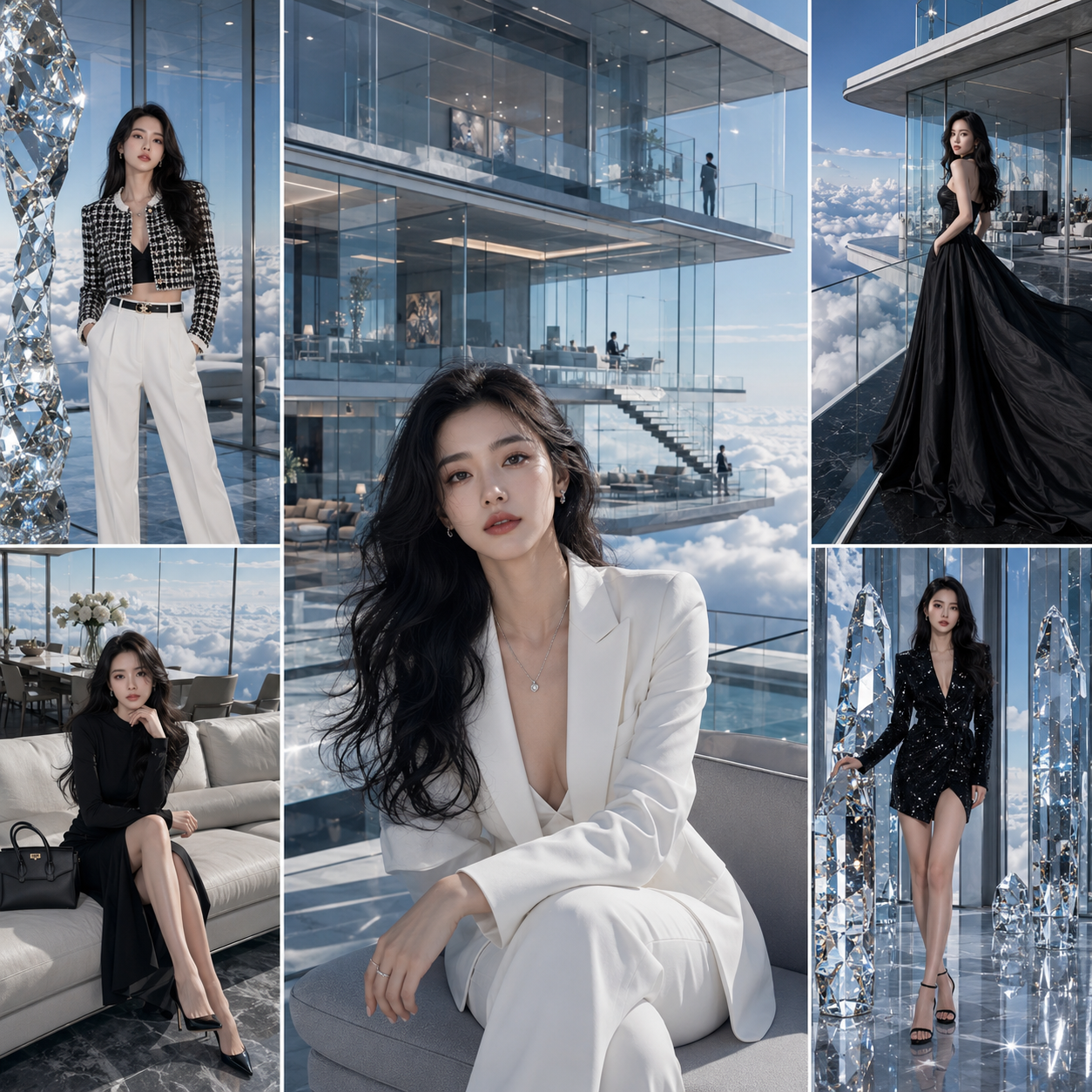
Most AI video projects do not fail because the model is weak. They fail because a written story was never translated into shots that a generator can actually render. A page of prose carries mood, subtext, and implication. A video model only understands a subject, an action, a setting, a camera, and a light source. The distance between those two things is where a repeatable workflow earns its keep, and it is the difference between a clip that looks impressive for three seconds and a story someone watches to the last frame.
This guide walks through a complete, tool-agnostic pipeline for turning text into video: how to break a story into shots, how to write prompts that survive generation, how to keep characters consistent across dozens of clips, how to build an audio bed that carries the narrative, and how to assemble everything into something that feels intentional rather than assembled.
Why the story-to-video workflow differs from editing footage you shot
Traditional production front-loads its cost. You scout, you light, you direct performances, and you commit decisions on set that you then live with in the edit. Most of the budget is spent before anyone touches a timeline.
Generative production inverts that curve. Creating an attempt is nearly free, so the expensive part becomes judging attempts, maintaining continuity, and deciding when a shot is good enough. Ten variations of the same moment cost less time than one poorly planned scene did on a physical set.
The bottleneck moves from capture to selection
When generation is cheap, the limiting resource is attention. If you generate 120 clips for a 60-second piece, you will spend more time reviewing, naming, and sorting files than you spent writing prompts. Professionals handle this by generating toward a decision rather than toward a possibility: every clip exists to answer a specific question about pacing, framing, or emotion.
Why planning discipline matters more, not less
It is tempting to treat AI video as improvisation. In practice, the opposite is true. A story with a clear beat structure gives you a fixed target, which means you can tell instantly whether a generated shot serves the scene. Without that target, you end up with a folder of beautiful, unrelated footage and a vague sense that the result feels hollow.
The end-to-end pipeline: from written story to finished timeline
A reliable pipeline has eight stages, and each one produces a concrete artifact. If a stage has no artifact, it is not a stage, it is a mood.
| Stage | Output | Typical failure |
|---|---|---|
| Story pass | One-page beat sheet | Story is too long for the target runtime |
| Shot list | Numbered shots with duration and purpose | Shots repeat the same information |
| Visual bible | Character, palette, and location references | Character descriptions drift between scenes |
| Keyframe generation | Still images per shot | Frames look good alone but not in sequence |
| Motion generation | 3 to 6 second clips | Motion contradicts the still frame |
| Audio build | Narration, music bed, effects | Narration was never timed to the cut |
| Assembly | First cut on the timeline | Cuts land mid-motion and feel jarring |
| Polish | Color, captions, mix, export | Loudness varies between platforms |
Sizing the story before you generate anything
Read your script aloud with a timer. A comfortable narration pace is roughly 140 to 160 words per minute. That means a 60-second piece holds about 150 words of spoken content, which is far less than most first drafts. Cut the story first. It is much cheaper to delete a sentence than to delete twelve generated clips.
Choosing the right generation approach per shot
Not every shot deserves the same method. Establishing shots and atmosphere can be generated freely from text. Character close-ups benefit from a locked reference image. Dialogue needs either a two-shot or a careful shot-reverse-shot plan, because most models still struggle to keep two people talking believably in a single frame.
Writing a shot list a generator can actually render
A shot list is the translation layer between your story and the model. Each line should describe one continuous action in one location. If a shot contains the word then, it is almost certainly two shots.
A practical shot entry contains six fields: shot number, duration in seconds, subject, action, setting, and camera intent. Here is what that looks like in practice for a scene about a courier arriving at a rain-soaked market at dawn:
- Shot 12, 4 seconds, subject: young courier in an olive rain jacket, action: steps off a motorbike and looks up, setting: covered street market at dawn, camera: slow push in from a wide angle.
Grouping by scene instead of by minute
Generate in scene order and keep one folder per scene. When you need to fix continuity, you only re-render the affected scene rather than the whole piece. It also makes it obvious when a scene has too many shots relative to its narrative weight.
Setting durations that match how models behave
Most current models produce convincing motion in short bursts. Three to six seconds is the reliable zone. Anything longer tends to drift in anatomy, geometry, or lighting. Plan your story around short, purposeful clips and let editing create the sense of duration.
Prompt design for story-driven shots
A prompt is not a description of a picture. It is a set of instructions with priorities. The most reliable prompts follow a stable order: subject, action, environment, camera, light, style, mood. Keeping the order consistent makes it easy to change one variable at a time when a result misses.
A workable template looks like this: a young courier in an olive rain jacket steps off a motorbike, covered street market at dawn, slow push-in from a wide angle, warm practical lights mixed with blue morning light, cinematic realism, quiet and determined mood.
Change one variable per iteration
When a shot fails, resist rewriting the whole prompt. Adjust the camera instruction only, then the lighting only, then the action verb. This isolates cause and effect and slowly teaches you how your chosen model interprets language.
What to put in negative instructions
Negative prompts are useful for the recurring artifacts of the moment: warped hands, extra limbs, text overlays, watermarks, harsh digital sharpening, fisheye distortion, and duplicated faces in crowds. Keep the list short and specific. Long negative lists tend to flatten the image because they suppress too much.
Consistency: keeping characters, places, and tone stable
Consistency is the single hardest problem in AI video, and it is solved with references rather than with words. Verbs are easy for models. Faces and wardrobes are not.
Build a character sheet before your first shot
Generate a still of each main character in neutral light, front-facing, and save it. Then reuse that image as a reference for every shot the character appears in. Write a fixed description string, roughly 15 to 25 words, and paste it into every relevant prompt without rewording it. Synonyms are the enemy here: hair described as chestnut in one shot and auburn in the next produces two different people.
Use keyframes and start-end control for difficult motion
For shots with a specific beginning and end, generate the first and last frame as stills and let the model interpolate between them. This is the most reliable way to handle reveals, walking shots, and camera moves, because you control both endpoints instead of hoping the model lands where you intended.
Locking palette and environment
Create a short style string that describes the grade, grain, and lens character of your piece, and append it to every prompt. A palette lock of two dominant colors and one accent keeps a sequence feeling like one film rather than a stock-footage sampler.
Audio as the backbone: voice, music, and sound design
Audiences forgive imperfect visuals far more readily than bad audio. Build sound first whenever possible, then cut picture to it.
Narration and voice selection
Synthesized voices have improved dramatically, but pacing is still your responsibility. Write for speech, not for reading: short clauses, concrete verbs, and no sentences that require a mental re-read. Insert explicit pauses where the edit needs room to breathe, and generate narration in paragraph-sized chunks so a single bad line does not force a full re-render.
Music, ambience, and effects
A music bed should sit under the voice at roughly 18 to 22 dB below the narration during speech and lift slightly in gaps. Ambience is what makes generated footage feel real: rain, distant traffic, room tone, cloth movement. Add at least one diegetic sound effect per scene so the image and the sound agree about where you are.
Editing generated clips into a story
Generated clips are raw material. They become a scene only on the timeline. Three editing habits make the biggest difference.
First, cut on motion. Find the frame where a hand, head, or camera move is already traveling and place the cut there. Static-to-static cuts between generated clips feel like slideshows.
Second, vary shot length deliberately. Short-form pieces usually sit between 1.5 and 3 seconds per shot, but emotion needs longer holds. Let the moment that matters run five or six seconds and the rest stay brisk.
Third, overlap audio across cuts. Letting the incoming scene's ambience or narration begin a few frames before the picture arrives smooths the join and hides small continuity mismatches. Captions should be burned in or exported separately depending on platform, and always checked for line length on a phone screen.
Quality control and common mistakes to avoid
Review in three passes, each with one job, rather than trying to judge everything at once.
Pass one, story: does each shot change what the audience knows or feels. If a shot can be removed without loss, remove it.
Pass two, continuity: character appearance, wardrobe, time of day, direction of movement, and screen direction. Watch the cut at double speed to spot jumps.
Pass three, technical: exposure consistency between clips, audio loudness, caption timing, and the first two seconds and last two seconds of the piece.
Common mistakes worth naming: writing prompts that are too long and contradictory, generating twenty variations before deciding what the shot needs to accomplish, relying on a single model for every visual style, forgetting that horizontal output must be reframed for vertical delivery, ignoring consent and licensing for real people and branded material, and skipping the audio plan until the picture is locked.
A worked example: one page of text to a 60-second short
The source text is a short paragraph about a night-shift baker who leaves a loaf on a windowsill for a stranger. The beat sheet reduces it to five beats: the empty kitchen, the bread coming out, the note being written, the loaf on the sill, and the morning stranger.
That becomes twelve shots: three for the kitchen, two for the baking, two for the note, two for the sill, two for the morning, and one wide closing shot. Narration is trimmed to 148 words, recorded in three chunks, and timed before any clip is generated.
Keyframes are produced for shots four, seven, nine, and eleven, the shots where the character's face matters. The remaining eight shots are generated from text with a fixed style string. Total generation attempts land near forty, of which twelve survive. Assembly takes about ninety minutes, most of it spent aligning narration to cut points and trimming clip tails to land on motion.
The lesson from the example is not the numbers. It is that the story was already decided before generation began, so every attempt had somewhere to belong.
FAQ
Do I need to be a video editor to do this well?
You need editing instincts: pacing, continuity, and the willingness to cut your favorite shot. Formal software training helps less than watching your own draft three times without touching anything.
How many shots should a 60-second video have?
Twelve to twenty is a healthy range for short-form. Fewer than ten often feels slow unless the piece is deliberately contemplative; more than twenty-five tends to feel like a highlight reel rather than a story.
Which part of the pipeline should I invest the most time in?
The shot list and the audio. The shot list determines how much waste you generate, and the audio determines whether the result feels professional regardless of the visuals.
Why do my characters change between shots?
Because character identity lives in reference images and fixed description strings, not in adjectives. Lock a still per character, reuse the exact same wording, and use start-end keyframe control for complex movement.
Can I mix multiple generation models in one project?
Yes, and many strong projects do. Use one model for realistic character work, another for stylized inserts, and a third for texture or abstract transitions. Just unify the grade and grain in the final pass so the piece still reads as one film.
How do I handle audio loudness for different platforms?
Export a version around -14 LUFS for general web delivery and a slightly louder, more compressed version for mobile-first feeds. Always check the first three seconds, since that is where viewers decide whether to keep watching.
What is the fastest way to improve at this?
Finish small pieces completely. A finished 30-second story teaches more about pacing, continuity, and audio than ten unfinished experiments. Ship, note what broke, and change one thing in the next one.
