
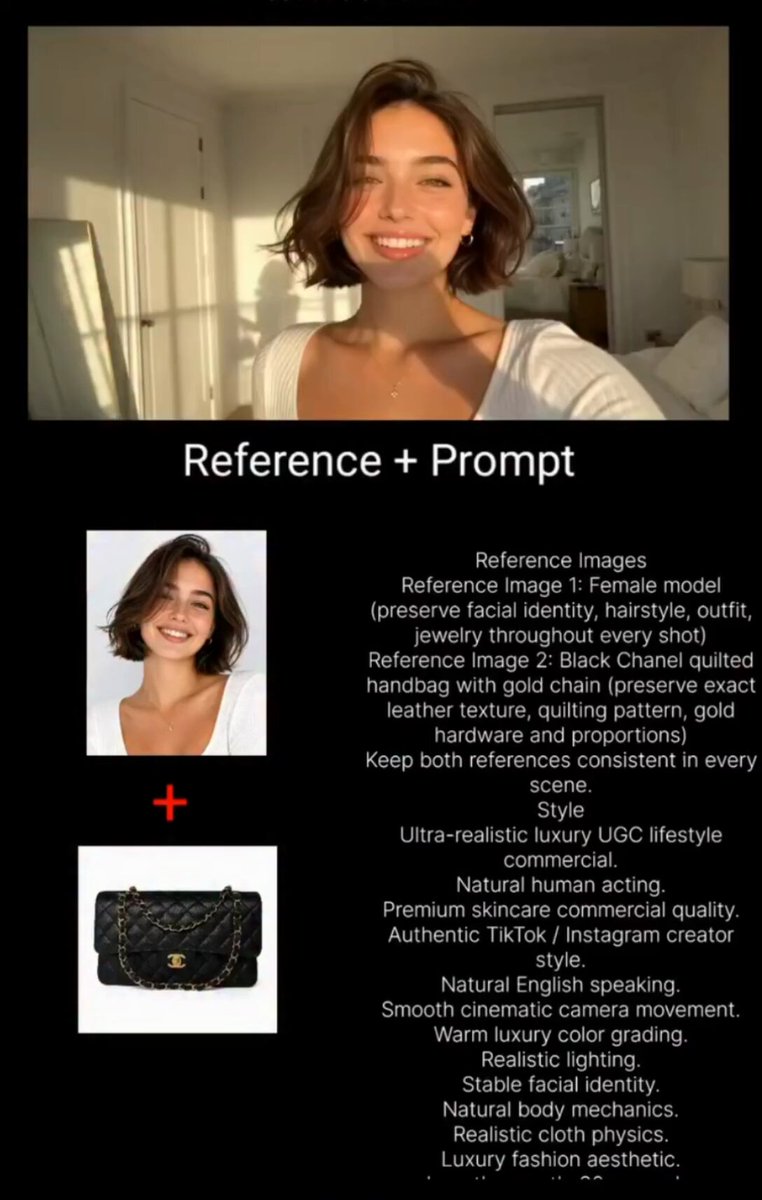

Photorealistic AI video stops being a novelty the moment it has to survive contact with a real production. Studios, agencies, research teams, and independent creators are all discovering the same uncomfortable truth: the models are no longer the hard part. The hard part is building a workflow where high-fidelity synthesis happens on hardware you control, where the resulting assets are encrypted at rest, where encryption keys rotate on a schedule you can defend in an audit, and where nothing about the pipeline depends on a network connection staying alive.
That combination - photorealism plus offline operation plus disciplined key management - is a systems problem, not a prompt problem. This guide walks through how to design it end to end, from model selection and GPU budgeting to envelope encryption, batch rendering, audit reconciliation, and the review process that keeps output believable.
Why Offline Changes Every Technical Decision
Running video generation locally is not simply a cloud workflow with a different hostname. Removing the network changes the failure modes, the cost curve, and the compliance story all at once.
What offline actually buys you
Three things, mainly. First, data never leaves the perimeter. Source plates, actor likenesses, unreleased product renders, and client-confidential storyboards stay on disks you physically control. Second, latency becomes predictable. A local batch does not compete with anyone else's queue, so a render that takes eleven minutes takes eleven minutes every time. Third, legal review gets simpler: there is no third-party subprocessor in the chain for footage that may be subject to strict contractual or regulatory handling rules.
What it costs you
The trade is real. You inherit hardware procurement, driver management, thermal problems, disk capacity planning, and the entire security burden. Nobody patches your inference stack for you. Nobody reruns a failed job after a power event. If a model checkpoint corrupts at 3 a.m., you are the support team. Offline pipelines reward teams that enjoy operational discipline and punish teams that treat infrastructure as an afterthought.
A useful decision rule: go offline when the footage is sensitive, the volume is steady, or the latency requirement is tight and repeatable. Stay hosted when the work is exploratory, bursty, or when you genuinely need frontier-scale compute for a handful of shots.
Choosing Models and Hardware Before You Commit
Model choice and hardware choice are the same decision. Picking a model you cannot fit comfortably in memory leads to offloading, tiling artifacts, and render times that quietly kill iteration speed.
A practical shortlist for photoreal output
- Diffusion transformer video models with strong temporal consistency - often the best balance of realism and controllable motion.
- Image-to-video models driven by a high-quality still - ideal when you already have a locked keyframe from an image generator and want motion without re-rolling composition.
- Hybrid stacks - generate the base frame with one model, animate with a second, then refine with a dedicated upscaler and grain pass.
- Open-weight checkpoints - essential offline, because you can pin an exact version and reproduce a shot months later.
Matching model size to GPU memory
Write down three numbers before buying anything: the resolution you must deliver, the clip length you must deliver, and your acceptable iteration time. A 1080p delivery target at eight seconds with a five-minute iteration window implies a very different machine than a 4K hero shot with a forty-minute window.
Rules of thumb that hold up in practice:
- Reserve 20-25 percent of VRAM headroom. Saturating memory causes fragmentation crashes mid-batch.
- Prefer more VRAM over more raw compute. Out-of-memory failures cost more time than slow kernels.
- Use fast NVMe for the working cache. Model loading from spinning disks destroys batch throughput.
- Keep a separate scratch volume that you can wipe, so failed renders never contaminate a clean project.
Version pinning is non-negotiable
Record exact checkpoint hashes, sampler settings, seeds, LoRA weights, and upscaler versions in a manifest file stored beside the render output. When a client asks for a revision six weeks later, the manifest is the difference between a fifteen-minute fix and a full reshoot.
The Photoreal Checklist: Believable vs Uncanny
Most disappointing AI video is not low-resolution. It is subtly wrong in ways viewers feel but cannot name. Photorealism is a stack of small correctness signals, and each one can be verified.
Light and lens language
Real footage has a consistent light direction and a physically plausible falloff. Check that your generated plates agree with the practical lights in the scene, that shadows land where the key light implies, and that highlights do not appear on surfaces facing away from the source.
Lens behavior matters just as much. Determine whether the shot should feel like a 24mm wide or an 85mm portrait, then enforce that framing with consistent perspective and depth-of-field cues. Mixing focal-length intuition across shots in a sequence reads as artificial even when each individual frame is convincing.
Motion, grain, and micro-imperfection
Perfect smoothness is a tell. Real cameras produce sensor noise, rolling-shutter quirks, slight handheld drift, and focus breathing. Add these deliberately rather than hoping a model supplies them:
- Grain matched to the acquisition format you are pretending to use.
- Very subtle gate weave or handheld micro-motion for organic shots.
- Motion blur consistent with the implied shutter angle.
- Harmonic skin and cloth motion - the places where temporal consistency usually breaks first.
The five-pass review
Run every clip through the same sequence: watch at full size for composition, watch at 25 percent for structure, scrub frame by frame for warping, watch muted for motion plausibility, then watch with sound for rhythm. Most artifacts appear in pass three; most pacing problems appear in pass five.
Encryption Key Rotation for Large Media Vaults
Key rotation is the part teams postpone and then regret. Done properly it is boring, automated, and rehearsed.
Envelope encryption in practice
Do not encrypt footage directly with a long-lived master key. Use a two-layer scheme:
- Generate a unique data encryption key per project or per render batch.
- Encrypt the media with that data key using an authenticated cipher.
- Wrap the data key with a master key held in a hardware security module, a secure enclave, or an offline key store.
- Store only the wrapped data key alongside the asset metadata.
This design lets you rotate the master key without re-encrypting terabytes of video. Rotation rewraps the small data keys; the media stays untouched. It also gives you surgical revocation: destroy one wrapped data key and that single asset becomes permanently unreadable while everything else continues to function.
Rotation cadence and recovery drills
Choose a cadence based on exposure, not fashion. Common patterns:
- Time-based: rotate the master key every 30, 90, or 180 days depending on contractual requirements.
- Event-based: rotate immediately after any personnel change, device loss, or suspected compromise.
- Scope-based: give each client project its own key hierarchy so a dispute in one project never touches another.
Whatever you choose, rehearse it. A rotation that has never been tested is a hypothesis. Run a full drill quarterly: rotate the master key, confirm every active project still decrypts, deliberately destroy one retired data key, and verify that only the intended asset is lost. Log the drill result. Auditors love drill logs and distrust rotation policies with no evidence behind them.
Practical rotation pitfalls
- Rotating without keeping old wrapped keys long enough to finish in-flight renders.
- Storing the master key on the same machine that renders the footage.
- Failing to rotate credentials that grant access to the key store itself.
- Forgetting derivative files: proxies, thumbnails, review copies, and audio stems need the same protection as the master render.
Scheduling GPU Batches Without a Cloud Queue
Local rendering is a scheduling problem. Without a queue service, jobs collide, memory fragments, and throughput collapses.
Build a simple supervisor with these properties:
- One job per GPU at a time, with explicit VRAM reservation.
- A priority lane for short iteration prompts so artists are never blocked behind a two-hour hero shot.
- Automatic retry with reduced tile size on out-of-memory failure, capped at two attempts.
- Checkpointing every N frames so a crash costs minutes rather than hours.
- A cold-storage step that moves finished renders off fast NVMe automatically.
A queue also gives you honest metrics. Track frames per hour per model version, failure rate by resolution, and average time-to-first-frame. Those three numbers tell you when a model upgrade is genuinely worth the migration cost and when it is just novelty.
Audit Trails, Sync, and Reconnection
If a machine ever rejoins a network - even briefly - you need a defensible record of what moved.
What to log
Every render job should emit an immutable record containing the operator identity, project identifier, model checkpoint hash, prompt or reference asset hash, input files, output files, encryption key identifier, duration, and result status. Write these records append-only, and hash-chain them so tampering is detectable.
Reconciliation on reconnection
When a workstation comes back online, do not blindly sync the whole vault. Follow a strict order:
- Upload audit records first, so the log order is preserved.
- Sync encrypted assets second, verifying checksums on arrival.
- Reconcile deletions last, with an explicit confirmation step.
This ordering means that even if the link drops mid-sync, the audit trail still explains what was in flight.
Review, Approval, and Secure Handoff
Approval workflows are where security policies usually leak. A reviewer exports a clip to a personal device and the strongest encryption in the world becomes decorative.
Practical controls:
- Watermarked, lower-resolution review copies for anyone outside the core team.
- Time-limited access links generated on demand rather than persistent shared folders.
- Per-reviewer identity binding so every frame served is attributable.
- A single approved export path that logs destination, recipient, resolution, and timestamp.
For final delivery, prefer encrypted containers with a recipient-specific key rather than shipping raw files. Send the key through a different channel than the asset. It is an old habit and still the most reliable one.
Mistakes That Quietly Break Secure Video Workflows
These rarely cause dramatic failures. They cause slow, expensive erosion.
- Treating encryption as a final export step instead of a pipeline-wide property.
- Letting one person hold all key custody with no documented recovery path.
- Skipping manifest files, then losing the ability to reproduce a shot.
- Tuning prompts without version control, so improvements cannot be attributed or reverted.
- Rendering at maximum resolution for review, wasting hours on frames nobody keeps.
- Ignoring thermal throttling until batch times drift upward by 30 percent.
- Rotating keys on a calendar without ever testing decryption afterward.
- Storing proxies and thumbnails unencrypted because they feel unimportant.
Frequently Asked Questions
Is offline generation really necessary, or is it mostly a compliance preference?
Both. Compliance drives the decision for regulated or contractually sensitive footage. Operational predictability drives it for teams producing steady volume who are tired of variable queue times. If neither applies, hosted generation is usually cheaper and faster to start.
How often should encryption keys rotate?
Align rotation with your risk model rather than a generic number. Thirty to ninety days suits high-sensitivity client work. Longer intervals are defensible for low-risk internal projects. Add mandatory event-based rotation after staff departures or device loss regardless of cadence.
Does envelope encryption slow down rendering?
Not meaningfully. The encryption overhead happens on write, and modern CPUs and GPUs handle authenticated ciphers with negligible impact compared to inference cost. The performance question that actually matters is disk throughput, not cryptography.
What is the minimum hardware for photoreal local video?
A workstation with a modern high-VRAM GPU, 64GB or more of system memory, and a fast NVMe scratch volume covers most 1080p work. 4K hero shots benefit from multiple GPUs and a dedicated storage tier. Start with one capable machine and measure before scaling out.
How do I keep review copies secure without slowing approvals?
Generate watermarked proxies automatically as part of the render job, bind each copy to a reviewer identity, and expire links quickly. Reviewers get fast access; you keep attribution and control.
Can I mix local rendering with occasional hosted bursts?
Yes, but define the boundary explicitly. If any sensitive frame leaves the perimeter, your security model must account for it. Many teams keep a strict-local lane for confidential work and a separate hosted lane for public or abstract material.
What should I back up first if storage runs short?
Manifests, audit logs, and wrapped data keys are tiny and irreplaceable. Back those up continuously. Render outputs are large and reproducible from a manifest, so they belong in a slower, cheaper tier.
A Starter Sequence That Works
If you are building this from nothing, sequence it deliberately. Lock the hardware and model shortlist first, then build the render queue, then add encryption at the storage layer, then wire in audit logging, and only then automate rotation. Each layer is testable on its own, and failures stay small.
Finish with one full rehearsal: pick a realistic project, run it end to end offline, rotate a key mid-flight, simulate a network reconnection, and produce a delivery package. Whatever breaks in that rehearsal is the thing that would have broken in front of a client. Fix it while nobody is watching, and the pipeline becomes something you can rely on instead of something you hope holds together.
