
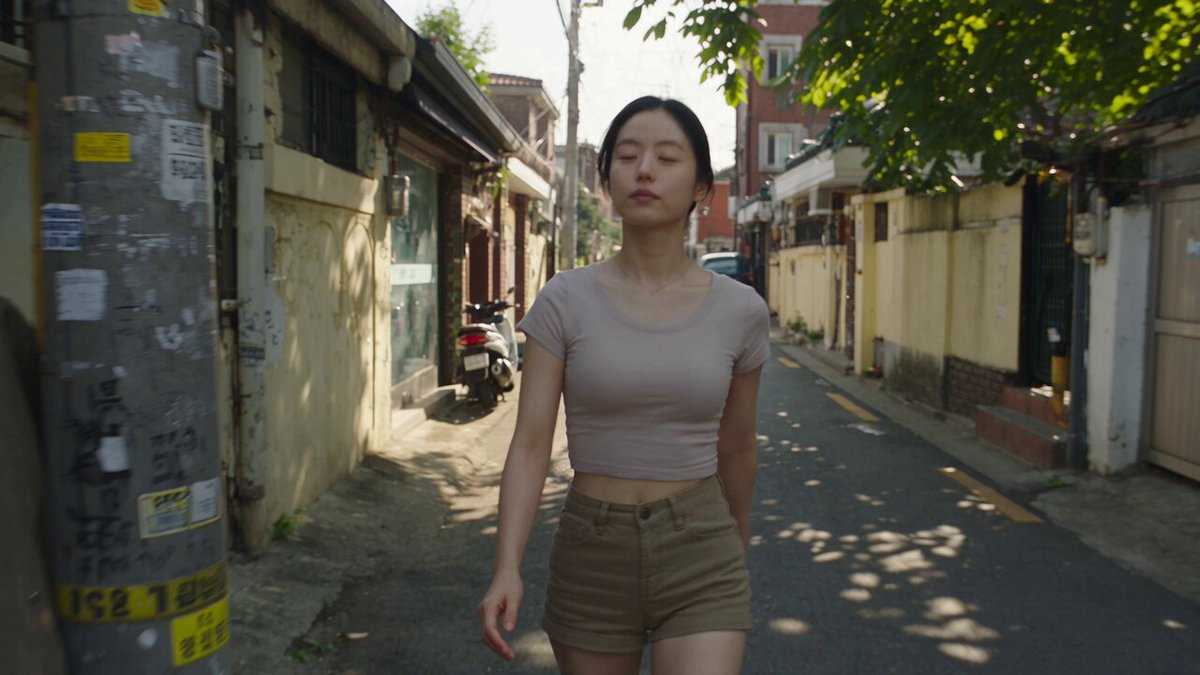
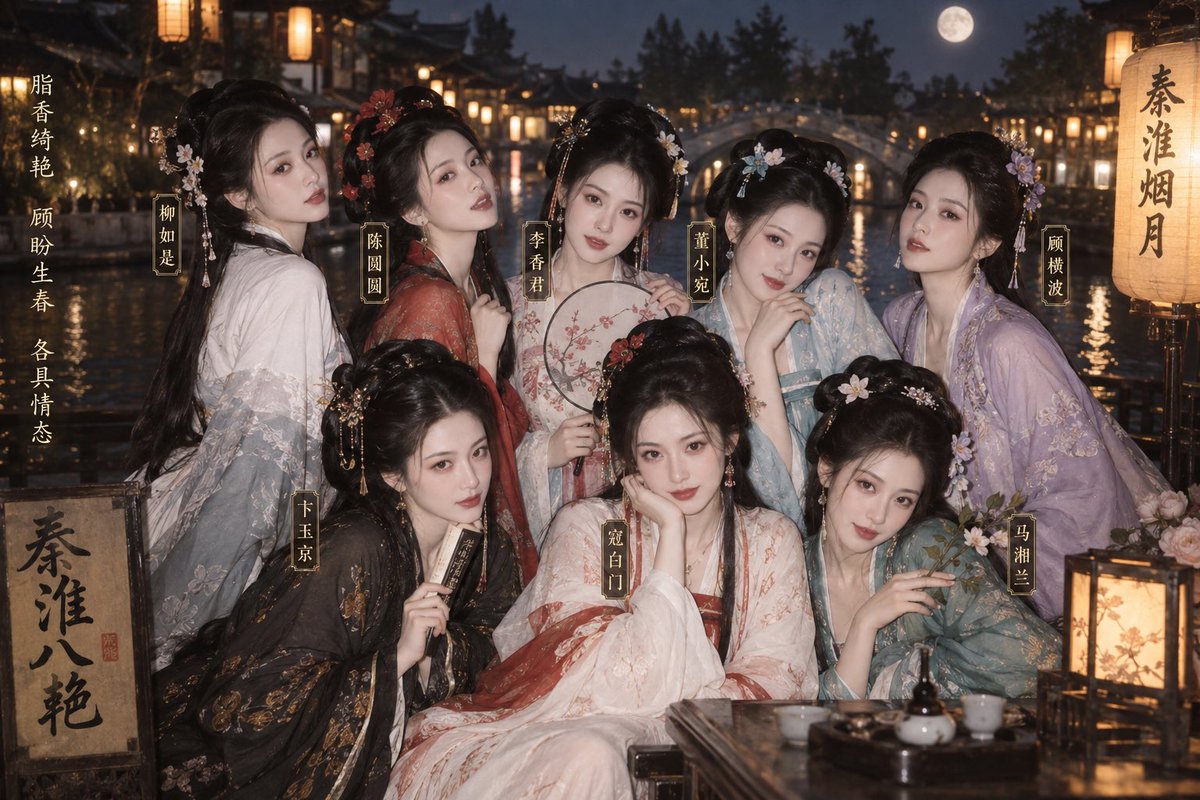
Why AI Video Ads Became a Default Production Path
For most of the last decade, a mid-sized company that wanted a respectable video ad had two options: hire an agency and wait six weeks, or shoot in-house and accept the quality gap. Both paths shared one bottleneck. Every new concept cost about as much as the first, because cameras, crews, locations, and talent do not scale down gracefully. A fifteen-second spot and a three-minute brand film differ in length, not in the number of people required to make them.
Generative video changed the arithmetic. A shot that once needed a location scout can now be drafted in a browser tab, reviewed the same afternoon, and regenerated with a different camera angle before the next meeting. The real shift is not that AI replaces a production crew. It is that AI removes the penalty for trying something new. When a concept costs an hour instead of a week, teams test ten hooks instead of one, and the winner gets chosen by response data rather than by whoever argued loudest.
The cost structure you are actually changing
Traditional production carries high fixed costs and almost no marginal flexibility. AI-first production flips that: setup is cheap, but judgement becomes the scarce resource. Budget moves away from rentals, crew days, and travel toward tool subscriptions, editing hours, and the patience to review many near-miss generations. The skills that matter change too. Writing a tight brief, describing camera language precisely, and cutting a two-second hook now matter more than knowing which camera body to rent.
What this means for your team
You do not need a nine-person crew, but you do need three jobs covered, even if one person wears all three hats: a strategist who owns the offer and the single message, a shot designer who thinks in frames, and an editor who can turn raw generations into a finished cut with sound and legible overlays. Agencies still earn their fees at the top of the funnel, on positioning, campaign architecture, and media planning, while the asset factory moves in-house.
What AI Video Ads Do Well, and Where They Still Break
Knowing the boundary between what generation handles easily and what it still fumbles saves weeks of wasted iterations. Treat this list as a routing table, not a verdict.
Strengths worth building campaigns around
- Hook and concept variants at volume, so testing is limited by your media budget rather than your production budget.
- Visual metaphor, transformation, and scale: a warehouse shrinking to a spreadsheet, a product assembling itself, an abstract idea made physical.
- Product in context, where the product is clean and the environment is generated around it.
- Locations and lifestyle scenes that would otherwise require permits, travel, or a much larger shoot.
- Localization, by regenerating backgrounds, signage, and voice tracks for different markets.
- Animated explainers and motion-led sequences where a designer would normally spend days on storyboards.
Limits that still require live action or manual work
- Precise hand and object interaction, such as unlacing a shoe or handing over a card.
- Legible text rendered inside the model. Generate the plate, then add typography in the editor.
- Recurring human faces across multiple shots unless you condition on reference images and a locked first frame.
- Exact product geometry and packaging. Reflections, bevels, and label fonts drift.
- Physical edge cases: pouring liquids, smoke, mirrors, layered transparency, and fast rotation.
- Testimonials, regulated claims, and before-and-after demonstrations you must legally substantiate.
- Long unbroken takes with dialogue and blocking.
The decision rule
If the ad depends on a real spokesperson, exact packaging, or a claim you must prove, shoot that part live and use generation for everything around it. If the ad depends on mood, metaphor, iteration speed, or a scene you could never afford to build, generate it. Most strong campaigns are hybrids, not all-or-nothing bets on one method.
Step 1: Write a Brief a Model Can Execute
AI amplifies clarity and punishes vagueness. A vague brief produces vague footage, and no amount of prompt tweaking rescues a message that was never decided. Write the brief before you open any tool, and keep it to one page with these fields:
- Offer in one sentence, including the price logic or trial terms.
- Audience: role, company size, and the moment they feel the problem.
- Single message: the one sentence you want remembered.
- Hook: the first two seconds, described visually.
- Proof: numbers, logos, reviews, or a demonstration.
- Call to action: the exact words on screen and in the voice track.
- Format ladder: 9:16 for 15 seconds, 1:1 for 15 seconds, 16:9 for 30 seconds.
- Brand rules: palette values, type, logo safe area, tone, and forbidden cliches.
- Deliverables: files, durations, captions, and languages.
Here is a compact example. Offer: a thirty-day free trial of payroll software. Audience: operations managers at companies with twenty to two hundred staff. Message: payroll closes in an afternoon, not a week. Hook: a desk disappearing under printed payslips, then the same desk clean with a single screen. Proof: a customer count and an average rating. Call to action: start the free trial. Formats: three aspect ratios, two durations. Brand: navy and gold, no stock-photo handshakes.
That page is worth more than any prompt library, because it answers the questions a model cannot.
Step 2: Build a Shot List Before Generating Anything
Models generate shots, not narratives. Editors assemble narratives from shots. If you skip the shot list, you will generate beautiful clips that do not cut together, then go back and rebuild everything.
A thirty-second ad usually needs eight to twelve shots. A fifteen-second cut needs five to seven. Build the list in edit order, one row per shot, with these columns:
| Field | What to write |
|---|---|
| Shot number | The position in the final cut |
| Duration | One to three seconds for most ad shots |
| Framing | Wide, medium, close, macro, over-the-shoulder |
| Subject action | One verb per shot, nothing compound |
| Camera move | Static, push in, pull out, orbit, handheld drift |
| Lighting and mood | Time of day, key direction, contrast level |
| Continuity group | Which shots must match each other |
| Audio | Voice line, music accent, or sound effect |
The continuity column is the one most teams forget. Mark every shot that shares a character, a product, a location, or a time of day. Those shots must be generated with the same reference frame, the same lens language, and the same grade. Everything else can be free.
Step 3: Match Each Shot to a Generation Approach
Not every shot deserves the same method. Choosing well is faster than fixing a mismatch later.
Text to video
Best for establishing shots, abstract visuals, weather, cityscapes, and anything the audience will never inspect closely. Fastest to iterate, hardest to control precisely.
Image to video
Best for product shots, recurring characters, and any frame where composition is already decided. Generate or photograph a still, lock it as the first frame, then animate camera and subject motion. This is the single most reliable way to keep a product looking like itself.
Video to video and restyling
Best when you already own footage and want a different grade, era, or animation style. Useful for repurposing an old shoot into a new campaign without reshooting.
Talking head and voice synthesis
Best for explainers, testimonials you are allowed to script, and localization. Pair a generated or licensed presenter with a synthesized voice track, and keep claims modest and accurate. For real customers, record real people; synthetic testimonials damage trust fast.
Motion graphics and screen capture
Best for interface demos, pricing comparisons, and anything where text must be crisp. Do this in the editor or a design tool, not inside a video model.
A practical rule: if a shot needs more than four or five attempts to look right, you chose the wrong approach, not the wrong wording. Switch methods before you burn another hour.
Step 4: Prompt Templates, Batch Generation, and Continuity
Write prompts with a fixed structure so results are comparable. The template that holds up well:
- Subject and wardrobe or material.
- Single action.
- Environment and time of day.
- Camera: framing, height, movement, speed.
- Lens and lighting: focal length feel, key direction, contrast.
- Style and grade: color palette, film reference, texture.
- Motion quality: fluid, snappy, slow, handheld.
- Technical: duration, aspect ratio, frame rate.
An example built from that stack: a ceramic coffee cup on a walnut desk, steam rising slowly, morning light from the left, medium close-up at table height, slow push in, fifty-millimeter feel, warm neutral grade, shallow depth of field, smooth motion, sixteen by nine, ten seconds. Note that only one action appears, and nothing is asked for twice.
Batch and select
Generate four to eight variants per shot and expect roughly one usable clip in three to five attempts. Keep a naming convention that includes the campaign, shot number, and attempt number so you can find the take that worked. Review as a contact sheet rather than one clip at a time; you are looking for cut points, not masterpieces.
Hold continuity
Lock a first-frame image for every shot in the same continuity group, reuse the same seed family where the tool allows it, keep one grade for the whole campaign, and avoid jumping between wildly different focal lengths unless the edit demands it. Grade every clip through the same look before you judge whether two shots match.
Step 5: Edit, Sound, and Ship Platform-Specific Cuts
Editing is where AI footage becomes an ad. A few rules carry most of the weight.
- Earn the first two seconds. No logo sting, no slow establishing shot, no brand film preamble. Show the problem or the payoff immediately.
- Cut on motion and on the beat. Generated clips often contain a strong movement peak; use it as the cut point.
- Add all typography in the editor. Even good models garble small text inside a frame.
- Build the sound bed deliberately: music, then a foley layer for texture, then the voice track. Generated footage usually arrives silent, and silence reads as unfinished.
- Keep a consistent loudness target across the campaign so platform normalization does not make one ad quieter than another.
- Export the ladder in one pass: 9:16, 1:1, and 16:9, each with safe-zone checks for captions and interface elements.
The hook is usually the weakest link, so plan to produce three hook variants for every winning body and let the platform decide.
Step 6: Keep Brand Consistency Across a Campaign
Consistency is a systems problem, not an inspiration problem. Build a one-page look pack and enforce it across every generation session.
- One grade for all footage, applied as a single lookup table.
- Two lens choices maximum, so the campaign feels shot by one team.
- A fixed palette with hex values for wardrobe, props, and backgrounds.
- A recurring motif, such as a specific motion transition or a graphic frame treatment.
- A logo safe area plus a rule that the logo never appears in the first second.
- One voice, one music direction, one end card layout that never changes.
Review the full campaign as a contact sheet before publishing. Mismatched color temperature between two clips is more noticeable to viewers than any single imperfect shot.
Tool Selection, Cost, and Rights: Decision Criteria
Do not pick tools by leaderboard. Pick them by what your shots actually require.
Selection criteria
- Control model: text-only, image-conditioned, keyframe-conditioned, or motion-guided.
- Clip length and resolution actually supported, not promised.
- Consistency features such as character references, subject locking, or seed reuse.
- Native audio support, and whether the voice is licensable.
- Export formats, alpha channels, and frame rates that fit your edit pipeline.
- Team seats, project sharing, and version history.
- Commercial terms, indemnity language, and whether your industry is excluded.
- Automation: does it expose an API or batch queue for volume work?
Categories to cover rather than single products: one cinematic text-to-video model for hero shots, one image-to-video model for product and character control, an image generator for first frames and product plates, a voice tool, an avatar tool for explainers, and a serious editor with color tools. Editing suites such as DaVinci Resolve and Premiere Pro, plus upscaling tools, round out the stack.
Cost model
Budget in three layers: subscriptions, editing hours, and iteration multiplier. The iteration multiplier is the one that surprises teams. If a shot takes twelve attempts, that shot costs three times a comparable shot that takes four. Track attempts per shot for a month and you will learn which shot types to stop attempting and start shooting.
Rights and disclosure
Check commercial use terms for every model you publish from, keep proof of licensing for music and voice, avoid likenesses of real people without written consent, and follow disclosure rules for synthetic media in your markets. Substantiate every claim in the voice track, and never generate a before-and-after that implies a result you cannot document.
Mistakes, Testing, and Iteration Metrics
The most common failures are process failures, not technology failures.
- Generating before writing a shot list.
- Asking one prompt to do five things.
- Letting the model render on-screen text.
- Changing three variables between attempts, so nothing is learnable.
- Judging a single beautiful frame as a usable shot.
- Ignoring sound until the last hour.
- Polishing a concept that has not been validated by any audience.
- Treating the first cut as final instead of preparing three hooks.
Metrics that decide what to make next
- Hook rate: three-second views divided by impressions.
- Hold rate: viewers reaching the midpoint.
- Click-through rate and cost per acquisition on the same audience segment.
- Completion rate, plus saves and shares for organic placements.
Test one variable at a time: hook, then body, then call to action, then end card. Give each variant enough impressions to be readable before calling a winner, and retire losers quickly. When a hook wins, keep it and rebuild the body around it; that is where volume production starts paying for itself.
FAQ
How long does an AI-assisted ad take from brief to export?
A single fifteen-second ad usually takes one to three working days once the workflow is in place, most of it in review, selection, and editing. The first campaign takes longer because you are also building the look pack and learning which shot types your chosen tools handle well.
Do I still need a video editor?
Yes. Generation replaces shooting, not editing. The person who chooses takes, sets pace, mixes sound, and places typography decides whether the ad works. AI makes editing the highest-leverage role in the pipeline rather than a finishing step.
Can AI-generated ads look premium?
They can, but premium comes from restraint: one grade, two lenses, short shots, and disciplined typography. Campaigns that look cheap usually have too many style references, inconsistent color, and on-screen text rendered by the model instead of the editor.
What should I never generate?
Real customer testimonials, regulated claims, medical or financial promises, and any demonstration you cannot substantiate. Also avoid likenesses of identifiable people. Use real footage for anything that carries legal or reputational weight.
How many variants should I generate per shot?
Four to eight, assuming roughly one usable clip in three to five attempts. If a shot needs more than about twelve attempts, change the approach: switch from text-only generation to image-conditioned generation, simplify the action, or shoot the element live.
Do I need to disclose that the video is AI-generated?
Requirements vary by market, platform, and category. Check the advertising rules where you run the campaign and the policies of each platform, keep records of your tool terms, and when in doubt, add a short disclosure line. It rarely hurts performance and it protects the brand.
How do I start this week?
Pick one product, write a one-page brief, build a seven-shot list for a fifteen-second vertical cut, and generate three hook variants of the first two shots only. Edit them into one rough cut, run it as a small test, and let the hook rate tell you whether to scale the concept or rewrite it.
