

Why Video Is Now the Default Ad Format for Online Stores
Shopping online is a visual decision-making process, and video is the closest thing to holding a product in your hands. A well-made product video answers the questions a customer cannot ask: How big is it? How does it move? What does the texture look like up close? Does it look cheap or premium in natural light? Static images leave those gaps open, and gaps create hesitation. Video fills them.
The economics have shifted too. Short-form placements on social platforms, in-app feeds, and marketplace storefronts reward motion, and platforms increasingly favor video creatives in their delivery algorithms because viewers stop scrolling for them. That means a store with only still photography is competing at a structural disadvantage, no matter how good the product is.
The historical blocker was production cost. A single polished ad spot could consume weeks of planning, a crew, a studio, and a round of revisions that doubled the budget. Generative and AI-assisted video tools changed the math. You can now produce a dozen variations of a concept in the time it used to take to book a shoot, then test them, keep the winners, and iterate. The constraint moved from production capacity to creative judgment.
This guide walks through a complete, repeatable workflow for e-commerce video advertising: how to brief, produce, test, and scale video creative with AI assistance, what tools fit which jobs, and the mistakes that quietly burn budgets.
The Production Pipeline, Step by Step
A reliable pipeline matters more than any single tool. When your process is stable, swapping tools is trivial. When your process is chaotic, no tool saves you.
Step 1: Brief and angle selection
Start with the customer problem, not the product. Write one sentence: "This ad exists to convince [specific person] that [product] solves [specific frustration] better than what they currently do." If that sentence is generic, the ad will be generic.
Then pick a single angle per ad. Useful angles for e-commerce include:
- The problem-solution angle: show the annoyance first, then the fix.
- The demonstration angle: product in action, no narration needed.
- The comparison angle: your item next to the old way of doing things.
- The social proof angle: real customer language, unboxing, or before-and-after.
- The objection-handling angle: directly address the top reason people do not buy.
One angle per creative. Combining three angles into one 20-second ad produces something that communicates nothing.
Step 2: Script and shot list
Write a five-beat script: hook, tension, product reveal, proof, call to action. For short placements, budget roughly: three seconds for the hook, five for tension and reveal, six for proof, and three for the close. Longer placements on YouTube or a landing page can stretch each beat, but the order rarely changes.
From the script, build a shot list of six to ten shots. Each shot should have a purpose, a duration, a subject, a framing note, and a movement note (static, push in, orbit, handheld). This list becomes your generation prompts and your edit plan simultaneously.
Step 3: Asset capture
Collect everything before generating anything. Product photos from multiple angles, lifestyle shots, packaging, demo footage shot on a phone against a clean surface, logo files, font files, brand color values, and any existing customer footage or testimonials. AI generation is dramatically better when it has real product references to work from rather than pure text descriptions. A smartphone clip of the product rotating on a table is often worth more than a long prompt.
Step 4: Generation and assembly
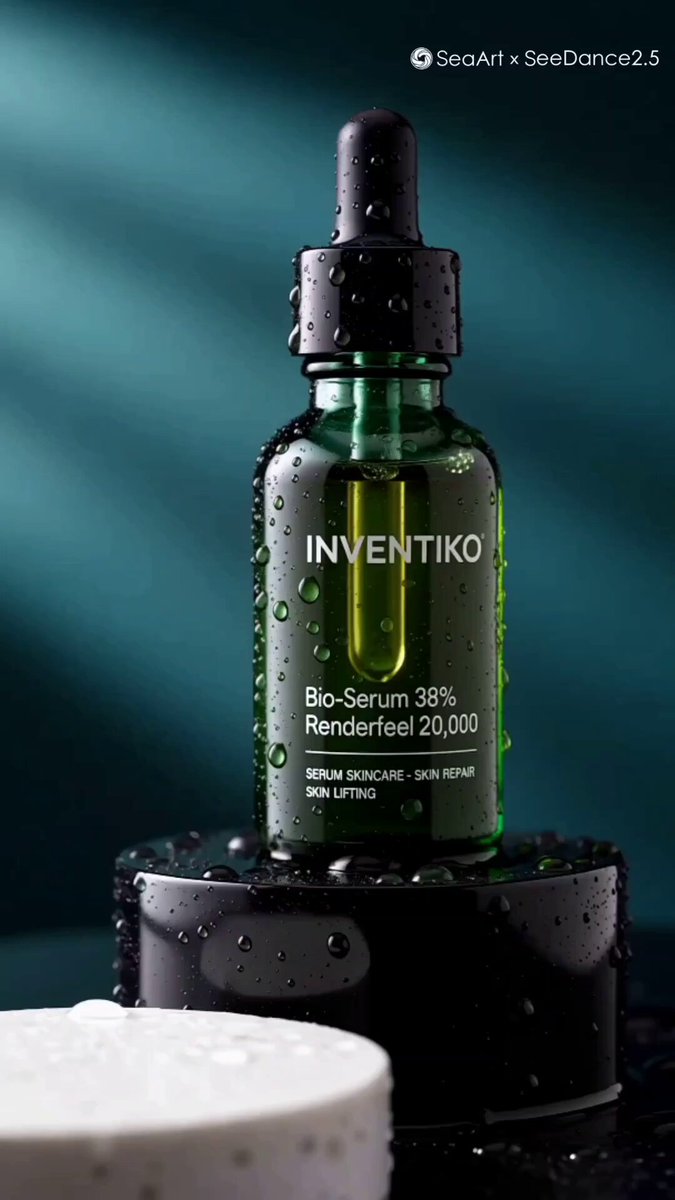
Generate the shots that are expensive or impossible to capture physically: abstract backgrounds, aspirational lifestyle scenes, motion transitions, stylized environments, seasonal variations. Keep real product footage for anything where accuracy is non-negotiable, because viewers notice warped logos and morphing textures immediately, and that damage is hard to undo.
Assemble in an editor with a consistent aspect ratio, add captions, and lay in music and voiceover. Captions are not optional: a large share of feed viewers watch with sound off.
Step 5: Delivery specs and versioning
Export a master and then create platform variants: vertical 9:16 for feeds and stories, square 1:1 for some placements, horizontal 16:9 for pre-roll and site embeds. Keep a version naming convention that encodes angle, hook, aspect ratio, and date so you can trace performance back to creative decisions later.
Matching AI Video Tools to Each Job in the Pipeline
Different tasks need different capabilities, and a single tool rarely excels at all of them. Think in categories:
- Text-to-video generation for conceptual shots, backgrounds, and stylized environments where no specific real object is required.
- Image-to-video generation for animating product photography, adding subtle camera motion, or creating parallax movement from a still.
- Motion and editing tools for cuts, speed ramps, text animation, and soundtrack syncing. Standard editing software remains the backbone here.
- Voiceover and audio tools for narration in multiple languages, plus a library of licensed music and sound design.
- Upscaling and cleanup for raising resolution and stabilizing generated output.
- Captioning tools for accurate, styled subtitles in each target language.
A practical rule: use generative tools for the shots you cannot film, and use real footage for the shots that carry product truth. The blend is what makes AI-assisted ads feel credible rather than synthetic.
Building a Hook Library That Survives Creative Fatigue
Hooks are the highest-leverage three seconds in your entire campaign. They decide whether anything else you made is ever seen. Because hooks fatigue fastest, treat them as an inventory you constantly replenish rather than as one-off ideas.
Maintain a document organized by hook type:
- Visual pattern interrupts: an unexpected motion, a color flash, a rapid zoom, a hand entering frame.
- Verbal questions: "Why does this keep breaking?" or "What changed after one week?"
- Text-first hooks: a bold on-screen claim or number before any product appears.
- Result-first hooks: show the end state, then rewind to how it happened.
- Contrarian hooks: politely disagree with common advice in your category.
Write twenty hooks for every concept. You will use five well and the rest will teach you something. Rotate hooks every one to two weeks for high-spend campaigns, and keep a running note of which hook type consistently outperforms for your audience. Over time that note becomes the most valuable marketing document your team owns.
Personalizing by Segment Without Duplicating Your Workload
Personalization does not have to mean producing a unique video for every audience. It usually means swapping a small number of modular elements inside a shared structure.
Structure your project so that the timeline has replaceable blocks:
- Hook block — swap per audience interest.
- Problem block — swap per pain point.
- Product block — mostly stable, occasionally reordered.
- Proof block — swap testimonials by demographic, region, or use case.
- Offer block — swap pricing framing, bundles, or shipping promises by market.
With this setup, one base video plus four hook variants, three problem variants, and two offer variants yields twenty-four distinct ads from a manageable amount of new work. Each variant is short, so generating and editing them takes hours rather than weeks.
Segment by motivation rather than by demographics alone. Two customers of the same age and income might buy for completely different reasons: one wants durability, the other wants aesthetics. Motivational segments predict ad performance far better than age brackets.
Creative Testing: Metrics, Cadence, and Decision Rules
Testing video creative without decision rules produces endless reports and no progress. Decide in advance what you are measuring and what result triggers which action.
The metrics that matter most at the creative level:
- Hook rate (three-second views divided by impressions) tells you if the opening works.
- Hold rate (through-view rate) tells you if the middle earns attention.
- Click-through rate tells you if the offer and call to action land.
- Conversion rate on the landing experience tells you if the ad attracted the right person.
- Cost per acquisition is the final arbiter, but it is noisy early and should be read over enough volume to be meaningful.
A workable cadence for a small team: launch three to five new creative variants weekly, let each run long enough to accumulate meaningful delivery, review performance every week, and retire the bottom performers. Promote winners into a dedicated high-spend group, and fork them into new variants: same concept with a new hook, same hook with a new proof block, same everything at a different aspect ratio.
Watch for the classic trap of killing a creative too early. Low spend does not mean low performance; it often means the platform has not finished learning. Give every variant a fair amount of delivery before judging it, and compare like with like (same placement, same audience, same time window).
Keeping Characters, Product, and Style Consistent
Consistency is what separates a campaign from a pile of disconnected clips. Three elements need protection: the people, the product, and the visual language.
For people, reusable character references help maintain the same face and wardrobe across shots. Generate a reference image set early (front, three-quarter, side, close-up) and reuse it for every shot featuring that character. Avoid changing hairstyle, clothing color, or lighting direction between shots unless the story requires it.
For products, always composite real photography or footage into the final edit wherever the product is the hero. Generated product renders are excellent for mockups and background plates but risky as final on-screen truth.
For visual language, lock a small style guide: color palette, contrast level, grain or texture preference, caption font, caption position, motion speed, and music genre. Write it down in one page. Share it with anyone producing creative, including freelancers and partners. A one-page style guide prevents more drift than any amount of review meetings.
Common Mistakes That Quietly Waste Budget
Starting with the tool instead of the message. Teams often generate impressive visuals with no argument behind them. Beautiful footage that says nothing converts nothing.
Overloading the first three seconds. Trying to show the brand, the product, the price, and the offer simultaneously splits attention and weakens the hook.
Ignoring sound-off viewing. If your ad only makes sense with audio, most viewers will never understand it.
Making every ad a variation of one idea. When all your creative shares the same hook structure, fatigue arrives faster across the whole account.
Skipping the landing page match. If the ad promises a specific benefit and the landing page leads with a generic brand statement, you lose the click you paid for.
No naming convention. Without structured names, you cannot learn across campaigns, and every new test starts from zero knowledge.
Chasing polish over clarity. Slightly rough, clear, honest-feeling video consistently outperforms glossy ambiguity in direct-response contexts.
Neglecting localization quality. Machine-translated captions with awkward phrasing undermine trust instantly in every market. Have a native speaker review the copy.
A Weekly Workflow Blueprint for a Small Team
A sustainable rhythm for a team of two or three people:
- Monday: review last week's performance, pick winners, write five new hooks per concept.
- Tuesday: script and shot list the new variants, gather product assets.
- Wednesday: generate conceptual shots, record or generate voiceover, assemble rough cuts.
- Thursday: edit, caption, color, sound, and export platform variants.
- Friday: launch new variants, archive losers, document learnings in the hook library.
Two guardrails keep this rhythm honest. First, batch similar work: generate all shots for a concept in one session rather than switching contexts repeatedly. Second, keep a single source of truth for assets and version names so nobody edits the wrong file.
FAQ
How many video ads do I need to test meaningfully?
Start with three to five variants per concept, each with a distinct hook. More than that becomes hard to read with limited budgets, and fewer than three rarely produces a clear signal.
Can AI-generated footage fully replace product filming?
For backgrounds, lifestyle scenes, transitions, and stylized visuals, yes. For the product itself, no. Real footage of the actual item remains the most trustworthy element in any ad, and accuracy matters more than spectacle.
How long should an e-commerce ad be?
Short-form placements usually perform best between 10 and 25 seconds, with the strongest material packed into the first five seconds. Longer formats work when there is genuine demonstration value, such as setup, assembly, or a real comparison.
Do I need a professional voiceover?
Not always. Clear synthetic narration is often indistinguishable from studio work for short ads, and native-language review of the script matters more than who reads it. If your brand voice depends on a specific human personality, keep the human.
How often should I refresh creative?
When hook rate and hold rate begin declining while everything else stays stable, refresh. That typically happens every two to six weeks depending on spend level and audience size. Build the refresh habit into your weekly workflow so it is never an emergency.
What is the biggest lever for improving performance?
The offer clarity and the first three seconds. Tools, transitions, and visual polish produce modest gains by comparison.
Should I localize ads for each market or run one global creative?
Localize the hook, the proof, and the offer framing. Those three elements carry most of the cultural weight, and adapting them costs far less than producing entirely separate campaigns.
