
Why AI Video Ads Became a Standard Production Line
Short-form video now carries the majority of paid social impressions, and the pressure it creates is structural rather than seasonal. A single product launch can require a dozen hooks, three aspect ratios, four languages, and a weekly refresh cycle. Traditional shooting cannot absorb that cadence without a budget that most creator teams simply do not have.
Generative video changed the economics of iteration. What used to be a two-week shoot-to-edit cycle can now be a two-day loop of concept, generation, assembly, and testing. The important word is iteration. AI did not remove the need for strategy, positioning, or taste. It compressed the expensive middle of the pipeline, which is where most creative ideas died before.
Four technical shifts made this practical:
- Image-to-video conditioning. Starting from a still frame gives far more control than pure text-to-video, and it lets you lock composition before motion is introduced.
- Reference-driven consistency. Modern pipelines accept multiple reference images so a face, a garment, or a product can survive across scenes.
- Motion and camera control. Dolly moves, orbits, and rack focus can be requested in language rather than rebuilt in 3D software.
- Integrated audio. Voiceover, ambience, and effects can be generated alongside picture, which removes a separate vendor step from simple ads.
The rest of this guide is a working pipeline: brief, model selection, consistency, prompting, audio, editing, distribution, and the mistakes that quietly destroy performance.
Map the Ad Before You Open a Generator
The most common failure mode in AI advertising is opening a generator before the ad exists on paper. Generation is cheap enough that people start there, and they end up with forty attractive clips that do not sell anything.
Define the single conversion goal
Every ad should have one measurable job. Either it stops the scroll and builds recall, or it drives a click, or it recovers an abandoned cart. Pick one. A spot that tries to be a brand film, a product demo, and a discount announcement at the same time will underperform all three.
Write the goal at the top of a one-page brief:
- Audience and the specific moment they are in (browsing, comparing, skeptical, ready).
- The one promise the ad makes.
- The proof: a demo, a testimonial, a comparison, a number.
- The call to action and where it leads.
- The tone: warm, clinical, chaotic, premium, playful.
Lock the aspect ratios and durations
Decide formats before you generate anything, because format drives composition. A 9:16 vertical needs a subject centered high with room for captions and platform UI. A 16:9 horizontal can hold wider staging. Generating in one ratio and cropping later routinely loses the top of a head or the label on a bottle.
A practical default set:
| Placement | Ratio | Duration | Note |
|---|---|---|---|
| Reels / Shorts / TikTok | 9:16 | 9–15s | Hook in first 1.5s, captions burned in |
| Feed video | 1:1 or 4:5 | 12–20s | More room for text overlays |
| YouTube pre-roll | 16:9 | 15–30s | Front-load the value, skip-safe at 5s |
| Landing page hero | 16:9 | 20–40s | Can breathe, less hook pressure |
Write a shot list you can hand to a generator
A shot list converts strategy into prompts. Keep it to a simple table: shot number, narrative purpose, duration, subject, action, camera, and setting. Six to ten shots is enough for a 15-second ad. If your list has twenty shots, you are making a short film, not an ad.
Choosing the Right Model for Each Shot
There is no single best generator. There are model families that each excel at a different kind of shot, and the professional move is casting them per shot rather than committing to one tool.
Match models to shot intent, not to hype
- Photoreal product and lifestyle shots — prioritize models with strong prompt adherence and believable materials: water, glass, fabric, metal.
- Cinematic B-roll — prioritize models with lens vocabulary, depth-of-field control, and stable slow camera motion.
- Stylized and animated looks — prioritize image generators with strong art direction first, then animate from the resulting still.
- Talking-head and presenter shots — prioritize lip-sync accuracy and head-motion naturalness over environmental detail.
- Dynamic action shots — prioritize motion control tools that let you specify the direction and subject of movement.
Run a three-clip test before committing
Before building a full ad on any model, generate the same prompt three times at the same settings. Read the results against three criteria:
- Prompt fidelity — did you get what you asked for, or something adjacent?
- Temporal stability — does anything melt, warp, or flicker across frames?
- Motion plausibility — do physics behave, especially with hands, hair, and liquids?
If two of three clips fail, you have a prompting problem or a model mismatch. If two of three succeed, you have a workable pipeline.
Keep a model shortlist per project type
Maintain a living document: project type, model, settings, prompt patterns that worked, and known weaknesses. A cosmetics brand will accumulate a different shortlist than a SaaS company. This document is the single most valuable asset a creator team can build, because it turns luck into repeatability.
Consistency: Characters, Products, and Brand Look
Ask any advertiser what went wrong with their first AI campaign and you will hear the same answer: the person changed face between shots, the bottle label moved, or the color grade drifted. Consistency is the difference between a real campaign and a demo reel.
Build a character and product reference sheet
Create a small reference pack before generating:
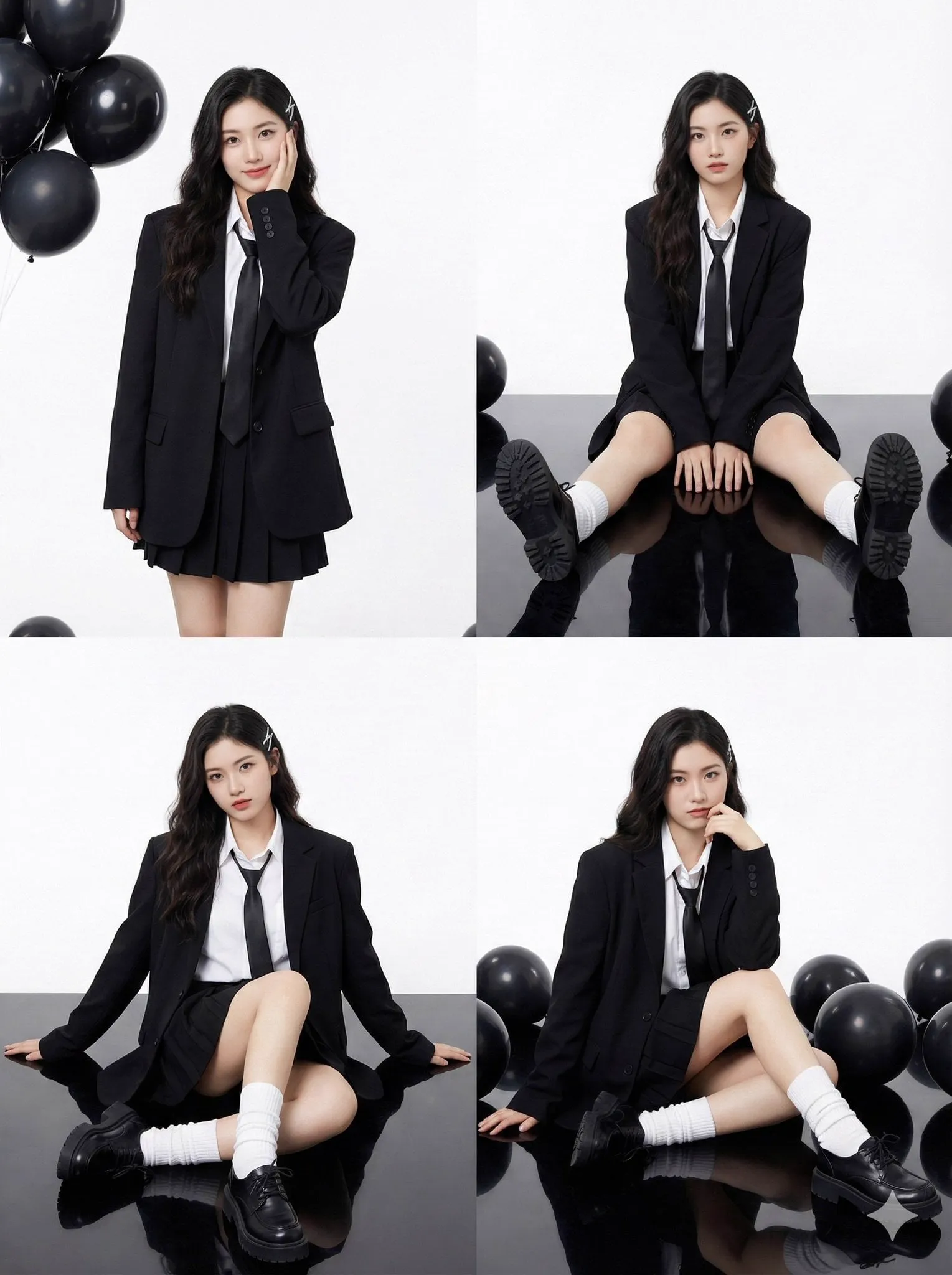
- Front, three-quarter, and profile views of the character in neutral light.
- Full-body shot with wardrobe specified down to color and fabric.
- Product shots from at least four angles, plus one close-up of any label or logo area.
- Two or three approved style frames that define the grade and lens feel.
Feed these references into every relevant generation. Where a tool supports multi-image conditioning, use it — combining a character reference and a style reference produces far more stable results than describing both in text.
Guard the brand palette and typography
Generated frames rarely reproduce brand colors precisely. Sample your official palette, compare it against the export, and correct in the edit with a LUT or a targeted hue shift. Never let a generator draw your logo, wordmark, or legal text. Composite those as vector overlays in the editor where they stay crisp and on-brand.
When to fake it in post instead
Some things are cheaper to fake than to generate. Product packaging text, small UI screens, phone displays, and signage are all better composited as tracked overlays. If a shot requires legible text on a physical object, shoot or design that element and add it in post rather than fighting a generator for twenty attempts.
Prompt Craft for Ad-Ready Clips
Prompt writing for advertising is a craft with a recognizable grammar. Structure beats adjectives.
The seven-part prompt skeleton
- Subject — who or what, with enough specificity to constrain casting.
- Action — a single, readable verb phrase.
- Environment — location, time of day, weather, background density.
- Camera — framing and movement.
- Lighting — quality, direction, color temperature.
- Style — film stock, era, finish, reference aesthetic.
- Technical — ratio, duration feel, and any negative constraints.
A worked example: “A woman in a linen shirt pours sparkling water into a glass, kitchen counter, morning, slow dolly-in from a low angle, soft window key light with a warm rim, shallow depth of field, clean commercial finish, vertical frame.”
Camera and lighting vocabulary that actually works
Useful camera terms: dolly in, dolly out, orbit, tracking shot, handheld follow, static lock-off, macro close-up, rack focus, crane up, low-angle hero shot.
Useful lighting terms: soft key, hard directional sun, rim light, practical lamp glow, golden hour backlight, overcast diffusion, neon spill, high-key studio white.
Keep motion modest. Advertisers want clarity; wild camera moves make short clips unreadable and are the top cause of generation artifacts.
Failure modes and how to prompt around them
- Hands and fingers. Frame hands out, or place the subject behind a product, or hold an object so fingers are partially hidden.
- Text in frame. Explicitly remove signage, labels, and screens from the prompt, then add real text in post.
- Identity drift. Regenerate from a locked reference image instead of extending a text-only lineage.
- Morphing in transitions. Generate shorter clips and cut on motion rather than asking a model to hold a long continuous take.
- Over-smoothing. Add shot-specific texture words such as film grain, natural skin texture, or practical imperfections.
Generate five seconds for every shot even if the final cut uses two. Editors need handles, and a two-second cut from a five-second clip is always cleaner than a two-second generation.
Audio, Voiceover, and Sound Design
Sound is where most AI ad pipelines visibly cheapen. Viewers forgive imperfect visuals far less readily than bad audio.
Voiceover direction in text
Text-to-speech has moved past robotic delivery, but direction still matters. Specify pace, tone, and emphasis in the script itself: short sentences, one idea per line, commas where you want a breath. Write numbers the way they should be spoken. If you are producing localized versions, regenerate the voice per language rather than captioning a single master — retention on native-language voiceover is consistently higher.
Layering sound effects for realism
A silent generated clip feels synthetic even when the picture is flawless. Add three layers:
- Ambience — room tone, street noise, café murmur, wind.
- Foley — footsteps, fabric, liquid pouring, packaging crinkle, keyboard clicks.
- Accents — a whoosh on the transition, a soft impact on the product reveal, a subtle riser into the CTA.
Sound effects should be felt, not noticed. If a viewer can name the whoosh, it is too loud.
Music, loudness, and captions
Use licensed or fully cleared music — generated or royalty-free — and keep documentation of the license. Mix voiceover forward, ducking music roughly 12–18 dB beneath it. Target platform loudness norms and check on phone speakers, where most of your audience will actually hear it. Burn in captions for short-form placements and verify them manually; auto-captions still mangle product names and brand terms.
Editing and Multi-Platform Adaptation
Generation produces raw material. Editing produces the ad.
Build a modular clip library
Save every usable clip with a descriptive filename and a note about what it shows. Over a few campaigns you will accumulate a stock library of establishing shots, product beauty shots, reaction beats, and transitions that can be reassembled into new ads in an afternoon. This library is often worth more than any individual generation.
Variant matrix: hooks, CTAs, ratios
The efficient structure is modular: one body, many hooks, a few CTAs. Build a matrix.
- Three hooks (question, bold claim, visual pattern interrupt)
- Two bodies (demo-led, testimonial-led)
- Two CTAs (direct, soft)
- Three ratios per winning combination
That is a testable set without becoming an unmanageable number of exports. Cut hooks at 1.5 seconds, keep the first frame visually loud, and make sure the value proposition lands before the five-second mark on skippable placements.
Quality control checklist before publishing
- No flicker, melting, or identity drift in any frame.
- Captions accurate, on-brand, inside safe zones.
- Audio peaks controlled, no clipping, no jumps between clips.
- Logo and legal text vector-crisp, not generated.
- First frame works as a thumbnail on its own.
- Aspect ratio exports checked on an actual phone.
Automating Distribution and Measurement
Automation is most valuable after the creative is approved, not before it.
Naming conventions that make reporting possible
Adopt a rigid naming scheme before your first upload: campaign, audience, hook, ratio, language, version. Every asset, export file, and ad account entry carries the same identifier. Without this, you will be unable to tell which hook drove the lift, and all the testing effort becomes unusable.
What to measure in the first 72 hours
Ignore vanity metrics early. Watch the three that indicate whether the creative itself works:
- Hook rate — the share of viewers still watching at three seconds. This is a creative metric, not a targeting metric.
- Hold rate — completion or mid-point retention, which reveals whether the body delivers on the hook.
- Click-through and conversion rate — where the hook and body converge into intent.
High spend with a weak hook rate means the creative is being served but not watched. Do not solve that with targeting; solve it with a new opening frame.
Closing the loop from data to prompt
When a hook wins, dissect it: what was the subject, the motion, the first frame, the first spoken words? Write that down as a prompt pattern and reuse the structure. When a body underperforms, check whether the shot list lost its narrative spine. The feedback loop from reporting back into prompting is what turns occasional hits into a predictable system.
Common Mistakes and How to Avoid Them
- Starting with the tool. The offer, audience, and hook come first; generation is downstream.
- Over-generating, under-editing. Fifty clips and a rushed edit beats ten clips and a meticulous one only in volume, never in performance.
- Ignoring safe zones. Platform UI eats the bottom of vertical frames and the right side of some placements.
- Letting the model draw text. Always composite brand text.
- One voice for every audience. Localize with native voiceover and natural pacing.
- No reference pack. Identity drift is a workflow problem, not a model limitation.
- Skipping captions. A large share of short-form viewing happens muted.
- Judging on one variant. Creative testing needs enough variants to distinguish signal from noise.
- Chasing cinematic length. A tight 12-second ad outperforms a slow 40-second one on most placements.
- Never archiving. Your clip library and prompt log are the compounding assets; maintain them.
FAQ
How long does an AI video ad take to produce?
A single 15-second ad with three hook variants is a realistic one-to-two-day task for one person once the workflow is established. The first project always takes longer because you are also building the reference pack and prompt library.
Do I need editing skills?
Yes, and they matter more than generation skills. Editing is where pacing, captions, audio balance, and brand text get right. Basic competence in any modern nonlinear editor is enough.
Can AI render accurate product packaging text?
Reliably, no. Generate the scene without legible text, then track a vector version of your packaging or logo onto the shot in post. This also keeps legal and regulatory text exact.
How many variants do I need before drawing conclusions?
At least three distinct hooks with meaningful differences. If all three use the same opening frame with different text, you are testing copy, not creative.
Is generated audio safe to publish?
It depends on the tool's license and your jurisdiction. Keep documentation for every music and voice asset, and prefer tools that grant clear commercial rights.
What clip length should I generate?
Five seconds per shot is a good working default. It gives you handles for cutting, and shorter generations are more stable than long continuous takes.
Do I still need a real camera?
For hero product shots, real hands, and anything requiring legible on-pack detail, a camera still saves time. Use AI for the volume and the testing, and reserve real footage for the assets that carry the brand.
How do I keep a character consistent across scenes?
Lock a reference image and generate each new shot from that reference rather than continuing a text-only prompt chain. Keep a character sheet with wardrobe, hair, and lighting notes, and reuse it across every campaign the character appears in.
