
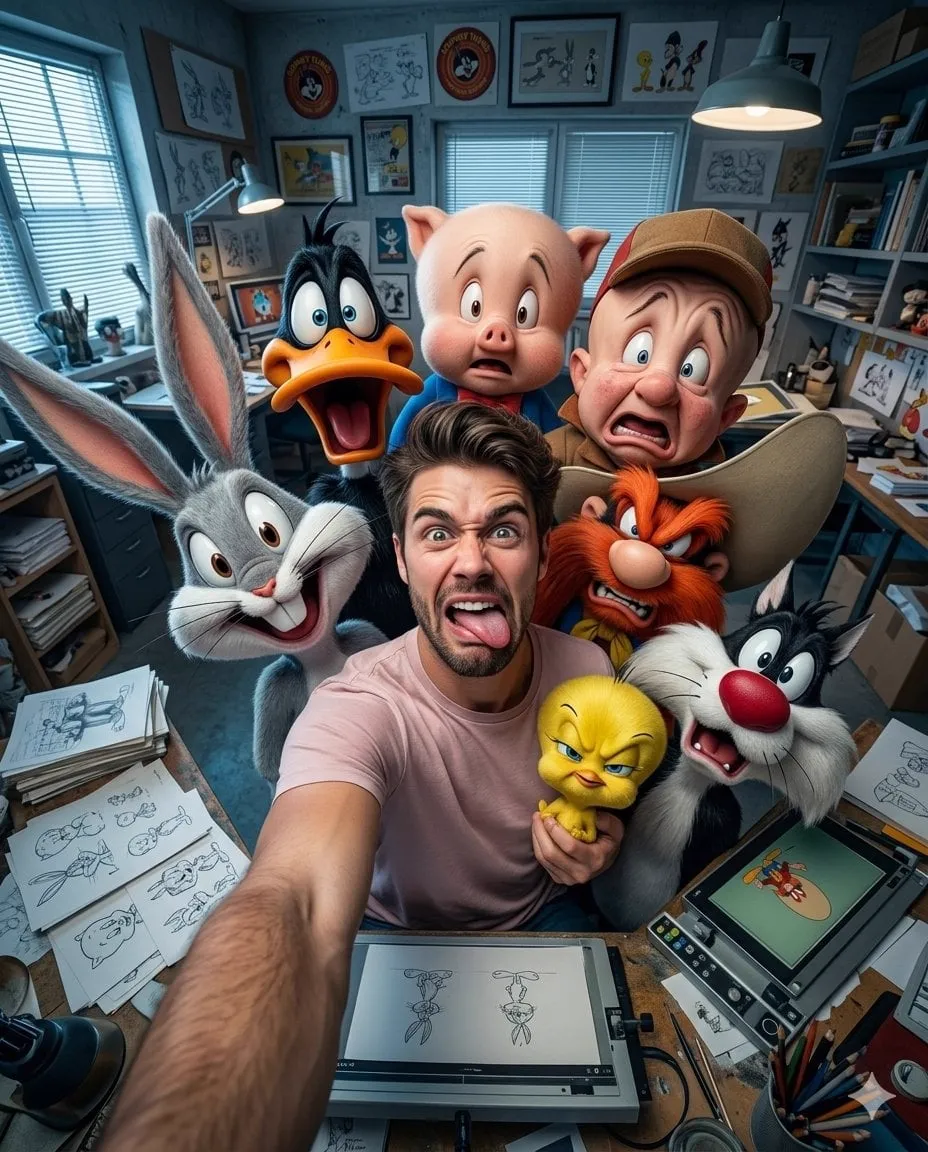


Character consistency is the silent killer of AI-generated video. You can craft a brilliant prompt, nail the lighting, and generate a gorgeous first shot, only to watch the hero's face subtly change in the next scene: a different jawline here, a new hairline there, a jacket that changes color halfway through the story. Industry analyses regularly show that roughly three out of four short-form viewers will drop a video if the central character's appearance drifts between scenes. The gap between "one good AI clip" and "a real story told across many clips" is exactly this problem: keeping one character believable, recognizable, and stable shot after shot.
Multi-image fusion is the technique that closes that gap. Instead of asking a model to invent a character from a text description alone, you feed it multiple reference images of the same character and let the model extract a stable visual identity from all of them. This guide explains how the technique works, how to build a proper character reference pack, and how to turn a handful of images into a consistent short film, commercial, or serialized content series.
Why Character Consistency Matters
Audiences are forgiving about many things in AI content: slightly stiff motion, an occasional warped hand, a background that bends a little. What they are not forgiving about is the main character changing appearance mid-story. A character who looks like one person in scene one and a different person in scene three breaks the emotional contract of the story. The viewer stops following the plot and starts hunting for artifacts. Retention collapses, and whatever message you were trying to deliver gets lost.
Consistency matters differently depending on your goal. If you are building a personal brand, your recurring avatar is effectively a logo that moves and talks. If you are producing an ad campaign, the product presenter must be instantly recognizable across every cut. If you are making a web series or a serialized social story, character continuity is the difference between a fanbase and a one-off video. In every case, the same principle applies: stable identity is the foundation that makes everything else feel professional.
How Multi-Image Fusion Works
A single text prompt is a weak description of a face. "A young woman with a confident expression" leaves enormous room for interpretation, and every generation can interpret it differently. Multi-image fusion replaces that ambiguity with evidence. The technique works by passing several reference images of the same character into the generation pipeline alongside your prompt. The model analyzes the shared features across those images, builds what you can think of as an identity vector, and then uses that vector to guide every new frame.
The key insight is that the model is not copying the reference images; it is extracting the stable parts of the character and ignoring the noise. Lighting changes, camera angles, and minor expression differences are discarded. What remains is the essence: bone structure, eye shape, hair style, skin tone, signature clothing details. That essence becomes the constraint that every new shot must satisfy.
This approach solves the classic failure mode of image-to-video and text-to-video generation, where each new generation starts from zero. With multi-image fusion, every scene starts from the same agreed-upon identity, so the character carries over naturally instead of being reinvented.
Building a Character Reference Pack
The quality of your reference pack determines the quality of your consistency. A good pack is not five screenshots of the same image; it is a deliberate set of images that gives the model the information it needs. Here is what to prepare:
- Multiple angles. Include front, three-quarter, and profile views so the model understands the full geometry of the face, not just one camera-friendly view.
- Consistent core features. Hair color, hairstyle, eye color, skin tone, and any distinctive marks must be consistent across all references.
- Varied expressions. Neutral, smiling, serious, surprised. Expression variety tells the model which features are stable and which are temporary.
- Wardrobe anchors. If the character wears a signature jacket or accessory, show it clearly in at least two references.
- Clean backgrounds. Busy backgrounds distract the model from the subject. Simple, uncluttered backdrops produce cleaner identity extraction.
- High resolution. Blurry references produce blurry identities. Use the sharpest images you have, ideally at least one high-resolution front-facing shot.
A Step-by-Step Character Workflow
Once your reference pack is ready, follow a repeatable workflow so consistency survives an entire project:
- Lock the identity first. Generate a set of test frames from your references before writing any scenes. Fix the reference pack until the character reads the same across several independent generations.
- Write scenes as a series of beats. Decide what happens, where, and who is on screen. Do not generate in the order of the final edit; generate the most important close-ups first.
- Keep a consistent character sheet. Document the exact wording you use in prompts, including hairstyle, outfit, and setting details, so you do not drift across a long project.
- Generate, compare, regenerate. For every new shot, compare it side by side with an approved frame. If the face shifted, regenerate with the same references and a tightened prompt.
- Approve in batches. Do not approve single frames in isolation. Approve groups of frames that will appear near each other, so the transition between them is smooth.
Choosing the Right Tools
The good news is that multi-image fusion and reference-based workflows are now widely available across the major AI video platforms. Runway, Kling, Pika, Luma, and the newer generation of video models from OpenAI and others all support image inputs or reference conditioning to varying degrees. Each platform has different strengths: some excel at realistic human faces, some at stylized animation, some at motion coherence. Choose the platform that matches your character style rather than the one with the most impressive demo video.
For most creators, the practical approach is to use an image generation tool to build the reference pack, then an image-to-video tool to animate it. This two-stage pipeline gives you precise control over the character design and lets you test the identity before you commit to expensive video generation.
Keyframes and Motion Control
Consistency is not only about faces; it is about motion. A character who walks differently in every shot, or whose body proportions shift during movement, still breaks the illusion. Keyframe control helps here. By specifying start and end frames, and sometimes intermediate poses, you constrain the model's motion decisions and keep the physicality of the character stable.
This matters most for action sequences and anything with complex movement. When you provide clear keyframes, the model has less freedom to invent, which is exactly what you want when the goal is continuity. For dialogue scenes, keep motion simple and let the performance carry the scene. For action, invest in keyframes.
Common Consistency Pitfalls and Fixes
Every creator hits the same set of failures. Here are the most common and how to fix them:
- The wardrobe changes mid-scene. Fix it by making the outfit an explicit part of every prompt and showing it clearly in references.
- The face looks right but the hair does not. Hair is high-variance detail. Include hair-specific references and keep the hair description identical in every prompt.
- Expressions feel stiff because the character is over-constrained. Use expression variety in your reference pack and vary the emotional prompts per scene.
- Different tools produce different versions of the same character. Pick one primary tool for a project. Mixing platforms mid-project is the fastest way to lose identity.
- The character ages or changes subtly over a long series. Re-verify the identity vector at the start of every production batch, and keep an approved frame as your ground truth.
Director-Style AI Workflows
The newest generation of AI tools is moving beyond single-shot generation toward director-style workflows, where a planning layer decides shots, camera moves, and pacing before any pixels are generated. You can approximate this yourself: write a shot list, decide the emotional arc, plan transitions, and only then feed references and prompts to the generation model. The more planning you do before generation, the fewer continuity problems you will have to repair after.
This is especially powerful for serialized content. A character sheet, a shot-list template, and a strict approval process let you produce episode after episode without re-solving the identity problem every time. The process becomes repeatable, which is what turns a one-off experiment into a sustainable content operation.
From Consistency to Brand
A consistent character is an asset, not just a creative choice. When an audience recognizes your recurring character on sight, you have the equivalent of a mascot: instantly identifiable, emotionally loaded, and reusable across formats. Creators are already building personal brands around recurring AI characters, publishing behind-the-scenes content about how the character was made, and licensing their character designs to other creators. The consistency techniques in this guide are the technical foundation of all of it. Nail the identity once, and the character becomes a platform you can build a following, a product line, or an entire channel around.
Consistency Across a Series
Serialized content raises the bar. A single video only needs internal consistency, but a series needs consistency that survives across episodes, weeks, and creative moods. The workflow that works for one video will drift if you do not institutionalize it. The fix is a production bible: one document that holds the character sheet, the approved reference frames, the exact prompt vocabulary, and the rules of the world. Every episode starts by checking the bible, not by improvising.
The bible should also record what changed and why. If you updated the character's hairstyle for a storyline reason, note it, update the references, and regenerate the identity tests. The audience will accept a deliberate change; they will not accept an accidental one. A production bible turns consistency from a daily battle into a routine, and routine is what makes a series sustainable.
The other series-level discipline is version control. Keep the approved identity locked to a version number. If you try a new model or a new style, test it against the locked identity before you use it in an episode. This sounds bureaucratic, but it prevents the most common series killer: the episode where the character suddenly looks subtly different because the creator upgraded their tool mid-season.
FAQ
Do I need expensive hardware to use multi-image fusion? No. All the heavy computation happens in the cloud on the platform you use. Your job is to prepare good references and prompts.
Can multi-image fusion work with animated or stylized characters? Yes, but the technique works best when the style is consistent across your references. Stylized characters are actually easier to keep consistent because small details matter less.
How many reference images should I use? Start with three to five strong images. More is not always better; five well-chosen images beat twenty random ones.
Does multi-image fusion work for creatures, vehicles, or objects? The technique is not limited to people. Any recurring visual element can be stabilized with references, which is useful for product shots and fantasy worlds.
How long does it take to lock a character identity? Budget a few hours of iteration on the reference pack and test frames. Once it is locked, every subsequent scene is faster.
Can I change the character's outfit for one scene without breaking consistency? Yes, if the change is deliberate and described everywhere it appears. Update the prompt for that scene, regenerate the identity test, and keep the face and core features locked while the wardrobe changes.
How do I keep consistency across vertical and horizontal formats? Treat the composition separately from the identity. Generate the character once, then re-frame for each format using the same references. Do not regenerate the character from scratch for a new aspect ratio; that is how the face drifts.
Conclusion
Character consistency is the difference between AI clips and AI storytelling. Multi-image fusion gives you a practical, repeatable way to keep one character recognizable across an entire project: build a strong reference pack, lock the identity early, document your prompts, compare every new shot against ground truth, and plan scenes before generating them. The technique applies whether you are making a 30-second ad, a five-minute short, or a serialized series. Invest in consistency first, and every other aspect of your video will look better because of it.
