


AI video generation has moved from a laboratory curiosity to a mainstream production tool. By mid-2025, the market for generative video was growing at an extraordinary pace, driven by independent creators, small and medium businesses, and digital marketing teams who need fast, scalable, high-quality content. The tools available today can turn a paragraph of text into a cinematic clip in minutes, and the gap between what amateur creators can produce and what used to require a professional studio has narrowed dramatically. This guide is written for creators who want to understand the landscape, choose the right tools, and build a repeatable workflow.
Why AI video generation matters for creators now
The way audiences consume video has changed. Short-form content dominates social feeds, and brands need to publish constantly to stay visible. Traditional production simply cannot keep up: it requires planning, crews, equipment, and budgets that most independent creators do not have. AI video generation solves the volume problem. It lets a single person produce dozens of variations of an idea, test different styles, and publish at a pace that was previously impossible.
But volume is only half the story. The same technology now offers a level of control that was unthinkable a few years ago. Creators can define a character once and keep it consistent across scenes. They can specify camera movement, lighting, and mood. They can turn a still image into a moving shot. The question is no longer whether AI can produce video, but how to use it well enough to stand out.
The fragmentation problem
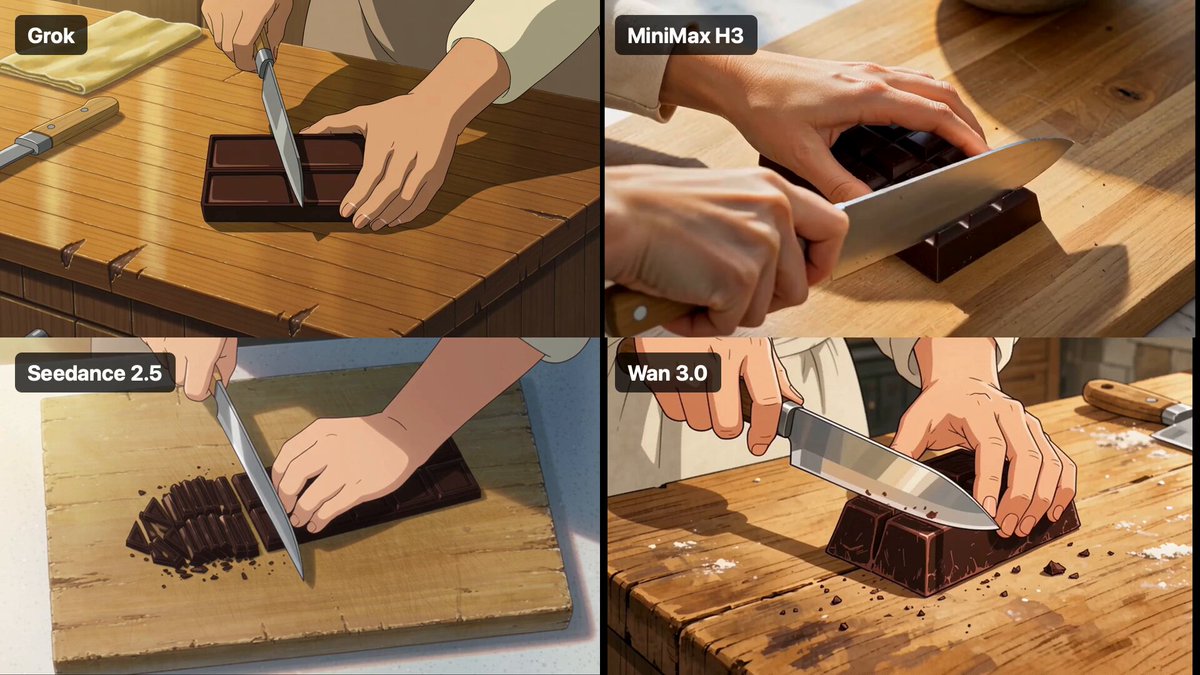
One of the biggest frustrations for creators has been market fragmentation. Each model family excels at something different: one produces photorealistic scenes, another handles stylized animation, a third offers fine control over camera movement, and a fourth generates fast drafts on a tight budget. In the past, getting access to all of these meant subscribing to several separate services, managing multiple accounts, and paying multiple bills.
Consolidated platforms that bring many models together in one place emerged as a direct answer to this problem. Instead of jumping between tools, a creator picks the engine that fits the task from a single interface. The practical benefits are real: one billing relationship, easier comparison of outputs, and a smoother pipeline from draft to final cut. For creators who produce diverse content, this consolidation reduces friction significantly.
Understanding model categories
To choose well, you need to understand what separates one model from another. The most useful distinction is by quality and speed.
Premium models lead in rendering quality and their ability to understand complex prompts. They handle realistic physics, consistent lighting, and cinematic composition. They are the right choice for hero shots, advertisements, and projects where the visual result matters more than the cost. The trade-off is longer generation times and higher per-clip cost.
Mid-tier models balance quality and speed. They are the workhorses of daily content production: good enough for social media, fast enough for iterative workflows, and affordable enough for regular use. Most creators will spend the majority of their generation budget here.
Budget and fast models prioritize speed and low cost over polish. They are perfect for drafts, moodboards, and testing whether an idea works before investing in premium generation. A smart workflow uses fast models to explore and premium models to finalize.
There is also a growing category of specialized models: engines for stylized animation, for editing existing footage, for keyframe control, for image fusion, and for niche aesthetics. Combining a general-purpose engine with a specialized one is often the secret to distinctive results.
Text-to-video, image-to-video, and video-to-video
The input format determines what you can do. Text-to-video starts from a prompt and is the most flexible: it can create scenes that do not exist, limited only by the model's imagination. Image-to-video starts from a still image and adds motion. This is the most reliable way to keep a character or setting consistent, because the model has a visual anchor. Video-to-video transforms existing footage, changing the style, the environment, or the era while keeping the underlying motion.
Each mode has its place. Text-to-video is ideal for conceptual exploration. Image-to-video is the backbone of consistent character work. Video-to-video is powerful for restyling, localization, and creative remixing. A mature workflow often chains them: generate a keyframe image, animate it with image-to-video, and refine the result with video-to-video.
Consistency: the creator's hardest problem
The single biggest technical challenge in AI video is consistency. Generate a character in one scene and she may look different in the next: different hair, different clothes, a subtly different face. For casual experimentation this is harmless. For professional content it is disqualifying.
The reliable solution is reference imagery. Generate the character once, save the result as an image, and feed that image into every subsequent generation. Most serious platforms support image references and keyframes: you define the first and last frame of a scene and the model fills in the motion between them. This dramatically improves continuity.
Consistency also applies to style. If you are building a brand identity across many videos, keep a library of reference images for your color palette, lighting, and aesthetic. Treat every project as part of a system rather than a one-off generation, and the results will hold together across an entire feed.
Audio: the often-forgotten layer
Video is not just pictures. Sound design, voiceover, and music carry a huge part of the emotional weight. Many creators neglect audio because the visual tools are so impressive, but a video with great visuals and bad sound feels amateur. The good news is that audio tools have improved alongside video generation. Voice synthesis can produce narration in multiple languages, sound libraries offer effects and music, and editing tools let you sync everything to the picture.
Plan for audio from the start. Write the voiceover before you generate the visuals, so you know how long each scene needs to be. Leave room for sound effects and music. And treat the final mix as part of the creative work, not an afterthought. The difference between a good AI video and a great one is often entirely in the audio.
Managing resources and production queues
Generative video is computationally heavy. Behind the scenes, every clip consumes GPU time, and a busy creator juggling many clips needs a system to manage the work. Task queues solve this: you submit a batch of generations, the system processes them in order, and you check the results as they complete. This is far more efficient than generating one clip and waiting.
A practical approach is to plan your batch before starting. Write all the prompts, prepare all the reference images, and decide which models to use for each clip. Then submit everything at once and review the results together. This keeps you in a creative rhythm instead of waiting between each generation. It also makes it easier to compare options side by side and pick the best version of each scene.
Building a repeatable creator workflow
A repeatable workflow protects quality and sanity. Start with the idea: define the message, audience, and format. Write the script and the voiceover. Break the script into shots and create a shot list. Generate reference images for characters and locations. Choose the model for each shot based on its importance: premium for hero shots, mid-tier for support shots, fast for drafts. Generate in batches, review, and iterate. Assemble the clips in an editor, add audio, captions, and color grading. Finally, review the whole piece for consistency and fix the weakest shots.
This pipeline is not glamorous, but it works. It turns a chaotic process into a production system, which is exactly what creators need when they publish regularly.
Monetization and community
Beyond making content, many creators want to build a sustainable business around AI video. Two patterns have emerged. The first is selling the output: commissioned videos, templates, and specialized content for clients. The second is contributing to the ecosystem itself: training custom models, sharing them with a community, and earning from usage. Both paths reward consistency and quality, because buyers and communities gravitate toward creators who deliver reliable results.
If you want to build an audience around your AI work, treat your process as part of your brand. Share behind-the-scenes workflows, explain your prompts, and show the iterations behind your best videos. The community values transparency, and it builds trust faster than polished final cuts alone.
Common mistakes and how to avoid them
Expecting perfection on the first try leads to frustration. Generative video is inherently iterative; budget multiple rounds for every important shot. Writing vague prompts produces vague results; describe the subject, action, environment, light, style, and camera in detail. Ignoring consistency breaks multi-shot projects; use references from the start. Comparing yourself to viral examples without knowing how many iterations they required sets unrealistic expectations. And skipping the plan turns production into a lottery: always start from a script and a shot list.
Practical criteria for choosing a platform
With so many options available, it helps to evaluate platforms on concrete criteria rather than hype. First, output quality on your own prompts: run your real project material, not marketing examples, and compare results side by side. Second, model diversity: a library of engines lets you match the tool to the task instead of forcing every project through one aesthetic. Third, consistency features: reference images, keyframes, and character tools determine whether multi-shot projects are feasible. Fourth, speed and reliability: generation times, queue behavior, and uptime matter when you are on a deadline. Fifth, licensing and commercial terms: read them before you build a business on top of a tool. Sixth, workflow integration: editing, audio, captions, and export options reduce the friction between generation and publication.
A useful exercise is to define your top three needs before comparing products. If you produce daily social content, speed and cost rank highest. If you produce branded series, consistency and model diversity matter most. If you work with clients, licensing and output quality dominate. Your priorities should drive the decision, not the length of a feature list.
Licensing and ethical considerations
AI video raises questions that every creator should address early. Licensing is the most practical: the terms of each tool define whether you can use outputs commercially, whether you own the results, and what happens if your content resembles existing work. Read the terms for every tool you rely on, and keep records of what was generated with which service and under which plan.
Originality is the ethical challenge. Models trained on large public datasets can produce results similar to existing works, and it is your responsibility to check before publishing, especially in commercial contexts. This is not just a legal concern; it is also a reputational one. Audiences notice when content looks like a clone of something else. Transparency matters too: being honest about when and how you use AI builds trust with your audience, while hiding it risks backlash later.
There is also the question of the work itself. AI tools should amplify your creative direction, not replace judgment. The creators who build sustainable audiences are those who treat AI as a collaborator with a clear point of view, not as a button that prints content. Keep a human review step in every workflow, both for quality and for responsibility.
FAQ
How long does it take to generate one clip? It depends on the model, resolution, and length, from seconds to several minutes per clip. Premium models generally take longer.
Can I use AI-generated video commercially? Check the license of each tool. Most paid plans allow commercial use, but the terms differ, so read them carefully.
What hardware do I need? For cloud platforms, a regular computer with a browser is enough. Local models require a powerful GPU.
Do I need video editing skills? Basic editing helps a lot, because generated clips rarely work alone. You need to assemble, add audio, captions, and grading.
How do I start without a big budget? Use free tiers and small paid packs. Learn to write strong prompts first, then invest based on what you actually produce.
AI video generation is a skill like any other: it rewards systematic practice. Start with small projects, master prompts and references, then scale to multi-shot productions. The tools will keep changing, but the fundamentals of planning, consistency, and iterative refinement will serve you no matter which platform becomes popular next year. The best investment you can make is not in the most expensive tool, but in the discipline to use whatever you have with intention.
