

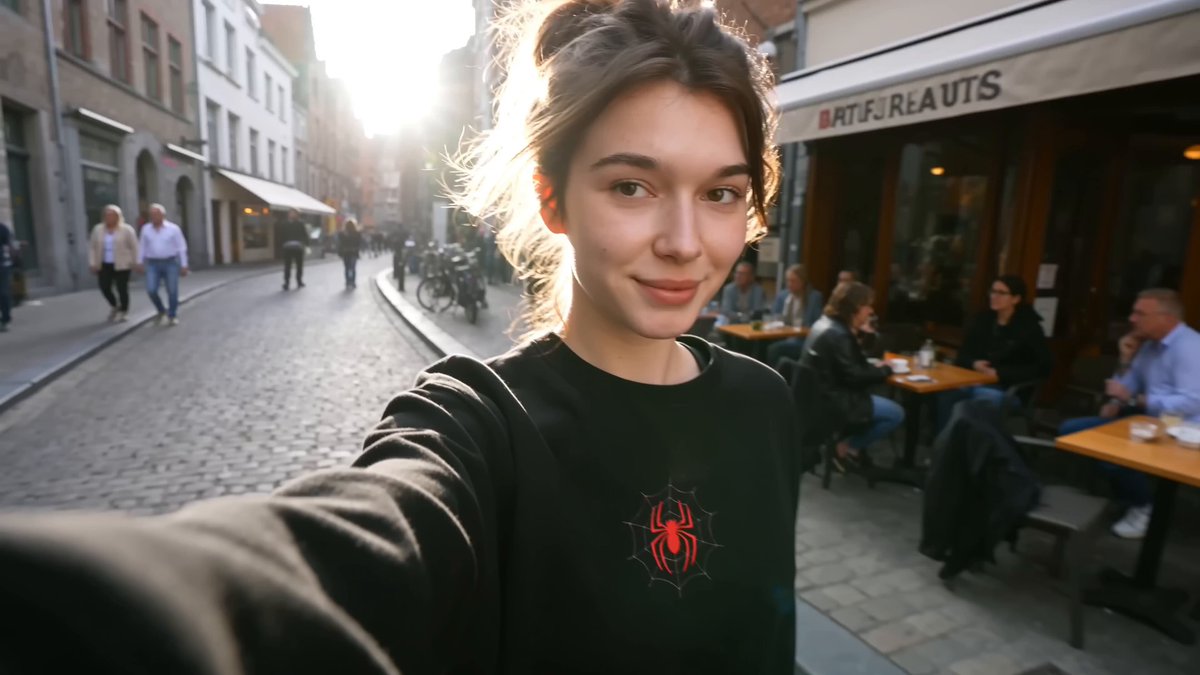
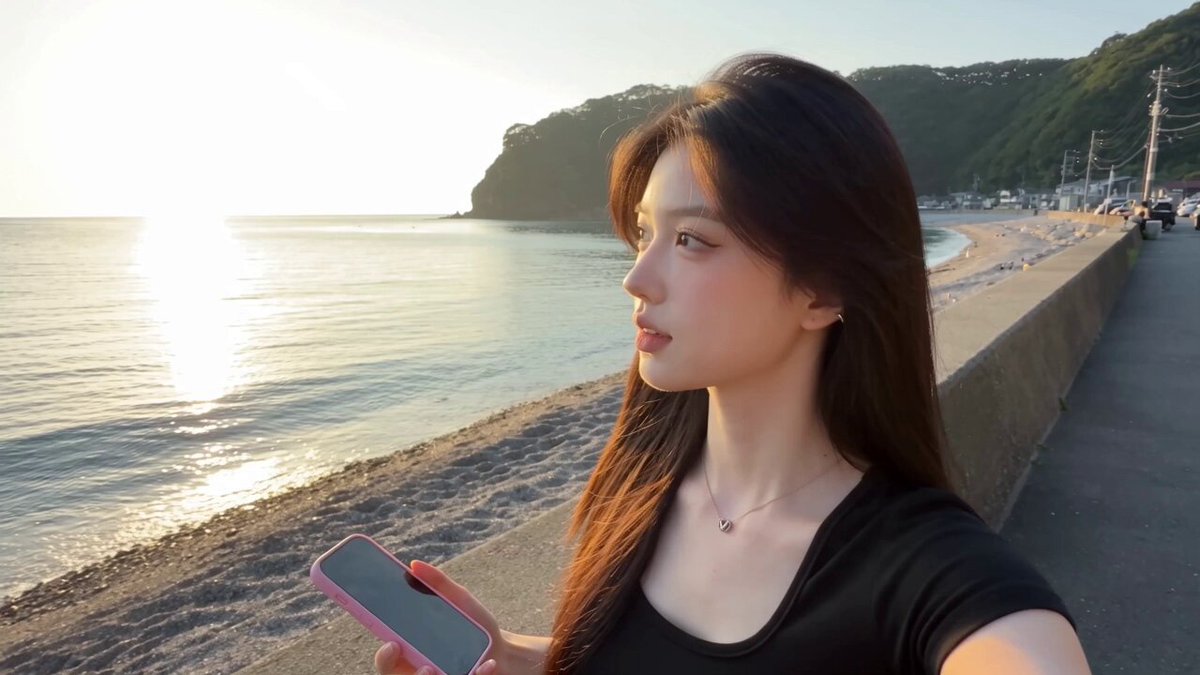
AI video generation stopped being a demo trick somewhere between the first wave of text-to-video experiments and the current generation of models that can hold a camera move for several seconds without melting a face. What changed is not that the footage became perfect. What changed is that the output became usable — good enough to cut into a real edit, good enough for a client to approve, good enough to ship.
The bottleneck has moved. It is no longer access to a model; there are dozens of capable ones, and new releases arrive faster than most teams can evaluate them. The bottleneck is orchestration: knowing which model to use for which shot, how to keep a character looking like the same person across twelve clips, how to prompt motion instead of just describing a scene, and how to fold the results into a normal post-production pipeline without the seams showing.
This guide is about that orchestration layer. It assumes you already have access to tools like Sora, Kling, Runway, Luma, Pika, Veo, or an open-source stack such as ComfyUI with video adapters. It focuses on decisions, workflows, and failure modes rather than feature lists.
What AI Video Generation Handles Well — and Where It Still Breaks
Start by being honest about the medium. AI video is extraordinarily good at some things and quietly terrible at others, and most disappointing projects come from asking it to do the wrong job.
Strong territory. Atmospheric b-roll, establishing shots, abstract transitions, stylized dream sequences, slow product beauty shots, environmental loops for backgrounds, animating a still photograph, and rapid concept visualization for pitch decks. These shots are read by the audience as mood, not as mechanical action, so minor physical implausibility passes unnoticed.
Weak territory. Long uninterrupted action with a clear cause-and-effect chain. Precise hand-object interaction. Multi-character dialogue blocking where two people must maintain eyelines. Readable on-screen text. Crowd choreography. Anything where the audience must track exactly what happened between second two and second six.
There is a useful heuristic: the more the audience has to reason about the physics of the shot, the less you should trust a generative model with it uncut. If a character needs to pick up a cup, drink, and set it down in one take, you will spend more time fixing artifacts than shooting it practically. If a character needs to stand at a window while rain streaks the glass and the camera drifts slowly right, generate it — the model will nail it in a few tries.
A second heuristic concerns length. Almost every model degrades as clip duration increases: faces drift, backgrounds warp, hands multiply. Generate short and cut often. A sequence of four-second clips edited with intent reads better than one fifteen-second clip with a warping face at the end.
The Four Model Families and When Each Earns Its Place
Most confusion in AI video comes from treating "video model" as one category. In practice you are working with four families that solve different problems.
Text-to-video
You describe a shot and the model invents everything: subject, wardrobe, setting, lighting, camera. This is the fastest route from idea to moving image and the best choice for b-roll, landscapes, abstract visuals, and mood pieces. It is also the least controllable family, because every generation is a fresh interpretation.
Use it when the shot is generic enough that variation is a feature. Avoid it when a specific person, logo, or product silhouette must be preserved.
Image-to-video
You supply a frame and the model animates from it. This is the workhorse of professional AI video work, because it decouples the two hard problems: composition is solved with a still image (where you have far more control), and motion is solved by the video model.
Image-to-video gives you consistency for free. If every shot in a scene starts from a still generated with the same character reference and the same lighting brief, the clips inherit that shared visual DNA. Most teams that struggle with consistency are simply not using this family enough.
Video-to-video and motion transfer
You supply existing footage and the model restyles, upscales, interpolates, or transfers motion onto it. This family is underrated for two jobs: converting rough 3D previs or phone-shot reference into polished look, and cleaning up the artifacts of earlier generations. A pass through a video-to-video model can rescue a shot that failed on hands or edges.
Talking-head and avatar models
These are specialized pipelines for a person speaking to camera, usually combining a portrait or a short reference clip with a text or audio script. They are the right choice for explainer content, localization, and training material where the requirement is legibility, not cinematic spectacle. For narrative work, real footage is still usually cheaper than a convincing synthetic performance.
A Model Selection Framework You Can Reuse
Model comparisons age badly. A framework does not. When a new model appears, score it against these criteria and you will know within an hour whether it belongs in your pipeline.
- Motion plausibility. Watch the hands, feet, hair, and background edges. Does motion resolve cleanly, or does the model smear detail when things move fast?
- Prompt adherence. Give it an unusual combination — a specific camera move, a specific color, a specific object count — and see whether all constraints survive.
- Maximum reliable clip length. Not the maximum the tool offers; the maximum before artifacts become visible.
- Identity retention. Feed the same character reference into five generations. Do you get five versions of one person or five cousins?
- Style fidelity. Some models have a strong house style that leaks into everything. That is fine for one project and fatal for another.
- Determinism and seed control. Can you reproduce a result? Can you iterate on one variable at a time?
- Aspect ratio and resolution. Vertical-first models exist. If your distribution is social-first, that matters more than cinematic ratio support.
- Turnaround and throughput. A model that takes four minutes per clip changes how you plan a shooting day; a model that takes forty seconds changes how you brainstorm.
- Licensing and commercial terms. Confirm what you can ship, and to whom, before you build a deliverable around it.
- Ecosystem. Direct API access, batch generation, and integration with your editor or compositor save more time than marginal quality gains.
A practical pattern: keep two or three models in rotation rather than one. Use a fast, cheap model for exploration and previz, and a slower, higher-fidelity model for finals. Trying to get one model to do both jobs usually means overpaying for drafts and underdelivering on finals.
Workflow: From Brief to Locked Cut
Here is a pipeline that works for commercial spots, short narrative pieces, and social campaigns alike.
Step 1 — Write a shot list before you open any tool
Generate on paper first. For each shot, note: duration, subject, action, camera move, lighting, and whether it must match an adjacent shot. This document becomes your prompting template and your editing blueprint. Teams that skip it produce beautiful clips that cannot be assembled into a sequence.
Step 2 — Lock the look with still images
Before generating any video, produce a style frame for each scene. Use an image model or a still frame from a video model with a fixed seed. Establish palette, lens character, grain, and lighting direction. Approve the stills with whoever signs off on creative. Changing direction at the still stage costs minutes; changing it after forty video generations costs days.
Step 3 — Generate in motion passes
For each approved still, run image-to-video with a simple, single-action prompt and a specified camera move. Generate three to five variations per shot rather than one. Keep a naming convention that maps every file back to its shot number and take. You will reference this constantly during assembly.
Step 4 — Assemble, sound, and grade
Bring everything into your editor. Cut for rhythm, not for completeness — AI clips often work best at sixty to seventy percent of their generated length. Add sound design, music, and voice. Apply a unifying grade. A consistent color pass does more for perceived quality than any single generation upgrade, because it makes disparate clips feel like they came from one camera.
Prompting for Motion: Patterns That Actually Work
Most prompting advice for images fails for video, because video prompts must describe change over time, not a static arrangement.
A reliable structure is: subject and wardrobe → primary action → secondary motion → camera behavior → lens and lighting → pacing.
For example: "A middle-aged fisherman in an oilskin coat lifts a rope hand over hand, water dripping from the line, mist drifting behind him, camera slowly pushes in from a medium shot, overcast soft light, shallow depth of field, unhurried pace."
Notice what the prompt does not do. It does not ask for two actions, a costume change, and a crowd. It specifies one continuous motion in one continuous shot with one camera behavior. That is the constraint that keeps generations stable.
Other patterns worth adopting:
- One action per clip. If a shot needs a character to sit down and open a laptop, generate two clips and cut between them.
- Name the camera. "Slow dolly left," "handheld follow," "static tripod," "drone pull-back." Vague camera language produces vague camera behavior.
- Use negative guidance. Terms like "no text overlays, no extra limbs, no face warping, no jump cuts" reduce common artifacts on most stacks.
- Iterate one variable at a time. Change the camera move, not the camera move and the wardrobe and the lighting.
- Keep a prompt library. Every successful prompt is an asset. Organize by shot type — establishing, product, character beat, transition — so future projects start from known-good language.
Holding Consistency Across Shots
Consistency is the single hardest problem in AI video, and it is solved editorially as much as technically.
Technical levers. Use the same character reference image across every generation. Reuse seeds where the model supports it. Keep the lighting description identical between shots in the same scene. Avoid switching models mid-scene, since each model has its own interpretation of skin tone, contrast, and lens character.
Editorial levers. Cut away from faces more often than you think you should — to hands, objects, environments. Use insert shots to bridge mismatches. Resist the temptation to hold a wide shot long enough for the audience to study a face. And when two shots of the same character refuse to match, place an unrelated cut between them; the audience's continuity tolerance resets after a beat.
Post-production levers. A unified grade, matched grain, and a consistent sharpening pass hide a remarkable amount of variation. If you have a compositor available, roto and relight the worst offenders rather than regenerating endlessly.
Audio, Voice, and Sound Design
Viewers forgive imperfect visuals far more readily than imperfect audio. Treat sound as a first-class stage, not an afterthought.
For voice, text-to-speech has become genuinely good for narration, and voice conversion can localize a single performance into multiple languages while preserving timing. For on-camera dialogue, lip sync tools work best on tight, well-lit, front-facing shots — the same conditions humans find flattering. Do not attempt lip sync on a profile shot in motion; you will spend hours and still see drift.
For music, generate a bed that matches the tempo of your edit, then cut to it rather than trying to fit music to a finished cut. For effects, layer real recordings wherever possible; synthetic whooshes and impacts are recognizable and they cheapen otherwise strong work. Keep dialogue peaks around minus twelve decibels and let music sit well underneath, and check your mix on phone speakers — that is where most viewers will hear it.
Common Mistakes and How to Avoid Them
- Generating before writing the shot list. Fix: lock the script and shot plan first.
- Asking one clip to do too much. Fix: split into shots, cut between them.
- Switching models mid-scene. Fix: assign one model per scene.
- Chasing perfection on a single clip. Fix: generate more takes and pick the best; selection beats iteration.
- Ignoring aspect ratio until delivery. Fix: decide the distribution format before the first generation.
- Neglecting sound until the end. Fix: temp in audio early so you edit to rhythm.
- Publishing ungraded clips. Fix: always apply a unifying grade and grain pass.
- Skipping licensing checks. Fix: confirm commercial terms before a deliverable depends on them.
- Keeping a shot because it was expensive to generate. Fix: cut for the story, not for sunk effort.
- No naming convention. Fix: shot-and-take filenames from the very first generation.
Quality Control: A Checklist Before You Publish
Run this pass on every finished piece. Watch once with sound off to check visual continuity, then once with your eyes closed to check the audio build. Then check the details: faces at the start and end of every clip, hands in any shot where they are visible, background text, reflections, and the first and last frame of each cut for pops. Confirm that on-screen text is legible on a phone, that captions are accurate, and that the opening three seconds establish the subject without narration.
Finally, watch the whole thing at normal speed without pausing. Viewers never pause. If a flaw is invisible at full speed, it is not a flaw worth fixing.
FAQ
How long should each AI-generated clip be?
Generate the longest clip the model handles cleanly, then cut it shorter. Four to six seconds is a comfortable working range for most current models; use only the portion that serves the edit.
Do I need multiple models, or can one do everything?
Most teams benefit from two: a fast one for exploration and previz, and a high-fidelity one for finals. A third specialized model is worth adding only when you regularly hit a specific limit, such as vertical output or long shots.
How do I keep a character consistent across many clips?
Generate stills of the character first, approve one as the reference, and drive every video generation from that image. Keep lighting language identical across the scene, and cut away from faces frequently.
Is image-to-video always better than text-to-video?
Not always, but it is more controllable. Text-to-video is faster for mood and b-roll; image-to-video wins whenever a specific subject or composition must be preserved.
What is the fastest way to improve output quality?
Add sound design and a unifying color grade. Both raise perceived production value more than another round of generation.
How do I decide between AI generation and shooting practically?
Ask whether the audience must track precise physical cause and effect. If yes, shoot it. If they only need to feel a mood, generate it.
Can I use generated footage commercially?
It depends on the model and the plan attached to it. Check the terms of every tool in your chain — including image, voice, and music tools — before building a paid deliverable, and keep a record of which tool produced which asset.
