
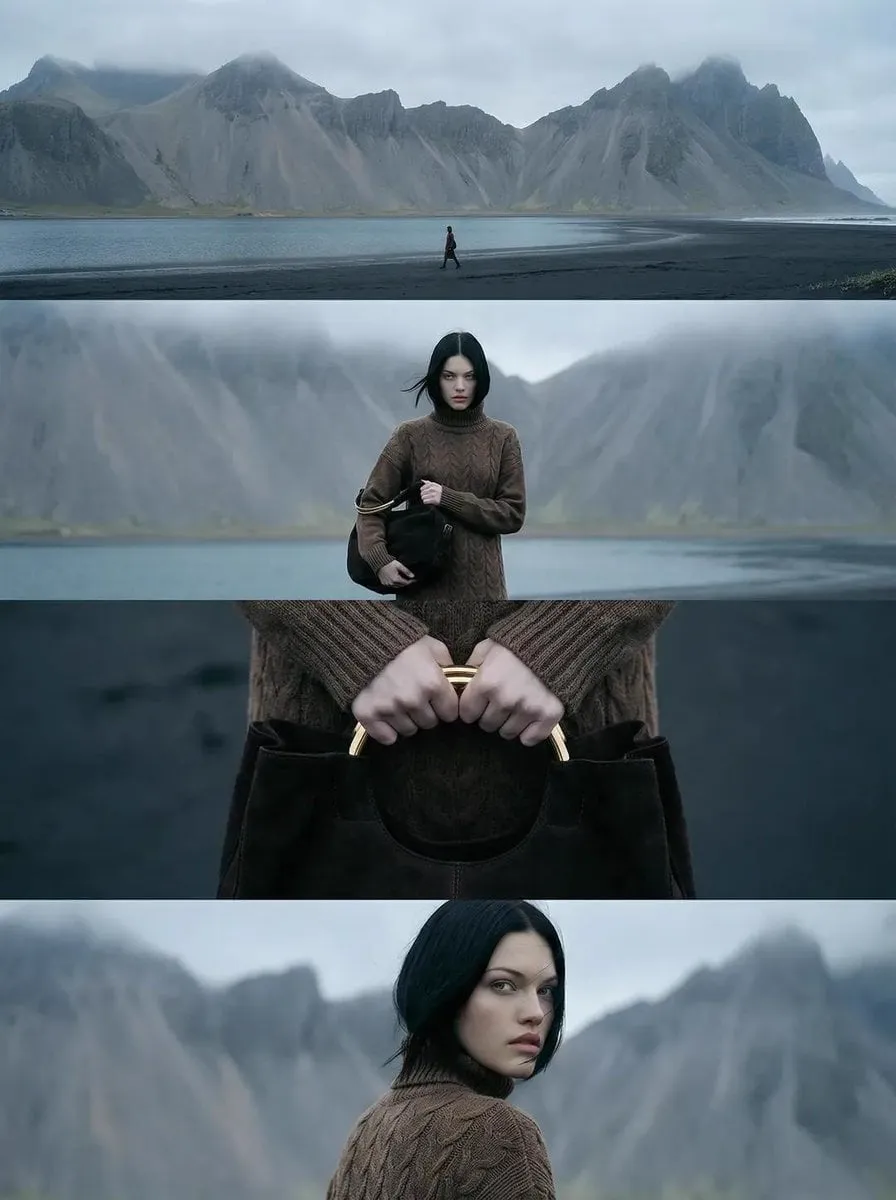

Marketing teams used to measure a video campaign in weeks: weeks to brief, weeks to shoot, weeks to edit. Today the bottleneck has moved. Generation is cheap; judgment is expensive. That inversion is the real story behind AI video in marketing, not the novelty of synthetic footage, but what happens to strategy, staffing, and creative testing when a finished-looking clip costs minutes instead of days.
The New Marketing Video Landscape: What Actually Changed
Four shifts matter more than any single model release.
Production latency collapsed. A concept can become a rough cut in an afternoon. Campaigns that once needed a production calendar now run on weekly creative sprints, which means planning discipline, not camera access, is the constraint.
The marginal cost of a variant is close to zero. Ten hooks used to mean ten budgets. Now they mean ten prompts and a naming convention. That changes the economics of testing: if you can afford fifty variants, the ability to choose one idea worth testing becomes more valuable than the ability to produce it.
Model quality crossed a usability threshold. Temporal coherence, camera control, and image conditioning are now good enough for real commercial work in many categories. Product loops, abstract explainers, background plates, localization pickups, and rapid concepting no longer require a crew on location.
Audiences stopped being impressed by the trick. Announcing that a video was generated no longer earns attention. Viewers judge hook, pace, sound, and offer, exactly as before. The novelty window closed and craft reopened.
What has not changed matters just as much. A weak offer with beautiful footage still fails. Brand trust, audience targeting, and message clarity still decide results. AI video is a production advantage, not a marketing strategy, and teams that confuse the two end up with a folder of attractive clips and no pipeline.
Building the AI Video Workflow: From Brief to Launch
Ad hoc prompting produces unrelated clips. A repeatable pipeline produces campaigns. This workflow holds up under weekly deadlines.
Step 1: Frame the brief and a single message
Define one audience, one promise, one proof point, one action. Specify deliverables before anyone writes a prompt: aspect ratios such as 9:16, 1:1, and 16:9; durations such as a 6 second bumper, 15 second social cut, and 30 second hero; subtitle rules; and safe zones for platform interface overlays. A brief listing five messages will produce five mediocre videos.
Step 2: Script, storyboard, and shot list
Write narration to timing, roughly 2.5 words per second of speech, then read it aloud. Convert the script into a shot list with columns for shot number, duration, framing, subject action, camera move, lighting, location, and on-screen text. The shot list is both your prompt source and your defence against cool-clip syndrome: assembling attractive footage that never makes an argument.
Step 3: Generate selectively, not exhaustively
Iterate at low resolution and short duration until composition and motion feel right, then commit to a final render. Produce three to five candidates per shot and keep one or two. Save seeds, reference frames, and prompt blocks for any shot you might need to regenerate, because you will need to regenerate it, usually the day before launch.
Step 4: Voice, music, and sound design
Synthesized narration is fast and increasingly natural, but it needs a pronunciation pass on brand names, product terminology, and numbers. Listen for pacing: generated voices tend to run flat across a long paragraph, so break narration into short beats and vary emphasis. Music must be licensed for commercial and paid-media use, and the licence should cover every channel you plan to run. Sound effects do more for perceived realism than extra resolution: footsteps, cloth movement, room tone, and interface clicks sell a cut.
Step 5: Assembly, QC, and localization
Lock the edit before translating anything, because late script changes multiply across every language variant. Run a technical quality check: consistent frame rate, loudness near the platform target, no warped hands or floating objects in hero frames, captions legible inside safe zones, logo and legal lines correct. Grade generated and live footage together so light direction and colour temperature match instead of alternating between glossy and flat.
Step 6: Distribution and the learning loop
Name every asset with one taxonomy, for example campaign_audience_concept_variant_language_ratio_version. Track which hooks, structures, and prompt patterns won, then fold those patterns into the shot-list template so the next campaign starts ahead rather than from scratch.
Speed Without Chaos: Volume, Versions, and Approval Gates
When production accelerates, rework accelerates with it. The usual failure mode looks like this: three versions of the same file with names like final, final_v2, and final_ok, a logo from an outdated brand guide, and a legal claim nobody approved.
Four habits prevent that. First, maintain a shared prompt and shot library: approved camera language, lighting descriptions, wardrobe notes, and product framing that anyone on the team can reuse. Second, keep golden reference frames for each recurring character, product, or set, and check new output against them rather than against memory. Third, write a definition of done that lists everything required before review, from captions to loudness to file naming. Fourth, timebox approvals and give one person ownership of the final cut. Committees edit badly, and a cut that changes every round loses rhythm.
A simple three-gate review also saves expensive mistakes: a brand gate for tone and visual identity, a compliance gate for claims and disclosure, and a technical gate for format and export quality. Each gate has a checklist and a named owner.
Personalization at Scale: Variants, Segments, and Dynamic Creative
Personalization is where AI video earns its budget, but only when it stays structured.
Segment-level variants beat one-to-one sprawl
Most brands capture the majority of available lift with four to eight audience segments and two to three hooks each. One-to-one personalization sounds impressive and usually collapses under operational weight, plus it can read as surveillance to the viewer. Build a matrix: segment on one axis, message or proof on the other. Keep the first three seconds stable so attribution stays clean, and swap the middle section where the argument lives.
Audio personalization and multilingual narration
Reusing one visual master across languages is one of the highest-return applications of AI video. Generate narration per market, adjust idioms rather than translating literally, and have a native speaker review before launch. Pronunciation errors and literal translations damage credibility faster than imperfect visuals, because audiences forgive strange images and do not forgive sounding foreign in their own language.
Interactive and responsive formats
Branching ads, quiz-style openings, and audience-triggered end cards are now practical because the underlying footage is cheap to produce. Responsive video, where the edit or the call to action changes by placement or device, also becomes feasible when you can render multiple cutdowns in an afternoon. The rule that keeps this sane is simple: vary the proof, hold the promise steady.
Testing discipline matters more than volume. Change one variable per comparison, give each variant enough impressions to escape noise, and resist rewriting a winner after two days of data.
Character Consistency and Brand Visual Identity
The most common complaint about generated footage is that it looks generated. Consistency problems have three sources: characters that change between shots, lighting that contradicts itself, and textures that are too smooth.
Practical fixes work better than hoping for the best. Build a character reference sheet with front, profile, and three-quarter views plus wardrobe and prop details, then condition every generation on those references. Lock a prompt block for a recurring character and reuse it verbatim, changing only action and framing. Limit complex motion, because hands, tools, and fast gestures are where continuity breaks first. Use a consistent vocabulary of camera and lens terms so shots feel like they came from one crew. Finally, apply a grade and a light grain pass across the whole edit so generated and live shots share a texture.
Recognise the warning signs early: drifting hands, morphing backgrounds, light that switches direction between cuts, mismatched eye lines, and skin that looks airbrushed. Any of these can be fixed with a reshoot of a single shot at low cost, which is one of the underrated benefits of this workflow.
Choosing Tools: Decision Criteria That Survive Trend Cycles
Model leadership changes every few months, so choose tools on capability and terms rather than on leaderboard position. The criteria that matter most in commercial work are control, consistency, rights, and repeatability.
A practical scorecard
Score each candidate from one to five on: control over camera and motion, including first-frame and last-frame conditioning; maximum duration and resolution; aspect ratio support; reference and consistency features; native audio or lip-sync support; render speed at usable quality; commercial licensing and indemnification clarity; data retention and training policy; API or batch automation for volume work; collaboration features for reviewers; export formats and codec compatibility; and cost predictability at your monthly volume. Weight the criteria, then treat rights, data policy, and export quality as non-negotiable minimums rather than tradeable points.
Keep the stack small and redundant
A workable stack is one primary video generator, one backup for when the primary is overloaded or weak on a specific shot type, one image generator for reference frames and thumbnails, one voice tool, and one editing suite with assist features. Tool sprawl destroys consistency and training time. Re-score the stack quarterly and migrate deliberately, not reactively.
Risk Management, Compliance, and Common Pitfalls
Generated footage introduces real obligations. Treat them as workflow steps rather than legal afterthoughts.
Consent, disclosure, and likeness
Never generate a recognisable person without permission, including a lookalike. If a synthetic presenter delivers a testimonial, that is regulated advertising in many markets and can be illegal if it implies a real customer experience. Label synthetic or altered content where platforms or regulators require it, and keep a record of what was generated, when, and with which model, so you can answer questions later.
Rights, provenance, and training data
Read the commercial terms for every tool you use, including music and voice libraries, and confirm that paid media use is covered. Avoid generating protected characters, celebrity likenesses, trademarks, or branded packaging you do not own. Where a client contract demands indemnification you cannot provide, consider live footage for the affected shots.
Common mistakes and how to avoid them
Starting with tools instead of a message. Generating dozens of clips without a shot list. Treating sound as an afterthought. Testing five variables at once. Skipping naming conventions and losing track of the winning version. Publishing before checking hands, text, and logos. Reusing the same voice and visual style across unrelated brands. Ignoring platform policies on synthetic media. Translating copy without a native review. Assuming generated output is automatically rights-clean. Each of these has a cheap fix, and each becomes expensive after launch.
Measuring Impact: Metrics That Matter
Judge AI video the way you judge any creative: on funnel outcomes and on operational leverage.
Funnel metrics include hook rate, hold rate at three and fifteen seconds, completion, click-through rate, cost per acquisition, and return on ad spend. Creative operations metrics are where AI shows its distinct advantage: time from brief to first cut, cost per finished asset, variants produced per concept, variant win rate, and localisation cycle time. Brand metrics such as brand lift, search lift, and sentiment tracking complete the picture, particularly for campaigns that trade direct response for memory.
Design tests properly. Give variants enough impressions to escape noise before declaring a winner, hold everything constant except the element under test, and document results somewhere the next campaign will find them. A creative library with recorded outcomes is worth more than any single tool subscription.
FAQ: AI Video in Marketing
Do AI-generated videos perform as well as filmed ads? In many categories a hybrid wins: generated footage for abstract, product, scale, or impossible shots, and live footage for human trust moments such as testimonials and team scenes. Test the mix rather than assuming either extreme.
How do we keep a character consistent across a series? Use a character reference sheet, condition every generation on the same references, reuse an identical prompt block, lock wardrobe and props, avoid complex hand actions, and grade the full edit together.
Can we use synthetic voices in advertising? Usually yes, if the licence covers commercial and paid-media use. Check disclosure requirements in each market, never clone a real person without written consent, and always run a native speaker review before publishing.
How many creative variants should we produce? Three to five per concept per segment is a strong starting point. Iterate weekly, retire losers quickly, and keep a record of what won so patterns compound instead of resetting.
Do we still need videographers and editors? Yes. Camera work shifts toward the shots only live production can deliver, while editing, sound, and creative direction become more valuable because they now determine quality rather than budget.
How do we avoid the AI look? Reference real lighting and real textures, keep motion simple, add sound design, apply a consistent grade, and include one human element per video, whether a real hand, a real location, or a real voice.
What is the single biggest mistake? Treating AI video as a content faucet. Volume without a brief, a shot list, and a review gate produces output nobody remembers, which is exactly the outcome faster production was supposed to prevent.
