

Two creators can type into the same video generator and get results that look like they came from different decades. One produces a blurry, generic clip that vaguely resembles the idea; the other produces a shot that could pass for a film still. The difference is rarely the model. It is the prompt. Prompt engineering for video has matured from a niche skill into the core craft of AI-assisted filmmaking — the discipline that decides whether your tool is a toy or a production asset.
This guide breaks down the practice into teachable pieces: the anatomy of a high-fidelity video prompt, how to choose and instruct models, how to keep characters consistent, how to control motion and style, and how to build an iterative workflow that turns failed generations into lessons. By the end, you will have a repeatable method instead of a collection of lucky one-liners.
Why Prompts Matter More Than the Model
Video generation models are trained on enormous amounts of visual data, but they are fundamentally instruction followers. A model with a powerful architecture will still deliver mediocre output if the instruction is vague. Conversely, a well-structured prompt extracts dramatically better results from even a mid-range model. The bottleneck in most pipelines is not compute — it is communication.
There is a second reason prompts matter: they are the only part of the pipeline you fully control and reuse. Model capabilities change, pricing changes, tools change. But a prompt library — a structured collection of what worked and why — is a durable asset that compounds over time. Every successful generation adds a data point; every failure adds a rule.
Finally, prompt quality determines iteration cost. A precise prompt produces a usable result on the first or second attempt. A vague prompt sends you into a loop of regenerations, burning time and budget on output you already knew was wrong. Precision is not pedantry; it is the cheapest form of quality control available.
The Anatomy of a High-Fidelity Video Prompt
A strong video prompt is not a sentence. It is a technical specification sheet, organized in a consistent order so the model can parse it reliably. Use this structure as your default:
Subject
Identify who or what is in the frame with enough specificity to matter. "A woman" is noise; "a woman in her thirties with short dark hair, a red raincoat, and a determined expression" is information. If the subject is a recurring character, reference the established character sheet by name and describe only what changed.
Action
Describe what is happening with concrete motion verbs. "Running" and "striding quickly while looking over her shoulder" generate very different footage. Be explicit about tempo, direction, and the physical details of the motion. Vague action is the most common cause of lifeless AI video.
Environment
Locate the scene with context that matters to the visuals. Time of day, weather, location type, and key objects all shape lighting and composition. "A rainy alley at night" sets a different scene than "an alley on a sunny afternoon." Include only details that affect the image; everything else is budget spent on noise.
Camera and framing
Video is cinematography. Specify lens feel, distance, and movement: close-up, wide shot, tracking shot, drone shot, slow push-in, handheld. Camera language is one of the strongest signals for a professional look, and it is the most underused element in beginner prompts.
Lighting
Light direction, quality, and mood transform the same scene: golden hour backlight, hard neon from above, soft window light, low-key with strong shadows. If you do not specify lighting, the model guesses — and the guess is usually generic.
Style
Anchor the visual style with a reference: a genre, an era, an aesthetic, a texture. "Cinematic, shallow depth of field, teal and orange grade, 35mm film grain" is a style directive; "nice looking" is not.
Constraints and negatives
State what must not appear: "no text, no watermark, no extra people, no distortion of the face." Many tools support a separate negative prompt field; use it consistently.
A practical format you can adapt:
Subject, in [setting], [action]. [Camera movement], [lens/framing], [lighting]. [Style references]. No [list of exclusions].
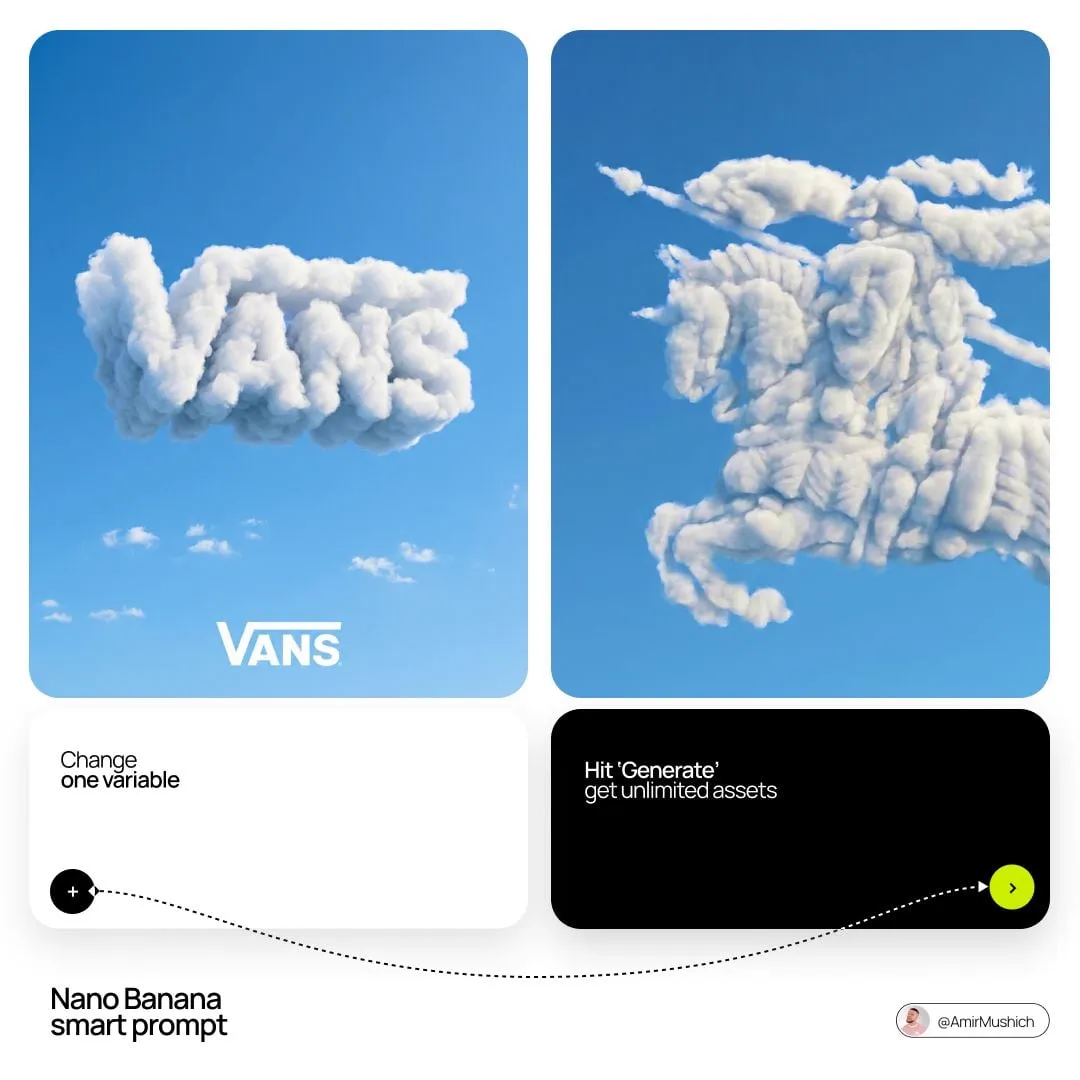
Write the prompt once, evaluate the output, and adjust one variable at a time. That discipline matters more than any single phrasing.
Model Selection and Context Injection
Choosing the right model is the first decision, but how you inject context into the prompt is what elevates results. Different models have different strengths, and the smart prompt names them.
If a model is known for strong adherence to prompts and fast iteration, use it for testing variations and high-volume work. If a model excels at realistic motion and long coherent sequences, reserve it for hero shots. If another is best at stylized or anime aesthetics, save it for projects that need that look.
Context injection means telling the model what role it is playing and what the output is for. A short context header — "You are a cinematographer creating a 5-second establishing shot for a sci-fi short film" — focuses the generation. Then the body carries the specification, and a closing line repeats the most important constraint so it is not lost.
Keep a model log: which model you used, what the prompt was, what came out. After a few weeks you will know exactly which tool to reach for in each situation, and you will stop wasting generations on the wrong model.
Keeping Characters Consistent
Character consistency is the single biggest quality gap between amateur and professional AI video. The solution is not luck; it is reference discipline.
Build a character sheet
Create three to five reference images of the character — different angles, poses, expressions, lighting conditions. Most generators accept these as reference inputs. Use the same sheet every time the character appears, and describe the character by name in the prompt so the model ties the reference to the subject.
Use multi-image fusion
When a tool supports it, combine multiple references into a single stable identity. This is the technique that keeps a face recognizable across scenes generated at different times, in different environments, with different models. It is the closest thing to a casting department for AI content.
Freeze the visual tokens
Decide the non-negotiables: the hair, the wardrobe, the distinctive props, the palette. Put them in every prompt for that character. Drift usually starts with a small change you allowed once — the jacket color, the hairstyle — and snowballs from there.
Watch the environments too
Environments drift just like characters. If a story repeats a location, keep reference images for the location and treat it with the same discipline.
Controlling Motion and Temporal Coherence
A video prompt controls time, not just space. Motion verbs carry the weight: the speed of an action, the direction of a camera move, the rhythm of cuts. Be explicit about the temporal shape of the shot.
For inter-frame coherence — the property that makes consecutive frames feel continuous — lean on models known for temporal stability, and keep shots simple enough for the model to handle. A single clear action beats a crowded scene with five competing movements. If you need complex choreography, break it into multiple shots and assemble them in the edit.
Motion quality is also where realism lives or dies. Unnatural physics — objects that float, limbs that bend wrong — destroy the illusion instantly. When a generation has good composition but bad motion, fix the motion verb and the camera description rather than regenerating the whole prompt blindly.
Stylistic Directives and Negative Control
Style is a language with its own vocabulary. Learn the terms that tools actually respond to: film grain, anamorphic, shallow depth of field, motion blur, color grade, aspect ratio. These words carry visual meaning to the model in a way that "looks cool" never will.
Negative prompts are half the craft. The most common exclusions — text, watermark, extra fingers, distorted faces, multiple subjects — prevent the failures that ruin otherwise strong generations. Keep a standard negative block that you reuse everywhere, and extend it when you meet a new failure mode.
Finally, use seed control when your tool supports it. A fixed seed makes generations reproducible: you can keep the composition and change one detail without restarting from zero. This is invaluable in the iterative loop, because it isolates variables.
The Iterative Prompting Loop
Professional prompting is not writing; it is a loop: generate, review, refine, regenerate. The loop is only fast if it is structured.
- Draft the prompt from your template.
- Generate a small, fast version first (low resolution or short duration).
- Review against the specification: composition, motion, style, constraints.
- Change one variable and regenerate.
- When the small version passes, generate the final high-quality version.
Keep a prompt log. Every prompt, every model, every output verdict — keep, fix, discard — and why. After a month, the log becomes a personal playbook: you stop making the same mistakes because you can see them in writing.
A worked example
Take a simple idea: a character walking through a market at sunset. A first draft might read "a woman walks through a market at sunset." The output will be usable but generic. The refined prompt reads: "A woman in her thirties with dark hair and a mustard coat walks through a crowded night market in Bangkok, vendors grilling skewers on both sides, steam rising, slow tracking shot following her from behind, warm tungsten light mixed with neon signs, cinematic, shallow depth of field, no text, no watermark." Same idea, completely different output: the model now knows the subject's appearance, the action, the environment, the camera, the lighting, the style, and the constraints. Every element maps to a decision the model would otherwise guess. That is the entire craft in one example.
Managing Compute and Budget
The iterative loop only pays off if the cost is controlled. Generate cheap first, expensive only when the idea is proven. Batch related generations to reduce context-switching. Queue long jobs in the background and work on other parts of the project while they run. Reserve premium generations for the shots that carry the video, and accept fast-and-good-enough for test frames.
Budget discipline is a creative choice, not an accounting chore: it decides where the scarce resource — your attention — goes. Spend it on decisions that matter.
Common Prompt Mistakes
- Vague subjects and actions: the model fills the gap with generic content.
- Ignoring camera and lighting: the fastest path to amateur-looking output.
- No negative constraints: avoidable failures cost generations.
- Changing many variables at once: you cannot learn what worked.
- Starting with premium generation: you pay full price for ideas that might not survive.
- No prompt log: repeating mistakes in a new session every day.
Frequently Asked Questions
How long should a video prompt be?
Long enough to specify the six elements — subject, action, environment, camera, lighting, style — and no longer. Verbosity adds noise. A tight paragraph beats a rambling essay.
Do I need to know technical film terms?
A working vocabulary of twenty or thirty terms — camera moves, lens qualities, lighting moods, style references — covers most needs. You learn them by using them; the model teaches you which words matter because the output changes.
Can I reuse prompts across different tools?
The structure transfers, the exact phrasing often does not. Different models interpret language differently. Keep the structure, adjust the vocabulary, and test on the new tool before relying on it.
Why do my characters keep changing appearance?
Usually because the reference discipline is weak: no character sheet, no multi-image fusion, or visual tokens that vary between prompts. Fix the references first; better phrasing alone rarely solves it.
Is prompt engineering still relevant as models improve?
More relevant, not less. As models get more capable, they follow instructions more faithfully — which means precise instructions extract more of their potential. The gap between a good prompt and a vague prompt grows as the models get better.
Wrap-Up
Prompt engineering for AI video is a craft with a clear core: treat the prompt as a technical specification, match the model to the task, enforce character consistency with references, control motion and style explicitly, and iterate with discipline and a log. None of this is magic, and none of it requires artistic talent you either have or lack. It is a system, and systems can be learned. The creators who get cinematic results from video generators are not lucky — they are the ones who stopped typing sentences and started writing specifications.
