
Why prompt quality is the real bottleneck
Most creators now have access to the same generation tools. The gap between a forgettable clip and one that survives a client review rarely comes from the model. It comes from the instruction. A video model has no memory of your intent, no storyboard in front of it, and no way to know which part of your sentence matters most. Everything it needs must be inside the prompt.
Think of a prompt as a compressed shot plan. When a director briefs a crew, they do not say "make it cinematic." They say: a slow push-in on a woman in her thirties seated at a steel table, window light from the left, 35mm lens, shallow depth of field, warm practicals behind her. That sentence is a stack of decisions. Video prompts work the same way. They are decisions, not wishes.
The encouraging part is that prompt craft is learnable and largely transferable. Once you understand the building blocks — subject, action, environment, camera, light, style — you can move between models without starting from scratch. Models differ in taste, duration limits, and how literally they interpret camera language, but the vocabulary is shared.
This guide walks through a repeatable method: define intent, structure the prompt, choose a genre pattern, protect consistency across shots, iterate in cheap passes, and check the result against a fixed list. It is written for working creators — marketers, editors, indie filmmakers, and social teams — who need clips that come out usable, not just interesting.
Start with intent: three questions before you type
An effective prompt starts away from the keyboard. Answering three questions first will save more time than any amount of prompt polish.
Who is on screen, and what do they want?
Specificity about the subject anchors everything else. "A cyclist" is weak. "A courier in her late twenties, rain-soaked jacket, helmet under one arm, breathing hard" gives the model physical details it can render and emotional cues it can play. If the subject has a goal — reaching a door, finding a key, catching a train — state it. Goals generate motion, and motion is what makes AI video feel alive rather than painted.
Where does the camera stand, and what does it do?
Camera position is the most underused control in prompt writing. "Wide shot from across the street, slow dolly left" produces a completely different clip from "low handheld close-up, slight drift." Decide whether the camera is static, tracking, orbiting, pushing in, or pulling out — and pick one primary move. Two competing moves usually cancel each other out.
What is the single most important beat?
A five-second clip can hold roughly one idea. If your prompt contains a chase, a reveal, and an emotional reaction, the model will split the difference and deliver a muddled middle. Choose the beat that matters, build the prompt around it, and let the surrounding beats live in adjacent clips.
The anatomy of a dependable video prompt
Strong prompts are assembled from six components. You do not need all six every time, but knowing them lets you diagnose what is missing when a generation disappoints.
Subject and action
Describe the subject with two or three visible traits, then assign one clear action in the present tense. Avoid stacking verbs. "She turns, then notices, then smiles" becomes three half-finished movements. "She turns toward the window" becomes one readable motion.
Environment and atmosphere
Name the place, the time of day, and one atmospheric detail: steam, dust, drizzle, sand, neon haze. Atmosphere is what makes an environment feel filmed rather than rendered. Keep it to one or two elements — too many particles distract the model from the subject.
Camera, lens, and motion
Combine a shot size (wide, medium, close-up), an angle (eye level, low, high, over-the-shoulder), a lens feel (wide-angle, 35mm, telephoto, macro), and a movement (static, pan, tilt, dolly, handheld). This quartet is the difference between a clip that looks like a phone test and one that looks like coverage.
Light and color
Lighting carries mood faster than any adjective. "Soft window light from camera left with warm practicals behind" reads instantly. "Golden hour backlight with lens flare" reads instantly. "Moody" reads as nothing. Add a two-color palette when you want visual cohesion across a series.
Style, medium, and texture
Style tells the model which visual world it is operating in: live-action film, 2D animation, stop-motion, archival footage, claymation, manga panels, infrared, black-and-white 16mm. Mixing two styles in one prompt usually produces the worst of both. Pick one and describe the texture — grain, halation, soft focus, paper fibers.
Duration, aspect ratio, and pacing
Although some platforms apply these as settings rather than text, mentioning pacing helps the model distribute motion. "Slow, deliberate movement" and "quick energetic cuts within the shot" are different instructions. State your aspect ratio early in your own planning, because vertical framing changes what you can put in the shot.
A reusable prompt template you can adapt
A template prevents you from forgetting half the shot. This one is deliberately plain so you can drop in your own vocabulary.
[shot size + angle + lens] of [subject with two visible traits], [single action], in [environment with time of day], [one atmospheric detail], [lighting description with direction], [color palette], [style and texture], [camera movement], [pacing note].
Filled example, cinematic:
Medium close-up, eye level, 50mm of a ferry deckhand in his fifties, salt-stained fleece, in a rain-slick harbor at dawn, mist drifting across the water, soft blue overcast light from behind camera, cool blue and rust palette, live-action documentary texture with fine grain, slow handheld drift right, unhurried pace.
Filled example, product:
Macro shot, slightly low angle of a matte ceramic mug, steam curling from the rim, on a concrete countertop in a bright kitchen, morning sunbeam crossing the frame, warm neutral palette, clean commercial live-action look, static camera with subtle rack focus, steady pace.
Keep a personal library of these filled examples. Most creators find that five or six reliable patterns cover the majority of their work, and starting from a known-good prompt is faster than writing from zero.
Prompt patterns by genre
Different deliverables reward different emphases. These patterns are starting points, not rules.
Photoreal cinematic
Prioritize light direction, lens choice, and texture. Words like "shallow depth of field," "practical lights," "natural grain," and "motivated lighting" push results toward filmed footage. Avoid exaggerated descriptors such as "hyper-realistic" — they tend to produce over-sharpened, plastic-looking frames.
Stylized and animated
Name the tradition rather than the vibe: "1990s cel animation," "watercolor with visible brush edges," "puppet stop-motion with felt textures." Stylized work tolerates broader motion, so you can describe more energetic camera behavior without breaking the illusion.
Product and commercial
Control reflections and backgrounds explicitly. State the surface, the backdrop color, and where highlights should fall. Product clips also benefit from a stated end state: "liquid settles into a still pool" gives the model a destination.
Documentary and interview-adjacent
Use imperfect camera language: "slight handheld sway," "brief focus hunt," "available light." Perfection reads as advertising; small imperfections read as real.
Social-first vertical
In vertical framing, keep the action in the upper-middle third and avoid wide establishing shots that lose detail on a phone. State the aspect ratio in your planning and keep shot sizes tighter than you would for landscape.
Protecting consistency across multiple shots
Single clips are easy. Sequences are where most projects break down, because each generation is an independent roll of the dice.
Write text anchors and reuse them verbatim
Create a short block of fixed phrasing for your character, location, and palette, then paste it unchanged into every prompt. Words like "navy peacoat, silver-streaked beard, weathered face" repeated identically give you a far better chance of a recognizable through-line than paraphrasing each time.
Use image-to-video and reference frames
When a platform supports a starting frame or reference image, treat it as your continuity insurance. Generate or photograph a clean reference, then drive every subsequent shot from it with only the camera and action changed.
Number your shots and keep a prompt log
Name files as project_shot03_v2 and keep a simple table of prompt, settings, and result. When a shot finally works, you will know exactly what produced it — and you will be able to reproduce it next month.
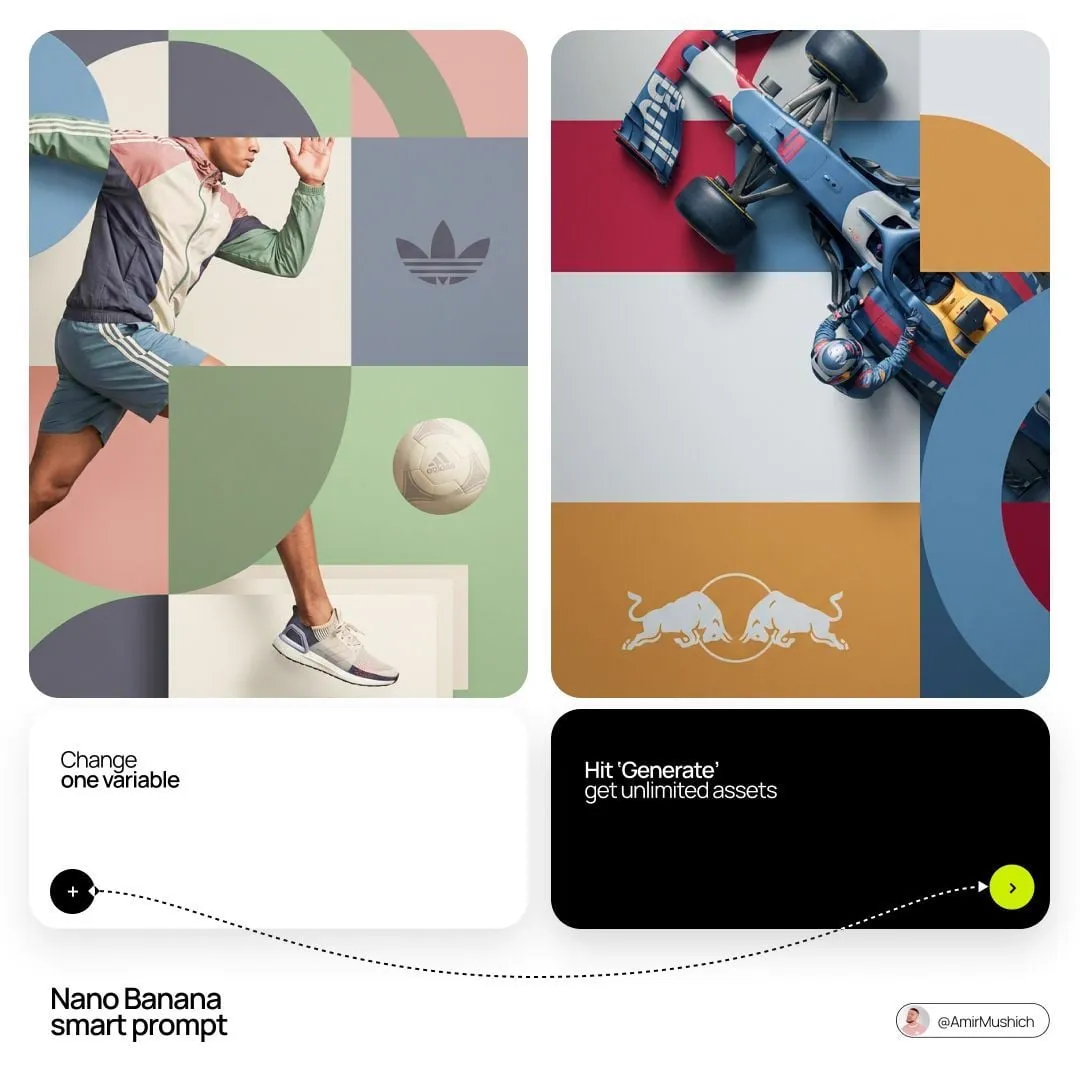
Change one variable at a time
If a character drifts, do not rewrite the entire prompt. Keep the anchor block, change the camera line, and compare. Controlled iteration is the only reliable way to isolate what is causing drift.
Iterating without wasting renders: the three-pass method
Random rewriting is expensive and demoralizing. A structured three-pass approach keeps you moving.
Pass one, structure. Generate two or three low-cost variations focused purely on composition and action. Ignore texture, color, and polish. You are asking one question: does this shot read?
Pass two, look. Lock the composition, then adjust light, palette, and style language. This is where you add grain, halation, practicals, and lens character. Generate a small batch and compare side by side rather than one at a time.
Pass three, polish. Fine-tune pacing, motion intensity, and end state. If the platform offers motion strength or duration controls, this is the moment to use them. Also decide whether the clip needs a generated sound layer or whether you will score it in the edit.
Throughout, log what changed. A prompt change log is the fastest way to build intuition, because it converts vague impressions into cause and effect.
Common mistakes and how to fix them
Overloading with adjectives
"Stunning, epic, breathtaking, ultra-detailed" adds no visual information. Replace each adjective with a concrete noun or verb: a location, a light source, a camera move.
Mixing incompatible styles
"Photorealistic anime watercolor" gives the model contradictory signals. Choose one visual tradition and enrich it from inside.
Issuing contradictory camera directions
"Static camera with fast orbit" is impossible. Pick one move and, if you want variety, split it across separate shots.
Forgetting negative guidance
Where a platform supports it, exclude what you do not want: text overlays, watermarks, distorted hands, extra limbs, warped faces, jump cuts. Short negative lists work better than long ones.
Ignoring aspect ratio and safe areas
A beautiful landscape clip can be unusable in a vertical feed. Choose framing before you generate, not after.
Treating one model's behavior as universal
Some platforms follow camera language literally; others interpret it loosely and favor mood. Keep the same prompt skeleton but adjust how much technical detail you include per tool.
A pre-render quality checklist
Run this list before you spend time on a batch: Is there exactly one subject? One action? One camera move? Is the light direction stated? Is the style singular? Is the aspect ratio decided? Are your character anchors copied verbatim? Do you have a shot number and version? If any answer is no, fix it first — it is cheaper than sorting through twenty near-misses.
FAQ
How long should a prompt be? Long enough to remove ambiguity, short enough to stay readable. For most models, three to five sentences is the sweet spot. If you cannot summarize your prompt out loud in one breath, it is probably doing too much.
Do specific model names matter inside the prompt? Generally no. Describe the look you want — film stock, lens, lighting style — rather than naming another system. Style references to directors or films work inconsistently and can pull in unintended elements.
Why does my clip look fine in one frame and strange in motion? Motion artifacts usually come from too many simultaneous actions or an over-specified camera move. Reduce to one action and one camera behavior, then rebuild.
How do I keep a character recognizable across ten shots? Use a reference image wherever possible, freeze your anchor phrases, and change only one variable per test. Consistency is a process, not a magic phrase.
Should I write prompts in my own language? Many models respond best to the language they were trained on most heavily, but modern systems handle several languages well. If quality drops, translate the prompt while keeping proper nouns and technical terms intact.
How many variations should I generate per shot? Two or three for structure, then three to five for look, then one or two for polish. Batches larger than that usually mean the prompt is still ambiguous.
What about sound? Treat audio as a separate layer unless the platform generates it alongside video. Dialogue, ambience, and music are usually easier to control in post, and it keeps your video prompt focused on visuals.
Putting it into practice
The creators who get consistent results are not the ones with secret prompts. They are the ones with a system: intent defined before typing, a six-part prompt structure, genre-specific patterns, frozen anchors for continuity, a three-pass iteration loop, and a short checklist before every render. Start by rewriting one recent disappointing prompt using the template above. Then rewrite it again with a different camera move. Comparing those two outputs will teach you more about prompt craft than any list of magic words — and it will give you a workflow you can reuse on every project that follows.
