
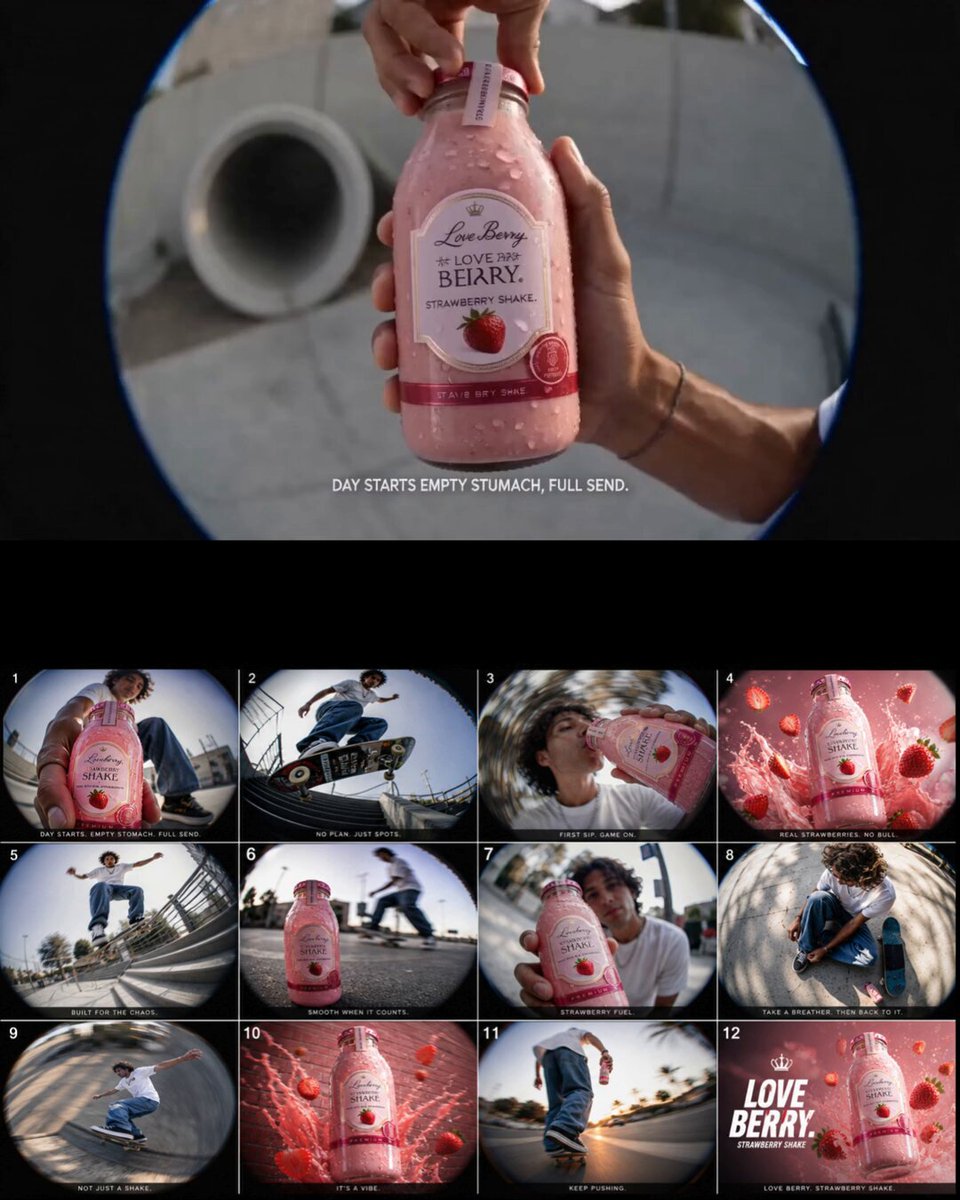


Why AI Video Synthesis Is Reshaping Short-Form Storytelling
Short films and animation have always been expensive in one specific way: not in ideas, but in iteration. A director who wants to test three endings, two lighting moods, or a different opening shot normally has to schedule a crew, book a location, and commit to a full production day just to learn whether the idea works. Generative video collapses that gap. A shot that once took a week to capture can be prototyped in an afternoon and refined the next morning.
That shift matters most for the formats where iteration is the creative process: a seven-minute narrative short, a two-minute animated teaser, a music-driven experimental piece, a title sequence, an explainer built on a single strong metaphor. These projects live or die on rhythm and visual coherence, not on budget. When synthesis becomes cheap, the real constraint moves from "can we afford to shoot it?" to "do we actually know what we want?" That is a much better problem for a filmmaker to have.
This guide walks through a complete AI video synthesis workflow for short films and animation. It covers how to choose a synthesis method per shot, how to prepare a script and shot list a model can execute, how to protect character and style consistency across dozens of clips, how to handle sound, and how to finish the result so it holds up on a large screen. It also covers the mistakes that derail most first attempts, and the decision criteria that tell you when a conventional approach is still the faster path.
Choosing the Right Synthesis Method for Each Shot
The single biggest quality decision in an AI-assisted production is not which model you use, but which method you apply to a given shot. Mixing methods deliberately is what separates a coherent film from a demo reel.
Text-to-video
Text-to-video is best for establishing shots, abstract transitions, backgrounds, and any moment where the composition is more important than a specific actor's performance. It gives you the widest creative range and the least control. Prompts should read like a shot description: subject, action, framing, lens, lighting, movement, atmosphere, duration. Avoid stacking adjectives; describe what the camera sees.
Image-to-video
When you already have a strong keyframe — a storyboard panel, a rendered still, a photograph — image-to-video preserves composition while adding motion. This is the workhorse method for character shots, because the face and wardrobe are locked in the input image. Motion prompts then describe only what changes: a slow push-in, hair moving in wind, a blink, a turn of the head.
Video-to-video and hybrid pipelines
Video-to-video restyles existing footage: live-action plates become painterly animation, or a rough 3D previz becomes a finished cinematic look. Hybrid pipelines — generate a clean plate, composite characters into it, then run the composite through a light synthesis pass for grain and atmosphere — remain the most reliable route for shots that must match a real location or a designed set.
A practical rule: use text-to-video to explore, image-to-video to commit, and video-to-video to polish. Exploration is cheap and disposable; the shots you keep should almost always pass through a reference-driven method.
Pre-Production: Writing for Models, Not Just for Actors
A script written for human performers contains assumptions a generative model cannot read. "She hesitates, then decides" is a performance note, not a visual instruction. Before generating anything, translate the script into a shot list with five attributes per shot: subject, action, framing, camera movement, and emotional tone.
From script to beat sheet to shot list
Break the film into beats, then into shots, then decide for each shot whether it needs a face, a full body, or no character at all. Close-ups of a speaking character are the hardest and most expensive shot type; a film that leans on hands, silhouettes, landscapes, and objects will finish faster and look more intentional. Many strong AI shorts deliberately use a "distant protagonist" grammar for exactly this reason.
Prompt templates that survive repetition
Build a reusable prompt skeleton rather than writing freehand every time. A consistent structure — style block, subject block, action block, camera block, lighting block, negative block — makes it far easier to isolate what changed when a shot goes wrong. Save the style and negative blocks as reusable fragments and paste them into every prompt in the project.
Storyboards and animatics as generation inputs
Rough storyboard panels are the most valuable pre-production asset for AI filmmaking, because they double as image-to-video inputs and as reference images for consistency. An animatic — storyboard panels cut to temp music — will reveal pacing problems in twenty minutes that would otherwise surface after days of generation.
Locking Visual Consistency Across Shots
Consistency is where AI short films succeed or fail. Audiences forgive imperfect physics; they do not forgive a character whose jacket changes colour between cuts.
Character design sheets
Create a single reference sheet per character containing a front, three-quarter and profile view, plus two expressions. Generate it once, keep it in a project folder, and feed it into every character shot. Describing a character in words alone will drift; describing them with the same image will not.
Seeds, references and style tokens
Most synthesis tools let you reuse a seed, a reference image, or a style embedding. Reusing seeds keeps colour grading, grain and lens character stable across a sequence. Reference images handle identity. Style tokens or LoRA-style adapters handle illustration style. Use one mechanism per job rather than expecting a single setting to solve everything.
Colour scripts and continuity bibles
Write a short continuity document: palette per act, wardrobe per scene, time of day, weather, and the direction characters move through the frame. If a scene has characters facing screen-right, keep them facing screen-right until the emotional turn. Continuity errors in generated films usually come from the prompt, not from the model.
Sequencing tips for hidden cuts
Use cutaways, inserts and reaction shots to bridge the moments where consistency is hardest to maintain. A cut to a hand, a window, or a landscape buys you a few seconds of visual rest and disguises a character shot that is only 80 percent accurate. Editors call this "cutting around the problem," and it is a legitimate craft technique in animation as well.
Animation-Specific Workflows
Animation benefits from synthesis differently than live-action-style shorts, because animation already treats every frame as constructed.
Style transfer and illustration pipelines
Generate or paint keyframes in your target style, then use image-to-video with restrained motion to bring them to life. Keeping motion small is what preserves a hand-drawn or painted look; large camera moves and complex articulation tend to push output toward a generic CGI aesthetic. Ask for flicker, line boil and paper texture explicitly if you want that traditional feel.
2D, 3D and hybrid approaches
If you have any 3D skills, generating a rough previz in Blender and rendering a synthesis pass over it gives you reliable camera geometry and blocking, with the look handled separately. Purely 2D pipelines are faster to iterate but harder to keep spatially coherent. A common hybrid: 3D for environments and camera, 2D-style synthesis for characters.
Frame interpolation and motion smoothing
Interpolation tools can raise a 12 fps hand-drawn feel to smooth 24 fps motion, or do the reverse by dropping frames to restore a stop-motion cadence. Decide the target cadence before you animate, because changing it late often damages timing you have already tuned.
Rotoscoping and cleanup passes
Masking is still necessary. A rotoscope pass over the character isolates them from a generated background so you can regenerate the environment without losing the performance, or the reverse. In practice, one or two cleanup passes per hero shot is normal and worth budgeting for.
Sound Design, Voice and Music
The visuals are half the film. Audio is what makes a generated sequence feel authored rather than assembled.
Voice performance
Synthesised voices have improved dramatically, but they still need direction. Generate several takes with different pacing before choosing, and treat breath, pause and emphasis as part of the performance. For dialogue-heavy shorts, consider recording a real actor for the lead and synthesising only incidental voices — the difference in presence is audible.
Ambience and Foley
Build a simple sound map: room tone for every location, a signature sound for each recurring object, and silence where you want tension. Generated ambience is fine for backgrounds, but layering a real recorded element on top — rain, footsteps, cloth, a door — is what makes a scene feel physical.
Music and pacing
Score to the animatic rather than to the finished cut. Music shapes rhythm, and if the edit is locked to picture before the music exists, the two will fight. A useful trick for AI shorts: let the score carry transitions, so the visual cuts happen on musical beats and any awkward visual seam disappears.
Lip sync and dialogue matching
If characters speak on screen, lock the dialogue audio first, then generate or re-time the mouth shapes to match. Retiming picture to audio is far easier than retiming audio to picture, and it keeps performance timing natural.
Editing, Upscaling and Finishing
Finishing is where an AI-assisted short stops looking like an AI-assisted short.
Assembling in a real NLE
Cut in a proper editor — Resolve, Premiere, Final Cut — not inside a generation tool. You need trim handles, J-cuts, audio crossfades and frame-accurate control. Generate clips slightly longer than you need so you have handles to trim into.
Upscaling and detail restoration
Most generators output at moderate resolution. A dedicated upscaler can take a 1080p clip to 4K, but aggressive settings will invent detail that looks like smeared plastic. Upscale in two modest passes rather than one extreme pass, and always compare against the original at 100 percent zoom.
Grade, grain and grain matching
Different clips will arrive with different colour science. A unifying grade — matched black levels, one LUT, a shared grain plate over the whole timeline — does more for perceived quality than any single improved shot. If some shots are grainier than others, apply the grain at the timeline level so it is uniform.
Frame rate and aspect ratio consistency
Check that every clip is the same frame rate and aspect ratio before you start cutting. Mixed frame rates cause judder on pans; mixed aspect ratios cause subtle scaling softness. Decide the delivery format at the start: vertical for social, 2.39:1 for a cinematic short, 16:9 for festival submission.
Common Mistakes That Break AI Short Films
Generating before planning. The most common and most expensive error. Ten minutes with a shot list saves hours of generation.
Over-prompting. Long prompts with contradictory instructions produce mushy results. Short, specific, internally consistent prompts win.
Changing style mid-project. Switching models or style settings halfway through creates a visible seam between acts. Pick a pipeline, test it on three shots, then commit.
Ignoring negative prompts. Artifacts, extra limbs, warped text and unwanted camera moves are usually controlled by what you exclude, not what you request.
Falling in love with unusable footage. A beautiful shot that does not cut with its neighbours is not a shot, it is a distraction. Judge clips in context, in the timeline.
Skipping sound until the end. Audio problems are discovered late and are expensive to fix. Build the sound map alongside the shot list.
No consistent resolution or frame rate. Technical inconsistency reads as amateurism faster than any visual flaw.
Not keeping generation notes. Record the prompt, seed, reference images and settings for every shot you keep. When a client or collaborator asks for a change six weeks later, those notes are the only way to reproduce it.
Decision Criteria: Matching Technique to Shot Type
Use these rules of thumb when planning a production:
- Wide establishing shots: text-to-video, generous duration, minimal character detail.
- Character close-ups: image-to-video from a reference sheet, short duration, small motion.
- Dialogue scenes: lock audio, generate image-to-video with subtle head movement, cut on reactions.
- Action and complex movement: 3D previz plus video-to-video, or shoot plates practically and restyle.
- Stylised animation: painted keyframes plus low-motion image-to-video, with line-boil and texture prompts.
- Transitions and montage: text-to-video, short clips, cut to music.
- Anything requiring precise text or logos: composite in post rather than generating.
A practical budget rule: expect to generate roughly four to six times more footage than you will use, and plan your schedule around the shots that need the most retries — faces, hands and complex interaction.
FAQ
How long should an AI-assisted short film be?
Three to eight minutes is the sweet spot for a first project. It is long enough to demonstrate narrative control and short enough that consistency problems stay manageable. Longer films are possible, but they demand a strict continuity system and a much larger generation budget of time.
Do I need animation experience to make an animated short with synthesis?
Not strictly, but visual literacy helps enormously. Understanding framing, staging, timing and colour will improve your results more than any specific tool. If you can draw even rough storyboard panels, you gain a major advantage, because those panels become your generation references.
How do I stop characters from changing between shots?
Three things, in order of impact: a fixed character reference sheet used in every shot, a consistent style block pasted into every prompt, and short clips with restrained motion. Long clips with lots of movement are where identity drifts fastest.
Should I generate everything, or mix in real footage?
Mix. Real plates for hands, textures and any complex interaction, then restyle or composite. Audiences read real footage as grounded even when it is only a background element, and it gives your compositing something solid to sit on.
What resolution should I finish at?
Deliver at 1080p for most online distribution and 4K only if the platform and the project warrant it. Generating at a moderate resolution and upscaling with care usually beats generating at maximum resolution with heavy artifacts.
How do I keep a consistent look across a whole film?
Treat the look as a technical deliverable: one LUT, one grain plate, one palette document, and a final grade applied to the whole timeline. Consistency is achieved in post, not in the prompt.
Where do AI-assisted shorts usually fall apart?
In the middle. Openings and endings get disproportionate attention during production, while connective scenes are generated quickly and carelessly. Those middle scenes are exactly where continuity drift shows up, so give them the same prompt discipline as your hero shots.
Is it worth learning to use multiple tools?
Yes, but sequentially rather than simultaneously. Learn one generation tool deeply enough to understand its failure modes, then add a second for the jobs the first does badly — typically upscaling, sound, or video-to-video restyling. Tool-hopping early replaces craft with novelty.
