

Why Short-Form AI Video Changed the Game
Five years ago, making a short video meant finding a camera, a person willing to stand in front of it, decent light, and a location that did not look like a bedroom wall. Today the bottleneck has moved. Generative video models can turn a paragraph of text into a convincing moving image, clone a voice that sounds human, and extend a two-second clip into something that holds attention for twenty seconds. The hard part is no longer production. The hard part is deciding what to make, in what order, and how to make it repeatable.
That shift is what separates creators who post occasionally from creators who ship something every day. The people winning on short-form platforms are not necessarily the best editors or the best writers. They are the ones with a system: a way to generate ten hooks, pick two, produce them in a batch, and learn something from the results before the next batch.
AI video tools slot into that system at specific points. They are excellent at generating B-roll, establishing shots, stylized transitions, abstract visuals, and talking-head footage. They are still unreliable at long continuous action, precise hand interactions, and text baked into a scene. Knowing where the tools are strong and where they fail is most of the skill.
What did not change is the algorithm's basic preference. Short-form feeds still reward watch time, completion, rewatching, sharing, saving, and commenting. Aesthetic quality matters only insofar as it supports those behaviors. A rough clip with a perfect hook will outperform a beautiful clip that takes eight seconds to get going.
The Anatomy of a Short That Keeps People Watching
Before touching any generation tool, it helps to understand the three structural parts of a short that performs: the interruption, the loop, and the payoff.
The interruption: the first 1.5 seconds
The opening frame has one job — stop a thumb. That means motion, contrast, or a claim that creates a small information gap. Avoid intros, logos, and greetings. A viewer scrolling has no context and no patience. If the first frame is a person standing still in a neutral room, you have already lost.
Practical rules that hold up across niches:
- Put a subject or object in motion in the opening frame, even if the motion is subtle.
- Show a face, a hand, or a texture at close range rather than a wide establishing shot.
- Pair the visual with a short on-screen text hook of six to nine words.
- Never let the hook text and the spoken line say the same thing verbatim; let them complement each other.
The loop: designing for the second watch
A short that loops cleanly gets two views from one viewer, and platforms read rewatches as strong positive signals. You create that by ending the clip on the same visual or motion that opens it, or by ending mid-thought so the viewer's brain wants to re-check the beginning for context. This is a deliberate design choice, not luck. When you storyboard, mark whether the last frame should visually rhyme with the first.
The payoff: giving the viewer something to do
The payoff is the reason someone shares. It can be a satisfying reveal, a genuinely useful tip, a funny reversal, or a small emotional hit. What it should not be is a generic conclusion. "And that's why consistency matters" is not a payoff. "Here is the exact three-line prompt I use, and here is what happens when you drop the second line" is.
Alongside the payoff, give the viewer a low-effort action: a question to answer in the comments, a save-worthy reference, or a format they can copy. Comment prompts that require an opinion work better than ones that require effort.
A Repeatable AI Video Workflow, Step by Step
The value of a workflow is that it removes decisions. Here is one that fits a solo creator producing three to five shorts per week.
Build an idea bank before you need one
Keep a running list of at least thirty concepts, each written as a hook plus a payoff. Sources: comments on your own videos, questions people ask, contradictions in your niche, and formats that worked for accounts adjacent to yours. Do not write full scripts here. Write the hook and the one-line payoff, nothing else.
Turn the script into a shot list, not a storyboard
A shot list is a numbered list of 6 to 12 shots with one line each: framing, subject, action, and duration. Storyboards are useful for narrative films and overkill for a twenty-second vertical clip. Keep each shot between 1.5 and 4 seconds. Anything longer than four seconds in an AI-generated clip gives the model more time to drift.
Generate stills before motion
Image-to-video consistently beats text-to-video for control. Generate a still frame that already looks right — composition, lighting, wardrobe, expression — then animate it. This two-step approach lets you reject bad compositions cheaply, because a still takes seconds to regenerate and a video takes minutes.
Animate in short bursts and pick takes fast
Generate two or three variations per shot, then immediately delete the bad ones. Do not hoard takes. Watch each at real speed with sound on, and ask one question: does the motion serve the story, or is it just movement? Motion for its own sake is the most common waste of time in AI video production.
Assemble in a fixed order
Lay the clips on a vertical 1080x1920 timeline. Add the voiceover or dialogue, then the music bed, then captions, then sound effects on the cuts. This order matters because captions need to match the final audio timing, and sound effects need to match the final cut points. Doing effects before captions usually means doing effects twice.
Ship in batches and log the outcome
Produce three or four shorts in a single session, publish on a schedule, and log the hook type, length, and retention result for each. After twenty posts you will have a pattern you can trust more than any general advice.
Keeping Characters and Style Consistent
Consistency is what makes an AI-generated account feel like a person or a brand rather than a random feed. It is also the hardest thing to maintain, because every generation is a fresh roll of the dice.
Lock the character with reference images
Most modern video tools accept multiple reference images of the same subject. Prepare a small reference sheet: a neutral front-facing portrait, a three-quarter view, a profile, and a full-body shot with the standard wardrobe. Use the same set every time. If your tool supports multi-image conditioning, feed two or three references per generation rather than one; the model has more information to hold the face steady.
Write a style bible in plain language
Keep a short document with the descriptors that recur in every prompt: lens feel, color palette, light direction, wardrobe, environment, and camera height. Something like: "35mm look, soft window light from camera left, muted teal and warm skin tones, plain grey backdrop, eye-level camera, shallow depth of field." Paste the relevant lines into every prompt. Consistency comes from repetition of language, not from hoping the model remembers.
Control the variables that drift
In practice, drift shows up in four places: hair length, clothing color, facial hair, and background clutter. Fixing wardrobe and background in the style bible eliminates two of them immediately. For the face, keep the framing similar across shots — switching from close-up to wide profile is where identity tends to slip.
Separate style consistency from story consistency
You can have a consistent visual style without a recurring character, and vice versa. Decide which one your account is built on. A style-driven account can use different subjects every post as long as the color grade, camera language, and pacing stay the same. That is much easier to sustain and still builds recognition.
Prompt Patterns That Produce Usable Footage
Prompts in video generation work less like instructions and more like casting calls. Vague prompts produce vague footage. Overstuffed prompts produce footage that ignores half your request.
Use a fixed sentence order
A reliable structure is: subject and wardrobe, then action, then environment, then lighting, then camera, then style. For example: "A woman in an oversized cream knit sweater, slowly turning to look over her shoulder, standing in a sunlit kitchen, warm afternoon light through a window, handheld medium close-up, shallow depth of field, film grain." Every element has a job.
Describe motion, not emotion
Models cannot render "feeling anxious." They can render "tapping fingers on a table, glancing off-camera twice, shallow breathing." Translate every emotional beat into physical movement. This single habit improves output more than any parameter tweak.
Avoid negation
"No text, no logos, no extra people" is processed inconsistently. Instead, describe what should be present: "empty street, one subject, clean surfaces." If an artifact keeps appearing, change the composition rather than adding a prohibition.
Keep prompts under about sixty words for motion shots
Long prompts tend to dilute attention. If you need more detail, split the shot into two shorter clips and cut between them. That also gives you more edit points, which helps retention.
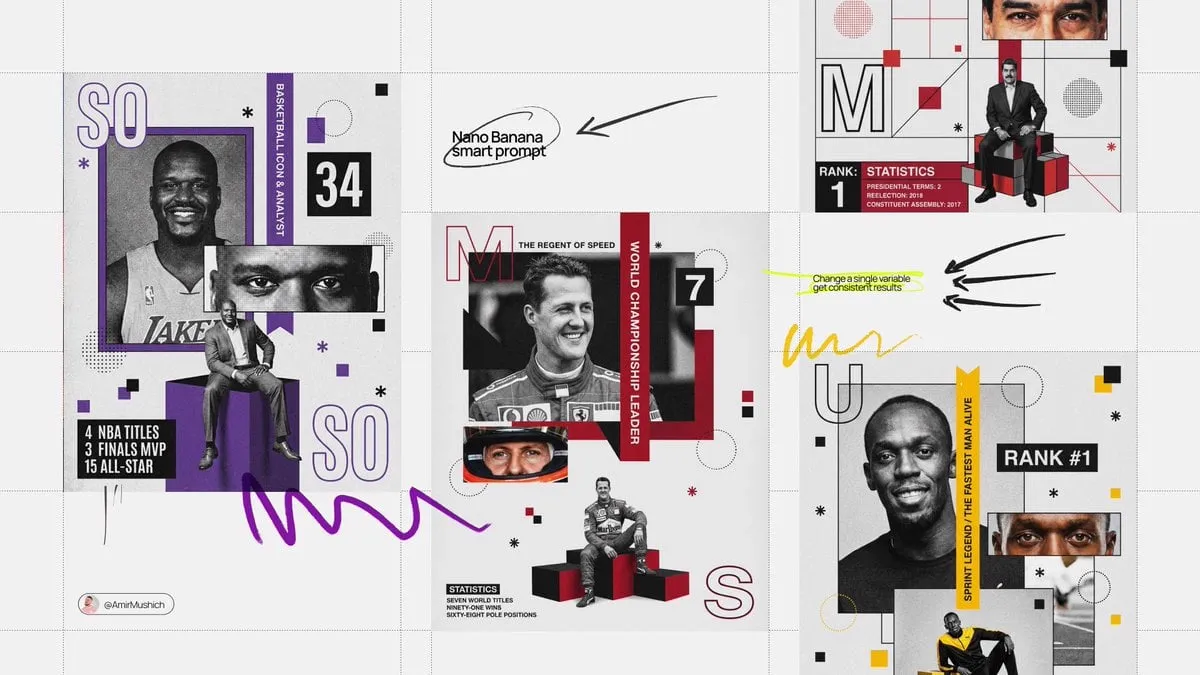
Iterate one variable at a time
When a clip is wrong, change exactly one thing: camera angle, or lighting, or wardrobe, or framing. Changing three variables at once gives you no information about which change mattered, and you will end up regenerating the same mediocre result five times.
Choosing the Right Generation Approach for Each Shot
Not every shot needs the same tool, and mixing approaches is normal in a professional workflow.
| Shot type | Best approach | Why |
|---|---|---|
| Talking head | Image-to-video with a locked portrait, or a dedicated lip-sync tool | Identity and mouth shapes stay stable |
| Establishing shot | Text-to-video | No character continuity to protect |
| Product detail | Image-to-video from a real photo | Preserves the actual product |
| Abstract transition | Text-to-video with strong style keywords | Fast, cheap, visually distinctive |
| Continuous action | Several short clips cut together | Models drift on long takes |
| Real footage insert | Phone shot, lightly graded | Authenticity contrasts well with synthetic shots |
Three decision criteria matter most. First, identity: does the shot contain a character that must be recognizable? If yes, start from a still. Second, duration: does the action need to be continuous for more than four seconds? If yes, break it up. Third, realism stakes: is the shot making a factual claim — a product, a place, a demonstration? If yes, prefer real footage or photo-conditioned generation.
Also think about the mix. A feed made entirely of synthetic footage can feel uncanny over time. Interleaving a real phone shot, a screen recording, or a still image with a slow zoom resets the viewer's perception and makes the generated clips feel more intentional.
Captions, Sound, and Accessibility
Most short-form video is watched with sound off at least some of the time. Captions are not a nice-to-have; they are the primary channel for your first sentence.
- Keep captions in the middle band of the frame, clear of the top and bottom interface overlays.
- Limit each caption card to three or four words and change it on the beat.
- Use a high-contrast treatment, and avoid fonts that are thin at small sizes on a phone screen.
- Auto-caption tools still miss names, jargon, and numbers — review every card before publishing.
Sound design is where AI-generated video most often falls flat, because generated clips frequently arrive silent. Build a small library of whooshes, clicks, and low impacts. Place a sound effect on every cut in the first three seconds; it creates a sense of pace even when the visuals are calm. Underneath, use one music bed at low volume rather than several competing tracks.
For voice, decide between a cloned voice and a synthetic narrator. A cloned voice builds recognition quickly but needs consistent recording conditions for the source audio. A synthetic voice is faster but should be chosen for tone, not novelty. Whichever you use, keep the pace slightly faster than natural conversation and cut every pause longer than about 300 milliseconds.
Accessibility is also a growth lever. Clear captions, legible text, and adequate contrast widen your audience, and describing your own content accurately in the caption text helps search and recommendation systems understand the topic.
Common Mistakes and How to Fix Them
Chasing one perfect video. Spending three days on a single clip is almost always worse than publishing five decent ones. Volume creates data; one polished post creates anxiety.
Front-loading style instead of substance. Neon lighting and cinematic camera moves do not create retention on their own. If the hook is weak, the visuals only make the scroll faster.
Letting shots run too long. Every AI clip has a sweet spot; after it, hands warp, faces drift, and backgrounds breathe. Cut earlier than feels comfortable.
Using the same voice and music for everything. Variety in audio keeps the feed from feeling like a template. Change the narrator's pace or the music genre between formats.
Ignoring disclosure requirements. Many platforms require labels on synthetic or manipulated media. Comply with the rules of each platform you publish on, and keep your own records of how each asset was produced.
Never reading the retention graph. The graph tells you exactly where viewers leave. If the drop is in the first second, the hook failed. If it is at eight seconds, the setup was too long. If it is at the end, the payoff did not land.
Editing to music only. Beat-synced cuts look good but can hide a weak script. Cut to the script first, then let the music follow.
Measuring What Matters and What Does Not
Vanity metrics such as total views can be misleading for a young account because a single lucky post can distort your sense of progress. Track these instead:
- Three-second hold rate. How many viewers stay past the opening hook. This is the clearest signal that your hook text and opening frame are working.
- Average watch time as a percentage. Duration matters less than the proportion watched. A twelve-second clip watched to ninety percent usually beats a forty-second clip watched to thirty percent.
- Shares and saves. These indicate that the video had practical or emotional value, and they tend to predict reach better than likes.
- Profile visits per thousand views. This measures whether the video made people curious about the account, which is the real bridge to a returning audience.
- Production cost in time. Log how many minutes each finished short required. If a format takes four hours and performs the same as one that takes forty minutes, retire it.
Review your metrics weekly, not daily. Daily noise will make you change direction constantly. Weekly patterns will show you which hooks, lengths, and formats deserve more production effort.
FAQ
How many AI-generated clips can I realistically produce in one session?
A focused three-hour session typically yields three to five finished shorts if your idea bank and reference images already exist. The generation itself is fast; the time goes into selection, captions, and sound.
Do platforms penalize AI-generated video?
Reach penalties are usually the result of low retention, not the origin of the footage. What matters is disclosure compliance, originality, and whether viewers stay. Follow each platform's labeling rules and focus on the content itself.
What is the single biggest quality upgrade for AI video?
Starting from a strong still image. Image-conditioned generation controls identity, composition, and lighting in a way text prompts cannot, and it makes rejection cheap.
How do I stop characters from changing between clips?
Use a fixed reference sheet, repeat the same wardrobe and lighting language in every prompt, keep framing similar across shots, and generate all clips for one video in a single session when possible.
Should I use trending audio?
Trending audio can help discovery, but it should not dictate your structure. Build the video around your script, then decide whether a trending track or a neutral bed serves it better.
How long should a generated short be?
Start between fifteen and thirty seconds. That range is long enough for a real payoff and short enough to hold completion rates. Extend only when the script genuinely needs it.
What if a shot keeps failing after several attempts?
Change the approach rather than the parameters: use a real photo as the base, reframe to hide the problematic element, shorten the duration, or replace the shot entirely with a still and a slow zoom. Persistence with a broken prompt wastes the most time of any habit in this workflow.
Is a consistent posting schedule more important than quality?
For a small account, yes, within reason. A predictable schedule produces faster learning, and learning is what turns a random viral hit into a repeatable process. Quality still matters, but consistency is what gives quality something to compound against.
