

Generative video has made the single shot almost free. You describe a scene, wait a moment, and get motion that would have taken a small crew a day to capture. The trouble shows up later — on the tenth video, or the hundredth — when the output starts to feel like it came out of the same mold as everything else in the feed.
That sameness is not a cosmetic problem. It is an attention problem, a brand problem, and increasingly a distribution problem. Platforms reward watch time, and viewers stop watching what they can predict. What follows is a working method for keeping AI video original at volume: where repetition actually comes from, how to build prompts that vary on purpose, how to hold a visual identity steady without freezing creativity, and how to audit a batch before it ships.
Why Generative Video Starts to Look the Same
Every generative model is, at its core, a probability machine. It produces the most plausible result for the words you gave it. That is exactly what you want when you ask for "a rainy city street at night," and exactly what you do not want when you ask for it fifty times in a row.
The training-data echo effect
Most video models learn from overlapping pools of web video, stock footage, and captioned clips. Those pools have strong aesthetic biases baked in: shallow depth of field, warm rim light, slow push-ins, teal-and-orange grading, three-second shot lengths, and a particular kind of glossy commercial polish. When two models train on similar material, they converge on similar defaults. Ask for a generic scene and you get the average of that material back.
Default sampling settings reinforce this. Lower temperature values reward the safest token choices, so camera moves and lighting setups that appear most often in captions win by default. Add a shared habit of reusing prompt templates, and you have a recipe for a feed where forty unrelated creators publish visually identical videos.
The three costs of sameness
The first cost is attention. Predictable visuals are easy to scroll past, and the first two seconds of any short-form video decide whether the rest is watched at all.
The second is differentiation. If your output is indistinguishable from the category average, you are competing on volume alone, which is a race you cannot win against teams publishing daily.
The third cost compounds. A channel built entirely on generic output trains its audience to expect generic output. When you later invest in a distinct look, the audience does not follow — you have to rebuild the habit from zero.
Where Repetition Actually Enters Your Pipeline
Repetition is not one problem. It arrives through four separate layers, and fixing only the most obvious one rarely solves it.
The prompt layer
Identical phrasing yields nearly identical results. The most common culprit is a saved prompt template that gets filled with a new noun but keeps every other word. If your template says "cinematic, ultra detailed, dramatic lighting, 4k, slow motion," your work will look like everyone else's template that says the same thing.
The model layer
Using one tool for every shot is convenient and homogenizing. Different models have different priors — some favor realistic motion, some favor stylized illustration, some handle camera movement better than faces. Treating one model as a universal solution imports that model's biases into your entire catalog.
The assembly layer
This is where most originality is lost and least attention is paid. Cut rhythm, music bed, subtitle font, transition style, thumbnail composition, and voice pacing are all creative decisions. When they are borrowed wholesale from the current trend, the video reads as a genre rather than as a voice, no matter how good the individual shots are.
The distribution layer
Identical captions, identical cover frames, identical opening lines. The algorithm groups videos by signals including thumbnails, audio, and text; if everything you publish shares those signals, your own catalog starts competing with itself for the same audience.
Designing a Prompt System for Deliberate Variation
Originality at scale is a system, not a burst of inspiration. The goal is to vary the right things and hold the rest steady.
Build a prompt matrix
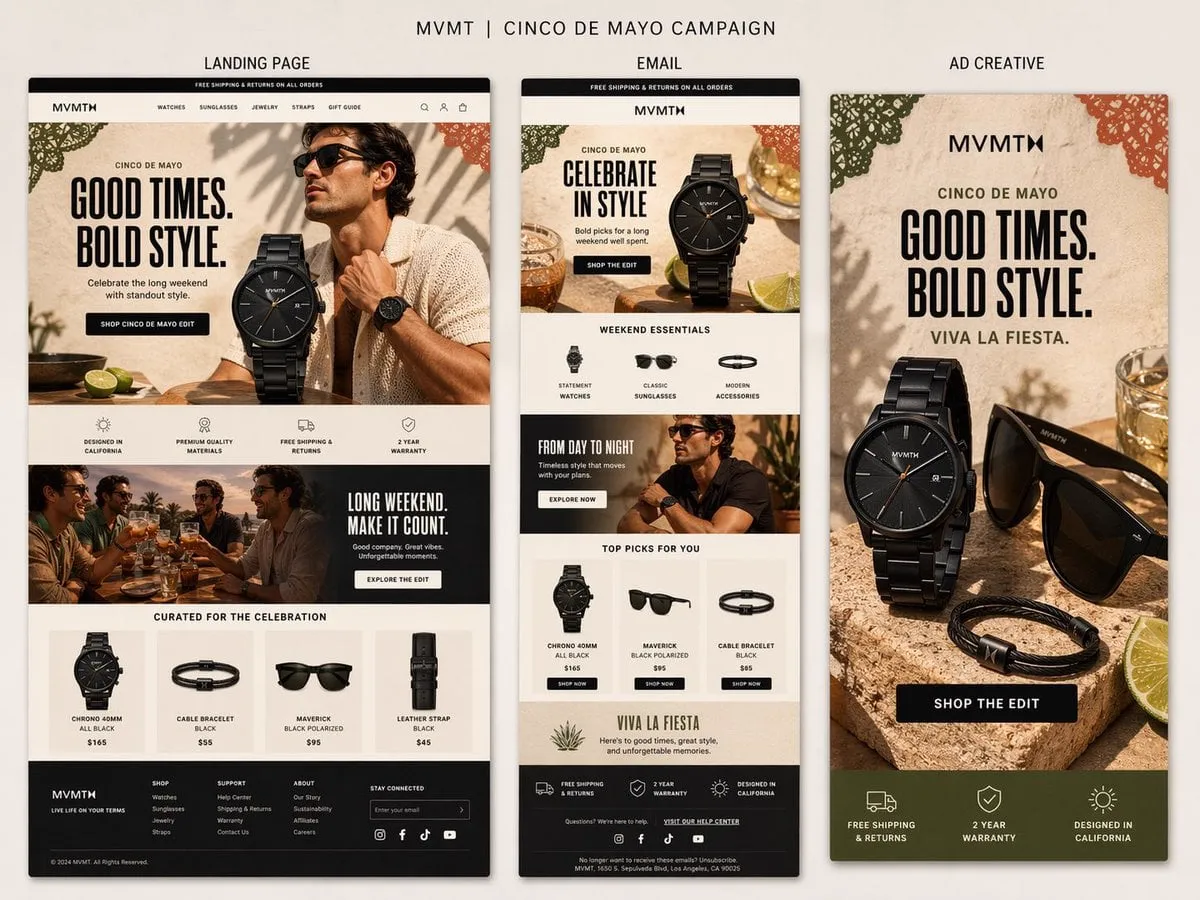
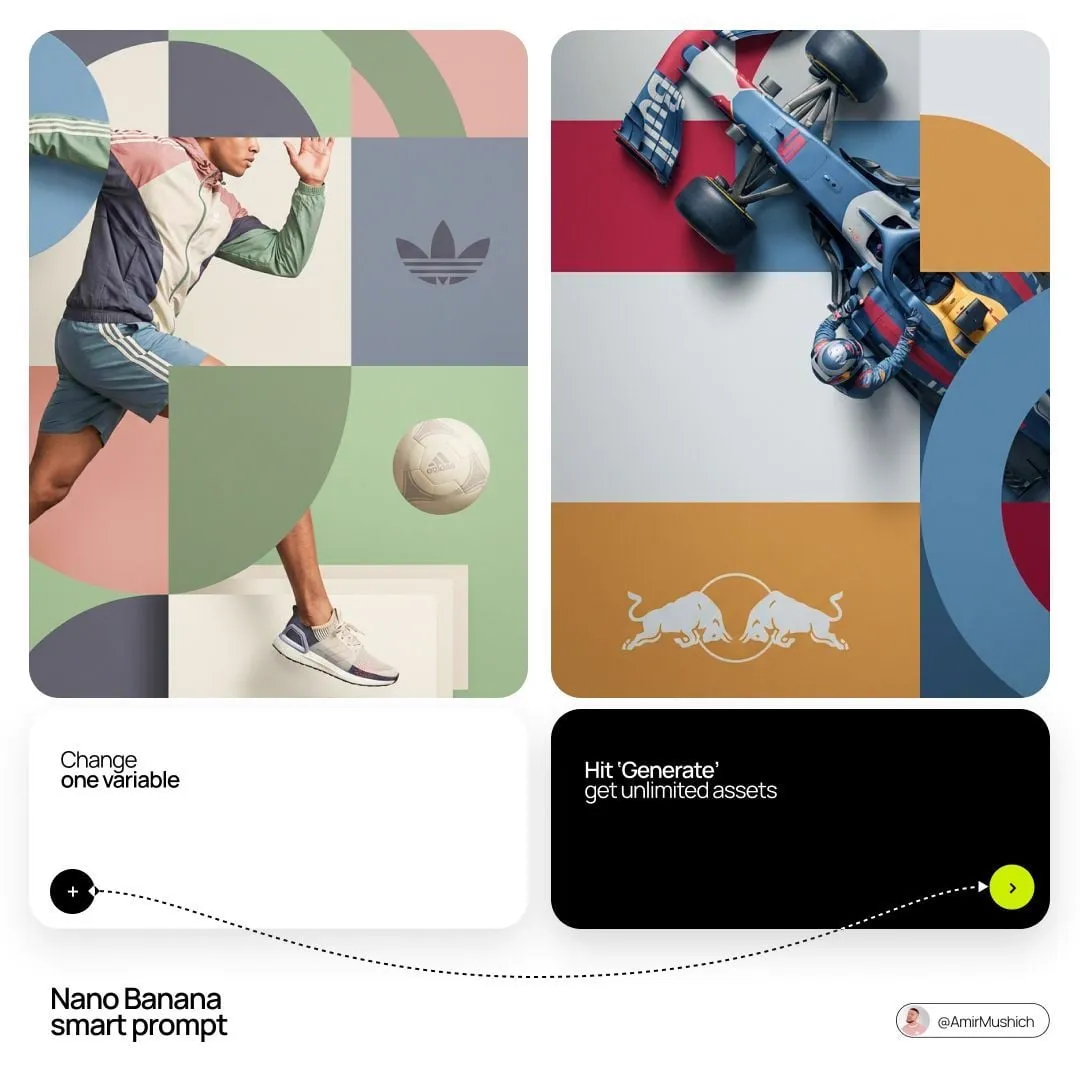
Split every prompt into independent variables: subject, action, environment, time of day, light source, lens character, camera movement, color palette, texture, and pace. Write two to four options for each. Then generate combinations instead of writing new prompts from scratch. Twenty combinations from a well-built matrix will look far more varied than twenty individually "creative" prompts, because the matrix forces you to change structural elements rather than synonyms.
Rotate constraints across a batch
At the start of each batch of videos, pick two or three variables and ban them. No sunsets this week. No slow push-ins. No neon. Constraints feel limiting for about an hour and then become the most reliable originality tool you have, because they push the model away from its strongest defaults and toward choices you would never have made by accident.
Write negatives as carefully as prompts
Most tools accept negative descriptions. Use them for the crutches you are most prone to: "no lens flare, no teal-and-orange grade, no slow-motion, no vignette, no generic orchestral swell." Removing five defaults does more for distinctiveness than adding five adjectives.
Keep a prompt log
Record which combinations produced usable results and, more importantly, why. A prompt log turns luck into a repeatable method. It also prevents the slow drift where a channel's look changes without anyone noticing because no one wrote down what the look was.
Holding Visual Identity Steady Without Freezing Creativity
The opposite failure is worth naming: too much variation produces a catalog with no recognizable identity. The resolution is to separate identity from staging.
Build a reference pack per project
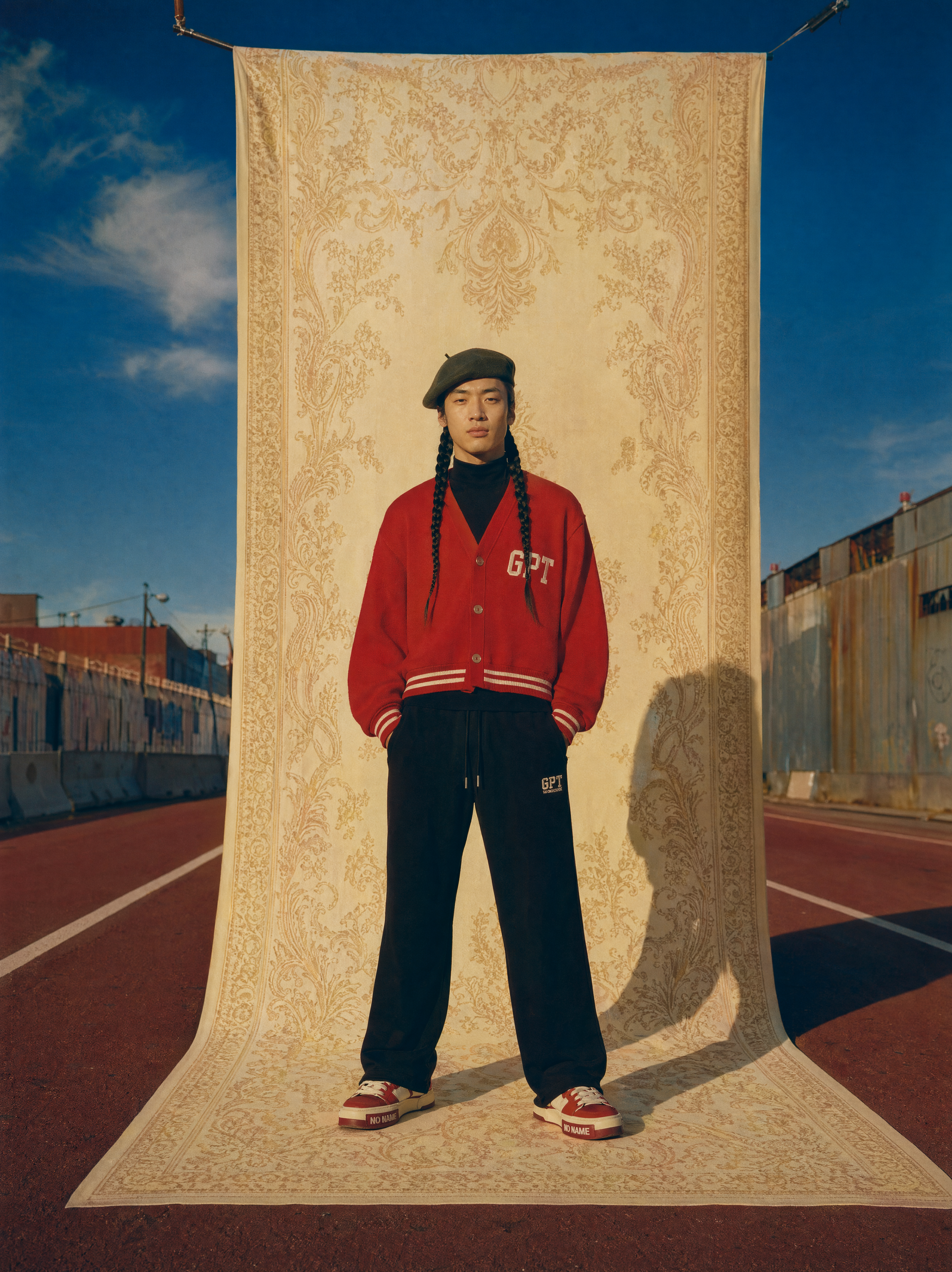
Collect ten to twenty stills covering your main character, wardrobe, two or three locations, and a palette sample. Reference images anchor likeness far more reliably than adjectives, and they cut down the number of takes needed per shot.
Lock the identity, vary the staging
Your character's face, build, wardrobe, and color palette should stay constant across a series. Camera angles, locations, weather, time of day, and framing should change constantly. Most creators do the reverse: they keep the same drone shot and the same street corner while the character drifts between generations.
Keep a style token list
Write down the exact words that describe your look — "matte film grain, muted earth palette, natural window light, handheld medium shots" — and reuse them verbatim. Synonym drift is one of the quietest ways a series loses cohesion. If the token list says "muted earth palette," do not occasionally write "desaturated browns."
Use a character sheet for recurring people
One document listing exact descriptors, reference stills, and exclusions per character. When a shot fails, the fix is almost always a reference problem, not a model problem.
Choosing Models by Shot Type Rather Than Habit
No single tool is best at everything, and matching tools to shot types is one of the cheapest quality gains available.
Use fast models for coverage
Establishing shots, texture inserts, background plates, and B-roll that will be on screen for under a second do not need expensive fidelity. Fast models give you more attempts, and more attempts is how you find the shot that actually works.
Use slower, higher-fidelity models for hero moments
Faces in close-up, dialogue, precise hand interaction, and any shot the story depends on deserve the more capable model. Spending the good render on the two shots people will remember is a better allocation than spreading it evenly.
Match the method to the shot
Text-to-video is best for environments and mood. Image-to-video, seeded from a still you already control, is best for characters and product. Inpainting or local editing is best for fixing one bad element without regenerating a whole scene. Knowing which method fits the shot saves more time than any prompt trick.
Benchmark on a fixed test prompt
Keep a standard prompt and run it through a new tool before committing. Compare motion realism, face stability, prompt adherence, and time-to-useful-result. This takes twenty minutes and prevents weeks of using the wrong tool for your style.
A Step-by-Step Production Workflow
A repeatable sequence removes most of the improvisation that leads to repetitive output.
1. One idea per video. Write the single sentence the video exists to deliver. If it needs two sentences, it is two videos.
2. Shot list in text first. List the shots in words before opening any tool. This is where structure, and therefore distinctiveness, is actually decided.
3. Assemble the reference pack. Pull the stills and style tokens that define this video's look.
4. Generate three variants per shot. One is a lottery ticket, ten is a time sink. Three gives you a real choice.
5. Review motion at low resolution. Motion quality is visible before fidelity is. Approve or reject on movement, not on detail.
6. Select against a rubric. Score each candidate on prompt adherence, motion realism, identity consistency, and whether it looks like something only you would publish.
7. Finish only the selects. Upscale, stabilize, and color only what survived the rubric.
8. Assemble with intentional rhythm. Vary shot length. Cut on action rather than on the beat every time. Let one shot run long if it earns it.
9. Do a real sound pass. Custom ambience, deliberate silence, and a music bed that is not the default trend track will differentiate a video more than any visual upgrade.
10. Run the originality audit. Check for reused hooks, repeated color grades, and interchangeable shots before publishing.
11. Publish with a distinct entry point. A different thumbnail logic, a different first line, a different caption structure.
Quality Control: Auditing a Batch Before It Ships
Volume hides repetition. A batch review catches it while fixes are still cheap.
Automated similarity checks
Perceptual hashing across frames will surface shots that are visually near-identical to earlier work. Text similarity across captions and transcripts catches recycled hooks and scripts. Compare each new video against your last twenty rather than against the internet — your own catalog is where sameness does the most damage.
A human review checklist
Ask four questions of every video. Does the opening two seconds earn the third? Could this have been published by any other creator in this niche without anyone noticing? Are any two shots in this video visually interchangeable? Does the audio carry a voice, or does it sound like every other narration in the category?
Track a repetition rate
Once a month, count how many of your last twenty videos reused a hook formula, a color grade, a camera move, or a music style. A number makes the problem visible; a feeling does not. Aim to keep any single reused element below roughly a third of your output.
Repairing a Video That Already Feels Generic
Sometimes the audit happens after publishing. These are the highest-leverage fixes, in order.
Replace the first two seconds. The hook carries most of the perceived originality, and re-cutting an opening is cheap.
Re-grade the whole piece. A different palette changes how the same footage reads more than most people expect.
Swap one shot. Generate a single replacement using a rotated constraint — a different time of day, a different lens character — and cut it in.
Change the music bed and add one distinctive sound. A specific, slightly unexpected sound effect creates a signature faster than a visual motif.
Re-record the voice with different pacing. Slower, warmer, or more clipped delivery can separate your narration from the category standard.
Add a recurring motif. A prop, a framing choice, a transition, or a title treatment that appears in every video gives viewers something to recognize.
Mistakes That Make AI Video Look Interchangeable
Saving one prompt template and never rewriting it. The template becomes the style, and the style becomes the category average.
Using a single tool for everything, including shots it is measurably bad at.
Accepting default aspect ratio, default grade, and default pacing because they are the path of least resistance.
Reusing the same three music tracks, which makes unrelated videos feel like episodes of one long ad.
Writing scripts with generic openers — "In today's world," "Have you ever wondered" — that signal to viewers that nothing specific is coming.
Skipping sound design. Audio is where most AI video gives itself away, and it is the cheapest layer to make distinctive.
Chasing whatever format is trending this month instead of building a recognizable voice that can absorb trends.
Keeping no archive of what worked. Without a written record, successful choices get lost and defaults quietly return.
FAQ
How many variants should I generate per shot? Three is the practical sweet spot. One gives you no real choice, and beyond about five the marginal gain drops sharply while review time climbs.
Does a more expensive model automatically mean more original output? No. Fidelity and originality are separate. A high-fidelity model running the same default prompt produces the same predictable look, just sharper.
How do I keep a character consistent across many videos? Use reference stills plus a written character sheet with exact descriptors, and reuse those descriptors verbatim. Consistency comes from controlled inputs, not from hoping the model remembers.
Is it bad to reuse a prompt if it works well? Reuse the structural elements — lens, palette, pacing — and vary the subject, location, and staging. Reusing an entire verbatim prompt is what creates a visible template.
How often should I refresh my visual style? Change staging continuously and identity rarely. A look that shifts every few weeks never becomes recognizable; a look that never evolves gets stale.
What is the fastest single fix for a generic-looking video? Re-cut the opening and re-grade. Between them, those two changes affect the most visible parts of the piece for the least effort.
The through-line in all of this is simple: originality in AI video is a process decision, not a model decision. Choose variation deliberately at the prompt and staging layers, protect identity at the character and palette layers, and audit your own catalog before anyone else does. Do that consistently and the tools stop producing the average of everything and start producing something that reads as yours.
