
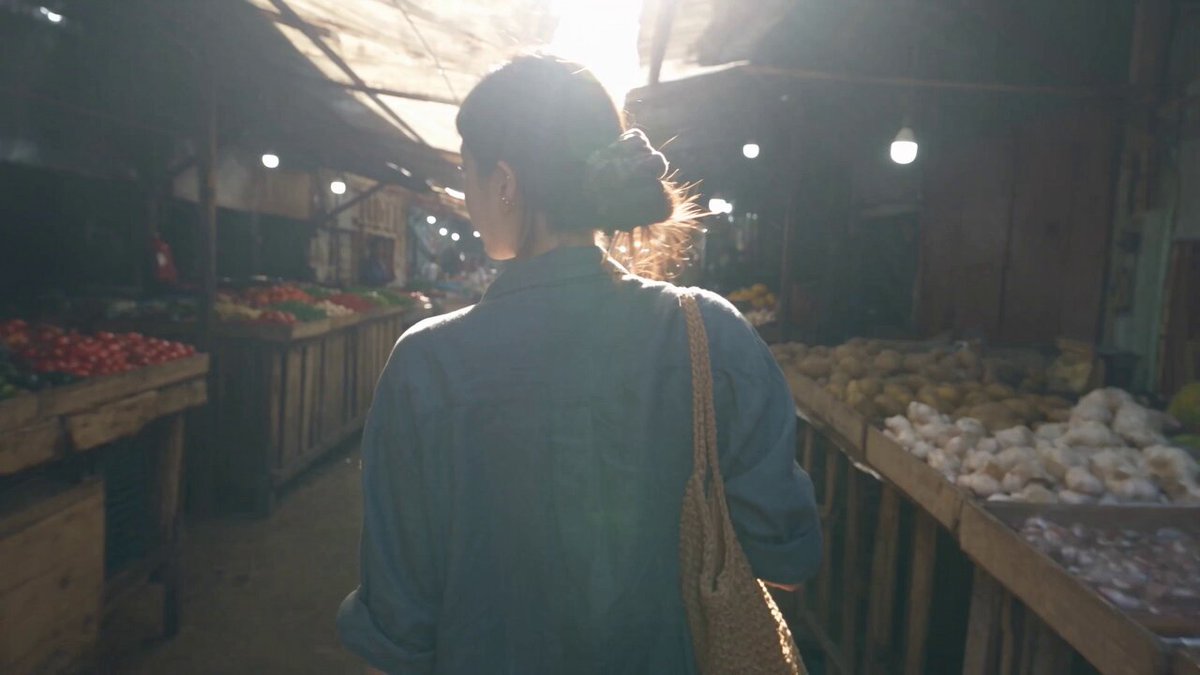

Why Still Images Still Drive Every AI Video Project
Most people arrive at generative media wanting motion. They picture a finished clip: camera push-in, drifting particles, a character turning toward the light. What they discover quickly is that motion cannot rescue a weak frame. If the composition is muddy, the lighting is flat, or the subject's face is inconsistent, animation simply makes those problems move.
That is why image generation remains the load-bearing skill in almost every AI visual pipeline. A strong still gives you three things at once: a locked composition you can judge before spending time on animation, a reference the video model can condition on, and a reusable asset for thumbnails, posters, and social crops. Professionals who work in this space rarely think of images and video as separate stages. They think of a single continuity problem: how do I keep the same world, the same face, and the same light across twenty frames?
This guide walks through the practical side of answering that question. It covers how current generators actually work under the hood, how to choose between them, how to prompt for results you can actually use, and how to build a workflow that survives contact with a real deadline.
How Modern Image Generators Actually Work
You do not need to read research papers to get good output, but a mental model of the machinery makes debugging far faster. When an image comes out wrong, the model is rarely "bad." More often, one specific stage of the pipeline is being fed the wrong thing.
Diffusion and latent space
Most current systems are diffusion models. They learn to reverse a process that adds noise to an image, gradually denoising a random field until a coherent picture emerges. Crucially, they do this in a compressed latent representation rather than raw pixels, which is what makes generation fast enough to iterate on.
The practical consequence: the model does not "draw" your subject. It resolves an image that is statistically consistent with your prompt, your reference images, and its training data. If a concept is rare or contradictory in the training set, the model will quietly substitute something more familiar.
Conditioning: text, image, and control signals
Text is only one input. Modern generators accept a stack of conditioning signals:
- Text embeddings for subject, style, and mood.
- Image references for identity, palette, and composition.
- Structural controls such as depth maps, pose skeletons, and edge maps that lock geometry while letting style change.
- Masking for inpainting and outpainting specific regions.
Learning to combine these is the difference between a hobbyist and someone who delivers on brief. If you need a character to look identical in twelve shots, text alone will drift. You need an identity reference plus a structural control to hold the pose.
Why model choice matters less than you think
Different models have genuine personalities. Some favor cinematic realism, some favor illustration, some excel at legible text inside an image. But prompt structure, reference quality, and post-processing discipline usually account for more of the final result than the logo on the tool.
A useful experiment: take one prompt and run it through four or five generators. Then rewrite the prompt carefully and run it through the weakest of the four. In most cases, the rewritten prompt beats the lazy prompt everywhere.
Choosing a Generator: A Practical Decision Framework
There is no single best tool. There is a best tool for a specific output format, budget of time, and tolerance for setup.
Match the model to the output format
Ask what the final deliverable is before opening anything:
- Photorealistic portraits and product shots reward models with strong skin, material, and lighting fidelity. Look for controlled lighting and low artifact rates around hands, hair, and reflections.
- Illustration, comics, and stylized 2D reward models with strong aesthetic priors. These often need less prompt tuning to look intentional.
- Typography and layout require a model that renders text reliably. If your image contains a headline, test the same string five times and check consistency before committing.
- Concept exploration favors speed over fidelity. A fast, cheap model that produces twenty rough variations is worth more than a slow, beautiful one at this stage.
Consider your hardware and privacy needs
Cloud tools remove the hardware barrier and usually ship with the newest models first. Local pipelines, in contrast, give you total control, offline operation, and no per-image metering, at the cost of setup time and a capable GPU.
If you handle client material that cannot leave your machine, local generation is often the only defensible choice. If you need the newest architecture the week it appears, cloud is unbeatable.
Test with the same prompt across tools
Build a small evaluation set: one portrait, one wide landscape, one object with fine detail, one image containing text. Run the same prompt through every candidate and score the results on subject accuracy, lighting quality, artifact count, and how much editing each requires.
Do not judge on the single best output. Judge on the median. A tool that occasionally produces a masterpiece but usually needs twenty attempts will cost you more time than a tool that reliably produces competent images in three.
Prompting for Photorealistic, Usable Results
Prompt writing is closer to art direction than to coding. You are specifying a shot — subject, framing, light, material, mood — and asking the model to resolve it.
The four-part prompt structure
A structure that works across nearly every model:
- Subject — who or what, with defining attributes.
- Action or state — what they are doing, and how.
- Environment and framing — location, distance, angle, depth of field.
- Light and medium — light source, quality, and the rendering style.
A weak prompt: a woman in a city at night. A usable one: a woman in her thirties in a rain-slicked denim jacket, walking toward the camera on a narrow city street, medium shot at eye level, shallow depth of field, lit by neon signage from the left and a warm streetlamp behind her, 35mm documentary photograph. The second version specifies enough constraints that the model has less room to invent wrongly.
Lighting, lens, and material language
Most amateur AI images fail on light. Vague words like "dramatic" or "beautiful" give the model no anchoring. Instead, name the source and its behavior: soft window light from the right, hard noon sun overhead, practical neon mixed with tungsten, overcast diffused daylight.
Lens language does double duty because it implies perspective and background compression. A 24mm frame feels wide and environmental. An 85mm frame isolates a face and blurs the background. Naming the lens is often faster than describing bokeh.
Material words matter for products and environments: brushed aluminium, matte ceramic, weathered oak, wet asphalt, coarse linen. These descriptors steer texture, and texture is where realism lives.
What to leave out
Contradictions and clutter are the two most common prompt killers. Asking for both "golden hour" and "harsh noon light" produces an averaged mush. Likewise, stacking ten stylistic references dilutes all of them.
Keep your negative list short and targeted. Generic negatives of "bad quality, blurry, low resolution" do very little on modern models. Negatives aimed at a known failure — extra fingers, watermark, visible text, distorted hands — are far more effective.
Bringing a Photo to Life: Image-to-Image and Animation
Turning a still into motion is where most projects either shine or fall apart. The variables are the source image, the identity reference, and the motion instruction.
Preparing your source image
Start with a frame that is already good. Crop to the final aspect ratio before generating, so the model is not composing for space you will cut off. Clean obvious artifacts, straighten horizons, and check that the subject's silhouette reads clearly. Animation amplifies ambiguity: a dark shape against a dark background will smear into noise when it moves.
If you plan to animate, favor slightly wider framing than feels natural. Motion models often need room to pan or drift without clipping the subject.
Character consistency across shots
Identity drift is the hardest problem in AI storytelling. Three tactics help:
- Lock a reference set. Generate one strong hero shot, then use it as an identity reference for every subsequent frame.
- Control the pose structurally. Pair the identity reference with a depth or pose control so the model cannot reinterpret the body language.
- Keep the wardrobe explicit. Repeating a short wardrobe sentence in every prompt prevents unexplainable costume changes between shots.
After a few shots, review them side by side at thumbnail size. If the face reads as the same person in a row of tiny images, it will hold up in motion.
Motion prompts versus motion controls
Some video tools accept only text. Others accept camera controls, motion brushes, or trajectory paths. When controls exist, use them: specifying "slow push in, slight handheld sway, subject turns head left" is more predictable than a poetic description of atmosphere. Save the poetry for your mood, not your trajectory.
A Repeatable Workflow from Concept to Final Frame
The workflow below works for a single social clip or a ten-shot sequence. Adjust scale, not order.
Step 1: Build a compact mood board
Collect six to ten reference images. Group them by what you are borrowing from each: palette from one, lighting from another, wardrobe from a third. Write one sentence per reference describing what it contributes. This converts taste into instructions.
Step 2: Explore at low resolution
Generate quickly and widely. Accept that most outputs will be discarded. Your goal here is to find a composition and a lighting direction, not a finished frame. Save anything that reads clearly at thumbnail size.
Step 3: Refine and upscale
Take the two or three strongest candidates and push resolution. Refine with inpainting rather than regenerating from scratch — fix the hands, clean the background edge, correct the eye direction. Regenerating throws away the composition you already approved.
Step 4: Animate and assemble
Animate only frames that pass your quality check. Generate slightly longer clips than you need so you have handles for cutting. Keep a consistent look across shots using the same palette and light direction, then assemble in your editor with music and pacing before adding any effects.
Quality Control: Judging an Image Before You Animate
Run this checklist before committing compute to motion:
- Does the silhouette read clearly at thumbnail size?
- Are hands, eyes, ears, and teeth anatomically believable?
- Is the light direction consistent across the frame?
- Do reflections and shadows agree with the light source?
- Is there unintended text or a watermark anywhere?
- Does the composition leave room for the camera move you plan?
- Would this frame work as a freeze-frame poster?
If a frame fails two or more checks, regenerate. Fixing a broken frame in animation is significantly more expensive than producing a new one.
Common Mistakes and How to Fix Them
Over-prompting. Long prompts with fifteen style references average into blandness. Cut to the four-part structure and add constraints only when something specific goes wrong.
Ignoring aspect ratio until the end. Generating square and cropping to vertical destroys composition. Set the ratio first.
Chasing perfection in generation instead of editing. Modern workflows assume you will retouch. Learn inpainting and you will halve your generation count.
Animated everything. Motion draws attention. If three shots out of ten are still, the moving ones hit harder.
No shot list. Generating randomly produces pretty images that cannot be edited into a story. Write the sequence first, then generate to it.
Treating one model as universal. Different shots have different needs. It is normal to use one tool for faces, another for environments, and a third for text inside images.
Tools Worth Knowing
| Tool type | Strengths | Best used for |
|---|---|---|
| Cloud text-to-image suites | Newest models, easy iteration | Rapid exploration, client decks |
| Open-weight local models | Full control, offline, extensible | Brand-specific fine-tuning, private material |
| Identity and character tools | Face and wardrobe consistency | Storytelling, recurring characters |
| Structural control tools | Pose, depth, and edge guidance | Matching shots, product mockups |
| Image-to-video models | Natural motion from a still | Short social clips, animated posters |
| Upscaling and restoration | Detail recovery, print-ready output | Final delivery, large-format work |
Most professional pipelines combine three or four of these rather than relying on one. The skill is knowing which stage each tool owns.
FAQ
Do I need artistic training to get good results?
No, but you need visual vocabulary. Learning to name light direction, lens length, and material quality will improve your output faster than any tool upgrade.
How many attempts should a good image take?
With a well-structured prompt and a strong reference, three to five attempts is realistic for a usable frame. Twenty attempts usually signals a prompt or reference problem, not bad luck.
Why do faces change between shots?
Because text prompts describe types, not individuals. Use an identity reference image and repeat wardrobe details to lock the character.
Can I animate any image?
Technically yes, practically no. Frames with clear silhouettes, consistent lighting, and uncluttered backgrounds animate far better than busy, ambiguous ones.
Should I generate at high resolution immediately?
Explore low, refine high. Generating at maximum resolution for every idea wastes time and makes iteration painful.
How do I keep a consistent style across a series?
Fix three variables: palette, light direction, and lens. Change subject and framing freely, but keep those three constant across every shot.
The real shift in this field is not that machines can make pictures. It is that a single person can now hold an entire visual world steady across dozens of frames. That capability comes from process — references, structure, checklists, and honest editing — far more than from any single generator.
