


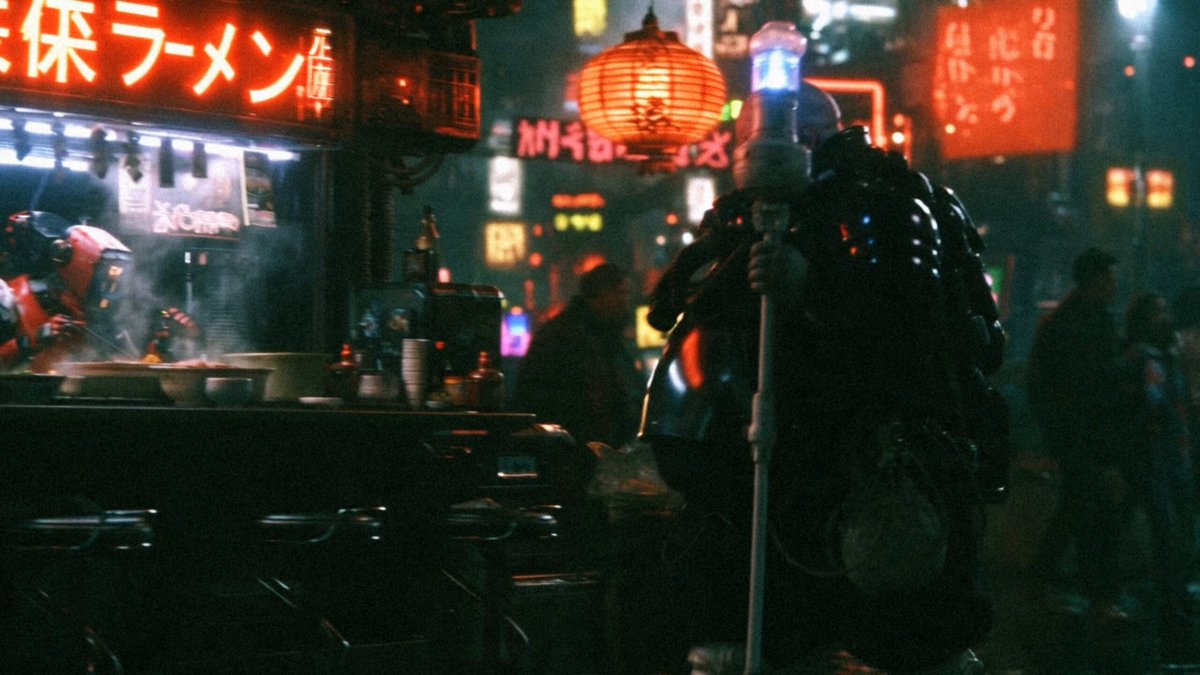
Image-to-video generation has quietly become the most practical corner of the AI video world. Text-to-video is impressive, but image-to-video is useful: you start with a frame you actually like, and the model brings it to life. That single workflow change — from "hope the model understands my words" to "animate the picture I already approved" — is why marketers, indie filmmakers, and social media teams have adopted it so fast.
The hard part is choosing a tool. The market moves quickly, names overlap, and every platform claims to be the best. This guide walks through five image-to-video tools that earned their reputation, what each one does best, and how to match them to a specific job. No hype, no sponsored rankings — just practical decision criteria you can use tomorrow.
What to look for in an image-to-video tool
Before comparing names, build a checklist. Every serious image-to-video tool should be judged on the same five axes:
Prompt fidelity: does the result match what you asked for, or does the model improvise? This matters more than raw resolution. A sharp video of the wrong thing is still the wrong thing.
Motion quality: can the model handle realistic physics — fabric moving, water flowing, a head turning — without warping the subject? Artificial-looking motion is the number one giveaway of AI footage.
Subject consistency: if the person or object appears in multiple shots, do they stay the same? Some tools introduce "character drift" between frames, which kills any project with a repeatable protagonist.
Control: can you steer the camera, the movement, and the duration? Basic tools give you one button; better tools give you handles.
Cost and speed: what does a finished clip cost in both money and waiting time? For high-volume work, a slightly weaker model that returns fast results can beat a masterpiece generator that takes an hour.
Now apply those axes to the current field.
Runway Gen-4 and Gen-3 Alpha Turbo: the cinematic benchmark
Runway has been setting the professional standard for longer than almost anyone else in the space. Its Gen-4 generation is built for production work: strong scene understanding, reliable subject consistency across shots, and camera control that feels like working with a real cinematography tool. If you are producing commercial footage — product spots, brand films, narrative short-form — Runway is the reference point that other tools are measured against.
Gen-3 Alpha Turbo is the speed-oriented sibling. It trades a little refinement for dramatically faster turnaround, which makes it excellent for iterative work: test five variations of a shot, keep the one that works, move on. Teams that combine both get a practical loop: Turbo for exploration, Gen-4 for the final pass.
Where Runway still asks for effort is prompting. It rewards precise, cinematic language — camera position, lens feel, light direction, blocking. Users who paste generic descriptions get generic results. The tool is powerful, but it expects a director, not a tourist.
OpenAI Sora series: narrative depth and realism
Sora changed the conversation about what AI video could look like. The series stands out for physical plausibility and narrative flow: objects cast consistent shadows, reflections behave, and the model can sustain a story across a longer clip instead of falling apart after a few seconds.
For image-to-video specifically, Sora's strength is starting from a strong still and extending it into a world. Feed it a well-composed image and it tends to respect the framing while adding natural motion — subtle parallax, ambient shifts, believable secondary action in the background. That makes it a favorite for concept visualization and for teams that want photorealistic output without visible morphing.
The trade-offs are real: cost per clip is high, and the platform can be picky about what it accepts as input. Sora is a tool for projects where quality is the bottleneck, not budget. If you need fifty quick social variants of one idea, it is the wrong hammer. If you need one unforgettable sequence, it earns its cost.
Kling AI series: speed and prompt loyalty
Kling built its reputation on a different bet: you should be able to see what you asked for. The series is known for strong prompt adherence and fast generation, which makes it a workhorse for content teams that cannot spend a day per clip.
Kling's motion model handles a surprising range of situations — from gentle scene-setting to more energetic camera moves — and it is especially competent with scenes that include people. For creators producing daily video output, the combination of speed, decent fidelity, and reasonable cost has made Kling one of the most-used tools in the market.
The honest limitation is polish. At the very top end of cinematic realism, Kling trails the premium leaders. But for the 90 percent of real-world production that needs good-enough, fast, and repeatable, it is often the smartest choice.
PixVerse V4.5: multi-reference control
PixVerse has grown into one of the most feature-rich platforms, and V4.5 focuses on control. Its headline capability is multi-reference input: you can provide several images and the model fuses them into a coherent scene. That is exactly what you need when a project has an established character, a specific location, and a particular style that must all appear in one shot.
This makes PixVerse a strong pick for franchises and series content — animation teams, comic-to-video projects, branded mascots. Instead of describing everything in words and hoping, you show the model what the character looks like, what the room looks like, and what the style should be, and it assembles the scene with better consistency than prompt-only approaches.
The interface is busier than the minimalist competitors, and there is a learning curve to its parameter set. Creators who want simple buttons may find it overwhelming; creators who need fine-grained control will find it liberating.
MiniMax Hailuo 02: budget-friendly physical realism
MiniMax entered the race with a focus on making physical motion look right at a cost that smaller teams can afford. Hailuo 02 is particularly good at natural human movement and believable interaction with objects — walking, turning, reaching, sitting — which are exactly the motions that cheap models usually butcher.
For solo creators and small studios, Hailuo 02 is often the best cost-to-quality ratio in the market. You can iterate freely without watching your budget disappear, which matters because the path from first draft to usable clip usually involves several attempts.
Its weak spot is complex scenes with many interacting elements. A single person in a room is its comfort zone; a crowd scene with layered action will expose its limits. Plan your shots accordingly and it will serve you well.
How to choose: a practical decision matrix
Stop asking "which tool is the best" and start asking "which tool fits this job". A useful shortcut:
High-end commercial quality with a real budget: Runway Gen-4, or Sora when narrative realism is the goal.
Daily content volume, fast turnaround: Kling or Gen-3 Alpha Turbo.
Established characters and multi-image scenes: PixVerse V4.5.
Tight budget, people-centric motion: MiniMax Hailuo 02.
Series with consistent protagonists across many shots: build your workflow around multi-reference tools from the start, because retrofitting consistency later is painful.
And do not be afraid to run the same still through two tools before committing to a direction — the comparison itself is cheap, and it teaches you how each model interprets motion, light, and reference images faster than any review.
Mixing tools is not a compromise — it is the standard workflow. Use one model for exploration, another for the hero shot, a third for cleanup. The best teams treat the model catalog like a camera kit: each lens for a different job.
A workflow that works regardless of the tool
Whatever you choose, this loop will improve your results more than switching platforms:
Start with a strong still. The image-to-video output is capped by the quality of the input frame. Spend time on composition and light in the still, not on hoping the model will fix it.
Write motion as a second-class citizen. Describe what moves, how fast, and in what direction — then stop. Over-describing motion confuses models; they thrive on one clear instruction per clip.
Lock the look before animating. Color grade the reference image, establish the light direction, and keep the same language in every prompt for a scene.
Generate short, then assemble. Ten five-second clips are easier to control than one fifty-second request. Edit the pieces together with cuts instead of forcing a single take.
Check consistency, not just beauty. A gorgeous clip that doesn't match the previous shot is a failure. Compare subjects, not vibes.
Prompt templates that work for image-to-video
A template is worth more than a thousand tips, because it removes the blank-page problem. Here are three that cover most real jobs.
The character scene: "A [person description] stands in [place], [light description]. The camera [camera move] as [character action]. Keep [subject] exactly as in the reference image." Example: "A woman in a beige coat stands on a train platform at golden hour, long shadows across the concrete. The camera slowly pushes in as she turns her head toward the tracks. Keep the woman exactly as in the reference image."
The product reveal: "[Product] on [surface], [light description], shallow depth of field. The camera orbits slowly from left to right while [product feature action] happens." Product shots need two things models often ignore: a stable object identity and a controlled camera path. Naming both in one sentence is usually enough to get a usable base clip.
The atmosphere scene: "Wide shot of [place], [weather and light description], [one moving element]. Slow drift, cinematic color grade, no people." Atmosphere scenes are where vague prompts fail hardest. Naming the single moving element — fog, curtains, waves, rain — gives the model a job instead of a vibe, and the difference shows up immediately in the output.
One rule applies to every template: mention the reference image explicitly. Phrases like "as in the reference", "matching the input image", or "same subject as the still" measurably reduce drift, because they tell the model that identity is locked rather than up for reinterpretation. Templates work because they make intent repeatable — and repeatability is what turns a lucky generation into a reliable workflow.
FAQ
Is image-to-video better than text-to-video? For most production work, yes. A curated still gives the model an anchor, which dramatically improves consistency and composition. Text-to-video is better for pure exploration — seeing what might be possible.
Which tool is easiest for beginners? Kling and Hailuo are the most forgiving, with simple interfaces and fast results. Start there to learn the craft, then graduate to Runway or PixVerse when you need finer control.
Can I keep the same character across different videos? Yes, if the tool supports reference images and you reuse the same references. The key is consistency of input: same angles, same style of still, same description. Expect some drift and plan retakes.
How long should a generated clip be? For social formats, five to ten seconds is the sweet spot. Longer clips cost more and increase the chance of artifacts. Cut, don't stretch.
Do I need a powerful computer? No. All the tools in this guide are cloud-based. You need a decent browser and patience, not a GPU.
How many takes should I expect per usable clip? With a solid reference image and one clear motion instruction, budget two to four attempts per clip. The first attempt is rarely perfect, but it usually shows the direction to correct. If the fourth attempt is still wrong, change the prompt or the reference, not the settings.
Should I use the same tool for everything? No. Mature teams keep two or three tools: one for exploration, one for hero shots, one for volume. Matching the tool to the job beats mastering a single tool that is wrong for half your work.
The image-to-video market rewards a simple habit: decide what you want before you prompt. The tools have gotten remarkably good at animating what you show them. The remaining skill gap is yours — knowing which frame deserves to move, and which tool will move it the way you imagine.
