
If you create videos for a living — or even just for a YouTube channel, a brand page, or a regional-language account — the tools you pick in 2025 will decide how fast you ship and how consistent your output looks. Indian creators have a particular advantage right now: the market has moved beyond one-size-fits-all western tools, and there is a growing set of text-to-video and image-to-video models that handle Indian faces, clothing, festivals, and multilingual prompts surprisingly well.
This guide walks through what matters when choosing AI video tools for Indian creators in 2025: model quality, speed, cost, regional-language support, and character consistency. You will also get a practical decision framework, example workflows, and answers to the questions creators actually ask.
Why the AI Video Landscape Changed for Indian Creators
India is one of the largest digital content markets in the world, and the shift is visible in the numbers. The Indian digital content market was already sized above twelve billion dollars in 2024, and analysts project it will keep compounding at roughly twenty-five percent a year through 2027. Short-form video is the main driver: reels, shorts, and short vertical clips are now the default format for discovery on every major platform.
That demand created a very specific problem. Generic prompts tuned for English-language western audiences often produce visuals that feel foreign to Indian viewers. A model trained mostly on western stock footage will give you a wedding scene with the wrong kind of jewelry, a street scene with the wrong signage, and accents in AI-generated voices that break immersion. The tools that solve this problem — either through multilingual prompt understanding, regional training data, or strong style control — are the ones worth paying for.
The second driver is speed. Content consumption is so fast that weekly trends now have a shelf life measured in days. By the time a creator finishes a week-long edit, the moment has passed. AI video tools compress the cycle from idea to publish from days to hours, which is why speed and quality are no longer trade-offs; they are the two sides of the same competitive advantage.
What to Look for in an AI Video Tool
Before comparing specific tools, it helps to define the criteria. Every serious tool in 2025 should be evaluated on five axes:
- Output quality: sharpness, motion naturalness, and how well the model avoids warping hands, faces, and text.
- Speed: time from prompt to first usable render, and whether the tool queues jobs or renders in parallel.
- Control: the ability to influence composition, camera movement, and framing rather than accepting whatever the model decides.
- Consistency: keeping the same character, product, or style across multiple shots and scenes.
- Cost per useful render: the actual price of iterating, not just the price of the first render.
Creators who ignore the last point often discover that a cheap tool is expensive, because they burn hours regenerating failed shots. The tools below are grouped by how they perform on these axes, with notes on what each one is best suited for.
The Foundation Models Worth Knowing
The quality of any AI video tool is largely the quality of the underlying model. In 2025, the field has consolidated around a handful of model families that define what is possible.
Kling AI Series
Kling, developed by Kuaishou, has become the default reference for many creators because of its strong motion quality and its ability to handle complex camera movements. The Kling 2.x generation improved character consistency and added better support for longer sequences. For Indian creators, Kling's strength is its understanding of non-English prompts and its tolerance for descriptive, phrase-level input that does not follow strict English grammar. It is a solid first choice for narrative videos, music videos, and any project where the camera needs to feel intentional.
MiniMax Hailuo
Hailuo is known for cinematic lighting and emotional acting in generated characters. It tends to produce shots that look like they were graded by a professional colorist, which is useful for brand content and advertisements. Its weakness has historically been precise prompt adherence on complex details, so it rewards creators who keep prompts focused on mood and motion rather than exact object specifications.
Runway Gen-4
Runway's Gen-4 line remains the benchmark for video-to-video work and for professional pipelines that need predictable output. It excels at maintaining style and character across shots, which makes it popular with studios and agencies. The trade-off is cost and access: Gen-4 is not the cheapest option, and its power is best used when you have a defined visual language you need to repeat across a campaign.
OpenAI Sora
Sora is the model everyone references for physical plausibility. It understands how objects interact, how light falls, and how a scene continues beyond the frame, which gives its output a coherence that earlier models lacked. Access has expanded through partner integrations, but it is still not a casual tool. Use it when the scene needs real physics: pouring liquids, falling fabric, weather, crowds.
Flux Series for Visuals
The Flux family, especially Flux Pro, is best known for images but increasingly powers video pipelines that need photorealistic stills as keyframes. Its non-destructive training approach keeps high fidelity, and it is an excellent choice for product shots, portraits, and any project where the first frame determines the rest of the video.
Luma Ray and Pika
Luma Ray 2 and Pika are the tools to reach for when you want fast iteration with cinematic motion. Luma is strong on camera control and smooth movement; Pika is popular for quick effect-driven clips and its playful interface. Neither replaces the heavyweights for long narratives, but both are excellent for daily output where speed matters more than absolute fidelity.
Cost-Effective and Asia-Focused Options
Not every project needs a premium model. For volume production — faceless channels, ad variations, social media tests — cost per render matters more than maximum quality. Two patterns are worth knowing.
First, many platforms offer distilled or turbo variants of their flagship models. These render faster and cost less per generation while retaining most of the visual quality. They are the right choice for A/B testing, rough cuts, and anything that will be re-edited anyway.
Second, Asia-focused models often lead on regional relevance. Models trained with a global distribution of training data handle Indian festivals, architecture, and clothing better than models whose training data skews western. If your content is explicitly regional — a regional-language explainer, a Diwali campaign, a local brand story — test the Asian model families before assuming the western flagships will do better.
A practical rule: use premium models for hero content that represents your brand, and use fast, cheap variants for everything that is experimental, time-sensitive, or destined for a short lifecycle.
The Consistency Problem and How to Solve It
The biggest complaint about AI video in 2025 is no longer "it looks fake." It is "the character changed between shots." Maintaining the same face, outfit, and style across a multi-scene video is the hardest technical problem in the field, and every serious creator needs a workflow for it.
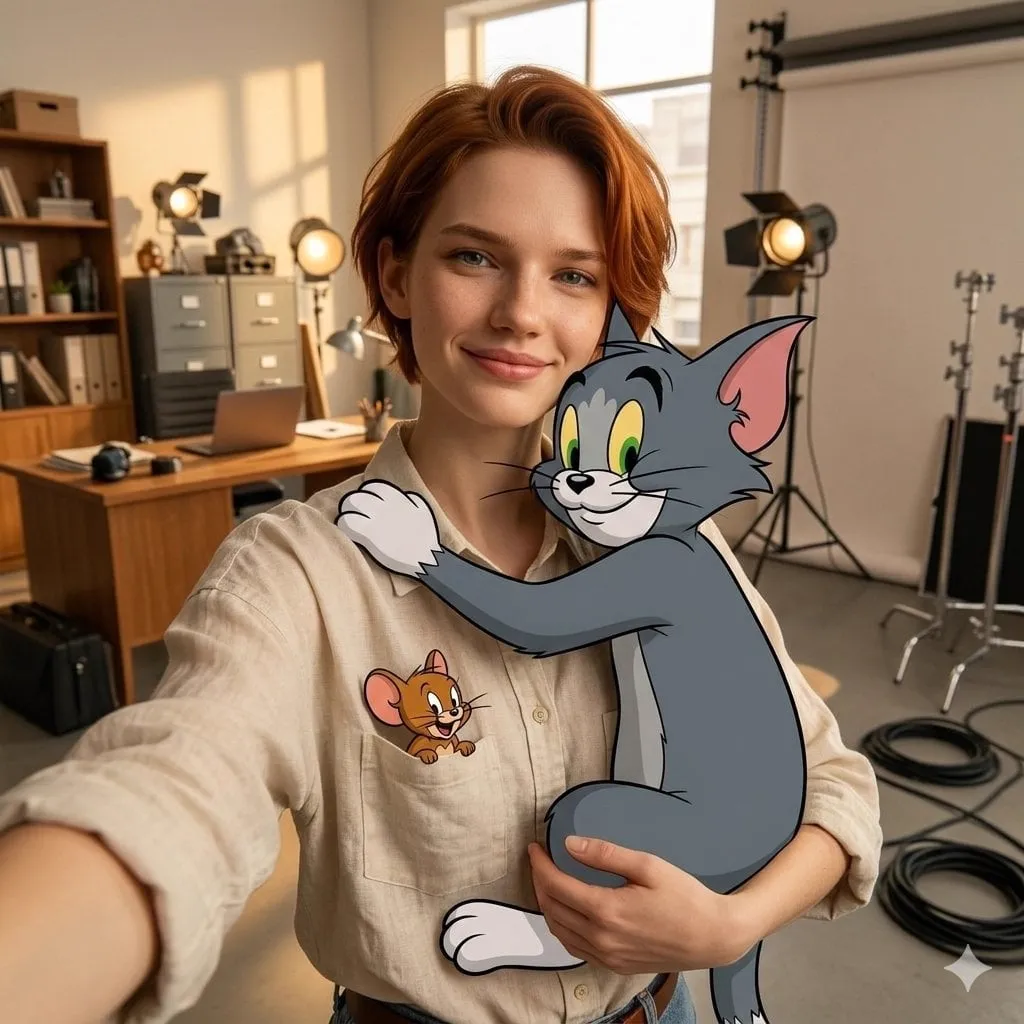
The most reliable approach is reference-based generation. Instead of describing a character with words, you provide one or more reference images and instruct the model to keep the subject identical. This technique, sometimes called multi-image fusion or reference conditioning, works especially well for:
- Explainer videos where the same presenter appears in every scene
- Product videos where the packaging, label, and color must stay exact
- Series content where a recurring character needs to remain recognizable across episodes
- Brand campaigns where the visual identity cannot drift
The workflow is simple: generate or source a clean reference image first, then build every scene from that reference. Keep the reference consistent — same lighting direction, same framing — because the model will treat it as ground truth. When you need a character in a new outfit, generate a new reference rather than hoping the model extrapolates correctly.
Regional Language and Cultural Relevance
Multilingual support is where 2025's tools separate themselves. The best models now accept prompts in Hindi, Tamil, Telugu, Bengali, Marathi, and other Indian languages and understand the cultural context behind the words. That matters far more than it sounds: a prompt about a "traditional wedding" generates a different scene depending on whether the model knows about north Indian versus south Indian ceremonies.
Three practical advantages follow from choosing multilingual-capable tools:
- Faster ideation: you can think and write prompts in the language you actually work in, rather than translating into English and losing nuance.
- Better visuals: culturally aware models render the right jewelry, clothing, architecture, and color palettes without you specifying every detail.
- Stronger localization: when you expand a campaign across regions, you can regenerate the same story with locally appropriate visuals instead of reshooting.
If you work in regional languages, test each tool with a real prompt in your language before committing. Model documentation often understates how well (or poorly) non-English prompts are handled.
Audio: Music and Sound Effects
Video without sound is only half the job. The 2025 toolchain includes AI-generated music and sound effects that match the mood of the generated footage, and this matters more for short-form than for long-form. A reel with a trending sound performs differently from the same reel with generic background music.
The best workflow is to generate the visual first, identify the emotional tone, then generate or select audio to match. Many tools now support generating a voiceover in Indian languages, which is a huge unlock for explainer content. Quality varies widely by language, so listen critically and test with your actual script rather than relying on demos.
A Practical Workflow for a Week of Content
Here is a repeatable workflow that combines the tools above for consistent weekly output:
- Plan the week: decide the number of videos, the platform (reels, shorts, long-form), and the target language for each.
- Build references: create or collect reference images for any recurring character, presenter, or product.
- Draft prompts: write prompts in your working language, including the reference image, the camera movement, the mood, and the duration.
- Generate in batches: use fast models for the first pass to check composition, then switch to premium models for the final hero shots.
- Review for consistency: check faces, text, and product details frame by frame before rendering final versions.
- Add audio: generate or select music, sound effects, and voiceover; mix to platform loudness standards.
- Publish and measure: track retention and engagement per video, and feed the winners back into next week's prompt library.
The point of the workflow is that the expensive part — prompt engineering and reference building — is done once and reused. The marginal cost of each additional video drops sharply after the first few.
Decision Criteria: Which Tool Should You Choose?
If you are still unsure, use these rules of thumb:
- New creator testing formats: start with a fast, cheap model and learn prompting before spending on premium tiers.
- Faceless or volume channels: prioritize cost per render and batch processing; distilled variants are your friend.
- Brand and product work: prioritize consistency features and reference conditioning, even if it costs more.
- Narrative and cinematic content: prioritize motion quality and camera control; test Kling and the Gen-4 class of models.
- Regional-language content: test multilingual prompt support first; a tool that misreads your language is useless no matter how good its visuals are.
The right tool is the one that fits your specific mix of quality, speed, cost, and language needs — not the one with the most impressive demo.
Frequently Asked Questions
Do I need a powerful GPU to use these tools?
No. Nearly all of the tools in this guide run in the browser or through cloud APIs. Your hardware matters mostly for editing the final output, so a mid-range laptop with a decent display is enough to start.
How long does a typical AI video take to generate?
It depends on the model and the length. A five-second clip can render in under a minute on fast models; a longer cinematic sequence can take several minutes or run as a background job. Plan for iteration time rather than a single render.
Can I use AI video tools commercially?
Most providers allow commercial use, but the license terms differ. Check the commercial rights for each tool and model, especially for client work and advertising, where the stakes are higher.
Are AI-generated videos good enough for paid ads?
Yes, for many product categories, provided you maintain consistency and quality. Test against your actual conversion metrics rather than judging purely by aesthetics; some audiences respond well to clearly AI-produced creative, especially in short-form.
What is the fastest way to learn?
Pick one tool, generate twenty clips in a week with real projects, and document which prompts worked. Prompt libraries built from your own failures are worth more than any tutorial.
