

The free tier era of AI video generation
A few years ago, generating a video with artificial intelligence required access to research labs or deep technical knowledge. Today, anyone with a browser can type a prompt and receive a moving image within minutes, often without paying anything. The free tier has become the front door of the AI video industry: platforms use it to attract creators, let them test the technology, and hope they stay long enough to upgrade. For creators, this is an extraordinary opportunity, but it comes with a catch: free tiers vary wildly in what they actually allow, and the differences are rarely visible in the marketing materials.
This guide compares the free options available in the market, with a particular focus on PixVerse and the alternatives it competes with. We will look at what "free" really means, how output quality differs between tiers, which restrictions hurt the most, and how to choose the tool that fits the way you actually create.
What free actually means in AI video
The word "free" hides very different business models. Understanding them helps you avoid surprises after you have built a workflow around a platform.
Limited generations per day
The most common model is a daily or monthly allowance: you get a certain number of generations before the tool asks you to wait or pay. This is generous enough to experiment and perfect for beginners, but frustrating when you are iterating on a real project and run out at the worst moment. Some platforms reset the allowance daily, others weekly, others monthly: check the reset cycle before relying on a tool for production.
Watermarking
Some platforms give you unlimited generations but stamp every video with a watermark. The watermark makes the output useless for professional use, which is precisely the point: the platform is betting that, when your channel grows, you will pay to remove it. If you are producing content for a client or a brand, always check the watermark policy before you invest time in a workflow.
Reduced resolution and length
Another common restriction is technical: free tiers often cap resolution at 720p or 1080p, limit clip length to a few seconds, or reduce the number of models available. These limits matter less for social media short-form content and a lot more for anything destined for a big screen or a professional portfolio.
The important takeaway is that free tiers are not all equal. Two platforms can both claim a free plan and offer completely different experiences. The right question is not "is it free?" but "what does the free plan let me do, and what does it force me to give up?"
PixVerse at a glance
PixVerse has earned its place in the conversation by doing one thing well: producing aesthetically strong results quickly, especially for short, loopable clips. Its free tier has been a genuine on-ramp for thousands of creators who would never have paid to test an unknown technology. The model family has improved steadily, with each new version bringing better prompt understanding and more consistent motion.
Where PixVerse shines is accessibility. The interface is straightforward, the generation speed is competitive, and the results are immediately shareable. For a creator experimenting with AI video for the first time, it is one of the most frictionless entry points available.
Where it is weaker is in the areas that matter for professional production: deep control over camera movement, long-form coherence across multiple shots, and the advanced features that separate hobbyists from professionals. Those features exist, but they tend to sit behind the paid tiers. If you are testing the technology, PixVerse is excellent. If you are building a production pipeline, treat it as one option among several rather than the obvious default.
The field: what the other major players offer
Runway
Runway is the veteran of the group and has built its reputation on cinematic quality and creative control. Its models are known for strong visual fidelity and a suite of editing tools that go beyond generation: inpainting, motion control, and a genuinely useful timeline for assembling shots. The free tier is designed as a trial rather than a lifestyle: enough to test, not enough to produce at scale. For creators who care about a cinematic look and are willing to learn a more complex tool, Runway remains a benchmark.
OpenAI Sora
Sora entered the scene with the strongest narrative understanding of any model: it handles complex scenes, multiple characters, and physical interactions better than most competitors. The trade-off is accessibility: the tool is not always available to everyone, and when it is, the free allowance tends to be small. For the moment, Sora is best understood as a glimpse of where the technology is heading rather than a workhorse for daily production.
Kling
Kling comes from a different school of thought and has become famous for motion quality and physical realism. Its models handle movement with a fluidity that surprises people who expect AI video to look stiff. It has also been aggressive with free access in various regions, which has made it a favorite of the testing community. If your content depends on believable motion, Kling deserves a serious look.
The open-source option
Open-source models matter in this comparison because they redefine the meaning of free. With tools like the open-weights models that run locally, you pay no per-generation fee: you pay in hardware and technical effort. A good local setup requires a capable graphics card and some willingness to configure software. For creators who generate at high volume, the math can work in favor of local generation despite the setup cost. The quality gap with commercial models has narrowed considerably, though the latest commercial releases still lead on ease of use and polish.
How to evaluate a free tier like a professional
Instead of judging a tool by its marketing page, run a structured evaluation. Here is a checklist that takes less than an afternoon and produces reliable answers.
Test output quality on your own prompts
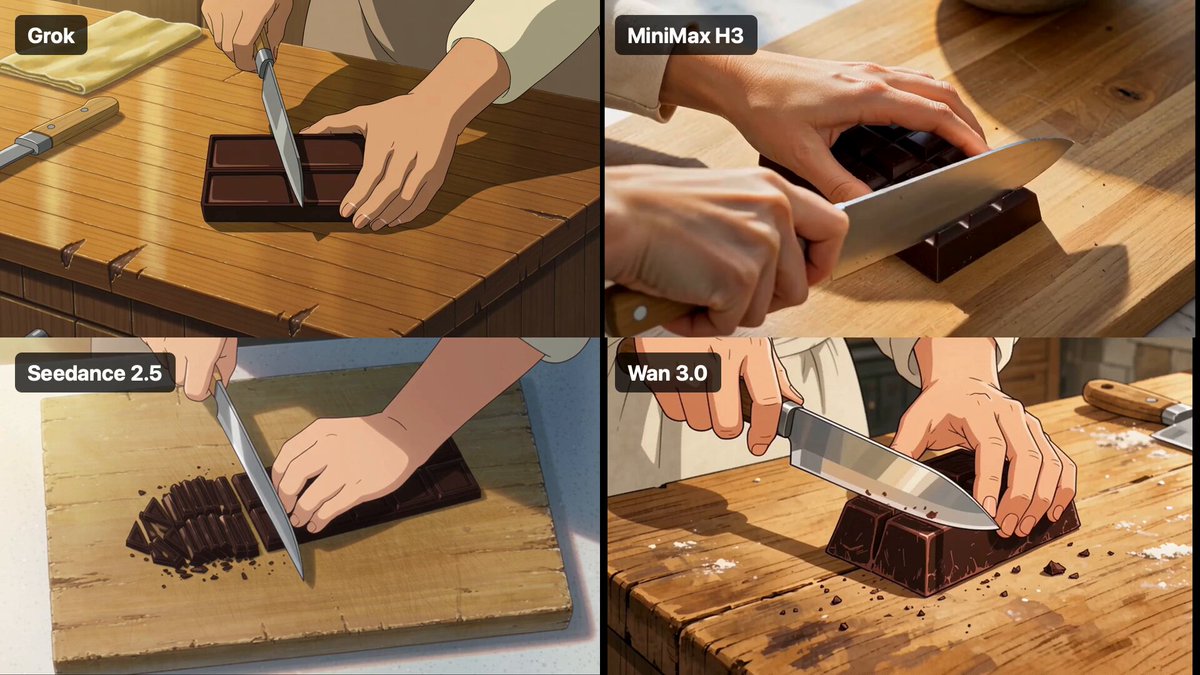
Never judge a model by its showcase videos. The showcase clips are selected from thousands of attempts; your results will be more representative. Write three prompts that match the content you actually produce and run them on every candidate platform. Compare the results side by side: same prompt, same length, same style. This is the only honest comparison.
Check the restrictions that affect your workflow
Make a list of your production needs: resolution, clip length, number of generations per day, watermark policy, commercial usage rights, model variety. Then check each platform against the list. A tool with perfect quality and a watermark is worse for you than a tool with good quality and no watermark, if you need clean output for clients.
Look for consistency and control
The features that matter in production are rarely the ones advertised: temporal consistency across shots, character coherence, camera control, style adherence. Free tiers often restrict exactly these features, so check whether your core workflow survives on the free plan or requires an upgrade.
Consider the ecosystem
A platform is more than its model: it is the editor, the asset library, the community, the export options, the API. A slightly weaker model inside a strong ecosystem can be more valuable than a stronger model with no ecosystem around it. Think about your entire workflow, not just the generation step.
Choosing the right tool for your use case
There is no universal winner, but there is a right tool for each profile. Here is how I would decide.
If you are a beginner testing the technology, start with the most accessible tool: the one with the simplest interface and the most generous free allowance. Your goal is to learn what prompts work and what your taste is, not to optimize the last 10 percent of quality.
If you produce short-form social content at high volume, prioritize generation speed, vertical format support, and a free allowance that survives daily posting. The marginal quality difference between models matters less than your ability to iterate quickly.
If you produce brand or client content, quality and control come first. Look for camera control, consistent characters, clean output without watermarks, and clear commercial usage terms. In this category, paying for a tier is often justified: it is a production cost, not an expense.
If you generate at very high volume and have technical skills, evaluate local open-source options. The fixed hardware cost can beat per-generation fees, and you get unlimited iterations without watching a counter.
Practical tips for getting more from free tiers
Even within a limited allowance, workflow matters. A few habits multiply the value of every generation.
Iterate on prompts, not on generations. Instead of generating twenty random versions, refine the prompt between attempts: each generation should teach you something about what the model responds to. Keep a small prompt journal: record what worked, what failed, and why.
Use image-to-video to control the starting point. Starting from an image you already like gives the model less room to invent and produces more consistent results. This technique also saves generations, because you discard fewer outputs.
Batch your work. Plan your content in batches: write all the prompts, generate all the drafts, then review everything together. This is more efficient than switching between prompt writing and generation, and it gives you a better overview of what works.
Export in the best quality allowed. Even if you only need a small final video, generate at the highest resolution your tier permits and downscale later. You cannot recover quality that was never generated.
The future of free AI video
The free tier landscape will keep shifting. Competition is intense, models improve every quarter, and platforms use free access strategically to build their user bases. Two trends are worth watching.
First, the quality of the worst free outputs is rising: as base models improve, even entry-level generations look better. Second, the features that were once premium, such as camera control and character consistency, are slowly moving into lower tiers as the technology gets cheaper to run. For creators, the practical consequence is simple: revisit your tool choices regularly. The tool that was best six months ago may no longer be the best today, and the free tier that seemed restrictive may have quietly improved.
Signs that you have outgrown the free tier
The free tier is a starting point, not a destination, and the moment to upgrade is usually clear if you are honest about your workflow. A few signals tell you the free plan is now costing you more than a subscription would.
The first is waiting: if you regularly run out of generations in the middle of a productive session, the allowance is the bottleneck, not your process. The second is watermarks: if you have started producing client work or brand content, every watermarked export is either a lost opportunity or unpaid labor. The third is missing control: if the features your projects now require, camera control, character consistency, longer clips, live behind a paywall, you are no longer evaluating the tool, you are being evaluated by its free plan.
There is no shame in upgrading when the math works. Think of it as a production cost: if the paid tier removes a daily frustration and unlocks work you are already doing, it pays for itself. The discipline is to upgrade for workflow reasons, not because a marketing page convinced you, and to keep testing alternatives even after you pay, because the market changes quickly and loyalty to a tool is never a strategy.
FAQ
Can I produce professional videos entirely with free tools?
Yes, especially for short-form content. The limits are usually volume and control rather than basic quality. For long-form or brand-critical work, a paid tier is often justified.
Is PixVerse the best free AI video generator?
It is one of the best entry points, but "best" depends on your use case. Test it side by side with Runway, Kling, Sora, and open-source options on your own prompts before deciding.
Do free tools own the videos I create?
Policies differ. Most platforms grant you rights to the content you generate, but some restrict commercial use or claim broader rights. Read the terms for the specific platform before using output commercially.
How many videos can I generate per day on a free plan?
It varies widely, from a handful to several dozen, depending on the platform and its current policy. Check the plan details before building a production schedule around it.
Should I pay for an AI video tool?
Pay when the free tier costs you more than the subscription: when you waste time waiting, when watermarks block professional use, or when the missing features directly limit your work. For a serious creator, a paid tier is a tool, not a luxury.
How do I know a model is good if I am new?
Generate the same prompt on several platforms and compare. The model that best matches your intent, most consistently, is the one for you. Ignore hype and look at outputs with your own eyes.
