

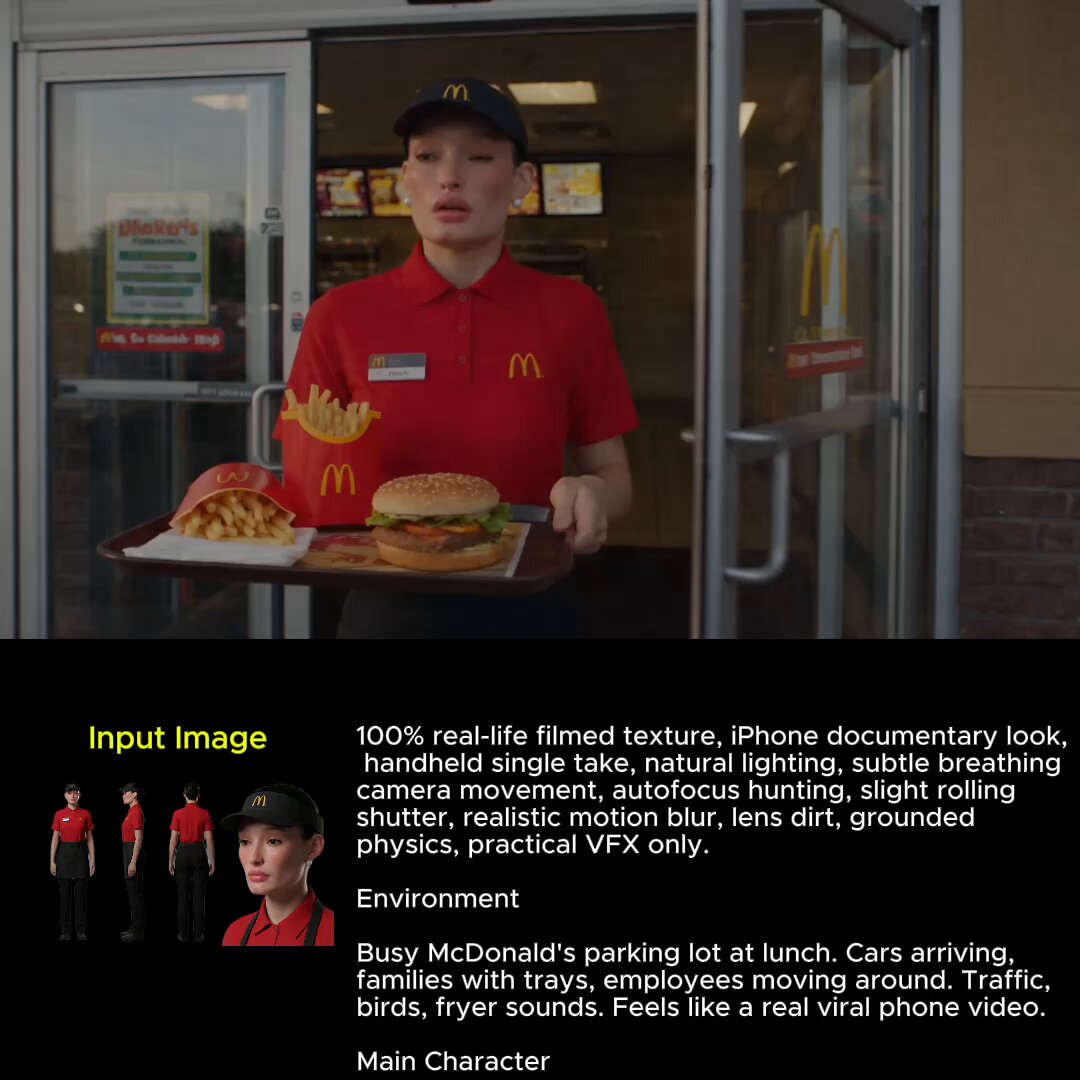
The visual content revolution reached a turning point in 2025: video production is no longer gated by render time or local hardware, and the question creators face has changed. It is no longer "can I generate video with AI?" but "which model should I use for this specific job?" The honest answer, after months of real production work, is that no single model is the right answer. The winning approach is a portfolio: a curated set of models, each chosen for a specific kind of task, managed inside one workflow. This playbook explains how to think about the model landscape, how to match models to jobs, and how to build a repeatable content production system around them.
Why Model Specialization Changes Everything
The core insight of the current AI video landscape is that models specialize. Some are exceptional at coherent motion, others at interpreting complex narrative prompts, others at fast, cheap iteration. Trying to use one model for everything is like using one lens for every shot: it works, badly, most of the time. Creators who treat the model library as a toolkit, selecting the right tool per scene, consistently produce better work at lower cost.
Specialization also protects you from the single biggest risk in this space: the hype cycle. A new model launches, everyone rushes to it, and a month later the consensus shifts. If your workflow is not tied to any one model, if you can swap models behind the same prompts and references, model churn becomes an opportunity instead of a disruption.
Mapping the Landscape: What the Tiers Actually Mean
The Premium Tier: When Quality Is the Deliverable
Premium models define the quality ceiling of AI video. They deliver cinematic fidelity, nuanced lighting, strong narrative understanding, and long coherent sequences. They are the right choice when the output is the product: brand films, hero content, anything that will be seen at scale and judged on production value. The cost is real, in both compute and time, so the discipline is to use them deliberately, not habitually. A premium model for a quick social loop is waste; a fast model for a brand hero is a missed opportunity.
The Efficiency Tier: Volume and Iteration
The efficiency tier is where most daily production should live. These models prioritize prompt adherence and speed: they interpret instructions reliably, generate quickly, and cost less per clip. For social content, ad variations, internal mockups, and anything that needs many iterations, they are the practical default. The quality bar is genuinely high; what you trade is the last few percent of cinematic polish, which most feeds do not reward anyway.
The Regional and Emerging Tier: Fresh Perspectives
Some of the most interesting models come from outside the traditional Western lab ecosystem. East Asian models, for example, bring different strengths: excellent prompt adherence, aesthetics tuned for regional audiences, and aggressive efficiency. Ignoring this tier means ignoring a large part of the innovation curve. The practical advice is to test emerging models regularly, because the frontier moves fast and the best tool for a task can change quarterly.
The Niche and Open-Source Tier: Control and Specialization
Open-source and niche models matter more than their marketing suggests. They offer control: you can fine-tune them, run them on your own infrastructure, and integrate them into custom pipelines. Open models like the Hunyuan and Wan series have proven that open-source video generation can be competitive on quality while giving teams the freedom closed platforms cannot offer. Industry-specialized models, tuned for specific domains like architecture, product visualization, or character animation, can beat general models inside their niche. If your team has technical capacity, this tier is where you build durable competitive advantage.
Building the Model Portfolio
A healthy portfolio has a shape. Start with one premium model for hero content, one or two efficiency models for daily volume, and one open or niche model for special requirements. Define the selection criteria in advance: quality ceiling, prompt adherence, motion realism, cost per clip, and latency. Score candidate models against the criteria for each task type, and re-score quarterly, because the rankings shift. Document the portfolio so the whole team knows which model is the default for which job, and when to escalate.
Consistency Is the Force Multiplier
The single most valuable technique in AI video production is reference-based consistency: anchoring characters, scenes, and styles with reference frames so that every generation inherits the same identity. This works across models, which is exactly why it belongs at the center of the portfolio strategy. If your character references are solid, you can switch the generating model without losing continuity. Consistency infrastructure, reference libraries, prompt templates, and style guides, is the asset that makes the model portfolio powerful, because it lets you treat models as interchangeable engines behind stable creative inputs.
The Technical Foundation
Production reliability depends on the platform underneath the models. Two things matter most. First, task queue management: AI video generation is compute-hungry and bursty, so a platform that queues, prioritizes, and schedules jobs efficiently keeps your pipeline moving instead of stalling. Second, modular architecture: the platform should let generation, editing, audio, and storage work as independent, replaceable services. You want the ability to swap models, storage, or processing without rebuilding everything. These details are invisible until they fail, and then they are everything.
A Practical Production System
Here is the system that holds up under weekly publishing pressure. Maintain a reference library: one folder for character references, one for style references, one for environments. Keep a prompt template per content type, with slots for subject, action, environment, light, and mood. For each project, start in the efficiency tier: generate previews in several directions, pick the winner, and iterate on the prompt. When the direction is locked, move the final shots to the premium tier for polish, reusing the same references and prompts. Assemble clips in the edit, add AI voiceover and music, master for the target platform, and publish. Every episode repeats the same steps with the same assets, which is what makes the system fast: the process is stable, only the content changes.
Common Mistakes and How to Avoid Them
The most expensive mistake is putting every job through one premium model and blowing the budget on volume work. Match the tier to the task. The second is ignoring consistency infrastructure and re-describing characters from scratch each time; the drift compounds across a series. The third is chasing every new model launch and disrupting working pipelines; evaluate new models in the portfolio framework before switching. The fourth is skipping documentation, so every new team member has to reinvent the selection logic. The fifth is ignoring the platform underneath and discovering reliability problems at the worst moment; stress-test the queue and storage before you depend on them.
Budgeting and Metrics for the Portfolio
A model portfolio only pays off if you manage it like a budget, not a menu. Define the unit economics first: cost per clip at each tier, average iterations per finished shot, and the labor time around generation, prompting, review, and edit. Then set the allocation: for most teams, roughly twenty percent of generation spend should go to the premium tier, sixty to the efficiency tier, and twenty to experimentation and niche models. These numbers shift by content type, but the discipline matters more than the exact split. Track three metrics over time. First, cost per finished minute, which tells you whether the portfolio is actually efficient. Second, iteration rate, the number of generations needed before a shot is accepted; a rising rate means your prompts or references are degrading. Third, quality acceptance, the share of finished shots that survive client or brand review; a falling rate means the efficiency tier is being used for work it cannot carry. Review these metrics monthly, and adjust the portfolio when the data, not the hype, says a model is the wrong default.
Team Workflow and Handoffs
AI video production fails more often on handoffs than on generation. The fix is to make the workflow explicit and shared. One person owns the reference library and prompt templates, because consistency dies when everyone improvises. Generation happens against a written brief: the shot list, the model assignment per shot, and the quality bar for acceptance. Review happens in batches, with the references and briefs visible to everyone, so feedback is about the work, not about taste disagreements in the abstract. The editor owns the final assembly, and nothing is published without the post-production pass, captions, audio, and mastering. If you are a solo creator, play all four roles but write the briefs anyway; the discipline of writing things down is what survives when the workload spikes or a new tool appears.
When to Retire a Model
Portfolios rot if they are never pruned. Models get deprecated, quality rankings shift, and a tool that was the right default six months ago can quietly become a liability. Set a review cadence, quarterly is right for most teams, and run every model in the portfolio against the same fixed test set: the same prompts, the same references, the same evaluation criteria. Retire a model when a competitor beats it on the metrics that matter for your actual work, when the vendor deprecates or degrades it, or when its cost structure no longer fits the budget. The discipline cuts both ways: do not switch on hype, but do not stay loyal out of habit. Document the retirement decision in the portfolio notes so the team understands why the default changed. A portfolio that is reviewed, measured, and pruned on a schedule stays sharper than one that is assembled once and never touched again.
FAQ
How many models do I actually need?
A workable minimum is three: one premium model for hero content, one efficient model for volume, and one open or niche model for special cases. Grow the portfolio when a gap appears, not when a new model launches.
Should I train my own model?
Only if you have a specific, recurring need: a consistent character, a proprietary style, or a domain no general model handles well. Multi-reference training tools have lowered the barrier, but training is still a commitment. Start with a strong reference library before you consider training.
How do I evaluate a new model?
Define your selection criteria in advance and score candidates against them for each task type. Run the same test prompts and references through the new model and your current default, then compare on quality, adherence, motion, cost, and speed. Keep the test set fixed so comparisons stay honest over time.
Is open-source video generation ready for production?
For many tasks, yes. Open models are competitive on quality and superior on control and cost at scale. The trade-offs are setup effort and ongoing maintenance. For teams with technical capacity, they are often the most durable choice.
How do I keep quality consistent across episodes?
Stabilize the process, not just the output. Same reference library, same prompt templates, same tier assignment logic, same edit and audio workflow. Consistency is a property of the system, and the system is what you control.
What if I only need video occasionally?
The portfolio still helps, but scale it down: one efficient model as the default, one premium model for the rare hero piece, and no permanent niche models. Keep the same discipline of references and briefs even for occasional work, because the next request will come faster than you expect.
Final Thoughts
AI video production has moved from experimentation to infrastructure. The teams that win are not the ones with the newest model; they are the ones with the clearest selection logic, the strongest consistency assets, and the most disciplined workflow. Build the portfolio, anchor everything in references, and treat models as interchangeable engines behind a stable creative system. That combination is harder to copy than any single tool, and it is what turns AI video from a trick into a production line.
