

Why Command Prompts Became a Practical Editing Interface
Video editing has always required translating intent into operations. You watch a rough cut, feel that a scene drags, and then perform a dozen micro-actions to fix it. Command-driven editing compresses that translation: you describe the outcome you want, and an AI system plans and executes the steps. "Tighten the middle third by four seconds, keep the dialogue intact, and let the music breathe at the end" is now a legitimate way to work.
This matters for two reasons. First, iteration speed. A single instruction can produce multiple variants of a sequence, each with different pacing, framing, or mood, something that would take hours of manual duplication. Second, accessibility. Someone with strong story instincts but weak software skills can now direct motion, light, and sound by describing them.
The timeline has not gone anywhere. Command-driven workflows are strongest for generation, variation, bulk operations, and first passes. Frame-accurate fixes, complex compositing, and final delivery polish still belong in a traditional editor. The skill worth developing is knowing which interface to reach for, and how to phrase instructions so the automated pass produces something usable instead of something you have to rebuild.
Anatomy of a Command That Actually Works
Most disappointing AI edits trace back to a disappointing instruction. A strong editing command contains four parts: an action, a subject, a scope, and at least one constraint.
Verb, subject, scope, constraint
The verb defines the operation: generate, restyle, trim, extend, re-time, dub, grade, caption, or export. The subject identifies what the operation touches: "the second shot of scene three," "every clip tagged b-roll," "the interview audio track." Scope sets the blast radius so a small request cannot rewrite an entire sequence. Constraints make the result verifiable: duration, aspect ratio, frame rate, lens character, motion, mood, dialogue language, or an explicit list of things not to change.
Compare two instructions. "Make the video better" gives the system nothing to optimize against, so it guesses, and you reject the guess without knowing why. "Re-time the opening three shots to a slower rhythm, leave dialogue timing untouched, add no more than eight seconds in total" is testable. If the output is wrong, you can identify which clause failed and revise that clause alone.
Reference frames and anchor descriptions
Models respond to anchors far better than to adjectives. Instead of "cinematic lighting," describe the physical source: "low window light from camera left, shallow focus, warm practical lamps behind the subject." Anchors can be temporal ("hold the wide for two seconds before cutting"), structural ("place this after the complication beat"), or sonic ("room tone should match the prior scene").
Negative instructions
Say what to avoid. Useful negatives include no on-screen text, no handheld shake, no crowd in frame, no music swell under dialogue, and no burned-in subtitles. Negative clauses are nearly free to write and prevent a large share of wasted generations. Keep a running list of your most-repeated negatives so you can paste them into every command for a project.
Preparing Your Workspace Before You Type Anything
Prompt quality is downstream of organization. When source media is scattered and inconsistently named, every instruction becomes ambiguous and every result becomes hard to compare.
Folder and naming conventions
Adopt a scheme that encodes project, sequence, scene, shot, and version. A path like aurora/s02/sc04/shot03/v004.mp4 tells you and the system exactly what is being referenced. Add short descriptive tags, wide, handheld, night, dialogue, broll, so a command such as "grade all night exterior b-roll" resolves to a precise set of files instead of a hopeful guess.
Versioning and rollback
Treat every command run as a new version rather than an overwrite. Storage is inexpensive; a destroyed take is not. Maintain a flat log with the instruction text, the model or preset used, and a one-line assessment. Within a week you will have a personal library of phrasings that reliably produce usable output, which is more valuable than any generic prompt list.
Lock what already works
Before any experimental batch, freeze the elements you have approved. Locked picture, final voiceover, and a graded hero shot should be protected so a broad command cannot quietly alter them. Most systems support a protect list or an explicit do-not-modify clause. Use it aggressively and treat any unlocked asset as fair game.
Generating and Restyling Base Footage
From shot list to first clip
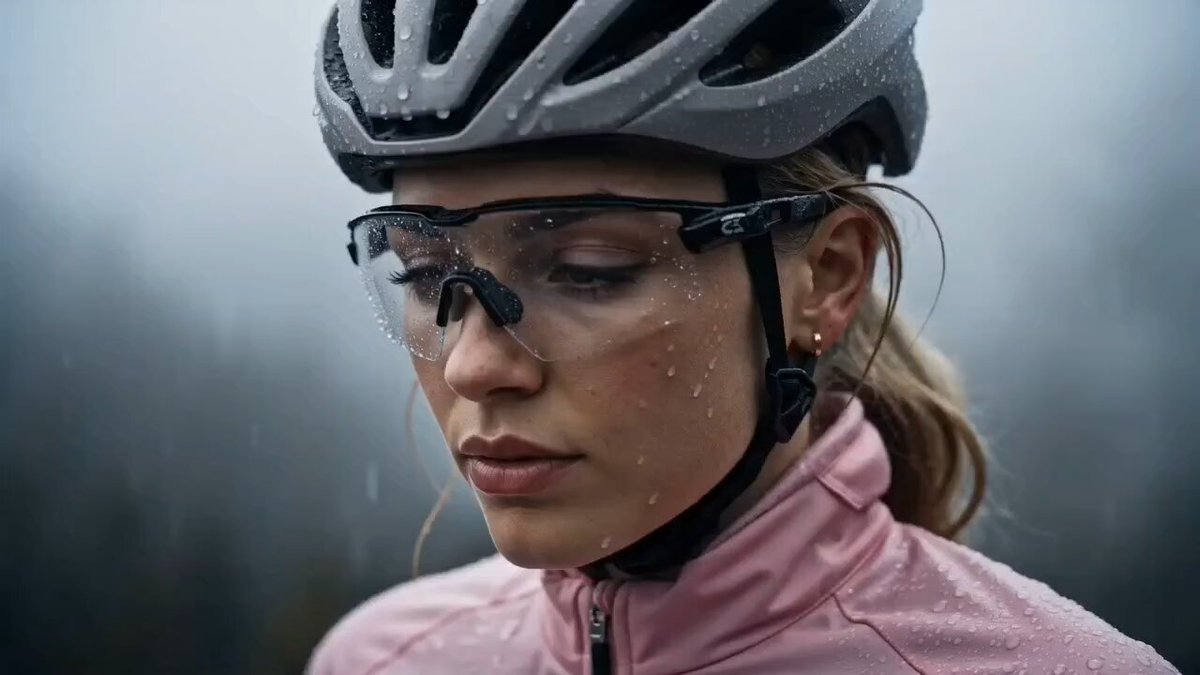
Write your shot list in plain language rather than camera jargon. Each line should carry the subject, the action, the framing, the light, and the duration: "A cyclist rounds a rain-slicked corner at dawn, tracking from behind, wide, cool blue light, four seconds." Run these one at a time instead of as one giant block. Short commands are easier to diagnose, and a single bad line cannot contaminate an entire batch.
Generate drafts cheaply. Resolution, duration, and frame rate drive processing time, so block your whole sequence at preview quality, confirm the structure holds, then regenerate only the keepers at full quality. This one habit typically halves total render time on a project.
Style transfer and camera control
Style is more reliable through reference than through vocabulary. If your tool accepts a still or clip as a style source, use it. If not, build a reusable style block, a fixed paragraph covering palette, contrast, grain, lens, and lighting, and paste it into every prompt for that project. Cross-shot consistency comes from repeating the same description, not from inventing a more vivid one each time.
Camera control deserves its own clause, and explicit parameters beat prose. Write "slow push in, eye level, 35mm equivalent" instead of "dramatic camera." Where the tool exposes direct controls for dolly, crane, handheld, or orbit, use those controls and let text describe only what the controls cannot express.
Batch runs and repetition control
Batch processing is where command-driven editing earns its keep. If you need twelve variants of a product shot with different backgrounds, write one template and swap a single variable per run. Two cautions: keep batches moderate so a failure stays contained, and record the seed or parameter values of any take you might want to reproduce. Without that record you can generate something similar, but rarely something identical.
Building Story Structure With Chained Commands
Beat sheets as prompt scaffolding
A sequence is not a pile of clips; it is a set of beats. Write the beat sheet first, hook, context, complication, escalation, turn, resolution, and attach your shots to each beat. Your editing commands then become structural rather than cosmetic: "trim the escalation block to twenty seconds," "insert a two-second beat of silence before the turn," "extend the resolution with one cutaway."
This is where automated assistance does something manual editing rarely does. Because generating an alternative costs minutes instead of days, you can ask for a genuinely different structure rather than the one you already had in mind. Request a version with the reveal moved earlier. Request a version told in reverse. Most will be worse; occasionally one will be better than your original plan, and you would never have found it by nudging a timeline.
Continuity across shots
Continuity errors are the most common complaint about generated sequences: wardrobe shifts, light direction flips, a prop disappears. Defend against them with a continuity note attached to the project, covering wardrobe, time of day, weather, key props, and hair state, and reference that note in every generation command for the scene. Where a shot must match an approved frame exactly, generate from that frame rather than from text.
Camera Movement, Pacing, and A/B Testing
Describing movement unambiguously
Movement instructions should specify direction, speed, and endpoint. "Pan left, slow, ending framed on the doorway" is testable; "move around a bit" is not. When a shot has to connect to the next one, describe both the outgoing and incoming motion in a single command so the system can plan the transition rather than guessing at the join.
Cut rhythm experiments
Pacing is the cheapest thing to test and often the most impactful. Take one sequence and produce three versions: cuts placed on the action, cuts placed slightly before the action resolves, and longer holds. Watch each without stopping to take notes. The version that pulls you forward wins. Because the underlying shots already exist, each pass costs minutes, and you can compare versions back to back instead of relying on memory.
Test decisions, not vibes
Keep experiments honest. Name the variable you are testing, cut length, color temperature, music entry point, change only that variable, and write down what you observed. Teams frequently run "comparisons" that alter four things at once and then debate which one mattered, which produces strong opinions and no reusable knowledge.
Audio Editing and Sound Design by Instruction
Voice synthesis and dialogue cleanup
Command-driven audio works best when you separate dialogue into three problems: content, timing, and tone. Content is the script. Timing is placement against picture. Tone is performance, warm, clipped, urgent, hesitant. Write the line, place it, then adjust delivery. Attempting all three in one pass tends to produce a muddy result that is hard to fix in isolation.
For cleanup, describe the artifact rather than the remedy: "remove room hum and keyboard clicks from the interview track," "reduce sibilance on the narration," "even out level differences between two speakers." If your tool accepts audio references for voice matching, capture one clean sample early and reuse it, so every synthesized line occupies the same sonic space.
Music, ambience, and level balancing
Descriptive mixing instructions work surprisingly well: "music at minus eighteen under dialogue, lifting to minus eight across the final five seconds," "add distant traffic ambience to exterior shots, no birds." Keep a reference mix you like and ask the system to match its character rather than to hit abstract numbers. When a mix feels cluttered, request a version with music removed entirely. Silence quickly reveals whether the picture holds up on its own.
Color, Captions, and Delivery Specs
Grade commands
Split color instructions into technical correction and creative look, and always run them in that order. Technical first: match exposure and white balance across shots, neutralize interview skin tones, unify contrast. Creative second: push night scenes toward teal shadows, keep highlights neutral, add subtle grain. Applying a creative look before shot matching guarantees rework, because correction will strip the look back out.
Captions, aspect ratios, and exports
Treat delivery as commands too: "export a 16:9 master, a 9:16 version with center-weighted reframe, and a 1:1 cut for feeds; burn in captions on the vertical versions only." Caption accuracy still requires human review, particularly for names, jargon, numbers, and brand terms. Auto-generated text that mangles a product name is a credibility problem rather than a minor typo, and it is the single most common reason a polished video gets pulled.
Quality Control and Common Mistakes
A review checklist that catches most problems
Watch each export three times, with one question per pass. First pass: does the story hold? Second pass: does anything look or sound wrong, flicker, drift, mismatched light, audio pops, jump cuts? Third pass: does it meet the delivery spec for length, aspect ratio, caption timing, and loudness? Separating creative judgment from technical checking keeps feedback specific enough to act on.
Frequent failure modes
- Prompt sprawl: one command attempting six operations and producing six half-results.
- Overwriting files instead of versioning, and losing the good take.
- Running batch jobs without a locked do-not-modify list.
- Style drift across shots because the style block was retyped rather than reused.
- Regenerating blindly instead of diagnosing which clause of the instruction failed.
- Shipping without a human caption and continuity review.
FAQ
Do I need editing software experience to work this way? Not to start, but basic timeline literacy pays off quickly. Understanding cut points, track structure, and loudness targets makes your instructions more precise and your review faster.
How long should a single command be? One action, one scope, one or two constraints. If you find yourself stacking conjunctions, split the work into sequential commands and check the result in between.
Can I reproduce an exact result later? Usually only if you recorded the seed, model, and parameters alongside the instruction. Keep the log religiously for anything you might want to match.
What is the biggest quality risk? Continuity drift across shots. It is subtle, it accumulates, and it is far easier to prevent with a continuity note than to repair after the fact.
Should I generate at final resolution from the start? No. Block the whole sequence at preview quality, lock the structure, then regenerate keepers at full quality.
How do I present options to a stakeholder? Show no more than three, each labeled with what differs: faster opening, warmer grade, music enters later. Too many options stalls decisions.
What should I check before publishing? Rights for any source footage or voice reference, consent for anyone depicted or imitated, caption accuracy, loudness compliance, and a final continuity pass.
