

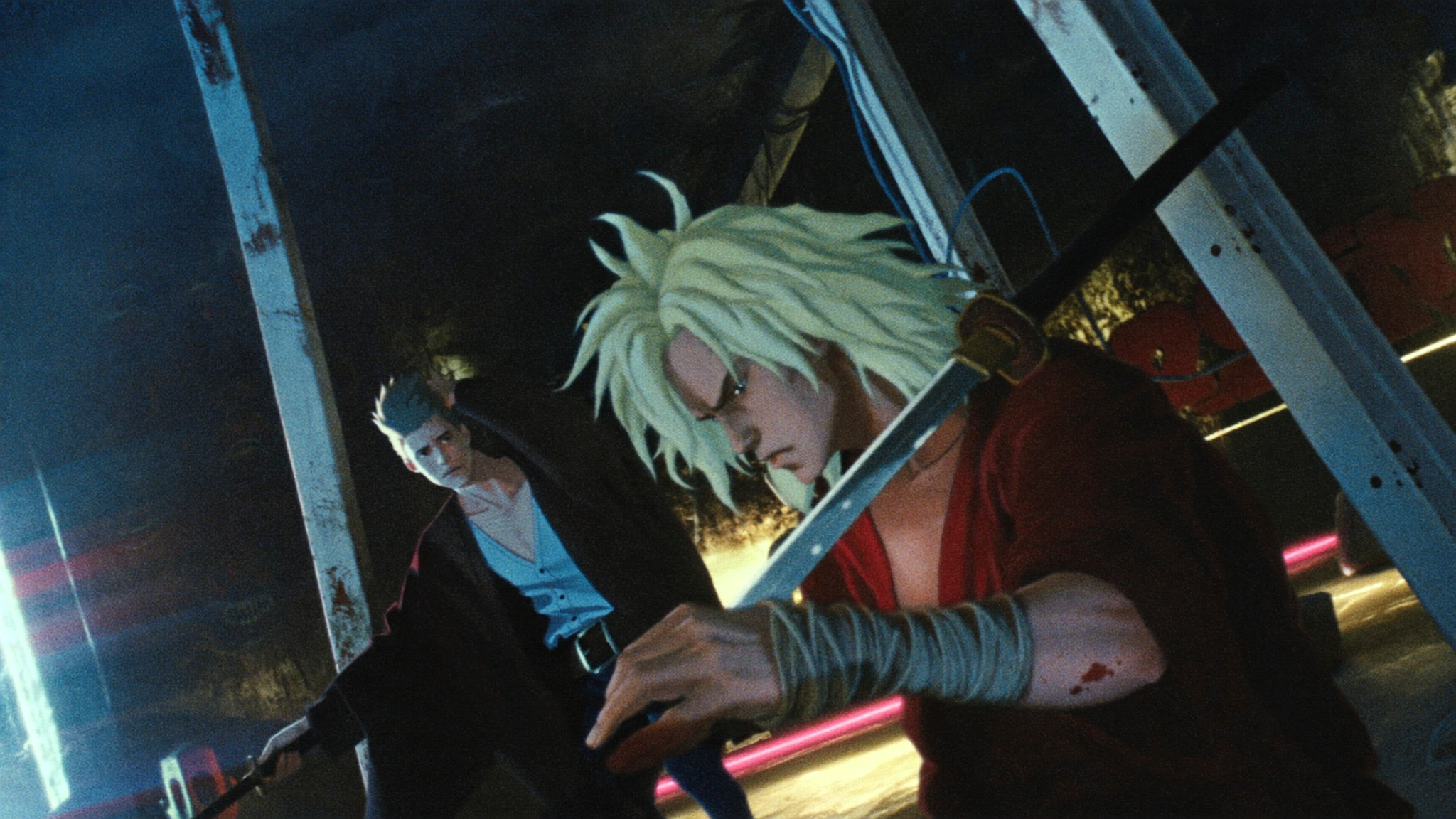


The character consistency problem nobody could solve
Ask any creator who has worked with AI video for more than a week, and they will tell you the same story: the first frame looks perfect, the character looks right, the mood is right — and then the second shot shows a completely different face. The hero's eyes change color, the costume morphs, the hair rearranges itself. This problem, known as character drift, was for years the single biggest obstacle between AI video and professional production.
In 2025 the industry finally started treating this as a solvable engineering problem rather than an unavoidable quirk. The result is a family of techniques grouped under names like multi-image fusion and keyframe control. They allow creators to lock a character's identity once and carry it through an entire project, across scenes, poses, art styles, and even across different AI models. This guide explains how these techniques work, why they matter, and how to put them into practice.
Why characters drift in the first place
To understand the fix, you need to understand the failure. Most video models generate each clip from a text description plus, at best, a single start image. The model has no persistent memory of who the character is. It sees a prompt about a "woman in a red coat" and reconstructs what that might look like from its training data — which means every clip is a fresh guess. The guesses are statistically similar but never identical, and the differences add up across a series.
Reference images help, but a single image is a weak constraint. It anchors the face reasonably well for one clip, yet the model still improvises when the character moves, turns, or changes lighting. The stronger the constraint, the less drift you get. That is the entire logic behind multi-image fusion: instead of one reference, you provide several, and the system fuses them into a much stronger identity anchor.
Multi-image fusion: building a character from many views
Multi-image fusion works like a police sketch artist who interviews five witnesses instead of one. Each image contributes different information: one shows the face from the front, another shows the profile, another captures the costume, another shows the proportions. The system aligns these images, extracts a shared identity, and builds a composite character model that is far more stable than any single photo.
In practice, creators build a character sheet: a few consistent views of the same character in the same outfit, ideally in neutral poses with good lighting. This sheet becomes the reference set. When you generate scenes, the system uses the whole set, not just one image, which dramatically reduces the chance that the model will reinvent the character's face halfway through the project.
Keyframes: directing the story, not just the character
Character identity is only half the battle. You also need to control what happens in the scene. This is where keyframe control comes in. In animation, a keyframe is a drawing that defines a critical moment; the software fills in the frames between. Modern AI video generation applies the same idea: you define the first frame, sometimes the last frame, and sometimes intermediate frames, and the model generates the motion between them.
First-frame control is the most common and most useful. You generate or choose an image of the scene, lock it as the starting point, and prompt the model to animate from there. The result stays visually anchored to your image instead of drifting into whatever the text alone suggests. Last-frame control works similarly in reverse and is invaluable for scenes that must end in a specific composition. Intermediate keyframes give you even finer control, at the cost of more work and higher compute.
Temporal keyframe control in longer sequences
For a single clip, first and last frames are usually enough. For a longer sequence or a whole series, you need temporal keyframe control: the ability to lock the character at multiple points along the timeline so that drift never accumulates. Think of it as checkpointing. Each checkpoint re-anchors the generation, so even if the model drifts slightly between checkpoints, it snaps back to the correct identity at the next one.
This is how professional creators now produce multi-scene narratives. They plan the story as a sequence of beats, generate a keyframe for each beat, and then fill the motion between beats. The result is a coherent video where the character remains recognizably the same person from the first scene to the last, even if each segment was generated separately.
Keeping identity across art styles
One of the most impressive capabilities unlocked by strong identity anchors is cross-style consistency. You can define a character once, then render the same character in a photorealistic style for one scene, a painterly style for another, and a 3D animation style for a third — and the audience still recognizes the character. The identity layer and the style layer are separated, so changing one does not destroy the other.
This is a game-changer for franchises and branded content. A mascot can appear in realistic commercials, stylized social media posts, and animated explainer videos without losing its recognizable features. Studios no longer need to rebuild the character for every format; they build it once and restyle it as needed.
A practical workflow for a video project
Here is a step-by-step process that works with modern AI video tools:
- Design the character. Generate or commission a character sheet with at least three consistent views: front, three-quarter, and side, in the same outfit and lighting.
- Lock the identity. Upload the sheet as the reference set for your project.
- Plan the story beats. Write the scenes as a sequence of moments, each with a clear visual anchor.
- Generate keyframes. For each beat, generate a static image of the scene using the locked character.
- Animate between keyframes. Use first-frame and last-frame control to create motion clips that respect the keyframes.
- Check for drift. Review every clip; if the character shifts, regenerate with a stronger reference set or add an intermediate keyframe.
- Assemble and refine. Edit the clips together, then fix any remaining inconsistencies in post-production.
Managing compute costs smartly
Strong identity anchors require more compute per task, and longer projects multiply the cost. There are three ways to stay efficient. First, do your experimentation on static images — it is far cheaper to fix a character sheet than to regenerate video clips. Second, generate drafts with lighter models and reserve the expensive, high-fidelity models for the final shots. Third, reuse successful keyframes across scenes instead of generating everything from scratch. A single great keyframe can anchor multiple clips, saving both money and time.
Choosing the right tools
The techniques described here are implemented differently across platforms. Some models are particularly good at following reference sets; others are better at motion. The practical approach is to keep a small toolkit:
- A model with strong identity binding for character work, especially one known for stable style inheritance.
- A model with excellent motion and physics for action scenes.
- A fast, cheap model for drafts and iterations.
- A video editing tool for final assembly and post-production fixes.
None of these need to come from the same vendor. The goal is to route each task to the tool that does it best.
Batch production: one anchor, many scenes
The real efficiency gain from identity anchors shows up in batch production. Once a character is locked, you can generate dozens of scenes from a shared pool of assets: the same hero interacting with different objects, visiting different locations, or wearing the same costume in different lighting. Because the anchor does not change, the scenes automatically match, and the only creative work is describing each new situation.
This is how small teams now produce content calendars for social media. One morning of asset building — character sheets, keyframes, style references — can feed weeks of output. The bottleneck shifts from generation to planning, which is exactly where a human should spend their time. You decide what the character does this week; the pipeline handles making it look right.
To make batch production smooth, keep a project folder with disciplined naming: character sheets, keyframes by scene, style references, and a prompt log. When you generate something that works, record exactly what you did. A week later, when you need to revisit the character, you can rebuild the setup in minutes instead of re-discovering it.
A worked example: an episodic web series
Imagine you are producing a three-episode animated series about a robot exploring a strange city. Here is how the identity-first workflow plays out:
Episode zero (pre-production): design the robot as a character sheet — front, three-quarter, side, plus detail views of the head and hands. Lock the sheet as the identity anchor. Define the city as a style reference: palette, architecture, mood.
Episode one: generate keyframes for the main beats: the robot waking up, walking through a market, discovering a hidden door. Animate between the keyframes, using the character sheet as the anchor for every clip. The robot looks identical in every shot.
Episode two: introduce new locations — a rooftop, a subway tunnel. The city style carries over from the style reference, and the robot still matches the sheet. New characters are added the same way: each gets its own sheet, locked before its first scene.
Episode three: bring everything together, including a scene where the robot is seen from a distant wide shot and a close-up in the same sequence. Because both were generated against the same anchor, the audience believes it is the same machine.
The entire production runs on a handful of assets, and consistency is guaranteed by the pipeline rather than by luck.
Working across different models
A practical question: can the same character appear in scenes generated by different models? The answer is yes, if the anchor is strong enough and you respect a few rules. First, keep the character sheet fixed; do not regenerate it for each model. Second, lock the same keyframes where possible, so every model starts from the same visual truth. Third, verify the transitions: a character generated by model A must be matched by the model B version before you cut between them.
Some platforms support this natively by letting you attach the same reference set to any model in their library. That capability is worth checking for when you evaluate tools, because it frees you from vendor lock-in: if a better model appears, you can switch without rebuilding your character.
Common mistakes
- Using a single reference image when you need a full character sheet. One view is not enough to anchor identity reliably.
- Locking only the face and ignoring the costume. Clothing is a major part of character recognition.
- Generating the video before testing the keyframes. Fix problems in still images first.
- Expecting perfection from one take. Always generate multiple variants and select the best.
- Skipping the final review. Drift can be subtle; watch the whole sequence before publishing.
FAQ
What is the minimum number of reference images? Three consistent views (front, three-quarter, side) are a good baseline. More views help for complex costumes or unusual features.
Can I keep a character consistent across different AI models? Yes, if the identity anchor is strong. Some platforms explicitly support this, allowing the same character to be rendered through different models for different scenes.
How do I fix drift that appears mid-project? Add an intermediate keyframe at the point where the character starts to change and regenerate from there.
Is character consistency possible with text-only prompts? Not reliably. Text descriptions are too ambiguous; you need at least one visual reference for meaningful consistency.
Does this work for products and objects? Exactly the same way. A product, a mascot, or a vehicle can be anchored with reference images and kept consistent across scenes.
The bottom line
Character consistency was the wall that separated AI video from professional use. Multi-image fusion and keyframe control broke through that wall. By building strong identity anchors from multiple views and directing scenes through keyframes, creators can now produce long, coherent narratives where the hero stays the hero from start to finish. The tools are already here, the workflows are documented, and the only remaining barrier is your willingness to restructure how you plan a project. Do that, and AI video stops being a lottery and becomes a production pipeline you can actually rely on.
