

Why Visual Consistency Decides Whether an AI Video Feels Professional
Anyone can generate a striking five-second clip. The hard part starts when you need that same character to walk through a doorway, sit down, argue with someone, and leave — across eight shots, two locations, and three lighting setups — without the face quietly morphing into a cousin of the original person.
That morphing is what audiences notice. They will forgive soft textures, slightly odd hands, or a background that is a little too clean. They will not forgive a jawline that widens between cuts or a jacket that changes from charcoal to navy in the middle of a conversation. Consistency is not a technical nicety; it is the difference between a demo reel and something that reads as a real production.
In practice, consistency breaks down into three separate problems that are easy to confuse:
- Identity consistency — the same person, same face geometry, same age, same skin tone, across every shot.
- Production design consistency — the same wardrobe, props, room layout, color palette, and time of day.
- Temporal consistency — motion that flows logically, without jitter, flicker, or sudden proportional shifts within a single shot.
Text-only prompting is weak at all three, because a prompt describes a category, not an individual. "A woman in her thirties with curly dark hair" gives you a new woman every time. Multi-image fusion exists to solve exactly that: instead of describing the person, you show the model the person — several times, from several angles — and let reference conditioning carry the identity load.
This guide walks through how multi-image fusion works, how to build a reference kit, how to run a repeatable shot-by-shot workflow, and how to audit your output before anyone else sees it.
What Multi-Image Fusion Actually Solves
Single-image-to-video pipelines condition the model on one frame. That frame pins down appearance for a moment, but as the shot progresses the model drifts toward its own internal average — the generic version of "a person like this." The result is the well-known rubber face effect: the subject slowly becomes someone else.
Multi-image fusion feeds the model a set of references at once. A typical set includes a front view, a three-quarter view, a profile, a full-body shot, and one or two expressions. The model then blends those references in its conditioning space rather than treating each as a separate, competing target. Good fusion implementations weight references by relevance and by angle proximity to the requested camera position, so a profile reference dominates when you ask for a profile shot.
Reference conditioning versus fine-tuning
There are two broad ways to lock an identity: condition on references at generation time, or train the identity into a model. Reference conditioning is fast, needs no training run, and works well for a single project. Fine-tuning a small adapter on 15–30 curated images produces a stronger, more reusable identity that survives extreme angles and heavy stylization — at the cost of preparation time and a fixed look you may need to retrain later.
A practical rule: use reference conditioning for client work where the subject changes weekly, and train an adapter when the same character will appear in multiple episodes.
The identity-versus-motion split
Fusion works best when you separate what must not change from what must change. Identity, wardrobe, and set layout are invariants. Pose, gesture, camera movement, and expression are variables. When you write prompts that try to control both at once, the model compromises on both. When you generate a strong keyframe first and then animate it, the invariants are already baked into pixels, and the prompt only has to describe motion.
Attention anchors and latent alignment
The mechanical reason fusion helps is that reference tokens act as attention anchors. Cross-attention layers that would otherwise attend to a vague text embedding now attend to concrete visual features — eye spacing, hairline, the shape of a collar. Latent alignment then keeps those features at consistent positions in the latent grid across frames, which is what prevents the slow slide into a different face.
The practical consequence: more references help only up to a point. Four to six well-chosen, well-lit, mutually consistent references usually outperform twelve mediocre ones, because contradictory references blur the anchor rather than sharpen it.
Build a Reference Kit Before You Generate a Single Frame
The quality ceiling of your entire project is set here. A rushed reference kit guarantees drift, no matter how good the model is.
Character sheets
Aim for:
- One neutral front view, even lighting, no strong shadows.
- One three-quarter view.
- One profile view, left or right.
- One full-body shot for proportions and wardrobe silhouette.
- Two expressions that match the emotional range of the script (neutral plus the most extreme emotion the character shows).
Keep the same wardrobe, the same hair styling, and the same focal length across the set. If you generate the sheet with an image model, iterate until the references agree with each other before you move on.
Wardrobe and prop references
Identity is only half the battle. A jacket that changes shade between shots reads as carelessness. Create a small product-style reference for each key wardrobe item and each hero prop — the phone, the briefcase, the coffee cup with a specific logo. Treat them as separate assets you can attach to any shot.
Location plates and lighting references
Capture or generate a location plate for each set: a wide establishing frame plus one close detail. Note the light direction and color temperature in a line of text so you can repeat it in prompts. If a scene moves from morning to evening, make two plates rather than describing a transition.
Negative references and what to exclude
Just as important is a small list of things you never want: extra jewelry, changed hair length, heavy makeup, different lens distortion, watermarks, on-screen text. Keep this list written down and paste it into every prompt in the project. Consistency is often less about adding the right thing than about removing the wrong thing every single time.
A Practical Multi-Image Fusion Workflow, Shot by Shot
This is a repeatable pipeline you can run on almost any modern video generation stack.
Step 1 — Convert the script into shot cards
Break the scene into a numbered list of shots with a single sentence each: framing, subject action, camera movement, duration. One action per shot. If a shot needs two actions, it is two shots.
Step 2 — Assign references and lock a style block
For each shot card, list the references it uses: character A sheet, wardrobe item 2, location plate B. Then write one style block — lens, film stock feel, color grade, lighting — and reuse it verbatim in every prompt so the visual language never shifts.
Step 3 — Generate keyframes before motion
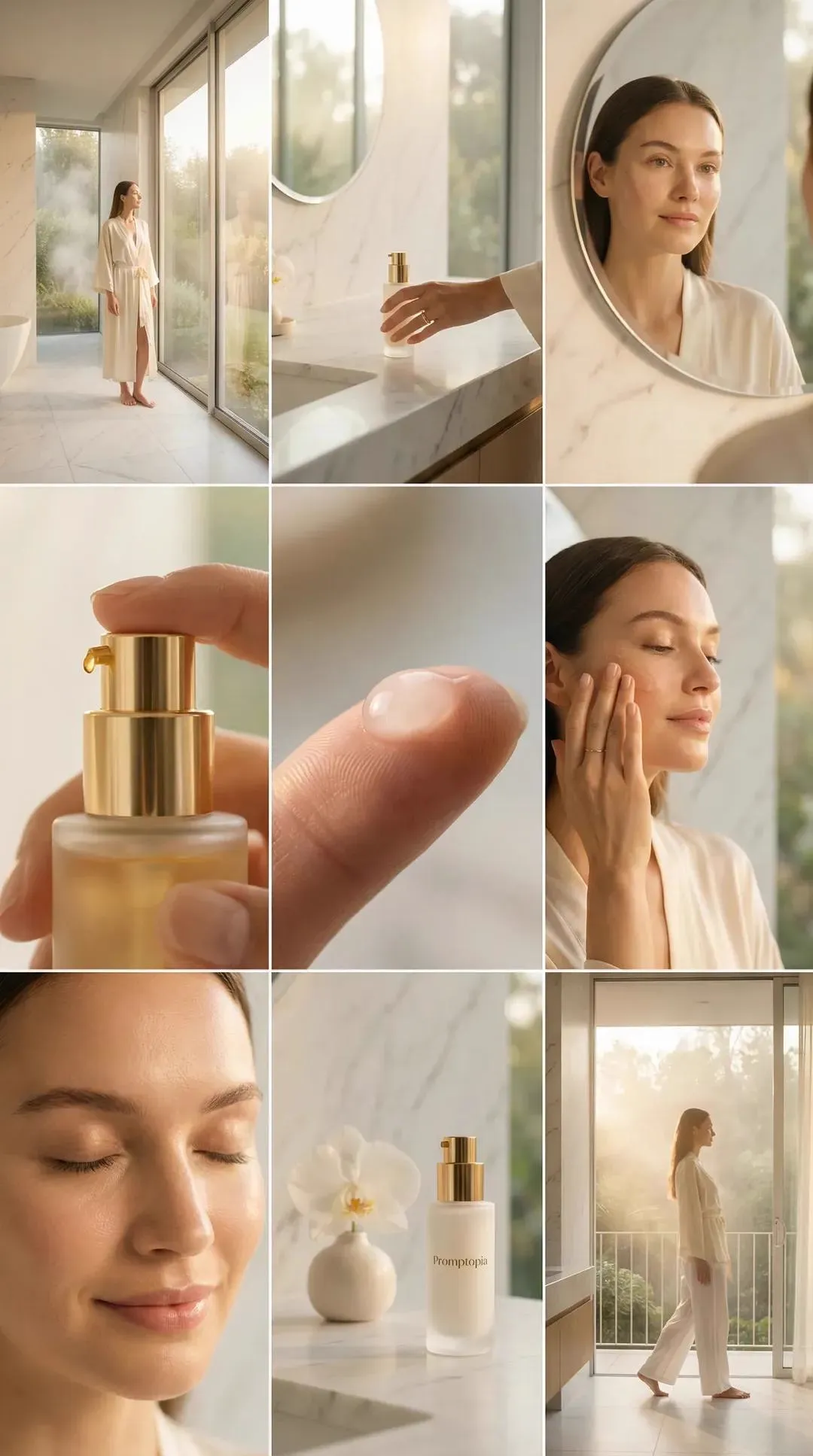
Generate a still for each shot using fusion across your references. Do not animate yet. Review the whole set of stills side by side as a contact sheet. Problems are cheap to fix at this stage and expensive to fix after rendering.
Step 4 — Render in short segments, then assemble
Animate each keyframe in short segments — typically three to six seconds. Short segments drift less, are easier to re-roll, and give you more control over pacing. Keep the same seed family where your tool allows it, and reuse the reference set in every segment rather than relying on the previous clip alone.
Step 5 — Grade, sound, and re-verify
Assemble in an editor, apply a single unified grade, then add sound. Sound matters more than people expect: consistent ambience and room tone make separate clips feel like one continuous scene. After the grade, re-watch once at normal speed specifically to look for identity drift, because grading can mask or reveal small shifts.
Prompt Patterns That Hold a Character Together
A reliable structure for fusion-based shots:
[Style block] + [Subject reference tag: character A, wardrobe 2] + [Action, one verb] + [Camera: framing, movement, lens] + [Lighting and time of day] + [Negative list]
Example: Cinematic 35mm look, soft contrast, cool daylight grade. Character A in the grey wool coat, walking slowly toward camera across a wet parking lot at dawn, hands in pockets. Medium shot, slow dolly-in, 50mm. Overcast light, slight haze. No text, no watermark, no jewelry, no change of hairstyle.
Three habits make this work:
- Describe invariants as nouns, variables as verbs. "Grey wool coat" is an invariant; "walking" is a variable.
- Never re-describe the face in text. Once you have references, textual face descriptions compete with them and pull the render toward a generic face.
- Keep camera language short. Long, poetic camera descriptions create motion the model cannot resolve, which produces warping that looks like identity drift.
Choosing Your Stack: Models, Adapters, and Custom Training
Different projects need different levels of commitment. Use these criteria rather than chasing whichever model is trending.
| Situation | Recommended approach | Why |
|---|---|---|
| One-off ad, single character | Reference conditioning with 4–6 images | Fast, no training, easy re-rolls |
| Series with a recurring lead | Trained adapter plus references | Survives extreme angles and stylization |
| Multiple characters interacting | Per-character references, separate passes, then composite | Prevents identity bleed between faces |
| Real product shown in scene | Dedicated product references and a locked camera | Protects logo shape and label legibility |
| Heavy stylization (animation, painterly) | Adapter trained on stylized images | Text prompts cannot hold a style reliably |
Also decide early whether you are chaining shots (each shot starts from the last frame of the previous one) or generating each shot independently from references. Chaining gives smoother motion continuity but accumulates drift and locks you into bad takes. Independent generation plus a strong reference kit gives cleaner identity at the cost of more transition work. Most professional pipelines use independent generation with a few deliberate chain points.
Transition Craft: Making Separate Shots Feel Like One Film
Consistency is not only about faces — it is about the seams. Six techniques do most of the work:
- Match on motion. End a shot with the subject moving left, start the next with movement continuing in the same direction.
- Match on shape or color. Cut from a round object to another round object, or from a warm interior to a warm interior.
- Keep the light direction. If the sun is behind the subject's left shoulder, keep it there across the sequence.
- Vary shot size deliberately. Wide, medium, close, then wide again. Identical framing back to back reads as a mistake.
- Use sound to bridge. Start the next scene's ambience two frames before the cut.
- Unify the grade at the end. One grade across the whole sequence hides small differences between clips.
The Consistency Audit: Checks Before You Publish
Run this list on a full-speed pass, then a paused pass:
- Face geometry identical at every cut?
- Hair length and color stable?
- Wardrobe identical, including buttons and collar shape?
- Prop details — labels, logos, textures — unchanged?
- Set layout plausible between angles (door on the correct side)?
- Light direction and color temperature continuous?
- Skin tone stable across shots, not shifting warmer or cooler?
- Hand and finger shapes acceptable in close-ups?
- No flicker or texture crawl in flat areas like walls or sky?
- Motion direction logically continuous across cuts?
- No stray text, watermarks, or garbled signage?
- Audio ambience continuous, no abrupt tonal jumps?
If two or more checks fail in the same shot, re-render that shot rather than trying to fix it in post. Repairing identity drift with masks and warps costs more time than a re-roll.
Common Mistakes and How to Fix Them
Mistake: too many references. Twelve near-identical photos dilute the anchor. Fix: cut to four to six diverse, high-quality views.
Mistake: mixing lighting conditions in the reference set. Some references lit warm, others cool; the model averages them into inconsistency. Fix: reshoot or regenerate the set under one lighting setup.
Mistake: long shots. Anything past eight seconds in a single generation invites drift. Fix: split into shorter segments and assemble in the edit.
Mistake: describing the face in the prompt. Text overrides references. Fix: remove facial adjectives entirely once references exist.
Mistake: changing the style block mid-project. Even a small phrasing change shifts the grade. Fix: save the style block as a reusable snippet and paste it unchanged.
Mistake: no contact-sheet review. Reviewing shot by shot hides cumulative drift. Fix: always review all keyframes together on one screen.
Mistake: relying on motion prompts to hold identity. Motion conditioning does not preserve identity. Fix: keep references attached to every segment.
FAQ
How many reference images should I use?
Four to six for most projects: front, three-quarter, profile, full body, plus one or two expressions. Add more only if a specific angle keeps failing.
Can I mix different generation models in one project?
Yes, and many teams do — one model for keyframes, another for animation. But each model interprets references differently, so expect a re-verification pass after every model switch. Keep the style block and references identical across tools to minimize the gap.
Why does the face drift after a few seconds?
Reference conditioning weakens over time as the model leans on its own predicted frames. Shorten the segment, re-inject the references, or use a trained adapter for long shots.
Do I need custom training for a one-minute video?
Usually not. A solid reference kit plus short segments handles most one-minute pieces. Train an adapter only when the same character will recur across many scenes or when the style is far from the model's defaults.
How do I handle two characters in the same frame?
Generate them in separate passes where possible and composite, or provide a clean reference pair and explicitly name both characters in the prompt. Identity bleed between two faces is one of the most common fusion failures, so check it in the audit.
What about day-to-night changes in one location?
Make two location plates with different lighting and treat them as different sets that share geometry. Keep the camera positions and prop placement identical so the audience reads continuity of place, not a different room.
Should I generate at the highest resolution available?
Generate at a moderate resolution for iteration speed, then upscale the approved take. Identity drift is easier to spot at low resolution because it shows up as shape change rather than texture noise.
How do I keep a product label readable?
Use a dedicated close-up reference of the product, lock the camera to a slow push or static frame, and avoid fast motion. When text must be perfectly legible, finish it in the edit rather than fighting the generator.
A Repeatable Pipeline Beats a Perfect Prompt
The teams that ship believable AI video are not the ones with secret prompts. They are the ones with a disciplined pipeline: a curated reference kit, a reusable style block, keyframes before motion, short segments instead of heroic long takes, a unifying grade, and an audit that runs on every single project.
Start with one character and three shots. Build the reference kit properly, generate keyframes, review them as a contact sheet, and only then animate. Once that loop feels automatic, scale it to a full scene — and you will find that consistency stops being the thing that breaks your video and becomes the thing that makes it watchable.
