
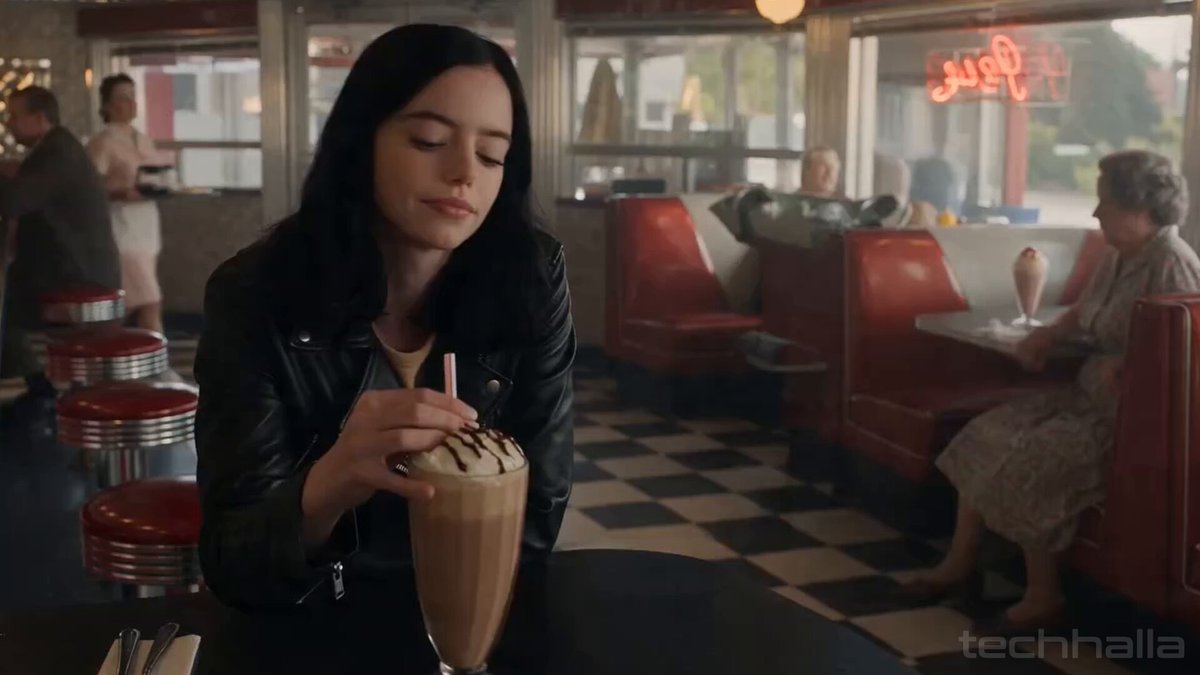
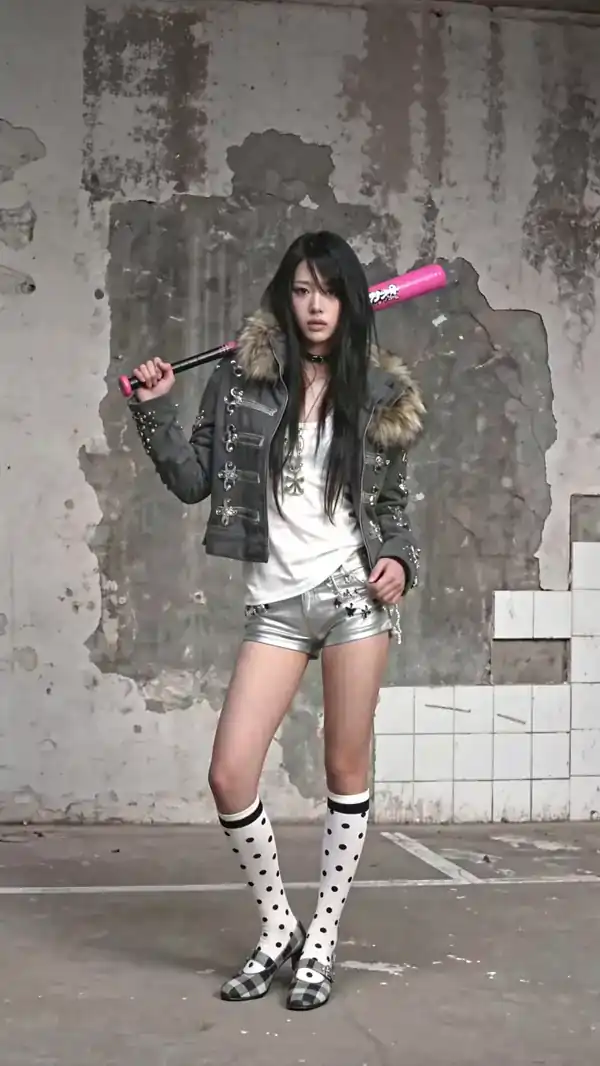

The question used to be easy to answer. "Do AI videos look real?" and the answer, for years, was no. Faces melted, hands fragmented, light behaved impossibly, and a moving clip was betrayed within a second or two. That answer has quietly changed. Modern video generation models now produce footage that holds up on close inspection, with believable skin, natural motion, correct reflections, and physics that does not break. The honest answer in 2025 is increasingly yes, at least for a growing number of scenes and use cases.
This guide examines the photorealism question without hype. It looks at what current models actually do well, where they still stumble, which capabilities make the realism hold, and how creators, marketers, and casual viewers can evaluate an AI video critically. Understanding the current ceiling of realism is practical, because it decides where AI video is trustworthy enough to use and where it still needs a human hand.
The State of Photorealism in AI Video
The steady march of generative models has fundamentally moved the goalposts. The conversation is no longer about whether a model can produce a recognizable human face or a plausible landscape; it is about whether a short clip can sustain realism across light, texture, and motion without breaking.
The current champions, built on diffusion and next-generation image-to-video rendering, produce frames that are difficult to distinguish from camera footage at a glance. Skin has subsurface scattering, hair has weight, water refracts, and cloth moves with believable drag. The physical plausibility of a scene, how objects relate and move, is now the main battleground.
Yet realism is not uniform. A static or slow-moving shot can be nearly flawless, while a demanding action sequence still reveals weaknesses. Understanding these gradients is more useful than declaring victory or defeat for the whole field. Realism is situational, and professionals treat it that way.
What the Leading Models Do Well
Different models have different realism profiles, and knowing them helps you choose the right tool.
The Flux family and the next generation of image-to-video rendering bring precise control and high-fidelity stills, making them ideal when a strong static frame is the starting point. Runway's Gen-4 line has refined the industry standard, polishing the details that separate believable video from obvious generation. The Sora series set the bar for photorealistic motion and physical understanding, raising expectations for how objects should behave.
Other models broaden the realist base at scale. Kling, PixVerse, and Hailuo, among others, make convincing video accessible at prices that allow volume use. Each has a slightly different realism profile, some stronger on face detail, others on environmental behavior, and the practical skill is matching the profile to the scene.
Where the Frames Still Break
Realism has a few predictable weak points, and a critical eye learns exactly where to look.
Hands and feet remain a classic failure, though far rarer than before. Complex finger arrangements and motion can still glitch, especially in long or fast clips.
Fine-textured repetitive patterns, such as lattice, brickwork, water, or hair in motion, can shimmer or simplify under stress. This is why motion frequently exposes the seams: the effort of keeping movement coherent steals detail from the texture.
Transitions and occlusions, where objects pass behind one another, remain demanding. A hand that passes behind a face, a car behind a pillar, or a character turning in three dimensions all risk inconsistency.
Finally, out-of-frame implications, such as what happens just beyond the visible edge, can break when the model has not correctly preserved the implied space. These failures are subtle, but they matter because the human eye is exceptionally good at spotting them.
Conservation of Visual Identity
Two capabilities decide whether realism survives contact with a real project: character consistency and environmental stability.
Character consistency keeps a person's face, build, and wardrobe intact across shots. Without it, a flattering but different face appears in every scene, and the realism collapses the moment a multi-shot sequence requires the same protagonist throughout. Referencing multiple still images of the character, and conditioning the generation on them, holds identity across an entire story.
Environmental consistency is its quieter twin. Backgrounds generated once and reused as established plates keep locations stable, so a street corner or a room looks the same from scene to scene. When both hold, a long-form piece feels like one film instead of a collage. Realism is not just about a single convincing frame; it is about a world that stays convincing over time.
Applying Realism to Production
Knowing the strengths of photoreal video is only useful when it changes how you work.
Choose the model to match the shot. Slow, controlled, well-lit scenes play to the strengths of the best engines and yield near-flawless results. Demanding action and fast camera moves need either a specialist model or a plan to compensate in post.
Design for the seam. Keep hands clear of tight occlusion where possible, avoid repeating fine patterns during fast motion, and favor controlled camera moves that give the model a stable geometry to preserve.
Use reference conditioning for anything with an identifiable subject. A hero character or a returning product benefits enormously from anchored identity, and the effort of setting up references pays for itself across the whole project.
Plan for a human review pass. AI video is strong, but it is not self-auditing. A designated reviewer who watches the render and flags the subtle realism breaks, the failed hands, the shimmering texture, catches the errors the model itself cannot see.
Critical Evaluation: How to Test an AI Video
For creators, marketers, and even cautious viewers, a few habits separate an informed assessment from a superficial one.
Watch the boundaries. Pause at moments of transition, occlusion, and fast motion, where realism is most likely to slip, instead of judging the beauty of a single frame.
Look at the hands and the feet. Check specific fine-motion details that models have historically fumbled, even though success there is no longer a rarity.
Check the light's consistency. If the light direction changes between shots of the same scene, that is a tell. Believable video keeps the light coherent.
Examine the implied space across cuts. If a room or a street changes its geometry between angles, the environment has broken, regardless of how pretty each individual frame looks.
Run your own small benchmark. Generate the same challenging prompt across several models and compare. A benchmark built on your own scenes is the most trustworthy way to know what a tool can really do.
The Business Case for Realistic AI Video
The rise of convincing AI video is not just a technical curiosity; it changes the economics of content.
Every ad agency, product team, and social marketer now weighs the trade-off between a location shoot and a generated shot. Realistic AI footage erases most of the cost and scheduling overhead for shots that once required a set, a crew, and a permit. A hero product shot that used to need a studio afternoon can now be generated and refined after lunch.
But the business case depends on the same caveats as the creative one. Photoreal AI works best where the scene is controlled and the identity is consistent, and worst where demanding physics or fine motion dominates. Teams that design shots around the models' strengths capture most of the cost savings without surrendering quality.
Transparency matters too. As the line blurs, audiences and regulators expect disclosure of AI-generated content, and brands that label it honestly tend to build more trust than those that hide it. Realism is a capability, but trust is earned through clarity.
Uses That Win and Uses That Cheat
Photorealistic AI video is a tool with a moral gradient, and responsible creators keep it on the right side.
Product visualization, architectural walkthroughs, environmental concept work, and safe training simulations genuinely benefit from believable footage. Here realism is the point, and the utility is obvious.
Sports and documentary scenes, real events, and identifiable real people are a different matter. Generating footage that implies a real event occurred, or using a real person's likeness to say something they never said, crosses a line. The technology does not distinguish these cases; the creator must.
A useful rule is to hold the same standard you would for any production asset. Would you describe this footage as real if asked directly? If you would only describe it as real to steer an outcome, that is the signal to label it clearly or find a different approach.
Frequently Asked Questions
Can AI video fool a careful viewer? Occasionally, especially in controlled, slow, well-lit scenes. Fast motion and fine detail still give the model away in demanding contexts.
How can I tell if a video is AI-generated? Watch the boundaries, the hands, the light consistency, and the implied space across cuts. Look for texture shimmer during motion and subtle occlusion errors.
Is photorealism good enough for commercial use? Yes, for the right shots. Controlled scenes and consistent identities deliver commercial-viable quality, provided a human review pass catches the remaining slips.
Does every model produce the same realism? No. Different models trade off face detail, physics, motion, and price, so matching the model to the scene matters.
Is AI video safe to use for real events or real people? No. For genuine events and identifiable people, keep to genuine footage and disclosure. The line between "looks real" and "is real" is precisely where responsibility lives.
Realism Is Now a Craft
The answer to "do AI videos look real?" has shifted from a flat no to a qualified yes. Modern systems genuinely produce footage that survives close scrutiny, and the remaining failures are predictable, findable, and increasingly fixable. That changes video production from a question of whether to use the technology to a question of wise deployment.
The deciding factor is no longer raw capability but craft. Teams that choose the right model for the shot, preserve character and environment identity, design around the known seams, and add a serious human review pass will produce realistic AI video that is genuinely useful. The tools keep improving, but the discipline of using them well is what separates polished, trustworthy work from footage that is merely convincing in the thumbnail.
The Tell-Tale Checklist for Spotters
For journalists, regulators, and ordinary viewers, a short checklist raises the chance of catching an AI video before it is mistaken for reality.
Trust the texture test. Zoom in on hair, skin, leaves, and cloth during motion; synthetic re-texturing often produces an unnaturally consistent, waxy sheen or a shimmering artifact that real cameras do not create.
Check the geometry of hands and feet. Fingers and shoe anatomy have been the classic tells, and while models are improving, complex configurations and fast motion still slip.
Watch the eyes and the mouth. Exact, believable syncing of speech to mouth movement, with natural micro-expressions, remains harder for models than a static face, so give dialogue scenes extra scrutiny.
Look for vanishing detail at the edges. Objects that leave the middle of the frame and return to it should persist unchanged; AI sometimes lets a shirt print or a sign mutate while it is partly occluded.
Hold every clip to the same standard. The reliable defence is not fear of a specific cue but consistent attention, because the models target to the obvious tells.
What Builds Trust In a Synthetic Era
As the line blurs, the currency that separates a responsible producer from an obfuscator is clarity about what the footage actually is.
Label generated content where it matters. On platforms that offer it, an AI involvement tag costs nothing and pre-empts the trust break that discovery would cause. Where a label is not available, an explicit note in the caption or description serves the same purpose.
Keep provenance records for anything publishable. The prompt, the model, the input references, and the date form a lightweight chain of custody that settles disputes and satisfies publishers and regulators who ask.
Design governance before a problem arrives. Establish a simple rule for what is allowed, label it on the asset, and hold a human responsible for each published piece. The teams that behave this way tend to keep the benefit of realism while sidestepping the credibility damage.
Understanding the Models Behind the Frames
Realism is produced by the underlying architecture, and a little understanding of the mechanics explains both the strengths and the persistent weaknesses.
Modern video models are largely built on diffusion and next-generation image-to-video pipelines. They learn by predicting and denoising, which gives them strong priors about how the world looks and, increasingly, how it behaves under motion. This is why static and slow scenes reach near-perfection: the prior is strong and the problem is easy.
The failures concentrate where the prior is weak: fine, repetitive, or fast-changing structure such as motion-blurred hair, lattice, or crowd motion, and where the model must reason about persistence across occlusion and long time scales. These keep failing because they demand a level of real-world simulation, not just visual similarity.
Two techniques bridge the gap. Motion-correctness modeling teaches sequences to behave physically rather than just look plausible, and reference conditioning hands the model exact identity to preserve. Both attack the specific failures a critical eye catches, which is why the latest engines have narrowed the gaps so quickly.
Honest Limits Wrapped in a Strong Trend
Set expectations realistically even as you take advantage of the capability.
The honest summary is that photoreal AI video has cleared the bar for controlled, slow, well-lit scenes and now targets demanding motion and long-form coherence as the frontier. It is not yet a substitute for documentary truth, and it never gets to be treated as one. It is, however, a dependable medium for crafted, fictional, and conceptual footage when the production is designed around its strengths.
The creators who benefit most are the ones who treat realism as a palette and a discipline, not as a claim. They match the model to a controlled shot, anchor their characters and worlds, design around the seams, submit every render to a human eye, and label the output honestly. The team that does all six reliably will produce footage that is both genuinely realistic and genuinely trustworthy, which is exactly the combination the field rewards.
