
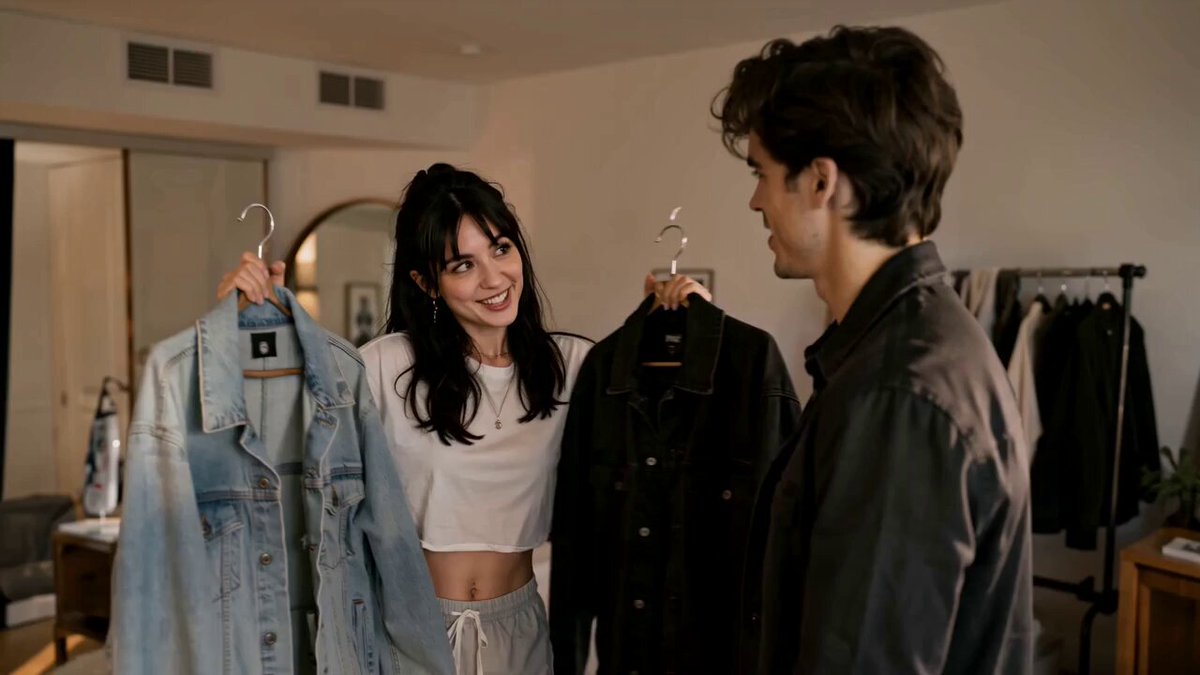

The short-form feed has changed what quality means. It is no longer enough for a clip to be clear and in focus; the videos that hold attention look like tiny movies. They have a point of view, deliberate camera choices, consistent characters, and a rhythm that keeps the eye locked. This shift from volume to craft is the biggest opportunity in content creation right now, because most creators are still publishing flat, generic clips. The ones who learn to think like directors will stand out in a feed where everything else looks the same. This guide lays out the production know-how behind film-like short-form video: the directing philosophy, the camera language, the consistency systems, and the workflow that turns a phone-and-prompt setup into something that feels like cinema.
Why Cinematic Thinking Wins on Short-Form Platforms
Short-form platforms reward retention, and retention is driven by craft, not by luck. The algorithms optimize for people watching to the end, rewatching, and engaging. A video that looks intentional gives viewers reasons to stay: they want to see the payoff, they admire the look, they trust the creator. A generic clip gives them no reason to stay at all.
Cinematic quality is also a brand signal. A creator who consistently publishes film-like videos is read as serious, professional, and worth following. That perception compounds. It raises the value of every video in the channel, improves conversion for sponsorships and products, and makes the audience more forgiving of the occasional miss.
The practical upside is that cinematic craft is learnable and largely tool-agnostic. The principles of camera language, lighting, and narrative pacing apply whether you are shooting with a phone, generating clips with AI, or mixing both. Investing in the craft is investing in every video you will ever make.
The Directing Philosophy: Every Shot Serves the Story
Directing is decision-making. A director decides what the audience sees, when they see it, and how it should make them feel. In short-form video, the directing philosophy can be compressed into one rule: every shot must do a job. If a shot does not advance the story, reveal character, raise emotion, or deliver information, it does not belong in the cut.
Start with the intent for each video: the one emotional response you want the viewer to have at the end. Then plan backward. What sequence of moments produces that response? Which moments are essential, and which are filler? The plan does not need to be elaborate; a simple shot list of five or six beats is enough for most short-form pieces.
The director also decides what to leave out. Short-form is defined by constraint, and constraint is a creative advantage. A ninety-second video that tries to say everything says nothing. Pick one idea, make it sharp, and end on time. The most cinematic short videos often feel effortless because the creator made hard cuts look easy.
Camera Language for Small Screens
Camera language on a phone screen follows the same grammar as cinema, with a few adaptations. The frame is small, so simplicity matters: one strong subject, a clean background, and one obvious focal point read better than busy compositions.
Shot sizes carry the same meanings as in film. A close-up is the currency of short-form because it fills the small screen with emotion. Medium shots work for action and dialogue. Wide shots are best used sparingly, as establishing moments or punchlines, because they lose detail on a small display.
Camera movement needs to be motivated. A slow push-in builds intensity before a reveal. A subtle tracking move adds life to a static scene. A whip pan or quick zoom can punctuate a beat. But movement for its own sake reads as amateur; if the camera moves, the movement should serve the moment, and it should usually be slower than feels natural, because fast movement is disorienting on a small screen.
Angle is a power tool. Low angles make subjects dominant; high angles make them vulnerable; eye level creates intimacy. In AI-generated video, these choices are made in the prompt, so the director's job is to know which angle the moment requires and describe it explicitly.
Building a Consistent Visual World
Consistency is what makes a series feel like a series instead of a collection of unrelated clips. Audiences notice consistency even when they cannot name it; it is the feeling that "this creator knows what they are doing."
Character consistency is the highest-impact investment. Establish a character with reference images from multiple angles, lock the description in writing, and use the same references and wording in every clip involving that character. This one discipline removes the most jarring artifact in AI video: the protagonist who changes face between cuts.
World consistency is the second pillar. Keep the color palette, lighting style, and environment vocabulary stable across a series. If every episode has its own random look, the audience cannot form a mental model of the world. If the look is stable, the world becomes believable, and the story gains weight.
Audio consistency is the third, and it is often forgotten. Use the same narrator voice, the same music style, and similar sound design across episodes. The audience's ear builds recognition just like their eyes, and audio consistency reinforces the brand even when the viewer is not looking at the screen.
Planning a Series Instead of a Single Video
The craft compounds when you think in series rather than in single videos. A standalone clip proves you can make one good video; a series proves you can run a channel, and channels are what algorithms reward and audiences follow.
A series needs a container before it needs individual episodes. Define the format once: the opening structure, the length, the narrator voice, the music style, the palette, and the end card. Every episode then plugs into the same container, and the consistency does the branding work for you. The audience recognizes the series from the first two seconds, before a single word is spoken.
Character and world assets become library items. The reference images, the style guide, and the prompt vocabulary you develop for episode one are investments that pay off in every later episode. Save them, version them, and treat them as production assets, the same way a studio treats its sets and costumes.
Episode planning follows the same beat-based method as single videos, with one addition: a season arc. Decide what the series as a whole is building toward, and give each episode a small role in that arc. Even a loose arc, where episodes connect by theme rather than plot, makes the series feel intentional and gives viewers a reason to come back.
Finally, review across episodes, not just within them. The discipline that keeps a character consistent inside one video must extend across the whole run. Watch episodes back to back, check the world still holds, and correct drift before it becomes the audience's impression of your channel.
Narrative Structure in a Ninety-Second Format
Short-form video does not have time for a leisurely three-act structure, but it still needs a narrative spine. The compressed version has three beats: open with a promise, develop with tension, close with a payoff.
The open is the first two seconds. It must make a promise that is specific enough to create curiosity. "I tried editing a video with AI for 30 days" promises a result and a timeline. "Here is the shot list I use for every Reel" promises a transferable system. The open should not summarize the whole video; it should raise a question the video answers.
The development builds the tension between the promise and the payoff. This is where examples, steps, obstacles, and details live. The development should escalate, not plateau: each moment should feel more interesting than the one before. Cut anything that does not escalate.
The close delivers the payoff and leaves a residue. The payoff can be a result, a reveal, a lesson, or a transformation. The residue is what stays with the viewer: a quote, a question, a feeling. A video that ends with no residue is forgettable no matter how good it looked.
From Prompt to Picture: Production Workflow
The workflow for film-like short-form video combines planning, generation, and editorial discipline.
Step one: concept and intent. Write the one-line promise and the emotional target. This is the creative contract for the video.
Step two: beat sheet and shot list. List the story moments in order, then assign each beat a shot size, angle, camera move, and lighting idea. Keep the list to what the format can hold; a ninety-second video needs maybe six to ten shots.
Step three: reference lock. Prepare character references, style references, and the palette vocabulary. Consistency starts here, before any generation.
Step four: generation. Write each shot as a precise prompt, generate multiple takes, and select the strongest. Check the takes against the shot list, not against your mood; the list is the standard.
Step five: sequence review. Watch the selected clips in order. Fix continuity breaks, pacing problems, and shots that do not serve the beat. This review is where the video becomes a film instead of a pile of clips.
Step six: sound and finish. Score to the emotional arc, mix the audio to a consistent level, and export with the right format for the platform. Then watch it twice: once with sound, once without, and confirm the story survives both.
The Role of AI in the Creative Process
AI changes the economics of production, not the principles of it. The model generates the raw material faster and cheaper than a crew could, but the decisions that make material cinematic are still human decisions: what the story means, which shot communicates it, when to cut, what to keep.
The best workflow treats AI as a collaborator with specific strengths. AI is brilliant at rendering a described scene, iterating quickly, and producing variations. It is unreliable at judgment, taste, and narrative intent. The director supplies intent; the machine supplies execution. When the workflow respects that division, the results feel directed. When the machine is asked to do the directing, the results feel random.
There is also a learning loop. Every generation is a test of your prompting vocabulary, and every accepted or rejected take teaches you something about how the model interprets language. Keep a prompt journal: what you asked for, what you got, what you changed. That journal is the fastest path from decent AI video to directed AI video.
Common Mistakes That Make AI Video Look Amateur
The first mistake is uneven lighting. Scenes with no lighting story look generated. Give every scene a light source, a direction, and a palette.
The second mistake is character drift. A protagonist who changes appearance between cuts destroys immersion instantly. Lock references and descriptions before generating.
The third mistake is camera motion without purpose. Movement should serve the beat. If the camera moves, ask why; if there is no answer, hold still.
The fourth mistake is ignoring the sequence. Approving clips one by one, without watching them together, produces a pile of good shots and a broken video. Review in sequence.
The fifth mistake is treating sound as an afterthought. Music and effects are half of the cinematic feeling. Score to the arc, not to the clock.
Frequently Asked Questions
Do I need expensive tools to make film-like short video? No. The craft lives in the decisions: shot list, lighting language, consistency, pacing. A phone and a decent AI video tool are enough to apply every principle in this guide.
How long should a short-form video be? Match the platform's sweet spot, usually between thirty seconds and three minutes. The length is less important than the arc; a tight ninety-second video beats a padded three-minute one.
How do I make my AI clips feel less generic? Add a lighting story, a depth-of-field choice, and a consistent palette to every prompt. Those three changes remove most of the "generated" look.
Can I combine AI clips with real footage? Yes, and it often works beautifully. Use AI for the shots that are impossible or expensive to film, and use real footage for authenticity and intimacy. Keep the color grade consistent across both.
What is the fastest way to improve my videos this week? Plan a shot list before you generate anything, and review your selected clips as a sequence before you edit. Both habits cost minutes and change the quality of the final video immediately.
The Takeaway
Film-like short-form video is not a matter of budget or luck; it is a matter of craft applied consistently. Think like a director: define the intent, plan the shots, lock the visual world, and let the story drive the technical choices. The tools will keep improving, but the principles will not change. The creators who internalize camera language, narrative pacing, and consistency now are building a skill that compounds across every platform and every future tool. Start with one video. Plan it like a film, generate it like a director, and edit it like an editor. The result will look different from the rest of the feed, and the audience will notice.
