

Cinema is no longer defined by budget
For more than a century, the visual language of cinema was tied to money. Big studios could afford elaborate sets, armies of visual effects artists, and months of post-production; independent filmmakers could not. That equation is being rewritten. Generative artificial intelligence has collapsed the cost of creating photorealistic imagery, animated sequences, and cinematic effects, and it has put tools in the hands of creators who would never have had access to a production pipeline. The result is a strange and exciting moment: the future of cinema is being shaped not only by studios, but by individuals experimenting in their bedrooms.
This is not a prediction about some distant decade. The shift is visible right now in short films, music videos, advertising, and social content. What was once a barrier, the ability to produce visuals that look expensive, is rapidly becoming a skill rather than a budget item. This article explores the concrete ways AI is transforming film visuals: the technologies involved, the workflows that use them, and what they mean for filmmakers of every scale.
From text to image to moving image
The most visible transformation is the evolution of generation itself. A few years ago, the state of the art was turning a text description into a single static image. Then image generation matured, and the frontier moved to video: describe a scene and receive a moving image, complete with camera motion, lighting changes, and physical behavior.
Text-to-video has crossed the realism threshold
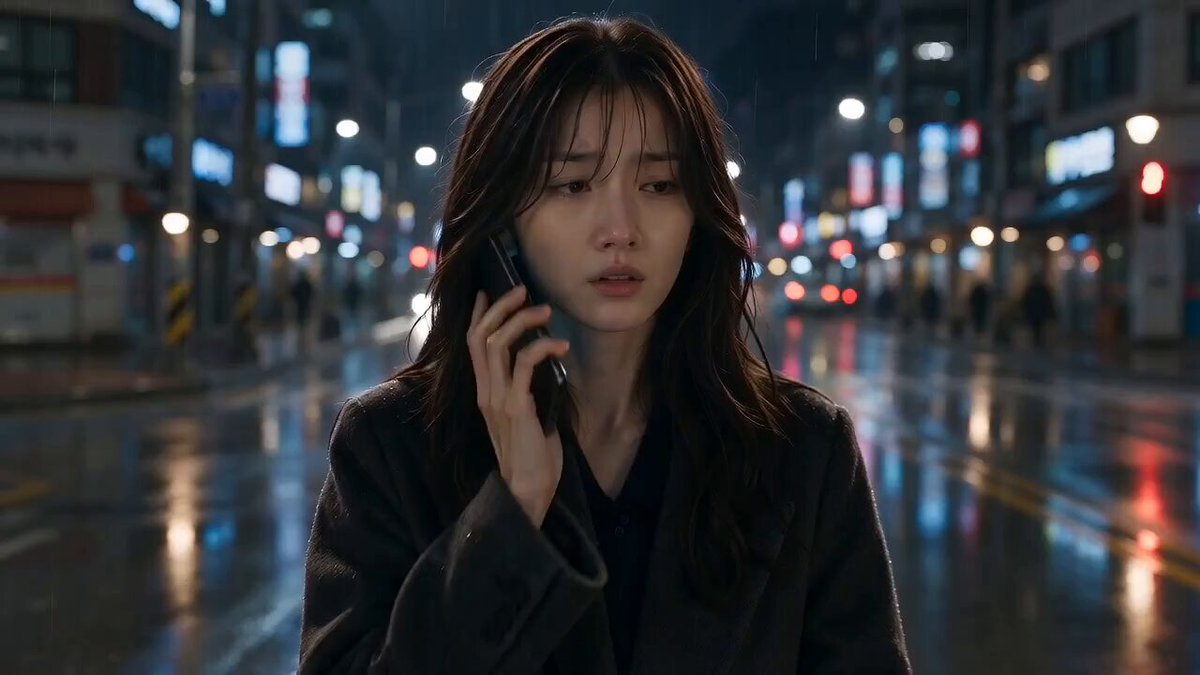
The early text-to-video outputs were recognizable as experiments: morphing shapes, strange physics, characters that changed identity between frames. The newest generation of models has crossed a threshold. Scene understanding is dramatically better: if you describe a rainy street at night with a neon sign, the model can hold that scene coherently for several seconds, with reflections that behave plausibly and light that moves naturally.
The practical consequence is that text-to-video is no longer a novelty generator. It is a legitimate tool for pre-visualization, concept development, and even final shots in certain contexts. Directors can test ideas visually before committing resources to a real shoot, and small teams can produce establishing shots that would previously have required location scouts, permits, and a crew.
Image-to-video gives directors a reference anchor
Text alone leaves a lot to chance. Image-to-video, which starts from a specific image, gives the filmmaker control: choose the frame, the composition, the lighting, the character, and let the model animate from that anchor. This technique has become the workhorse of practical AI filmmaking, because it keeps the aesthetic decisions with the creator.
The workflow is simple in principle: generate or select an image, describe the motion, and receive a clip that starts exactly where you chose. For films with a strong visual identity, this is a far more reliable way to control the look than pure text generation.
The coherence problem and how it is being solved
Every filmmaker who has worked with generative video eventually hits the same wall: consistency. A character looks different in shot two, a costume changes color between scenes, a set rearranges itself. For narrative cinema, this is fatal. The audience does not need to know the technical reason; they simply stop believing in the world.
Character and style consistency
The solution has come from a family of techniques grouped under the idea of consistency control. The most powerful is multi-image fusion: feed the model several reference images of the same character or location, and it uses them to keep the visual identity stable across shots. This is the difference between a character who happens to appear in several scenes and a character who is recognizably the same person throughout a film.
The workflow mirrors what real productions do: create a visual bible for the project. Define the protagonist across multiple angles, the key locations, the color palette, the lighting style. Then use those references in every generation. Productions that skip this step pay for it later in reshoots and abandoned shots.
Keyframe control for deliberate direction
The second pillar is keyframe control: define the first and last frame of a shot and let the model fill in the motion between them. This transforms the filmmaker's relationship with the tool. Instead of accepting whatever the model produces, you dictate the beginning and end of every movement. Shots can be composed to cut together, loops can be closed perfectly, and transitions can be planned with intent.
The AI director: automation with a point of view
One of the most interesting developments is the emergence of AI-based direction tools that assist with cinematography decisions: shot selection, camera movement, pacing, and even narrative structure. These systems are not replacing directors; they are compressing the time between an idea and a visual proposal.
Think of the assistant director's role: breaking down a scene, deciding coverage, planning the sequence of shots. AI direction tools take a brief, propose a shot list, and can generate rough versions of each shot for review. The director then selects, rejects, and refines. The value is speed: a scene that would take a storyboard artist a day to sketch can be visualized in an hour, and the visualization is already in the visual language of the final film.
The creative risk is homogenization. If everyone uses the same direction tools with the same defaults, films start to look alike. The countermeasure is to treat the tool as a collaborator with a personality, not as an oracle: override its suggestions, feed it unusual references, and keep your own taste in the driver's seat.
The production pipeline is changing
Beyond individual shots, AI is reshaping the entire production workflow. The traditional pipeline, concept to final image, is being replaced by something faster and more iterative.
Pre-visualization is becoming a standard step
Pre-visualization used to be a luxury reserved for big productions. Now it is accessible to everyone. A director can write a scene description, generate a rough animatic, and test whether the sequence works emotionally before spending any real money. This is the single biggest cost saver in the new workflow: find out what does not work while it is still free.
The practical method is layered: first, static concept frames to lock the look; second, rough animated sequences to test pacing; third, refined generations for the shots that survive; fourth, post-production for the final assembly. Each layer is cheap, so the process encourages iteration.
Post-production is accelerating
The back half of the pipeline is changing too. AI tools now assist with color grading, upscaling, denoising, and even editing decisions. Sound design, historically a specialized craft, is being augmented by generative tools that produce music, effects, and dialogue alternatives. The filmmaker's bottleneck is shifting from technical execution to creative decision-making, which is exactly where it should be.
Choosing models and tools for film work
For filmmakers, the model landscape can be confusing. Here is a practical way to think about it.
Quality-first models, such as Sora and the most advanced releases from Runway, excel at complex scenes, narrative understanding, and physical realism. Use them for hero shots and moments where the audience's eye will linger.
Motion-focused models, such as Kling, are known for fluid, believable movement. Use them when the physics of a scene is the point: action sequences, water, cloth, creatures.
Speed-oriented models, such as Luma and Pika, trade some depth for rapid iteration. Use them for pre-visualization, drafts, and high-volume experiments where quantity beats polish.
Style-specialized models, such as Hailuo and others tuned for animation, serve projects with a distinctive visual identity, from anime to painterly looks.
The winning strategy is not loyalty to one model but fluency across several: a pipeline that generates the concept with one tool, animates with another, and refines with a third. Build a personal map of which tool does what best, and your production speed will multiply.
Monetization and the community economy
The same technology that democratizes creation is also creating new ways to earn. Model sharing and community marketplaces let creators distribute the styles and tools they have trained or refined, while demand for skilled prompt engineers and AI art directors is growing quickly. For filmmakers, this means the skills acquired in the new pipeline have direct economic value, not just creative value.
The serious caution is intellectual property. Training data provenance, the rights of reference images, and the terms of the tools used are unresolved areas that vary by jurisdiction and platform. Before building a commercial project on AI-generated visuals, check the licensing terms carefully and document your process.
The artistic question
There is a legitimate worry beneath the technical excitement: if machines generate the images, what is left for the artist? The answer, visible in the best AI-assisted work, is that the machine generates options and the artist makes decisions. Choosing what to show, what to hide, what to emphasize, what to cut: these are human judgments, and they are more important than ever when the raw material is abundant.
The filmmakers who will thrive are not the ones who type the best prompts, but the ones who know what they want to say. The technology removes the friction between vision and screen; it does not supply the vision. That remains the rarest and most valuable thing in cinema, as it has always been.
A practical example: the hybrid short film workflow
To make the ideas concrete, here is how a typical AI-assisted short film is assembled today, in the order the work actually happens.
The film begins with a script and a visual bible: concept frames that lock the world, the protagonist, the palette, and the lighting language. This phase is slow by design, because every later step depends on these references. Next, the team generates rough animated sequences for the key scenes, testing pacing and emotion while everything is cheap to change. Most of the creative risk is retired here: scenes that do not work are cut before they cost anything.
Then the production splits. Live action is shot for the moments that need performance: faces, dialogue, physical interaction. Everything else, the environments, the effects, the impossible scale, is generated with AI, anchored to the same visual bible. The composite phase integrates the two: real footage composited into generated worlds, with AI upscaling and color tools used to unify the look. Sound design finishes the film, and the final edit is where the director makes the last decisions about rhythm and emphasis.
The entire pipeline can be run by a team of two or three people with the right tools, in weeks rather than months. The results are not identical to a studio production, but they are close enough to compete, and they are produced at a fraction of the cost. That is the practical reality of cinema's new economics: the barrier is no longer budget, it is taste, discipline, and the willingness to learn a new workflow.
FAQ
Is AI-generated footage good enough for a real film?
For many shots, yes: establishing shots, background plates, concept visualization, and stylized sequences are already production-usable. Hero shots with actors still usually require traditional methods or careful integration.
How do I keep a character consistent across AI-generated shots?
Build a visual reference set for the character, with multiple angles and consistent lighting, and use it with multi-image fusion in every generation. Treat it like a costume and makeup bible.
Do I still need a camera crew?
It depends on the project. AI handles generated imagery, but live footage, performance, and physical production still require people. Many hybrid productions use AI for environments and effects around real footage.
What skills should a filmmaker learn first?
Prompt craft, visual reference building, and editing. The ability to describe a shot precisely, to define a consistent visual identity, and to assemble clips into a coherent sequence covers most of the new pipeline.
Are AI tools replacing visual effects artists?
They are changing the role. Many repetitive tasks are automated, but the demand for people who can art-direct, composite, and fix what models get wrong remains strong. The craft is shifting from execution to direction.
Is it legal to use AI-generated visuals commercially?
Often yes, but terms differ by platform and jurisdiction. Always read the licensing terms, check the provenance of your reference material, and keep records of your process.
