
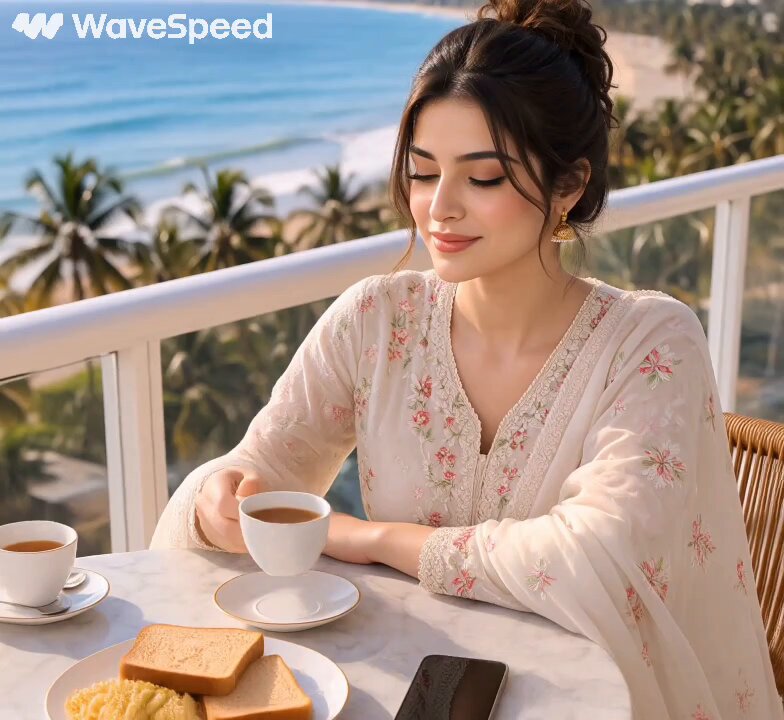

The Radical Shift in Video Production
Video used to be the most expensive form of content to produce. It required cameras, crews, studios, actors, and weeks of post-production. That reality is being dismantled in front of us. In 2025, generative AI has turned video production into a process that independent creators can run from a laptop, at a quality level that competes with professional studios. The market for AI-generated content is growing at a remarkable pace, and the models that drive it are improving faster than the industry can adapt.
This is not a distant future. It is the operational reality of media and entertainment today. The question is no longer whether generative AI will reshape video creation, but who will take advantage of it first and how the workflows will evolve.
The Model Revolution: Accessibility and Diversification
The most visible driver of this shift is the explosion of capable video generation models. A few years ago, creators were locked into one or two providers with limited quality. Today, the landscape is diverse, and each model family has distinct strengths.
Models in the Flux lineage deliver exceptional prompt understanding and intricate detail in lighting and texture, which makes them a strong choice for cinematic and product work. Runway Gen-4 set the benchmark for image-to-video and video-to-video workflows, with impressive character consistency across scene changes. The Sora series from OpenAI redefined expectations for physical realism and long-horizon narrative coherence, generating shots that obey real-world physics and hold a story across long takes. Kling AI and MiniMax Hailuo excel in precise prompt adherence and are strong options for Asian aesthetic contexts and fast marketing iteration. Models like PixVerse and Vidu Q1 push creative control through multi-reference workflows, while Luma Ray 2 and similar open-community efforts keep pressure on quality and cost.
The practical consequence for creators is freedom of choice: pick the model that fits the job, not the one that happens to be installed. Platforms that aggregate many models under one interface have become the crucial access point for creators who need specialization without maintaining a dozen subscriptions.
Character Control and Multi-Image Scene Consistency
The biggest historical obstacle in AI video was character consistency: the same person appearing in two scenes would come back with a different face, different clothes, or missing props. That barrier has fallen. Two techniques drive the change.
The first is multi-image fusion. Instead of describing a character in words and hoping for the best, you supply reference images that act as visual anchors. The model locks the face, the outfit, and the defining features, and carries them across scenes, styles, and camera angles. The second is trained character models: a curated set of reference images used to train a reusable identity asset that any future generation can load. Combined, these techniques make serialized storytelling possible — the same hero can star in a ten-episode series without drifting.
For brands and creators, this unlocks a new category of work: branded characters that remain recognizable across every piece of content, from a product demo to a narrative campaign.
AI Director Agents and Cinematography Automation
Raw generation produces clips; storytelling requires direction. The newest layer of the stack is the AI director agent: software that plans scene sequences, proposes camera language, and assembles individual generations into a coherent narrative.
An AI director agent changes the workflow in a fundamental way. Instead of prompting every shot individually, you describe the story, the mood, and the pacing, and the agent produces a structured plan: beats, keyframes, transitions. It understands that an establishing shot should precede a close-up, that tension builds through pacing, and that the emotional arc of the story should drive visual choices. For independent creators, this is the difference between assembling clips and directing a film. For teams, it compresses the pre-production phase from weeks to hours.
The Infrastructure Behind Speed and Scale
Generative video is compute-hungry. The creators who win are the ones who never stare at a spinning progress bar. Behind the best tools is serious infrastructure.
Microservices and Reliable Backends
Modern video platforms are built as modular backends, often in TypeScript with frameworks that enforce clear module boundaries. Each capability — generation, user management, billing, content storage — runs as an independent service. This modularity is not an implementation detail; it is what allows a platform to scale generation capacity without destabilizing the rest of the product.
Task Queues and GPU Management
The heart of the system is the task queue. When a creator submits a generation, the request enters a queue, where a scheduler assigns it to available GPU resources. The queue smooths out demand spikes, prioritizes urgent work, and prevents the service from collapsing under load. For creators, a good queue means predictable turnaround times even at peak hours.
Image Fusion and Frame Control
At the generation layer, image fusion and frame control are what keep results coherent. Frame control lets the creator specify keyframes that the model must respect, and image fusion combines multiple references into a single visual intent. Together, they give creators the ability to direct the model rather than just prompt it.
The Creative Economy of Generative Video
Generative video is not only a production technology; it is an economic system. Three trends define how money flows.
Monetization Models for Creators
Creators monetize in three ways: client work, audience building, and productized services. Client work pays for consistency and speed. Audience building rewards serialized content, which is now feasible because character consistency is solvable. Productized services — templates, branded assets, recurring video production — convert a skill into a scalable business. The common thread is that the creators who charge the most are the ones who solve the consistency problem reliably.
Communities and Model Marketplaces
A new layer of the economy is the model marketplace. Creators train their own models — a character, a style, a product look — and publish them for others to use, earning when their models generate results. This turns specialized knowledge into passive income and accelerates the ecosystem: the more models available, the more valuable the platform becomes to every creator.
Integrating Image and Audio Tools
Video does not exist in isolation. The strongest workflows integrate image editing for reference frames and audio generation for soundtracks and effects. A creator can design a character in an image editor, animate it with a video model, and score the result with an audio generator, all in one pipeline. The integration is what makes the final product feel finished rather than assembled.
Challenges: Technical and Ethical
The opportunities are real, and so are the challenges.
Temporal Control Across Long Clips
The hardest remaining technical problem is temporal control across long clips. A model can keep a character stable for ten seconds; holding a face, an outfit, and a setting consistent across a two-minute continuous shot is still fragile. Expect rapid improvement here, and plan projects so that long-form coherence is achieved through keyframing and assembly rather than single-shot generation.
Ethics, Provenance, and Disclosure
Generative video raises legitimate questions about consent, likeness, and provenance. The responsible approach is disclosure: label AI-generated content clearly, respect the rights of real people, and document the origin of assets. Platforms and audiences increasingly reward transparency, and creators who build trust will outlast those who hide the process.
A Practical Adoption Workflow
If you are starting today, follow this path:
- Pick one use case: product demos, social clips, or narrative shorts. Do not boil the ocean.
- Choose two models with different strengths and learn them deeply.
- Build a reference asset library: characters, styles, camera templates, prompt structures.
- Standardize a review loop: generate keyframes first, review as a sequence, then animate.
- Document everything: prompts, models, failures, and fixes.
- Ship consistently. Volume plus iteration beats occasional perfection.
Choosing Your Stack: A Comparison Framework
With so many models and platforms available, choosing a stack can feel overwhelming. A simple framework cuts through the noise. Score each candidate on five criteria:
- Output quality for your use case. Generate the same test prompt on each candidate and compare side by side. Do not rely on leaderboards alone; your use case is what matters.
- Character consistency features. Does the tool support multi-image fusion, keyframe control, or trained character models? This is the highest-leverage feature for narrative work.
- Workflow fit. Can you build a pipeline: reference library, prompt templates, batch generation, review loop? Tools that force manual steps will not scale with you.
- Cost structure. Is pricing predictable per generation? Are batch options available? Model the cost of a real project, not a single clip.
- Portability. Can you switch models without rebuilding your entire workflow? Locking yourself to one provider is a strategic risk in a fast-moving market.
Apply the same test to every candidate, keep the results in a comparison document, and re-run the evaluation every quarter. Models change fast; your criteria should stay stable.
A Creator Workflow in Practice: A Case Study
A concrete example makes the workflow tangible. Consider a creator building a five-episode product story for a beverage brand, with a recurring mascot character.
Week one: asset building. The creator shoots or generates a reference set for the mascot, defines the visual style from three approved stills, and writes a character sheet. These assets become the foundation for every generation in the series.
Week two: keyframe planning. For each episode, the creator generates keyframes scene by scene and reviews them as a sequence. The mascot's face, outfit, and the product's label are checked for consistency before any motion is generated. Two scenes fail the review and are regenerated with additional reference images.
Week three: production and assembly. Each approved keyframe becomes the anchor for its scene. The creator generates scene variations in batches, selects the best take per scene, and assembles the episodes. An AI director agent helps structure the transitions between scenes.
Week four: delivery and iteration. The creator exports the episodes with captions and metadata, publishes them, and tracks watch time. The data from episode one informs adjustments to pacing and scene length in episodes two through five. The mascot asset is reused in the next campaign, which now starts from the foundation instead of from zero.
The case study shows the pattern that separates scalable creators from one-off producers: build assets once, plan with keyframes, produce in batches, and let data drive iteration.
FAQ
How do I start with no budget? Start with the free or trial tiers of two or three tools, build a reference library and prompt templates, and document every test. The skills transfer when you upgrade; the workflow is the asset, not the tool.
Do I need to be a filmmaker to use generative video? No, but basic visual language helps: framing, pacing, and lighting awareness improve results dramatically. Learn enough to direct, not enough to operate a camera.
Will generative video replace human video teams? It replaces the manual parts of production, not the creative direction. Teams that adapt become faster and cheaper; teams that ignore it lose the work.
How do I keep a character consistent across a series? Use trained character models or multi-image fusion with a fixed reference set, and repeat the identity block in every prompt.
Is AI-generated content clearly labeled? Good practice says yes. Label AI content transparently, especially when it depicts real people or could mislead.
How fast is the technology changing? Fast enough that a model released this quarter can be obsolete in two. Follow the leaderboards, test constantly, and keep your workflow model-agnostic.
Conclusion
The future of video creation is already here, and it is generative. The models have crossed the threshold where speed no longer means sacrificing quality, and the infrastructure has matured to the point where independent creators can operate at studio scale. The competitive advantage now belongs to the creators who master the process: consistent characters, disciplined workflows, and a pipeline that turns a single idea into a finished, coherent story. The tools will keep improving; the skills you build around them are the durable asset.
